








 Posted 04/06/2026 6:37 pm


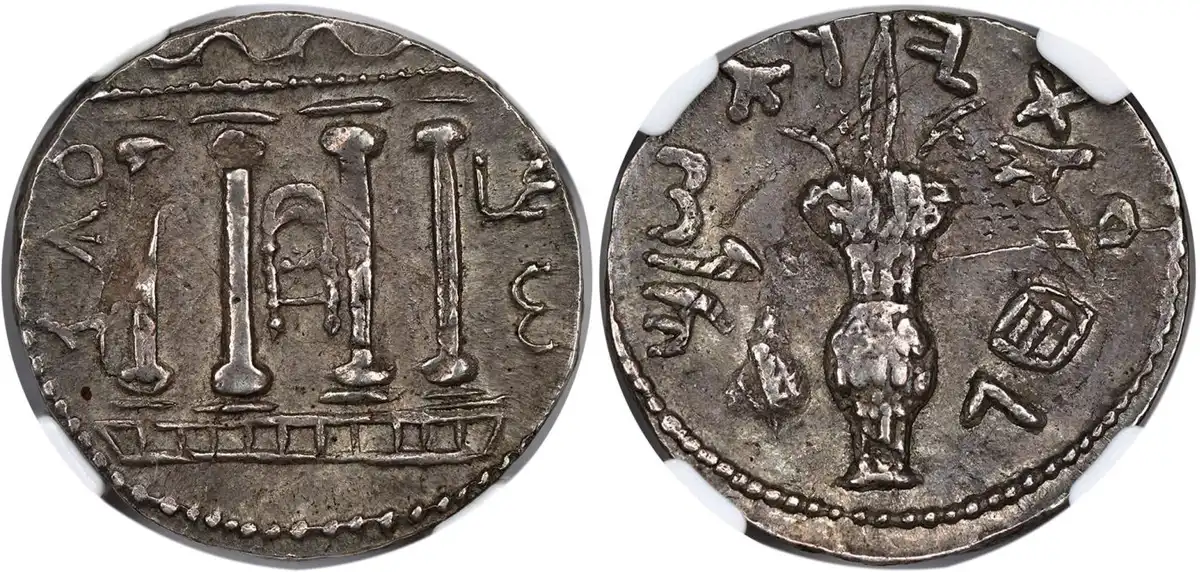
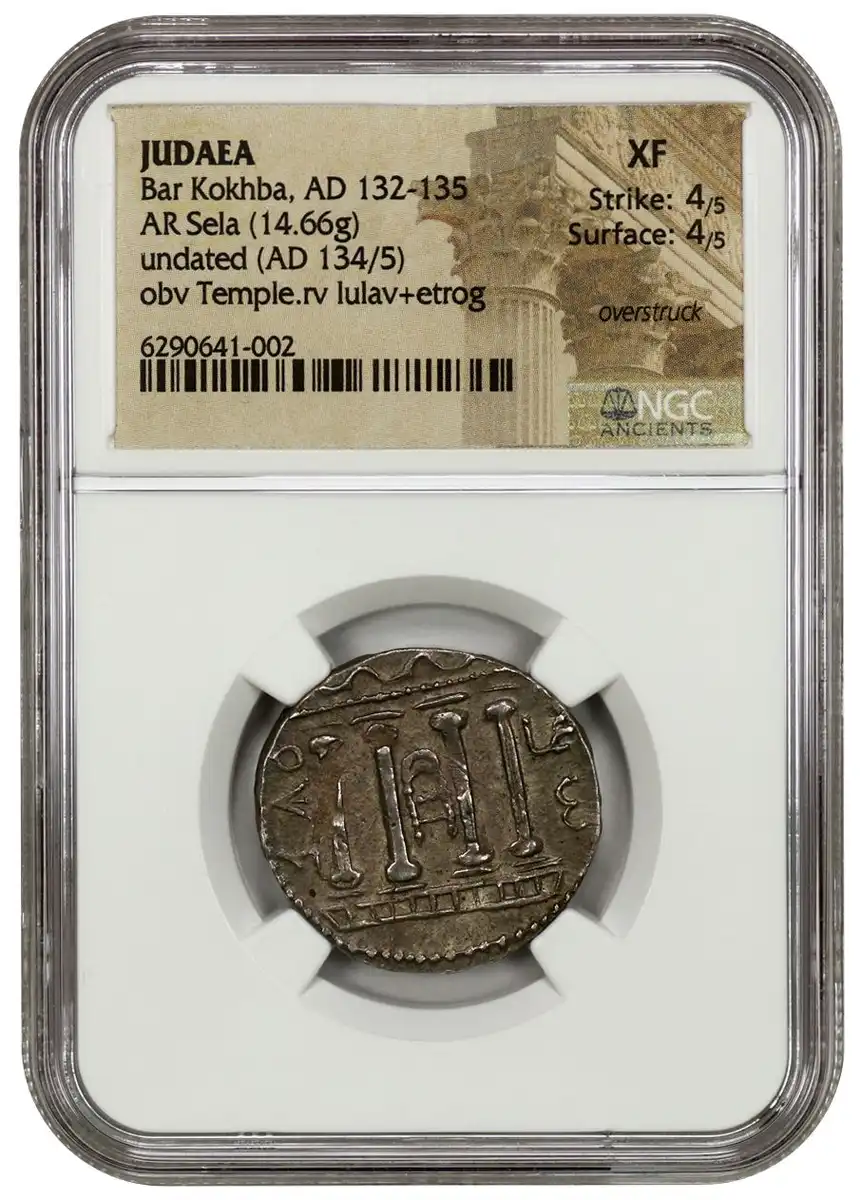
Marvin Tameanko, in his book "Monumental Coins", makes the observation that certainly none of the people who struck this coin, in 132 AD, would have been alive to see in person the actual Jewish Temple when it was still standing (prior to 70 AD). So they're really just guessing as to what the Jewish temple might have looked like. Surviving accounts, for example, describe the Temple as having only two primary pillars on the outer facade, not four. The wiggly line above the columns is perhaps supposed to represent the grape-vines that adorned the roof, and the hatching at the bottom is probably supposed to represent the walls and fences that surrounding the inner sanctum.
Scholars debate whether the item depicted inside the temple is supposed to represent the long-lost Ark of the Covenant, or the "mercy seat" in the Holy of Holies (which wasn't really a seat as such), or merely an empty throne to represent the non-corporeality of the Jewish God in contrast to the Gentile coins, many of which depicted their gods seated on thrones in their temples.
We have seen many replicas of this coin posted on this forum over the years, as it's a popular "tourist fake" design; I don't recall seeing a genuine one posted before.
Scholars debate whether the item depicted inside the temple is supposed to represent the long-lost Ark of the Covenant, or the "mercy seat" in the Holy of Holies (which wasn't really a seat as such), or merely an empty throne to represent the non-corporeality of the Jewish God in contrast to the Gentile coins, many of which depicted their gods seated on thrones in their temples.
We have seen many replicas of this coin posted on this forum over the years, as it's a popular "tourist fake" design; I don't recall seeing a genuine one posted before.
Don't say "infinitely" when you mean "very"; otherwise, you'll have no word left when you want to talk about something really infinite. - C. S. Lewis


