NGC - Sea creatures, birds, and some unexpected land animals offer whimsical modes of transportation on these coins from ancient Greece, Rome, and elsewhere.
Horseback riding is believed to be over 5,000 years old. By the time the first coins were struck about 2,600 years ago, horse-drawn chariots already were well established in many ancient cultures. They show up in the Iliad as a status symbol for conveying high-profile warriors to battle, and chariot races were held at the ancient Olympic Games before the introduction of coinage.
While horses are most commonly featured on ancient coins as a way of getting around, deities are sometimes shown enlisting the help of other animals, a testament to their power over the natural world. These strange depictions inspire wonder in anyone taking a close look at these coins, giving rise to the thought: What a ride!
Early CoinageWe'll start with something relatively simple — a silver tetradrachm of the Sicilian city of Messana, struck c.412-408 B.C.
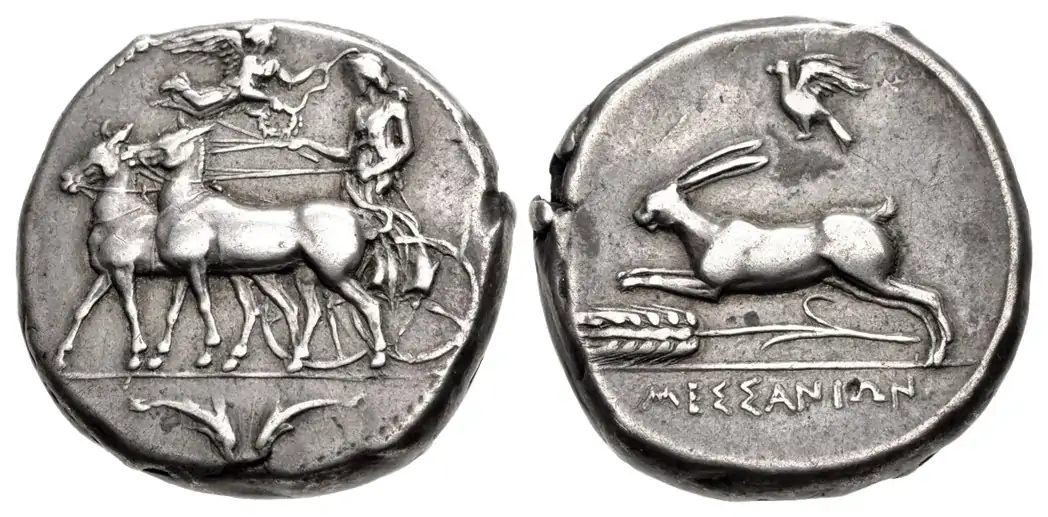
On this coin, a chariot is drawn by mules rather than horses. This distinctive type was introduced at Messana after a team of mules representing one of the city's tyrants, Anaxilas, won at the Olympic Games held early in the 5th century B.C.
Now, on to more exotic creatures!
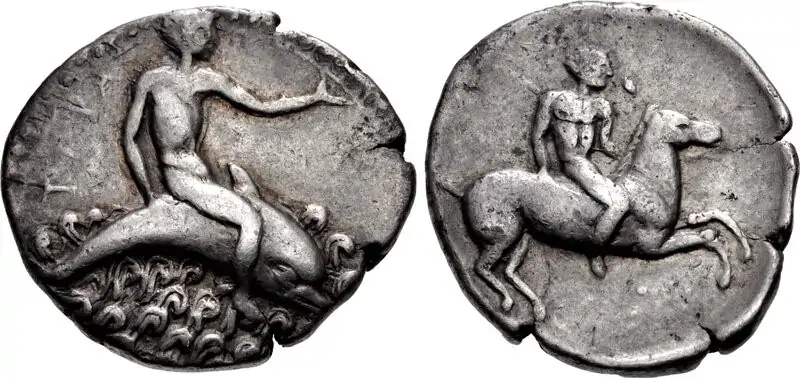
One famous series is the "dolphin rider" coins issued over several centuries at the city of Taras in southern Italy. These show a dolphin ridden by a young male, usually identified as Phalanthus (the legendary founder of Taras) or a son of the god Poseidon who survived a shipwreck with the help of a dolphin.
The silver didrachm shown here was struck circa 450-440 B.C., and shows a dolphin rider opposite a horse rider on the reverse. (You can learn more about the dolphin rider coins of Taras in this
NGC Ancients column.)
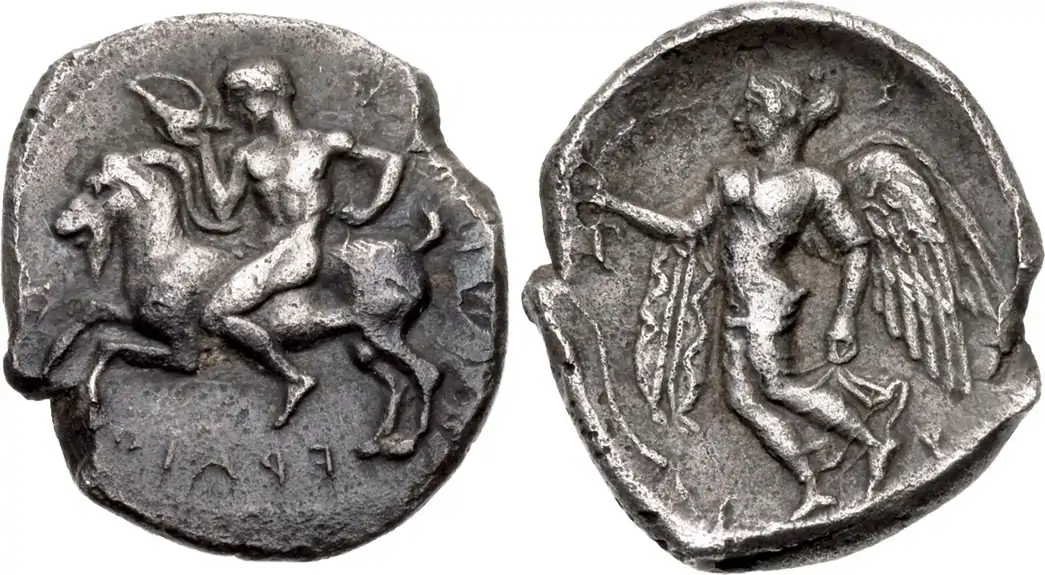
The god Pan is depicted riding a goat on this silver hemidrachm struck circa 425-409 B.C. in Himera, Sicily. The other side shows Nike, the Greek goddess of victory, in flight.
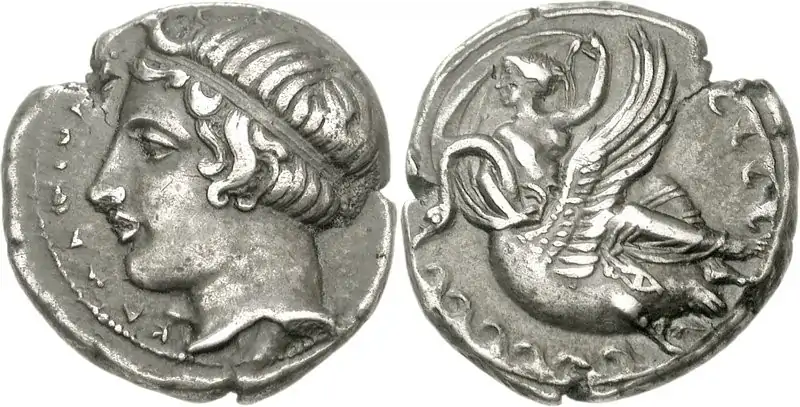
From nearby Kamarina, Sicily, is this silver didrachm struck around this same time. It shows on its reverse a nymph riding a swan. The obverse shows a local river-goddess.
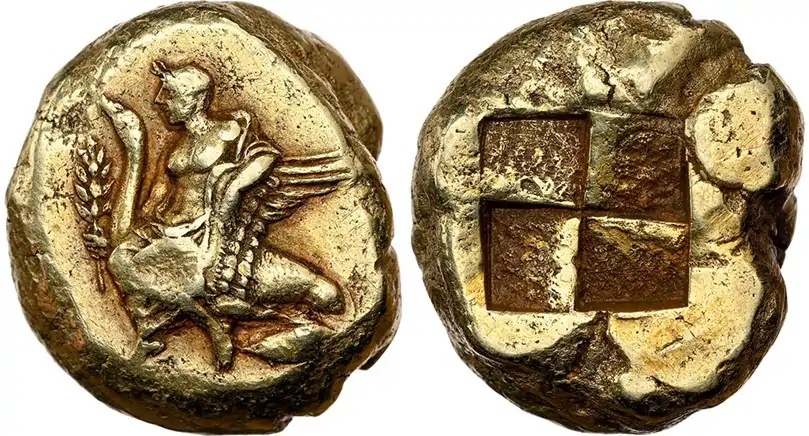
A similar theme appears on this electrum stater, struck circa 450-350 B.C. at Cyzicus in Mysia. In this case, the god Apollo rides a swan. Swans are closely linked to Apollo in Greek mythology, including by the legend that he would ride a swan to the northern land of the Hyperboreans in the winter months.
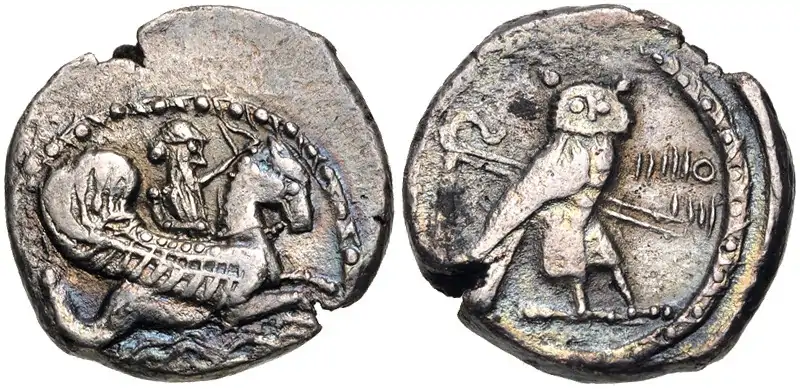
This silver shekel issued c.349-311 B.C. at Tyre, in Phoenicia, shows a deity riding a hippocamp, a winged sea creature with the forepart of a horse. It was struck under Azemilkos, a leader of Tyre who was a contemporary (and eventual ally) of King Alexander III 'the Great.'
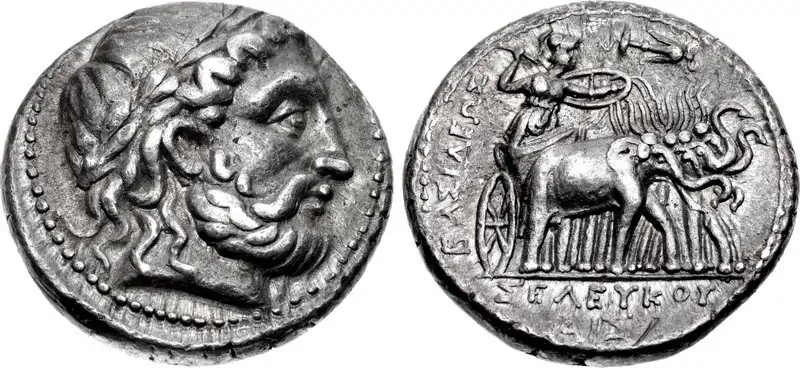
A quadriga is a chariot pulled by four animals, which on this silver tetradrachm happen to be elephants. This coin was struck under Seleucus I, founder of the Seleucid Empire, who reigned from 312 to 281 B.C. An ally in India gifted Seleucus 500 war elephants, which proved crucial at the Battle of Ipsus in 301 B.C., where it was determined that Alexander the Great's empire would not be reunited under one man.
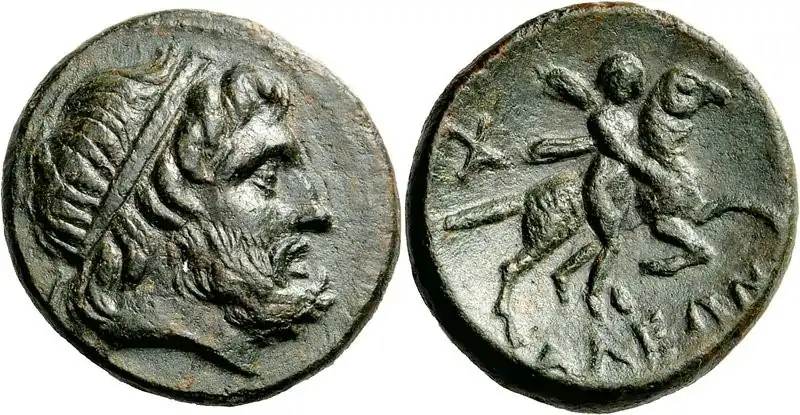
This base-metal dichalkon struck in Halos, Thessaly, around the 3rd century B.C. shows Phrixos riding a ram. In Greek mythology, Phrixos' parents were a king of Boeotia and a cloud goddess. He was hated by his stepmother, who convinced her subjects that he and his sister needed to be sacrificed to prevent famine. However, before they could be killed, his natural mother sent a flying ram to rescue them.
Roman Republic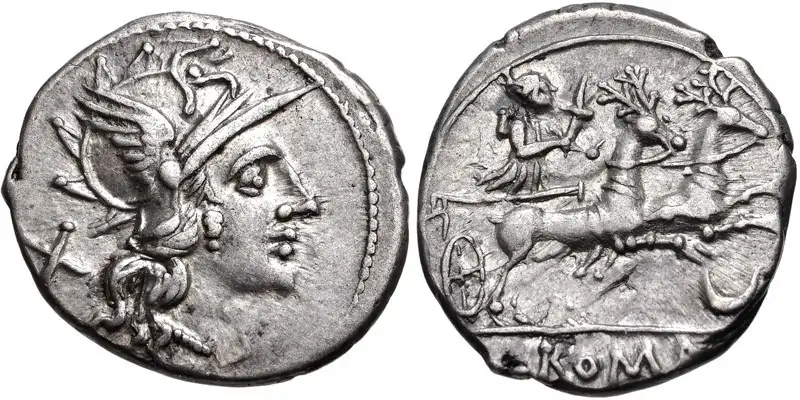
Silver denarii issued during the Roman Republic show chariots drawn by a diverse group of creatures. They include this silver denarius of 143 B.C., which shows the hunting goddess Diana in a biga (a chariot pulled by two animals) of stags. The state-goddess Roma is on the obverse.
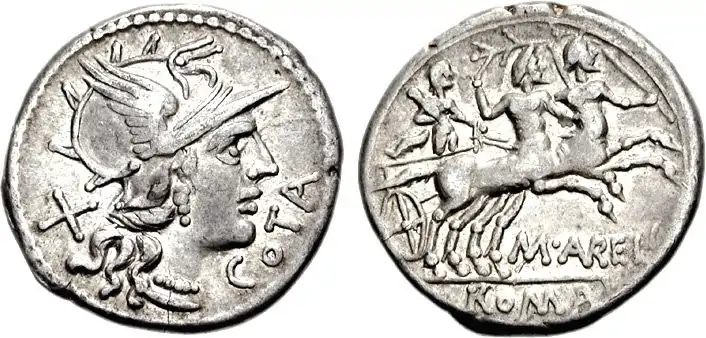
Continuing the theme, this denarius issued in 139 B.C. by M. Aurelius Cotta shows Hercules in a biga of centaurs,
Mythical Creatures with the lower body of a horse and the torso of a man. (Explore more
Mythical Creatures on ancient coins in NGC Ancients columns
here and
here.)
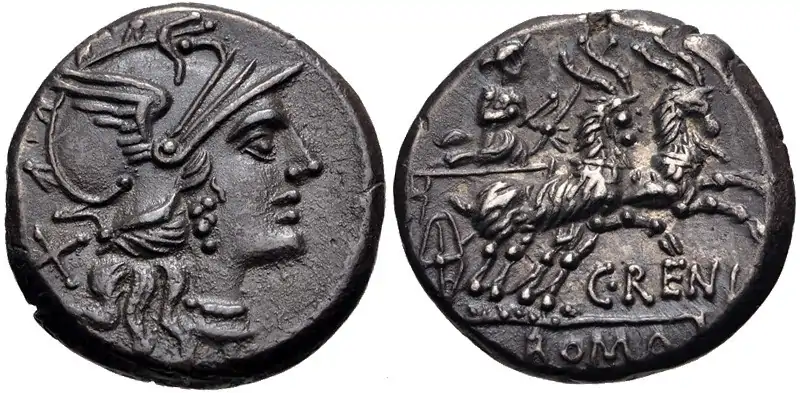
This denarius of 138 B.C. by the moneyer C. Renius shows fertility goddess Juno Caprotina driving a biga of goats. One of Juno's biggest festivals in ancient Rome was Nonae Caprotina in early July, which involved the sacrifice of a goat under a fig tree.
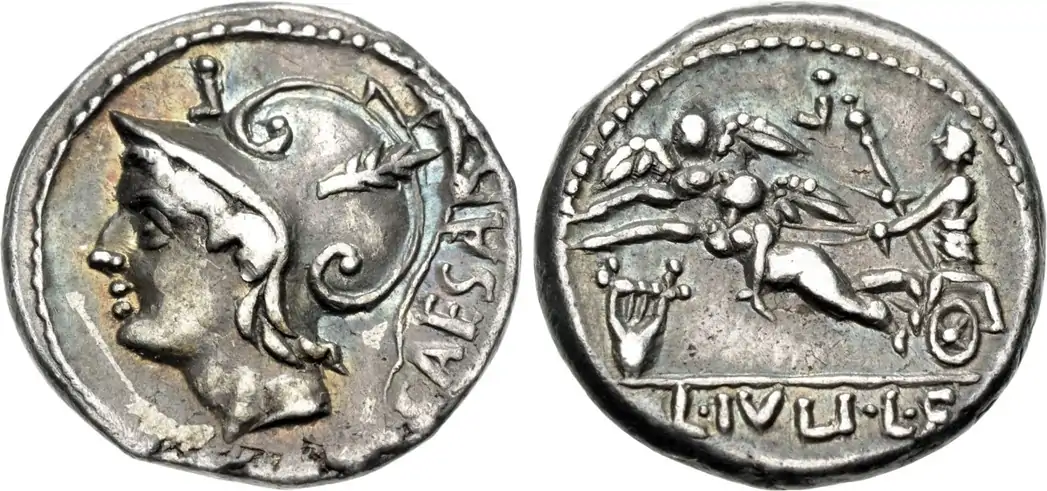
This silver denarius showing Venus Genetrix driving a biga of cupids was issued in 103 B.C. by the moneyer L. Julius L.f. Caesar. The obverse shows the head of the war god Mars. This Caesar was a successful general who later served as consul and was the grandfather of Marc Antony.
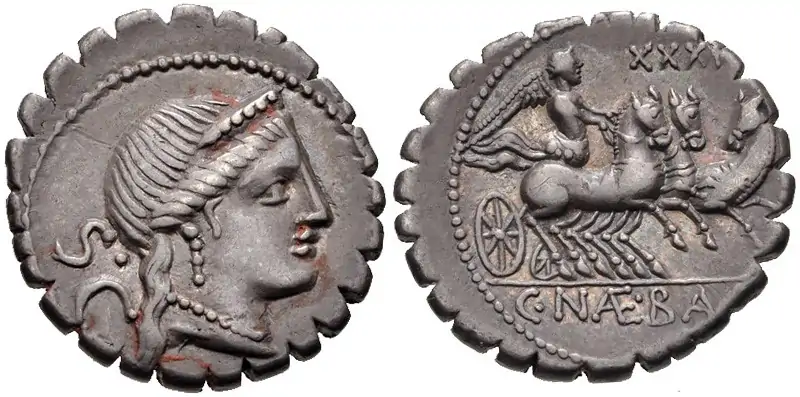
A triga is a chariot drawn by three animals, which is rarely shown on coinage. This silver serrate denarius was issued in 79 B.C. under C. Naevius Balbus shows a triga of horses driven by Victory. The obverse shows the goddess Venus. The coin was issued after Sulla had prevailed in his civil war and had resigned his dictatorship.
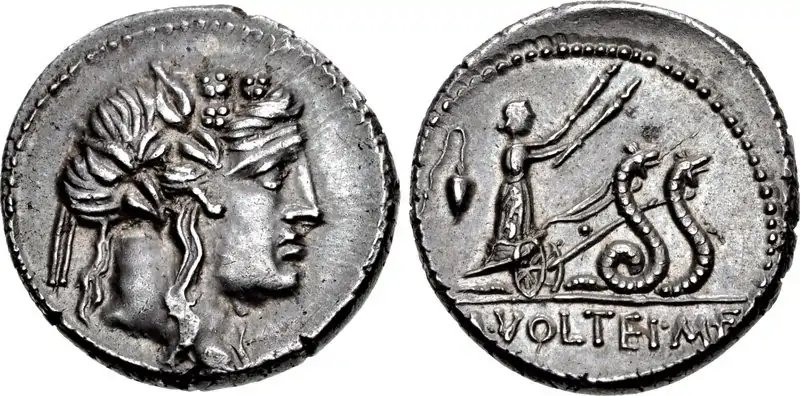
The god Liber appears opposite the agricultural goddess Ceres, who drives a biga of serpents on this silver denarius issued in 75 B.C. by the moneyer M. Volteius M.f. The reverse alludes to Ceres' search for her daughter Prosperina, whom Dis Pater (Pluto) had taken for his wife.
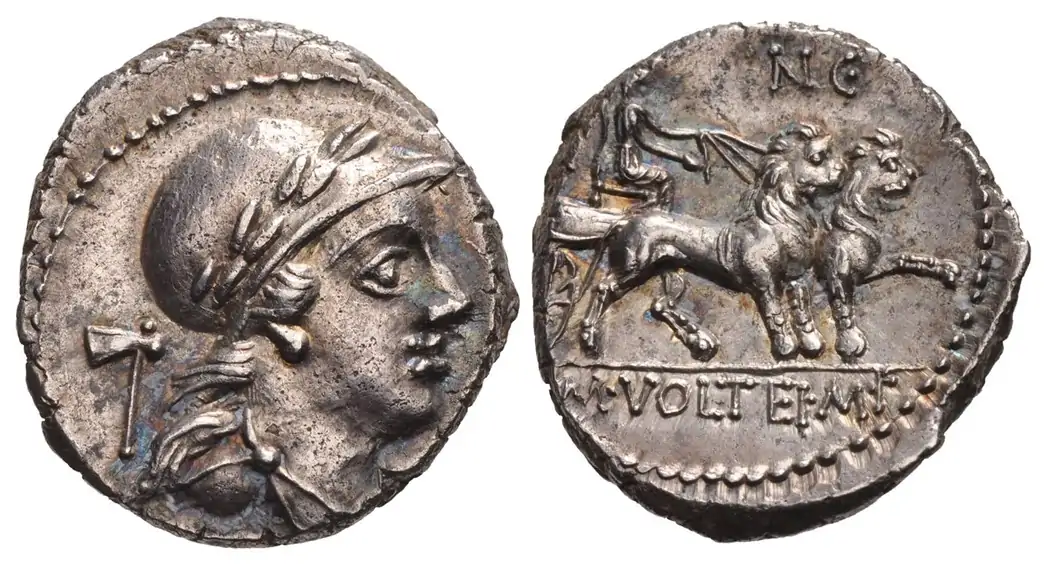
Another silver denarius issued in 75 B.C. by M. Volteius M.f. shows Cybele driving a biga of lions, an animal closely associated with her. The obverse shows her consort Attis, whose mythological origins (like Cybele) can be traced to modern-day Turkey. Rome adopted her cult after an oracle recommended her help in a war against Carthage, and she became known as Magna Mater.
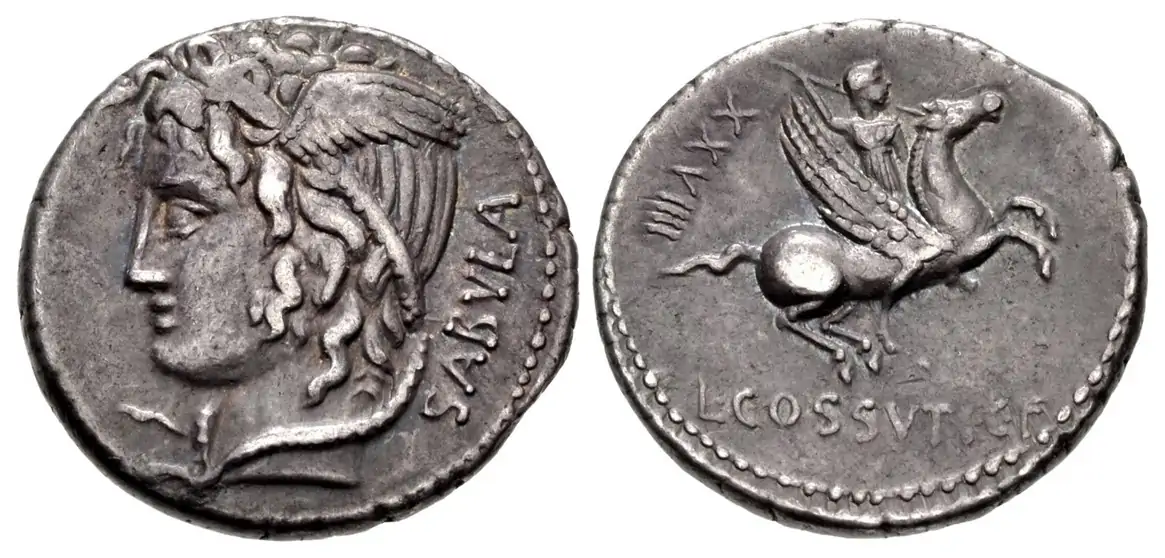
This silver denarius, struck in 72 B.C. for the moneyer L. Cossutius C.f. Sabula, shows the Corinthian hero Bellerophon riding the famous winged horse Pegasus, while the obverse shows Medusa.
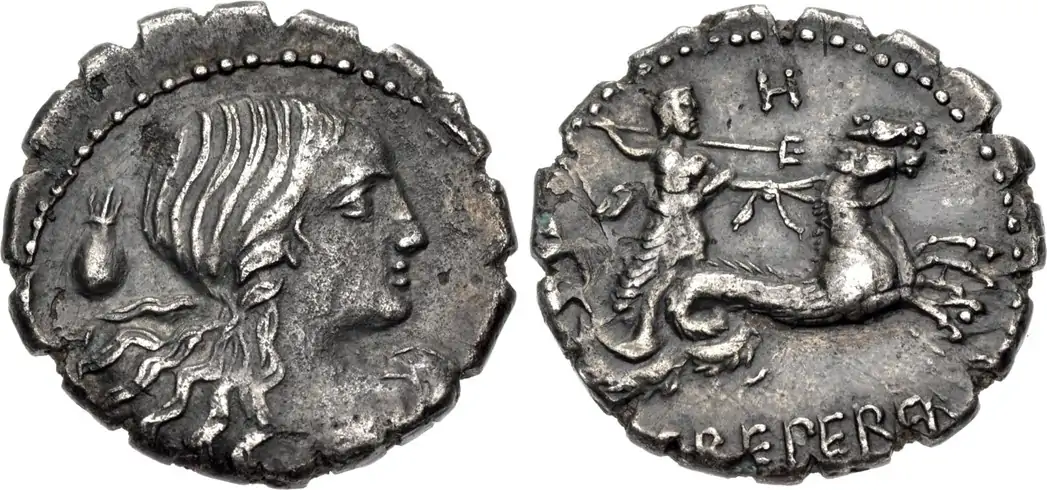
This serrate denarius was issued in 69 B.C. under Q. Creperius M.f. Rocus shows Neptune driving a biga of hippocamps, mythological sea monsters which were part horse, part fish. The obverse of the coin shows Amphitrite, goddess of the sea and Neptune's consort.
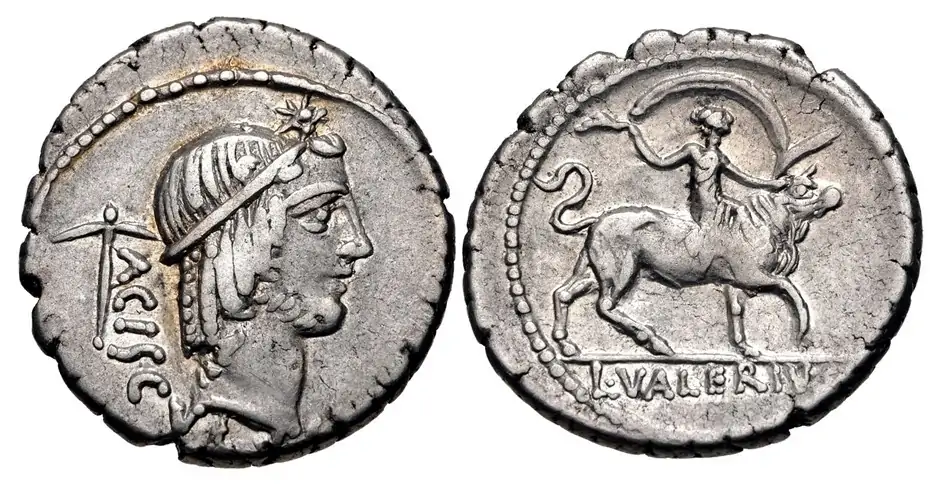
The last Republican denarius we'll feature is this piece, struck in 45 B.C. under L. Valerius Acisculus. It portrays the god Apollo opposite a scene of Europa riding a bull. Europa was a Phoenician princess whom Zeus seduced by taking the form of a white bull; he abducted her and swam to Crete, where she became a queen.
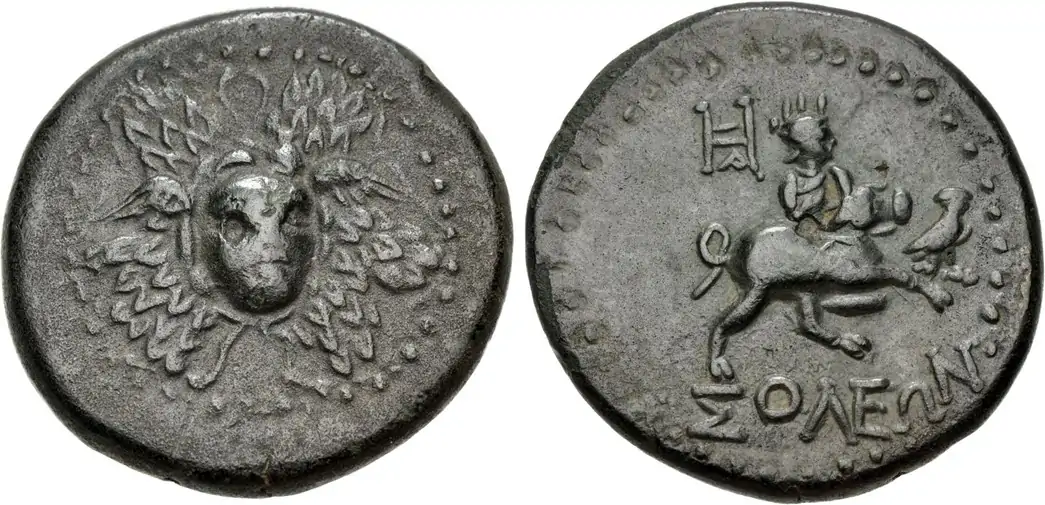
Another goddess — Aphrodite — rides a bull on this base-metal coin struck in the 1st century B.C. at Soloi, in Cilicia (in southern Turkey).
Roman Empire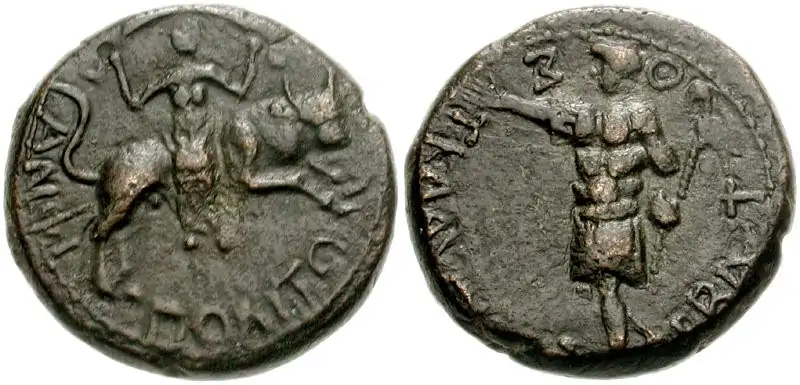
As the Roman Republic transformed into an empire with enormous reach, coins often featured images of emperors and local themes. This base-metal coin struck in Amphipolis, in Macedon, shows yet a third goddess — Artemis Tauropolos — riding a bull. Opposite is a figure of the Roman Emperor Claudius (A.D. 41-54).
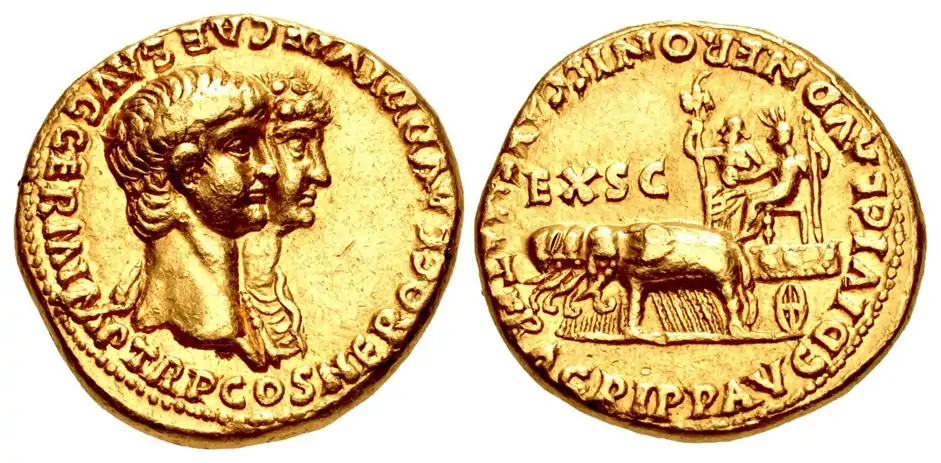
This gold aureus of the emperor Nero (A.D. 54-68) shows his predecessor Claudius drawn by four elephants. This aureus is from early in Nero's reign, for it portrays him with his mother, Agrippina the Younger, the last wife of Claudius. Nero later had his politically ambitious mother murdered.
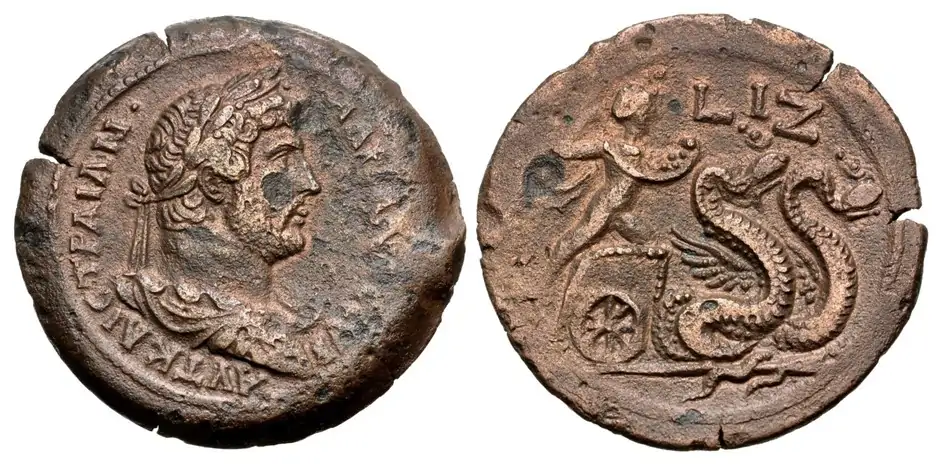
This base-metal drachm, struck for the emperor Hadrian (A.D. 117-138) at Alexandria, Egypt, shows the Greek hero Triptolemos driving a biga of winged serpents, which he'd received as a gift from Demeter. She also taught him the art of agriculture, which he shared with others.
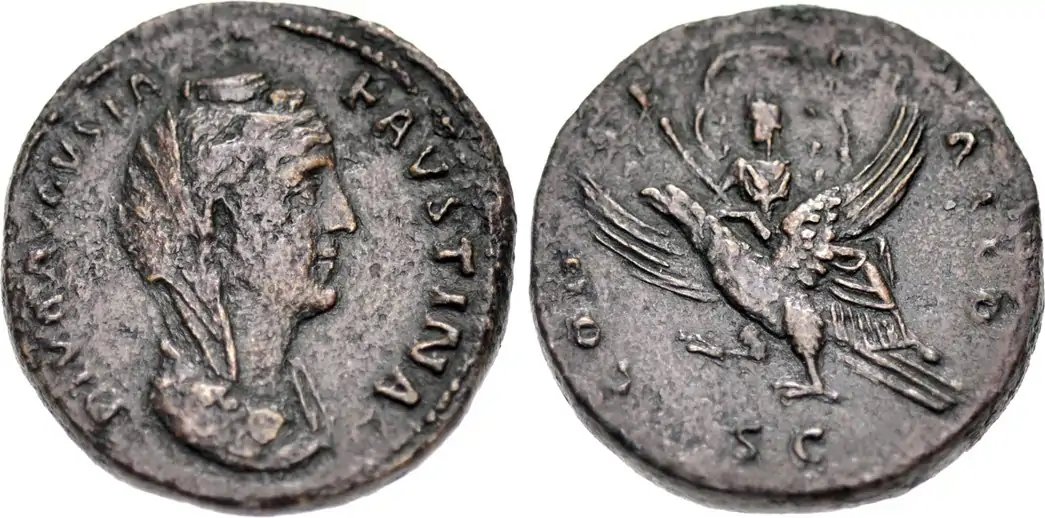
This base-metal sestertius shows the portrait of the deified empress Faustina Senior (formerly the wife of Emperor Antoninus Pius, A.D. 138-161) being carried into the heavens by an eagle. Faustina was one of a handful of Roman women who were declared divine after their death; you can read about them here.
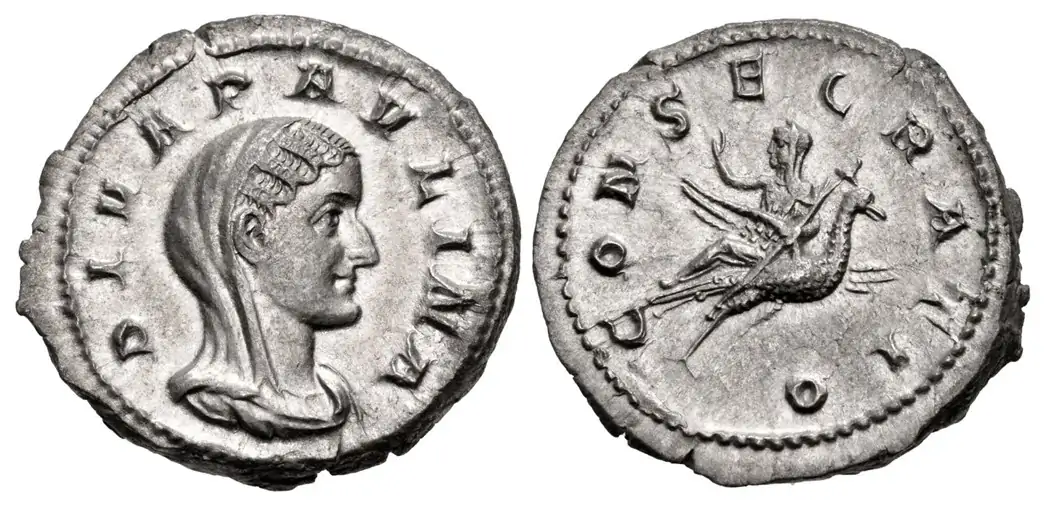
The peacock, an animal sacred to Juno, appears frequently on coins honoring deified Roman women. This silver denarius struck in A.D. 236 by the Emperor Maximinus I shows his late wife, Diva Paulina, ascending to heaven on a peacock.
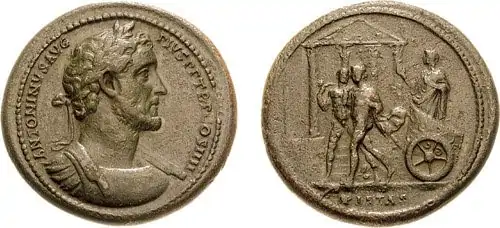
This base-metal medallion of Antoninus Pius (A.D. 138-161) shows two men pulling a woman in a cart. This echoes the tale of Kleobis and Biton, two brothers who pulled their mother to the temple of Hera when her oxen could not be found. Their mother asked Hera to reward them for their devotion, which she does in a bittersweet way by letting them fall asleep in the temple to die a peaceful death while in their prime.
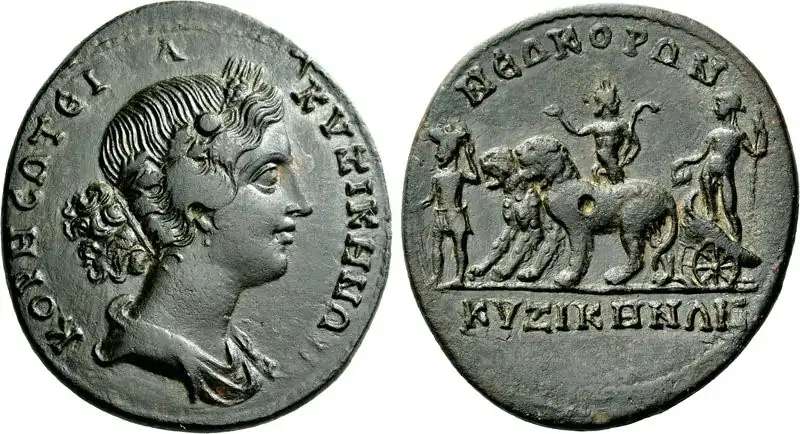
This possibly unique base metal medallion struck in the A.D. 180s at the city of Cyzicus in Mysia depicts the wine-god Dionysus in a chariot drawn by two panthers, animals intertwined with his mythology.
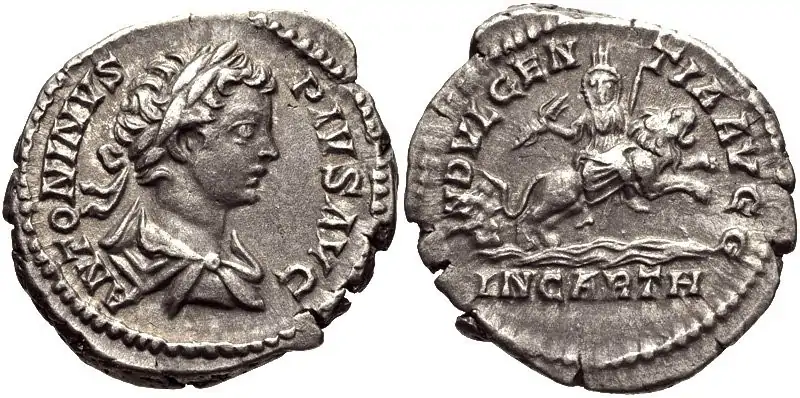
This silver denarius of Emperor Caracalla (A.D. 198-217) shows Dea Caelestis riding a lion, an animal closely associated with her. Dea Caelestis was worshipped in Carthage as a Romanized version of the Punic goddess Tanit, who was the chief deity of the city.
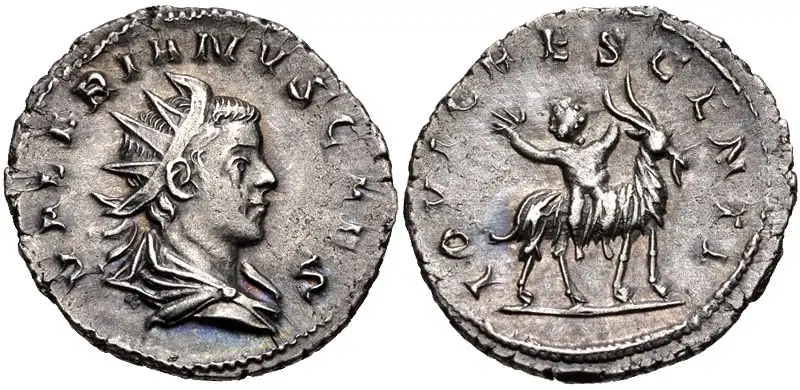
One of the last Roman coins to show an unusual ride brings us back to the beginning of Greek mythology. This silver double-denarius of Valerian II Caesar (A.D. 256-258) shows a young Jupiter (Zeus) riding a goat. One account of the god's earliest years describes how nymphs fed him milk from the she-goat Amalthea.
 Check out Ancient Coins on ebay
.




 Posted 08/21/2026 10:28 pm





