Another coin that was a bit of a devil to pin down, from Silandus (Silandos) in Lydia. Initially I thought it was similar to
https://rpc.ashmus.ox.ac.uk/coins/4/2857, but the reverse legend has a different orientation, i.e.reading clockwise from the top right. Wildwinds had the RPC 4 2857 coin as Mionnet IV, 814 (1), and below it another coin that had the legend in the correct format, as Mionnet IV, 814 (2).
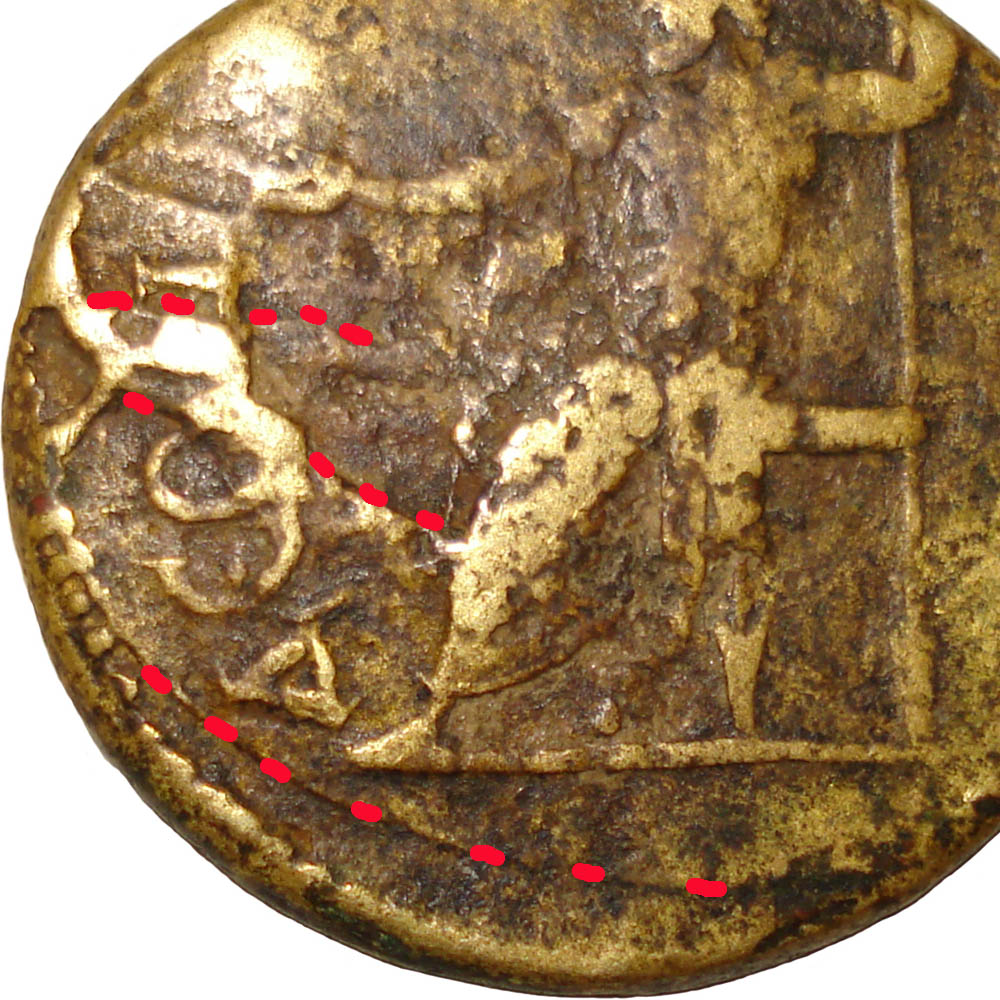
There is something odd about the left side of the reverse, especially the lower quadrant. Could it be a double strike or a die crack?
I didn't find much information about the city apart from the extract below from "Numismata Hellenica - A Catalogue of Greek Coins":
"SILANDUS Lydise.
Note.—This city is known only from its coins, which are both autonomous and imperial, and from its having been a Greek bishoprick under the metropolitan of Sardes. At Selenti, a village situated on a tributary of the Hermus, in the eastern part of Lydia, Mr. W. J. Hamilton found no remains of antiquity. Silandus, nevertheless, may be in that vicinity, the name perhaps having moved with the people,—a process of which there are many examples in Greece."
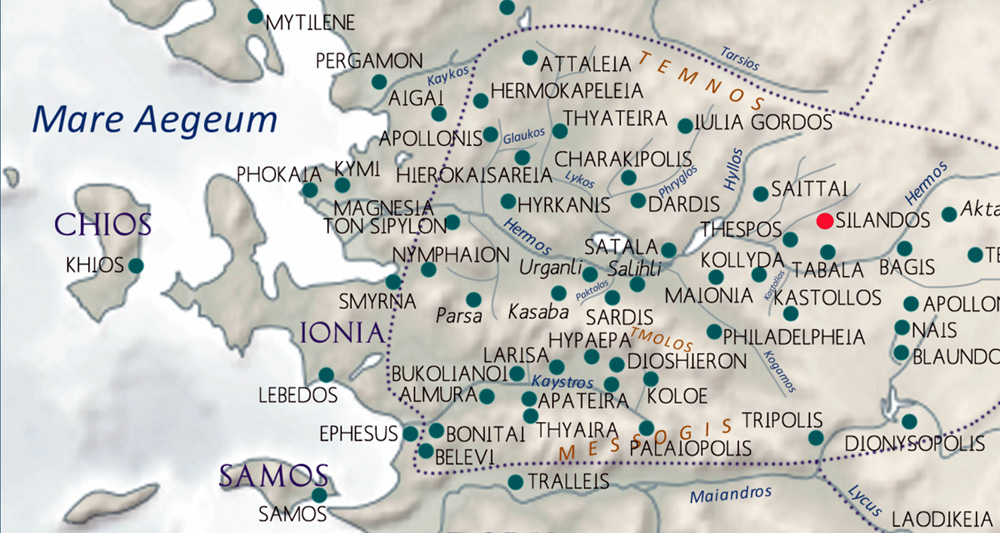
Despite what the extract says, the map above corresponds with the location of Silandus in the Barrington Atlas.
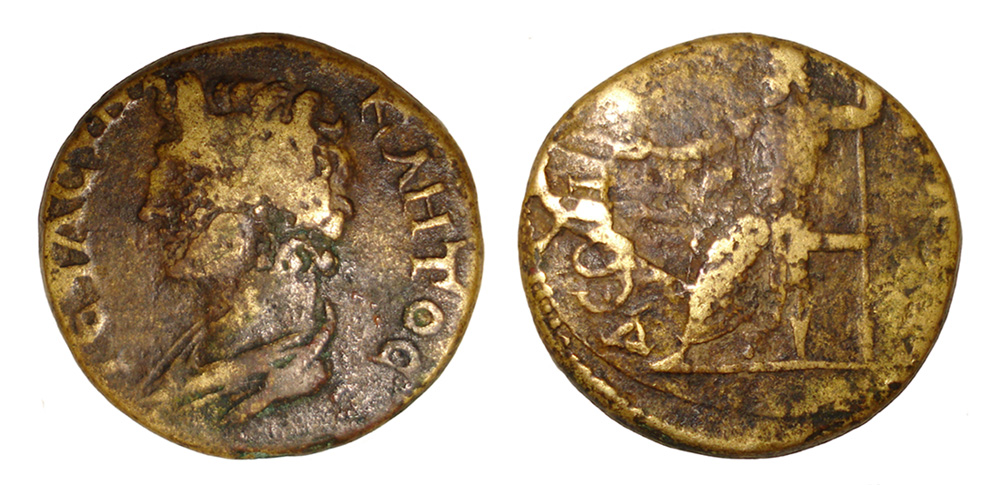
Lydia. Silandus. Semi-autonomous issue. 81-96 AD.
Obverse; Draped bust of the Roman Senate left. Obverse legend: IEPA CYNKΛHTOC. Reverse; Zeus seated left, holding patera and sceptre. Reverse legend: [CIΛAN]ΔEΩN. Bronze. Diameter: 25 mm. Weight: 9.86 gr.
Reference: Mionnet IV, 814 (2).










 Posted 06/28/2024 10:32 pm


