|
This page may contain links that result in small commissions to keep this free site up and running.

Welcome Guest! Registering and/or logging in will remove the anchor (bottom) ads and the security checks. It's Free!
To participate in the forum you must log in or register. | Author |
 Replies: 6 / Views: 892 Replies: 6 / Views: 892 |
|
|
New Member
United States
2 Posts |
Hi all, Need some help with a few coins I bought in Lebanon. Didn't cost me much, but I'm not sure if they are real or fake, and don't have any information on what they are. So looking forward to getting some help. I'll post these up over the next few week. The first one was sold to me as a Greek coin, made from bronze. It is 13mm diameter, about 4mm width, and weighs 4grams. On the reverse of the coin I determined the lettering reads: ΒΑΣΙΛΕΩΣ ΑΝΤΙΟΧΟΥ, or King Antiochus. I spent several hours researching and learned that there were several King Antiochus' from the Seleucid Empire. So not sure which one this coin refers to. I have also seen similar looking coins online being sold as reproductions. Looking for any information the community might be able to provide as to what this coin is, what date it might be from, is it real or not. etc... Thanks in advance. Sorry for the poor pictures, best I could do with Iphone. 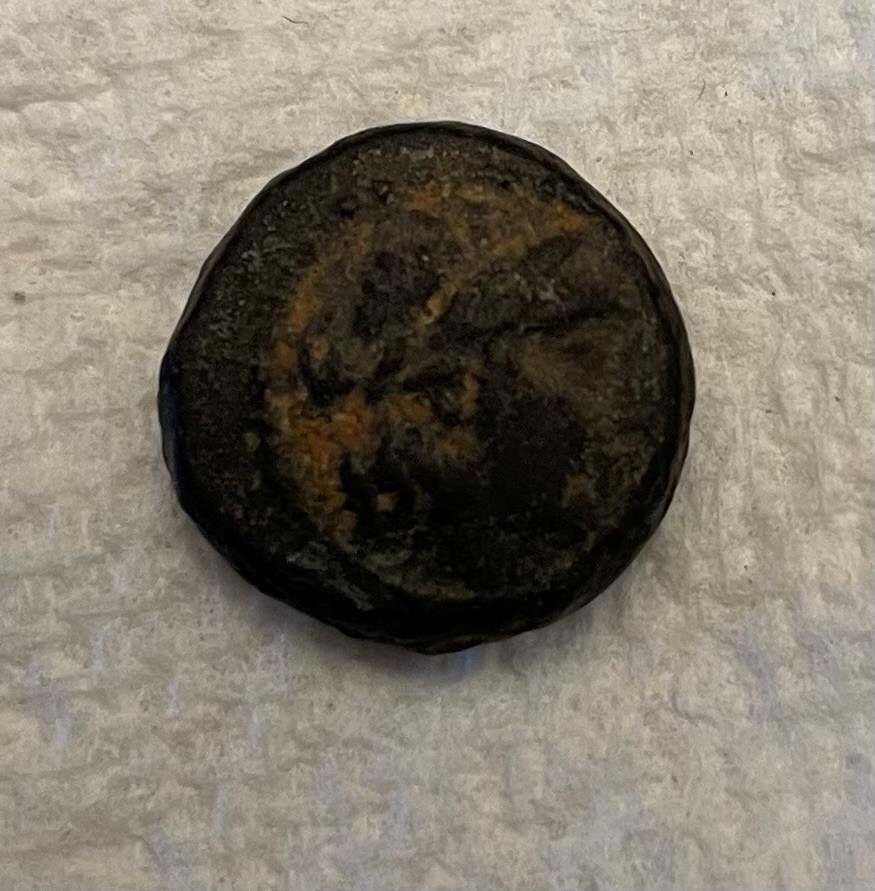 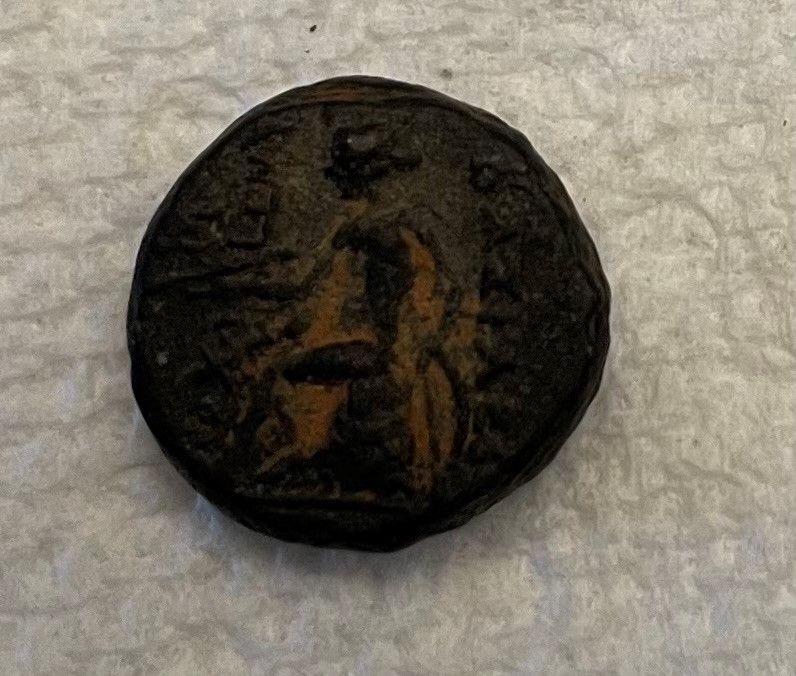 |
|
|
|
Moderator
 Australia
17031 Posts |
Hello and welcome.  There were indeed a large number of kings named "Antiochus" who ruled over what is now Lebanon. Your coin depicts on the reverse Apollo, seated on the omphalos rock, with a bow. Antiochus I, II, III, IV and VI all made coins of this general design, mostly silver but a few in bronze. Antiochus I or III would be my guesses, based purely on probability as theirs are most common. So, is it genuine? I would have to be skeptical. It is illegal in Lebanon to sell genuine ancient coins to tourists, so on that basis alone it is most likely a reproduction - selling reproductions is perfectly legal. People can and do smuggle genuine ancient coins out of Lebanon, but they don't usually use the tourist route to do so. It would also depend on when you obtained it, because the Lebanon government has not always had control over all of its territory - civil wars and invasions from neighbouring states have meant that, at certain times, enforcement of Lebanese law was impossible. However, if you were there as a tourist, I'd suspect that it was relatively peaceful and stable and Lebanese law would have been in full effect. Don't say "infinitely" when you mean "very"; otherwise, you'll have no word left when you want to talk about something really infinite. - C. S. Lewis
|
|
New Member
 United States
2 Posts |
Thanks for that info. I did buy the coins recently. The shop I bought them in did not have them on display. So they were not out on the shelf for sale in the store. The owner pulled out a box of coins at the request of a local that was acting as my guide there. That certainly could have been just for show though.
Any idea what denomination of coin this would be?
Edited by ACO175FO
07/31/2024 6:49 pm
|
|
Moderator
Australia
17031 Posts |
Quote:
The owner pulled out a box of coins at the request of a local that was acting as my guide there. That certainly could have been just for show though. I'd still be skeptical - anyone selling tourist souvenirs would be worried that you might be a government agent from the Ministry of Antiquities, and only offer you replicas, even if they swear to you that they were genuine. I haven't been to Lebanon, but most countries in the Middle East have similar laws, and have a similar attitude towards selling fake/replica ancient coins. I've been to Turkey, and every ancient site in Turkey has a mini-mall of street hawkers at the gate selling tourist souvenirs, including "ancient coins". If you tell them that you know those are all fake, they'll give you a sly look, and pull another box of coins out from under the table, this time with pricetags in hundreds of euros. These, too, will all be fake, but much better quality fakes. Quote:
Any idea what denomination of coin this would be? We don't really know what the names and nominal face values were for most ancient Greek bronze coins. Some Greek states at the time seemed to have a monetary system of 8 chalkoi to the obol, and 6 obols to the drachm (so 48 chalkoi to the drachm) - but how many chalkoi a specific coin might have been tariffed at, or even if they called them a "chalkos" at all ("chalkos" is simply the Greek word for "copper") is usually unknown - the coins themselves don't say, and if anybody back then wrote that kind of thing down, it has not survived. Unlike for silver coins, there is no obvious direct correlation between a coin's weight or size and it's intended denomination; bronze coins were essentially government-issued tokens. We could give them artificial labels, or best-guess labels, but they'd most likely be wrong. So we normally just classify them by diameter. Your coin is 13mm diameter? Then it's an "AE13". Don't say "infinitely" when you mean "very"; otherwise, you'll have no word left when you want to talk about something really infinite. - C. S. Lewis
|
|
Pillar of the Community
United States
3503 Posts |
Always wise to be skeptical when purchasing . especially ancients !
Lots of things are against the rules
But that doesn't mean they aren't commonly found in shoppes and 'tavernas' across the world
(Lebanon has much weightier issues at present)
This actually is a 'garden variety' AE of a type commonly found throughout the area
It could be a fake .
But more likely genuine
They were produced in the millions and are about as rare a rusty nail found on a New England roadside
Slightly more valuable .
But probably less than a cup of coffee
The Omphalos is an interesting "stone"
Not a rock !
Perhaps similar in nature to the 'Kaa'ba' found in Mecca the Omphalos represented the navel or bellybutton of Mother Earth and was located in sanctuary of Delphi where the priestess of Apollo served
Many scholars believe it to have been a black iron/nickel meteorite hence its origin from the god Cronos (Uranus)
The father of the Olympians
Try placing dark coins on a dark background
The camera is reading the light background
Hence the coin under exposes
|
|
Pillar of the Community
Portugal
767 Posts |
I agree. The photos are not good but looks genuine to me. There are many many millions of ancient coins around the ancient mediterranean. A government can ban their sale but they will continue to be found. And sold.
In some places those bans are a formality, because a government signed some agreement. Will only be activated when they want to grab some very valuable item. If you do not mind the law, and the value is low, who will bother with it?
|
|
Moderator
United States
198004 Posts |
 to the Community! |
| |
Replies: 6 / Views: 892 |
|
To participate in the forum you must log in or register.
Disclaimer: While a tremendous amount of effort goes into ensuring the accuracy of the information contained in this site, Coin Community assumes no liability for errors. Copyright 2005 - 2026 Coin Community Family- all rights reserved worldwide. Use of any images or content on this website without prior written permission of Coin Community or the original lender is strictly prohibited.
Contact Us | Advertise Here | Privacy Policy / Terms of Use
|
| Coin Community Forum |
© 2005 - 2026 Coin Community Forums |
| It took 0.37 seconds to rattle this change. |
 |
|
| |
| |




 Posted 07/31/2024 6:33 pm


