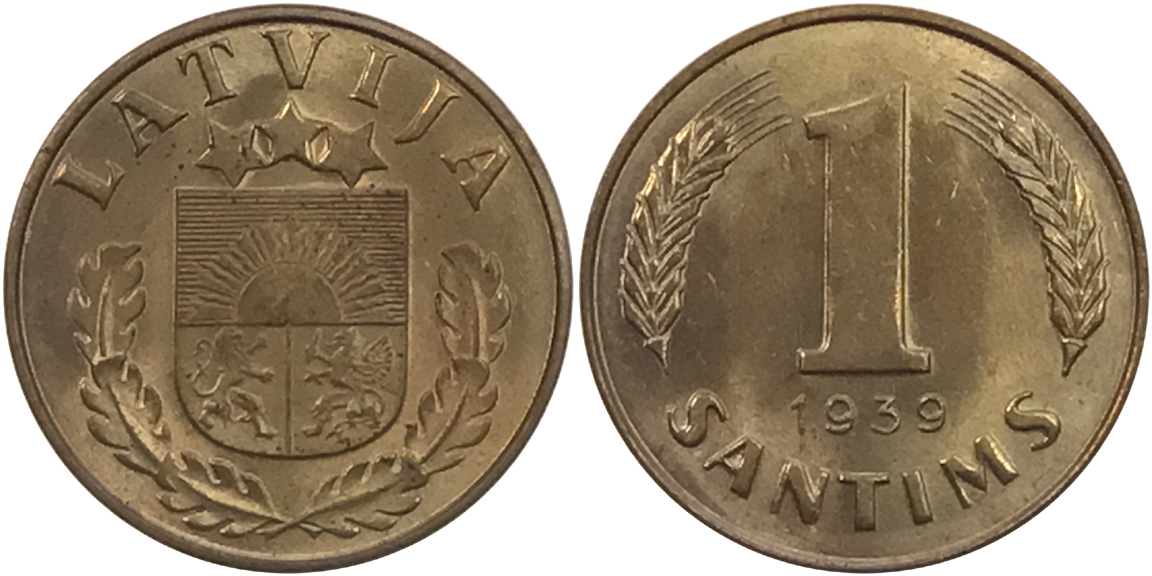
Belgium, 1 franc 1939 (French text first)
KM# 119,
Numista 1107I bought this little oddity for 1 ruble (circa 1.5¢ US) from a seller who, as far as I can tell, probably assumed it was corroded.
And so did I, until I realized that 1) it was absurdly unlikely for corrosion to make such pretty little holes right down the edge like that, and 2) even more so, it was absurdly unlikely for corrosion to make any significant holes
at all in a coin made of pure nickel, or at least not without making the rest of it unrecognizable.
I still don't know what the triangular heck happened with this coin; it's
probably some kind of planchet flaw, if only because I can hardly conceive of any form of
PMD that would leave a coin's insides looking like
that while keeping the rest of it so completely ordinary, but even so this isn't much of an explanation.
My best guess is that something that
really wasn't nickel (and probably wasn't even metal) ended up in the middle of the planchet strip and got melted/corroded off sometime in the process of planchet preparation (or, perhaps, dissolved away by environmental damage after minting). Still really weird though.
...I'm actually surprised that AFAICT I've never actually bothered to
weigh this coin. My guess would be about 4.2 grams (nominal weight is 4.5 grams), but it could easily be higher or lower.
If/when I end up back with my main collection in Moscow, I'll try to remember this and do the weighing. (I hope my 0.01 gram electronic scale is still there... I might have to get another one first.)
[
Previous thread, which was surprisingly hard to find due to lacking the expected keywords "Belgium", "franc", or "1939". Maybe I should make a new one with better phrasing...]








 First Page
 Previous Page



 Posted 11/24/2024 09:48 am