NGC -
A missing countermark and inconsistent details reveal this coin isn't genuine.Yugoslavia was formed after World War I, combining Serbia with the former lands of the Austria-Hungary Empire. From 1931 to 1934, Yugoslavia struck Gold Dukats weighing 3.48 grams (about an eighth of an ounce). The coins' obverse shows King Alexander, who ruled from 1921 until his assassination in 1934, while the reverse shows Yugoslavia's coat of arms.
 Check out 1932 Dukats on ebay
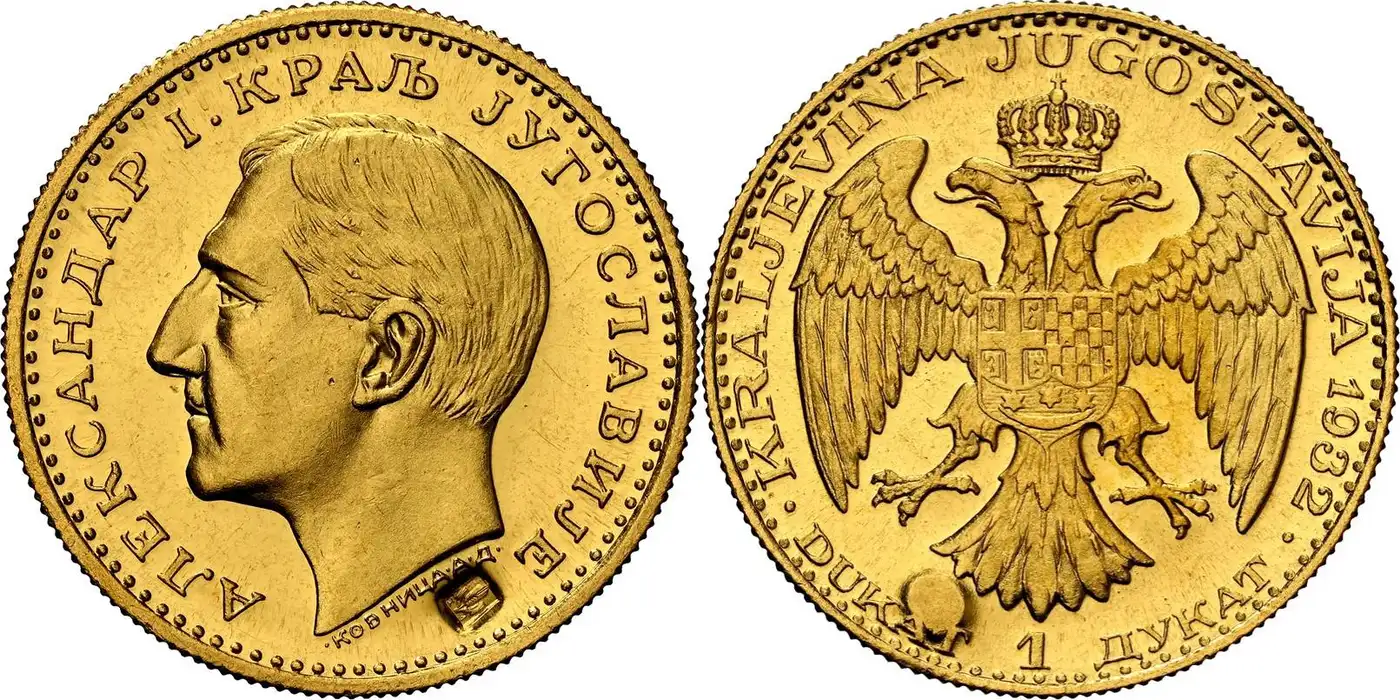 Genuine Yugoslavia 1932 Dukat
Examples of the 1932 Dukat in higher grades contain hundreds of dollars of numismatic value in addition to the value of the gold. NGC recently received a purported example of this coin.
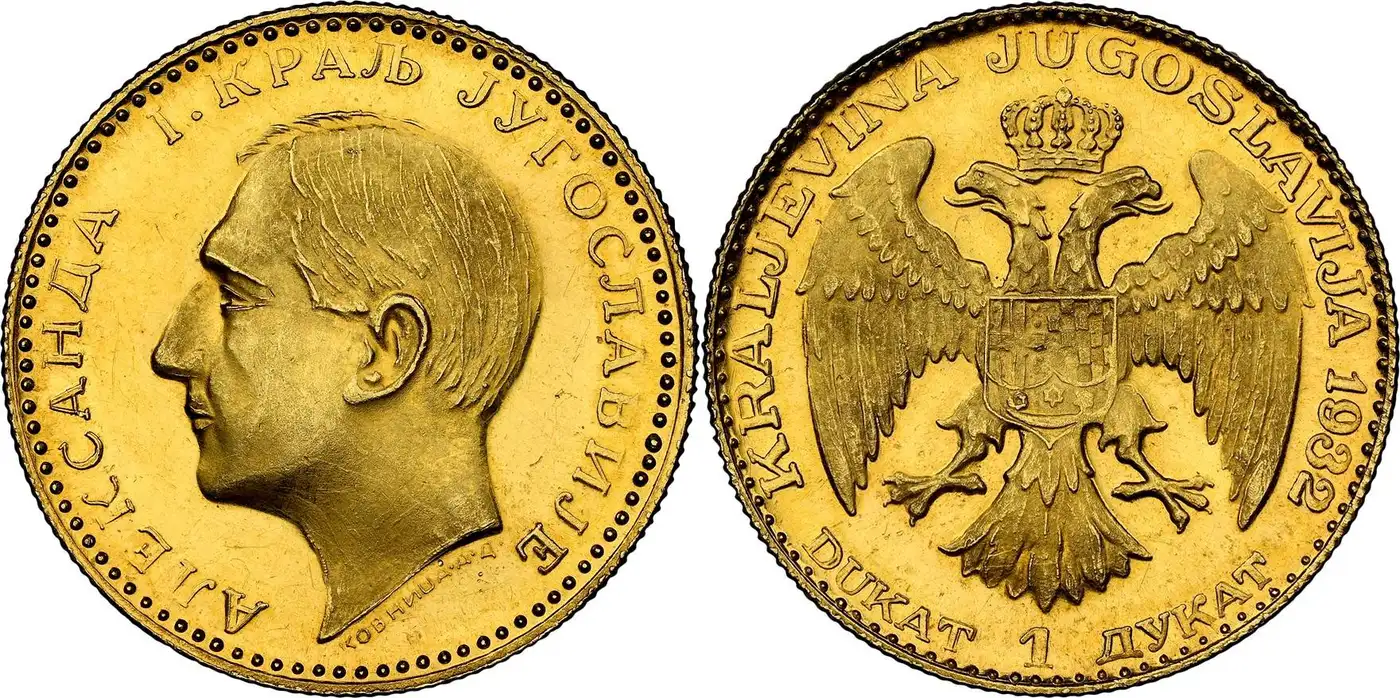 Counterfeit Yugoslavia 1932 Dukat
An immediate red flag with this coin is the lack of a countermark below the base of the king's neck. Genuine 1932 examples (NGC has certified more than 200 of them) have a corn countermark indicating Serbia.
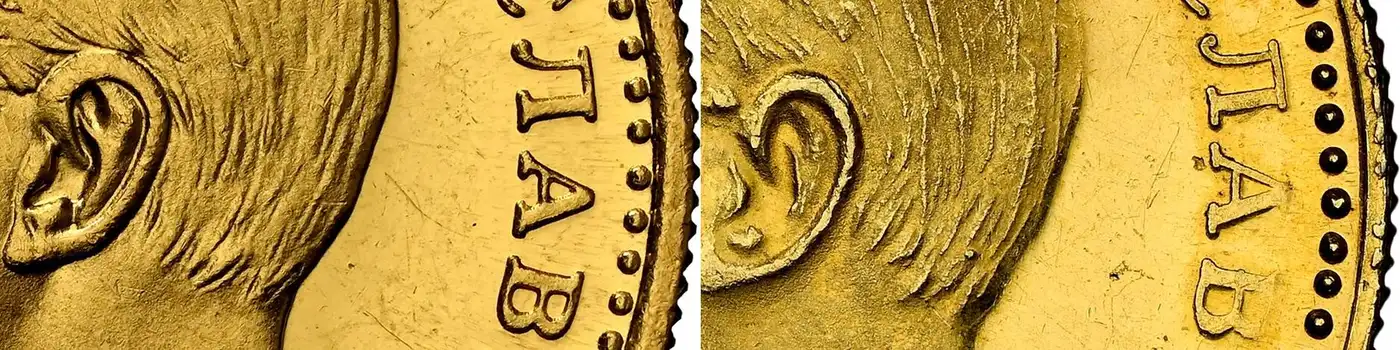 Close-ups of genuine (left) and counterfeit
Additionally, there are inconsistencies in the design. Note the missing detail in the king's inner ear on the counterfeit as well as the greater distance between the obverse rim and the dots adjacent to it. The letters also appear to fade out in part of the Cyrillic word for Yugoslavia to the right of the king's head on the counterfeit.
Check out 1932 Dukats on ebay
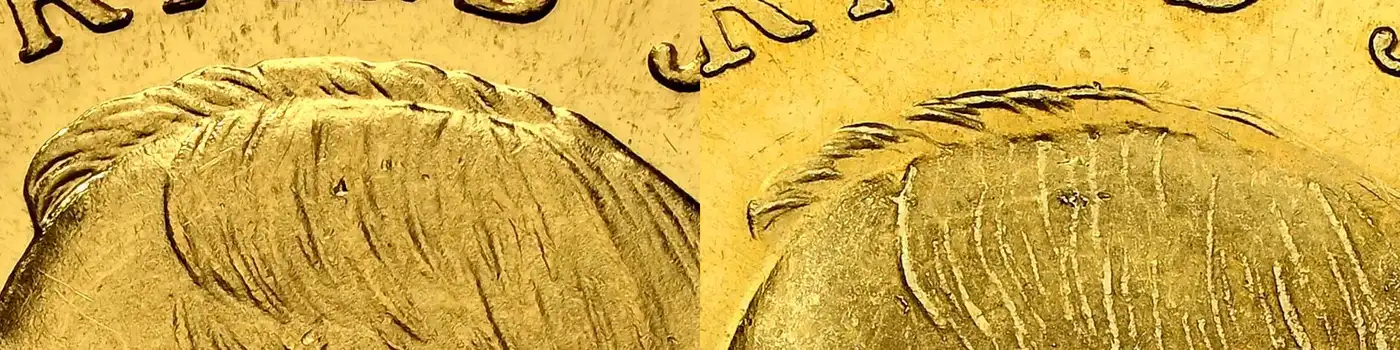 Close-ups of genuine (left) and counterfeit
Additionally, the top of the king's hair (above the part) appears to be disconnected from the rest of his head.
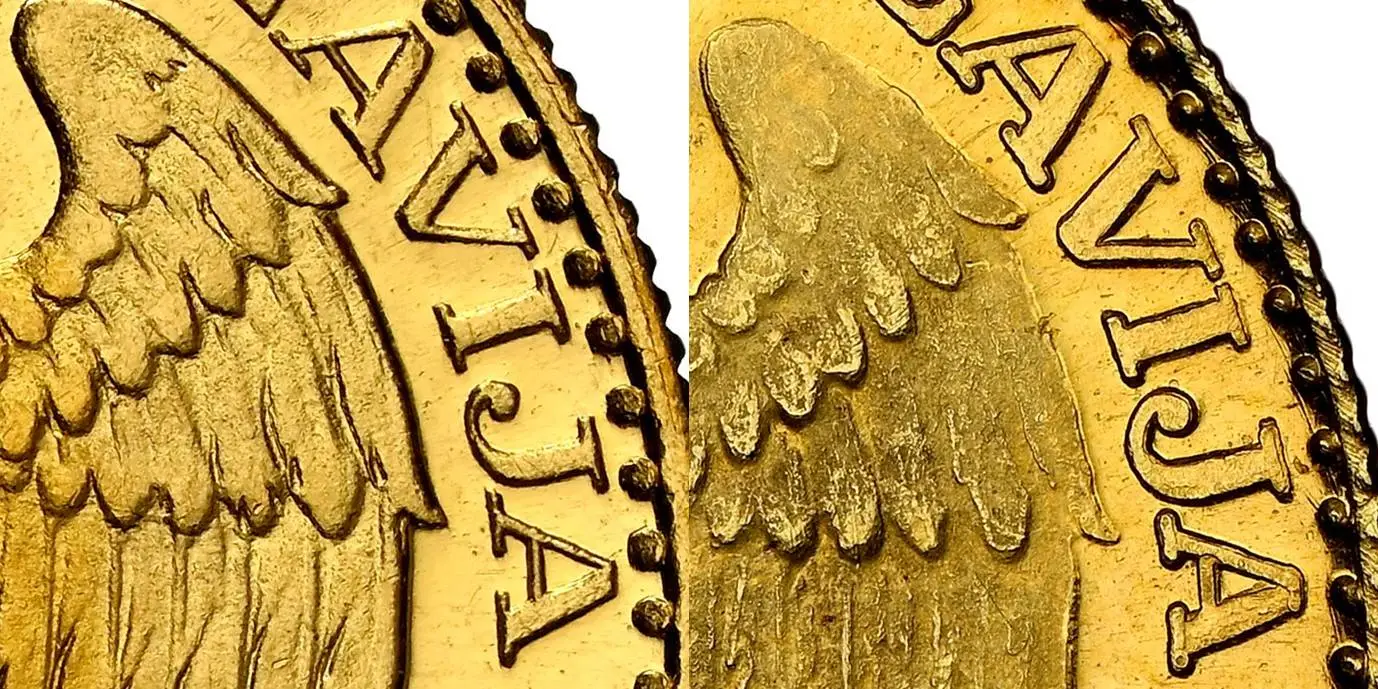 Close-ups of genuine (left) and counterfeit
The problems continue on the reverse. Note how thick the letters are compared to the elegant ones on a genuine example. Meanwhile, fine feather details are completely absent on the fake.
Despite the flaws in its design, the counterfeit is struck in gold — an important reminder that metal content alone is not enough to establish authenticity.
Check out 1932 Dukats on ebayRead More: Counterfeit Detection Series 



 Posted 03/04/2026 2:37 pm





