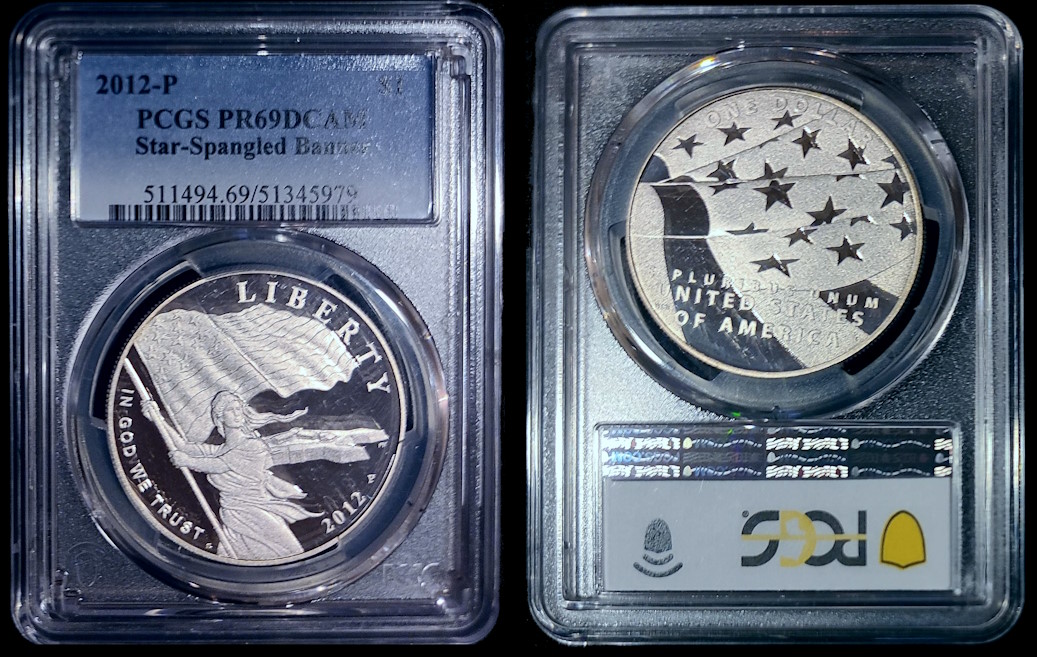
Collectors of the modern series of United States ("US") commemorative coins are likely to be familiar with the two-coin program issued in 2012 to help mark the 200th Anniversary of the US' "Star-Spangled Banner" ("SSB"). The coin program became Public Law via authorization of a bill introduced in the House of Representatives ("House") during the 111th Congress; it was signed by US President Barack Obama on August 18, 2010.
2012 Star-Spangled Banner Gold Half Eagle
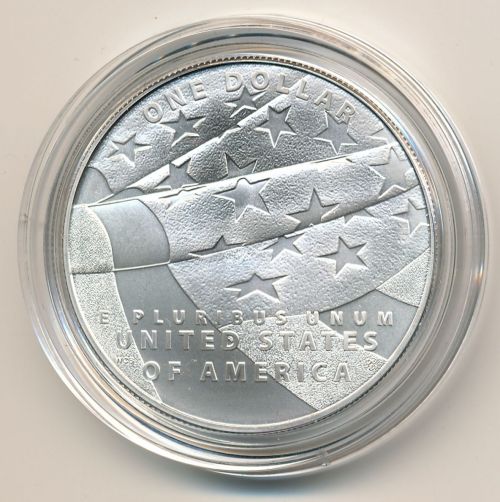
 2012 Star-Spangled Banner Silver Dollar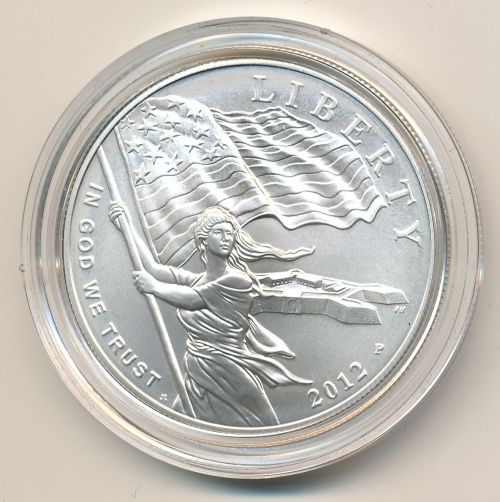
But what became Public Law via the 111th Congress, was not what was originally introduced in the 110th Congress.
Related bills were introduced in the House in the 110th by CA "Dutch" Ruppersberger (D-MD) in June 2007, and in the Senate by Benjamin Cardin (D-MD) in September 2008.
The House bill was introduced during the Congress' First Session, and was titled "Star-Spangled Banner and War of 1812 Bicentennial Commemorative Coin Act". Its stated purpose was "to mint coins in commemoration of the bicentennial of the writing of the 'Star Spangled Banner' and the War of 1812, and for other purposes."
The Senate bill, introduced during the Second Session of the 110th Congress, featured a shorter Title - "Star-Spangled Banner Bicentennial Commemorative Coin Act". (Dropping "War of 1812".) The bill stated its purpose as "to mint coins in commemoration of the bicentennial of the writing of the 'Star-Spangled Banner', and for other purposes." (Again, dropping "War of 1812".)
Rather than the two-coin program presented in the 111th Congress, the 110th Congress bills proposed only the minting of a Silver Dollar.
The two bills shared historical highlights in a common "Findings" section that provided a very brief history lesson regarding the "Star-Spangled Banner":
"The Congress finds as follows:
"(1) During the War of 1812, on September 13, 1814, Francis Scott Key visited the British fleet in Chesapeake Bay to secure the release of Dr. William Beanes, who had been captured after the burning of Washington, DC.
"(2) The release was completed, but Key was held by the British overnight during the shelling of Fort McHenry, one of the forts defending Baltimore.
"(3) In the morning, Key peered through clearing smoke to see an enormous American flag flying proudly after a 25-hour British bombardment of Fort McHenry.
"(4) He was so delighted to see the flag still flying over the fort that he began a poem to commemorate the occasion, with a note that it should be sung to the popular British melody "To Anacreon in Heaven".
"(5) In 1916, President Woodrow Wilson ordered that it be played at military and naval occasions.
"(6) In 1931, the "Star-Spangled Banner" became our National Anthem."The House bill called for the striking of up to 350,000 2012-dated Silver Dollars with a design "emblematic of the War of 1812 and particularly the Battle for Fort McHenry that formed the basis for the 'Star-Spangled Banner'". The Senate version of the proposal sought the same number of coins, but brought more focus to Baltimore and the "Star-Spangled Banner", stating that the coin designs were to be "emblematic of the battle for Baltimore that formed the basis for the "Star-Spangled Banner". The Senate bill definitely sharpened the focus of the commemorative coin proposal.
The Issue Price of each issued Proof or Uncirculated coin was to include a $10 surcharge. As introduced in the House, the bill specified that collected surcharges were to be paid to the Star-Spangled Banner and War of 1812 Bicentennial Commission "for the purpose of supporting bicentennial activities (including providing coordination, advice, and assistance to Federal agencies, States, localities, and other organizations for such activities), educational outreach activities (including supporting scholarly research and the development of exhibits), and preservation and improvement activities relating to the sites and structures relating to the War of 1812."
The surcharge distribution details were later amended to specify the Maryland War of 1812 Bicentennial Commission as the surcharge recipient for its use in "supporting bicentennial activities in collaboration with and aiding the Star-Spangled Banner and War of 1812 Bicentennial Commission as it provides coordination, advice, and assistance to Federal agencies, States, localities, and other organizations for such bicentennial activities, educational outreach activities (including supporting scholarly research and the development of exhibits), and preservation and improvement activities relating to the sites and structures relating to the War of 1812."
Though the language of the two surcharge provisions is similar, the amended version switched the financial control of the surcharge funds to the Maryland War of 1812 Bicentennial Commission, a Maryland State-authorized Commission. The Commission was to use the funds as it engaged with the (proposed) Star-Spangled Banner and War of 1812 Bicentennial Commission. The Star-Spangled Banner and War of 1812 Bicentennial Commission was a Federal-level Commission proposed in Congress, but not enacted. This lack of authorization for the Federal Commission led to future changes of the surcharge distribution language.
Once approved by the House, the amended bill was sent to the Senate for its consideration. It was referred to the Senate Committee on Banking, Housing, and Urban Affairs, but was not reported by the Committee.
In an effort to re-energize consideration of the coin bill, Senator Cardin of Maryland re-introduced the bill in the Second Session of the 110th Congress.
In the new bill, the reference to the Star-Spangled Banner and War of 1812 Bicentennial Commission was dropped from the surcharge distribution specifications:
"all surcharges received by the Secretary from the sale of coins issued under this Act shall be paid to the Maryland War of 1812 Bicentennial Commission for the purpose of supporting bicentennial activities, educational outreach activities (including supporting scholarly research and the development of exhibits), and preservation and improvement activities pertaining to the sites and structures relating to the War of 1812."
Upon its introduction, the new bill was referred to the Senate Committee on Banking, Housing, and Urban Affairs (the same Senate Committee that considered the House-approved bill during the First Session of the 110th Congress), but, as with its predecessor, it stalled.
As a result, no "Star-Spangled Banner" or War of 1812 commemorative coin was to be authorized by the 110th Congress.
History tells us, however, that when the coin bill was re-introduced in the 111th Congress, it fared better - it also included a Gold Half Eagle. The two-coin commemorative coin program was successfully authorized by Congress and signed into law by US President Barack Obama. (Might be a good topic for a future post!)
If you'd like to read about the Mint's Special Packaging option for the SSB Silver Dollar, check out:
-
2012 SSB Bicentennial Silver Dollar SetFor other of my posts about commemorative coins and medals, including more Modern Issue What If? stories, see:
Commems Collection






 Posted 10/26/2025 6:50 pm


 Uncirculated American Silver Eagles