| Author |
 Replies: 12 / Views: 1,247 Replies: 12 / Views: 1,247 |
|
|
Pillar of the Community
United States
6944 Posts |
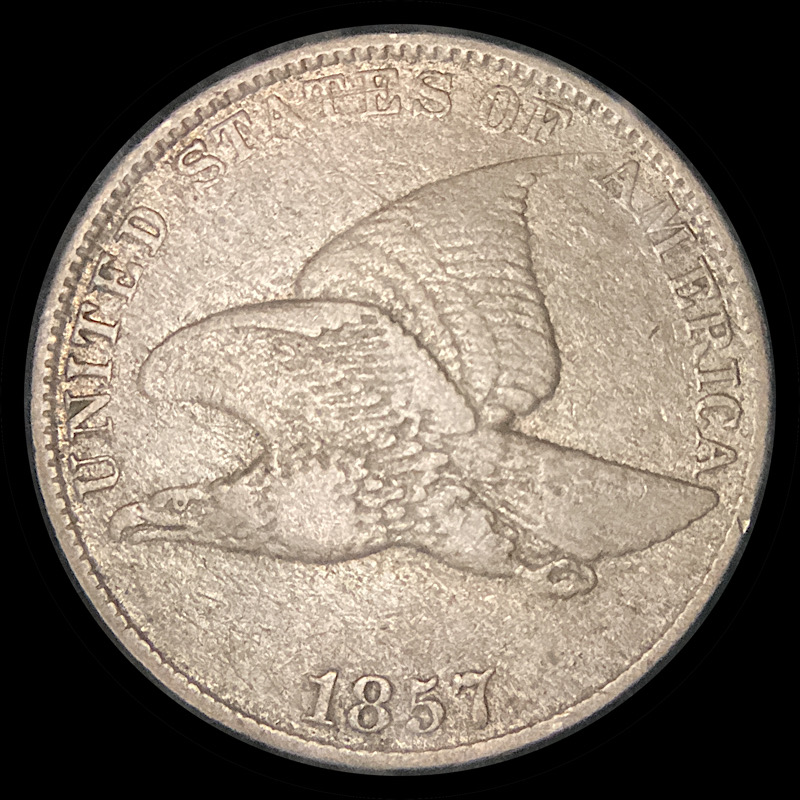
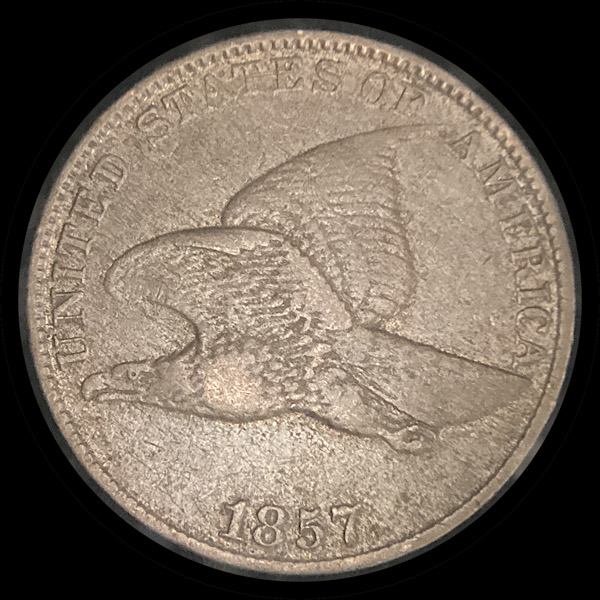
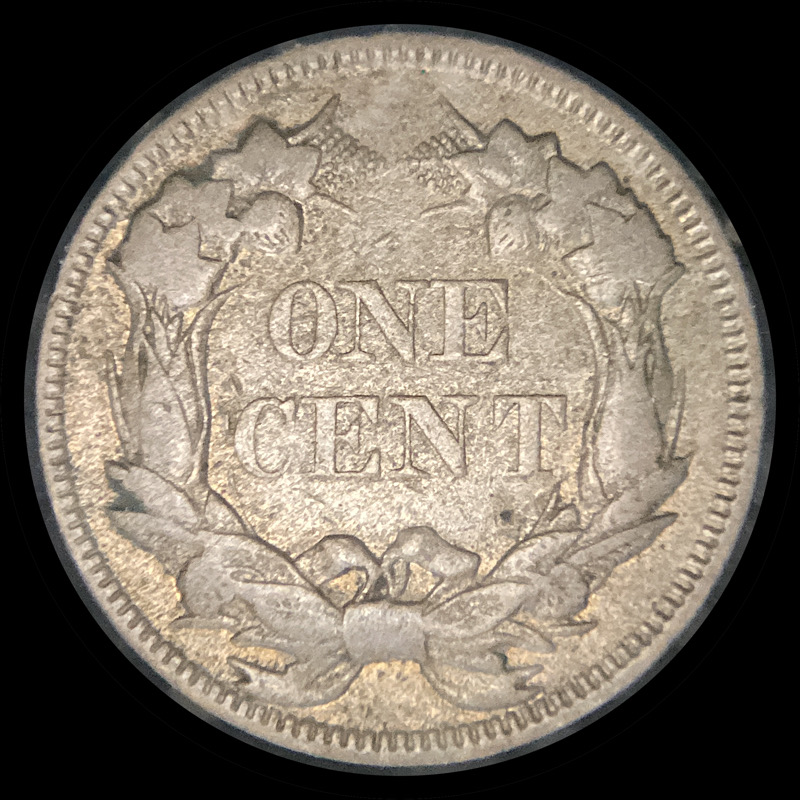
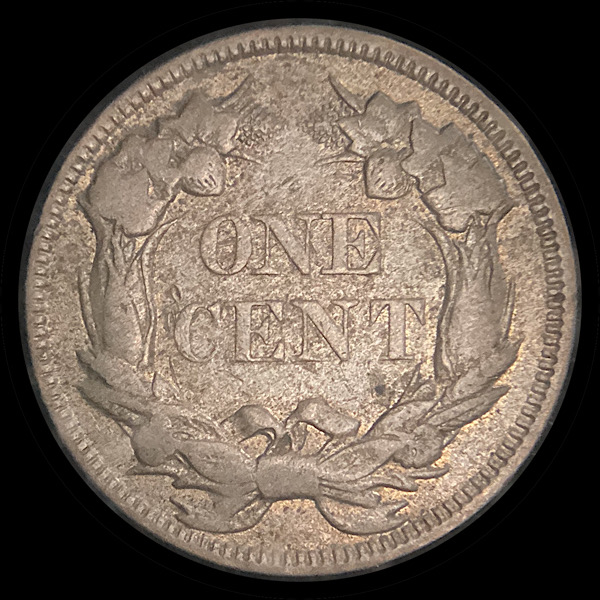
I posted this question on an individual coin thread, but I suppose it is better posed by itself. After soaking a Flying Eagle cent for several days, I have noticed that some of the dark olive patina is changing to a lighter red and developing some metal reflectiveness. I believe the cent patina is very slowly getting dissolved by the pure acetone. Is there a point at which the acetone will damage the coin surface? Or can one soak a coin indefinitely in pure acetone without the coin being considered damaged or cleaned? |
|
|
|
Moderator
 United States
109052 Posts |
great question, I have not noticed any damage to a coin (copper) after a 2 day soak.
what do you mean by 'Extremely long"?
|
|
Bedrock of the Community
United States
27514 Posts |
Acetone cannot chemically react with the metal of a coin. Quote:
I believe the cent patina is very slowly getting dissolved by the pure acetone. The acetone is probably slowly removing the grime that has accumulated on your coin over the last 168 years, exposing the actual surfaces of the coin itself. I have seen directions to not expose copper coins in acetone to direct sunlight, as photodegradation products of acetone can react with copper. Inordinately fascinated by bits of metal with strange markings and figures
|
|
Pillar of the Community
 United States
6944 Posts |
Quote:
what do you mean by 'Extremely long"? We are presently at approximately 96 hours. Quote:
I have seen directions to not expose copper coins in acetone to direct sunlight, as photodegradation products of acetone can react with copper. I knew about the sunlight, so the acetone is in a clear glass jar on a shelf in the basement. I had assumed (but don't really know) that the flourescent lights down there don't produce the same intense reaction as UV light, and they are off most of the time. Quote:
The acetone is probably slowly removing the grime that has accumulated on your coin over the last 168 years, exposing the actual surfaces of the coin itself. That is definitely my hope! The lightening on the obverse is mostly around the rim edge right now. On the reverse, it is happening more at the edges of the wreath, and between the wreath and the rim. My inclination would be to leave it in there for weeks, as long as the process slowly continues, and it isn't harming the coin itself. |
|
Moderator
Australia
17017 Posts |
There is an academic research paper from 2001, which the anti-acetone crowd love to trot out, which demonstrates that acetone, when exposed to both bright shiny copper and UV light (including direct and indirect sunlight) for at least 18 hours, can photocatalyse into acetic acid which then is free to start to erode the copper. A control sample exposed to the same acetone in complete darkness showed zero reaction or evidence of acetic acid formation, thus proving it is indeed a photocatalytic effect. The paper in question: https://www.academia.edu/7718029/Ph...ne_on_copperSo, is this likely to happen with your coins? I wouldn't have thought so. Your coin is not "bright shiny copper", it is oxidized copper, and it has to be raw metallic copper that acts as the photocatalyst. I'm also assuming you aren't sitting out in bright sunlight or under a UV lamp, so the light probably isn't bright enough to cause the effect over the "couple of days" duration. Finally, they needed a photomicroscope to see the damage to the copper, so visible-to-the-eye discoloration is unlikely to occur over that timeframe. That being said, it is recommended not to use ultra-long soaks in acetone, for this reason, especially for red unc copper coins. Long soaks are also kind of redundant; if the goo doesn't come off in acetone after a quarter-hour at most, a longer soak is unlikely to improve things. Don't say "infinitely" when you mean "very"; otherwise, you'll have no word left when you want to talk about something really infinite. - C. S. Lewis
|
|
Bedrock of the Community
United States
27514 Posts |
Quote:
Long soaks are also kind of redundant; if the goo doesn't come off in acetone after a quarter-hour at most, a longer soak is unlikely to improve things. Agreed. Use Bad Thad's polarity ladder: https://goccf.com/t/57008#447106Distilled water --> acetone --> xylene. If these don't take it off, consider it a part of the coin now. Inordinately fascinated by bits of metal with strange markings and figures
|
|
Moderator
Australia
17017 Posts |
Oh yes, the paper also says the reaction happens in the presence of fully humid air, under which the acetone was allowed to evaporate to dryness. If the atmosphere is dry and there's not buckets of water lying around, and you don't allow the acetone to slowly and completely evaporate away, it's also unlikely to occur.
Don't say "infinitely" when you mean "very"; otherwise, you'll have no word left when you want to talk about something really infinite. - C. S. Lewis
|
|
Pillar of the Community
United States
6944 Posts |
|
|
Pillar of the Community
Canada
9999 Posts |
I would now try Verdi-Care , that may give you what you want.
|
|
Pillar of the Community
Portugal
747 Posts |
I have noticed that silver with pvc goo and corrosion spots on top can benefit from longer acetone baths. Half an hour or one hour. Did wonders on one of my coins that had been victim of an old album.
|
|
Pillar of the Community
 United States
8069 Posts |
Thanks for posting the link to the article, Sap.
Two comments:
1. I don't like that there was no control experiment without any acetone, but I don't think it affects the main conclusion on photodegradation of acetone and corrosion of the copper..
2. MORE IMPORTANTLY ... the analysis of the sample that was NOT exposed to sunlight still showed the presence of carbonyl carbon on the surface of the copper. That means that acetone molecules were stuck to the surface, and presumably as soon as exposed to light, the reaction to make acetic acid and corrode the copper would then have proceeded!
Having seen that, I would have expected the authors to do that obvious follow up experiment, but maybe they only had one shot at using the XPS equipment.
This highlights the importance of rinsing off any remaining acetone after your soak.
It should also make us think about things like the same reaction possibly occurring in CuNi coins (which are mostly copper).
Edited by tdziemia
11/03/2025 11:33 am
|
|
Moderator
United States
197031 Posts |
Quote:
I would now try Verdi-Care , that may give you what you want.   |
|
Moderator
United States
197031 Posts |
Quote:
I have noticed that silver with pvc goo and corrosion spots on top can benefit from longer acetone baths. Half an hour or one hour. Did wonders on one of my coins that had been victim of an old album. I do not believe you can ever soak a coin for too long, as long as you do not let it evaporate and replace the bath with fresh acetone as it gets saturated. |
| |
Replies: 12 / Views: 1,247 |
|







 Posted 11/02/2025 8:51 pm