| Author |
 Replies: 10 / Views: 707 Replies: 10 / Views: 707 |
|
|
New Member
China
4 Posts |
Hello everyone! I am new to this forum and this is my first topic. I am looking for ancient Byzantine silver coin Miliaresion (Basil II and Constantine VII) and found this one, which is badly restored but at a low price, however, I think the bust of Basil II on the obverse seems weird, the cloth of the emperor have no "dots". So I am not sure whether its real or fake, could anyone share some insights? (The third picture is a genuine Basil II and Constantine VII Miliaresion, the cloth of Basil II have "dots"). 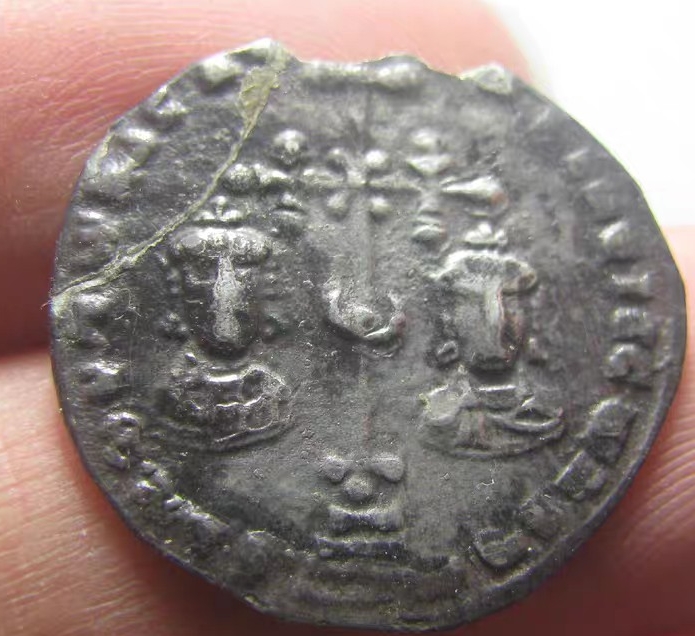 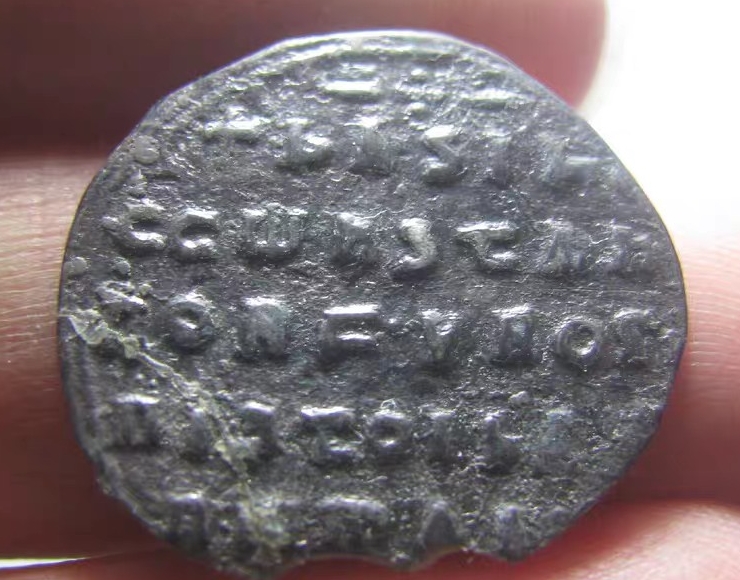 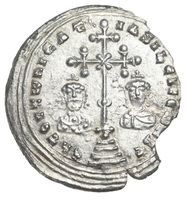 |
|
|
|
Bedrock of the Community
 United States
10601 Posts |
Looks like that small piece cracked off and is glued on?
|
|
New Member
 China
4 Posts |
Yes, they glued the fallen-off pieces back onto the coin, and the restoration is very shoddy. Do you think this coin is genuine?
|
|
Pillar of the Community
 United States
8076 Posts |
 I think it is genuine. Based on the number of surviving specimens these were made in large quantity from numerous dies, so it is probably die variation. Or just a worn die/weak strike (it's possible the dots are there on the emperor's robe, but are faint). Edited by tdziemia
11/08/2025 09:49 am
|
|
CCF Advertiser
United States
1318 Posts |
I think it is genuine as well. That would be some elaborate fake to make such a thing and glue it that way. When I have a delicate coin like that with a break I carefully fit a case around it, and let it sit static in such a way it can't separate the two parts. Like a slab case with that foam plastic insert I cut with a razor to fit the coin dimensions. Then when I seal the case with the info I write, don't take out of the case as it is separated along what looks like a crack in the coin in the case. That glue work is just never going to work well. And I never understand, that if someone were going to try such a glue, why not just get a fine tip soldering iron and hard silver wire solder? They plan on making something to last forever in a collection, then take the time and try that perhaps. But not that glue.
|
|
Pillar of the Community
United States
1122 Posts |
Quote:
... I carefully fit a case around it, and let it sit static in such a way it can't separate the two parts. That's what I did. 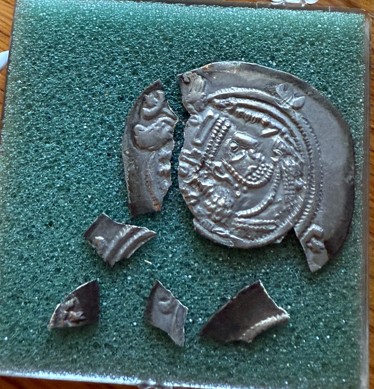 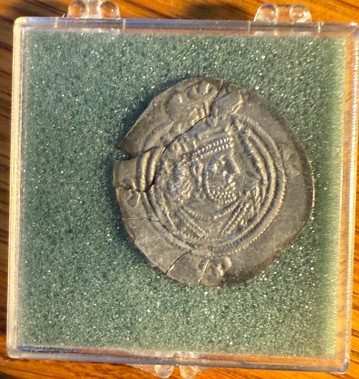 |
|
New Member
China
4 Posts |
Thanks ! I do more research and found this might be made by Mstislav Volodimirovich the Brave, which Imitated a Constantinople mint Miliresion of Basil II Bulgaroktonos.
|
|
Pillar of the Community
United States
8076 Posts |
Good research! I was not aware of known imitations of this ruler's miliaresions.
Did you compare the accuracy of the legends on your coin to a real miliaresion and to the imitations?
On your reverse I see
+bASIL
CCWhJtAh
II ORFVROS
II I STIOIbAS
ROMAI
This is the correct lettering for the reverse, and the imitations are not usually this close.
Edited by tdziemia
11/09/2025 06:26 am
|
|
New Member
China
4 Posts |
Here are pictures of the imitation that I found. It looks more "blurry", but as an imitation, I think it is well made. 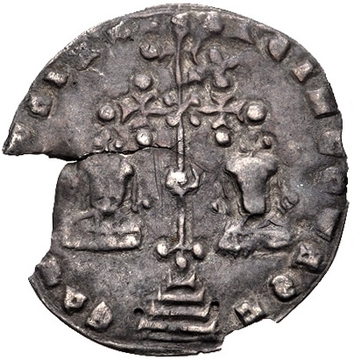 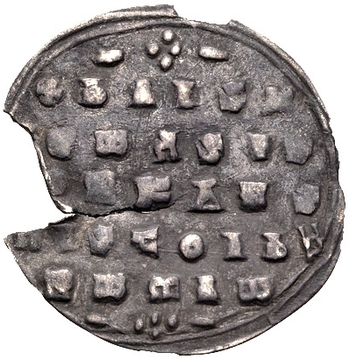 |
|
Moderator
United States
198004 Posts |
to the Community! |
|
Pillar of the Community
United States
8076 Posts |
Quote:
... but as an imitation, I think it is well made. I agree, and it shares with yours the weak planchet that resulted in cracks. But it has mistakes in the legend on the reverse that are not present on yours: Line 1 - BAISL ibstead of BASIL. Line 3 - (II) ORFARS instead of II ORFVROS etc. For a coin in better condition, the weight could also be indicative, but yours is missing some metal, and possibly was clipped since the obverse legend is so close to the edge of the coin, so I don;t think weight will help. I think the miliaresion of the 10th century was made of good silver, so if you were able to have the silver content assessed by analysis (for example, by a jeweler or coin dealer), this might help confirm. |
| |
Replies: 10 / Views: 707 |
|




 Posted 11/08/2025 01:48 am





