Collectors of the modern series of United States ("US") commemorative coins are likely familiar with the three-coin - Gold Half Eagle, Silver Dollar and Copper-Nickel Clad Half Dollar - issued to commemorate "the 225th anniversary of the establishment of the Nation's first law enforcement agency, the United States Marshals Service."
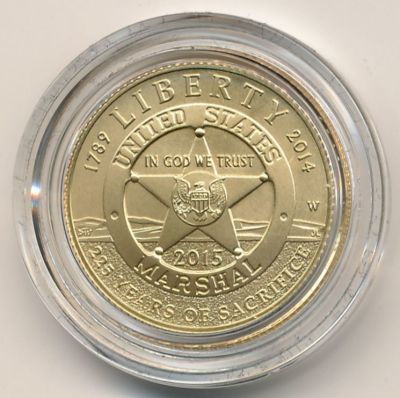

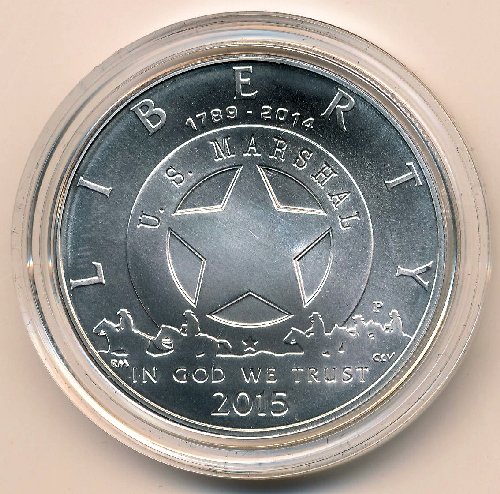
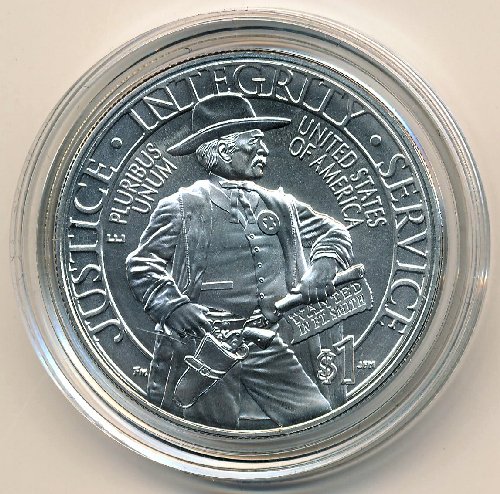
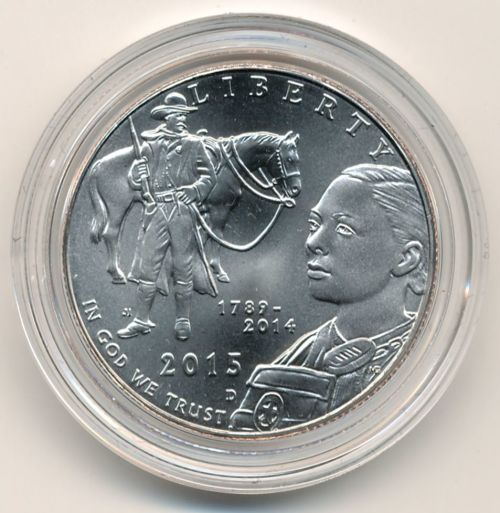
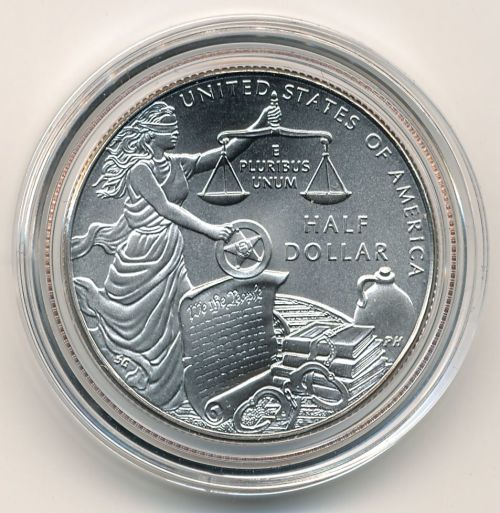
But, as originally proposed, the program would have lacked the Clad Half Dollar.
Efforts began in June 2009, during the First Session of the 111th Congress, with a bill introduced in the US House of Representatives ("House") by John Boozman (R-AR); a companion bill was introduced in the Senate by Blanche L. Lincoln (D-AR) in October 2009. The bills proposed a two-coin commemorative program - Gold Half Eagle (up to 100,000) and Silver Dollar (up to 500,000) - no Clad Half Dollar. Each of the coins was to be struck in Proof and Uncirculated versions.
Note: The coin bills included a provision that authorized the striking of bronze duplicates of the Gold Half Eagles.To provide background and context for their coin request, the bills included a Findings section:
The Congress hereby finds as follows:
(1) The United States Marshals Service, the first law enforcement agency in America, was established under section 27 of the Act of Congress entitled "Chapter XX.—An Act to Establish the Judicial Courts of the United States" and enacted on September 24, 1789 (commonly referred to as the "Judiciary Act of September 24, 1789", during the 1st Session of the 1st Congress and signed into law by the 1st President of the United States, George Washington.
(2) George Washington had carefully considered the appointments to the Judicial branch long before the enactment of the Judiciary Act of September 24, 1789, and appointed the first 13 United States Marshals on September 26, 1789, 2 days after signing the Act into law.
(3) The United States Marshals Service has had major significance in the history in the United States and has directly contributed to the safety and preservation of this Nation, by serving as an instrument of civil authority used by all 3 branches of the United States Government.
(4) One of the original 13 United States Marshals, Robert Forsyth of Georgia, a 40-year old veteran of the Revolutionary War, was the first civilian official of the United States Government, and the first of many United States Marshals and deputies, to be killed in the line of duty when he was shot on January 11, 1794, while trying to serve civil process.
(5) The United States Marshals Service Commemorative Coin will be the first commemorative coin to honor the United States Marshals Service.
(6) In 2008, the United States Marshals Service established a 225th Anniversary Committee to ensure a suitable national observance of the United States Marshals Service 225th Anniversary to take place on or about September 24, 2014, to support and facilitate marketing efforts for a commemorative coin and related activities for the United States Marshals Service 2014 observances.
(7) A commemorative coin will bring national and international attention to the lasting legacy of this Nations oldest law enforcement agency.
(8) The United States should pay tribute to the Nation's oldest law enforcement agency, the United States Marshals Service, by minting and issuing commemorative coins as defined herein.
(9) The proceeds from a surcharge on the sale of such commemorative coins will assist the financing of several national monuments, museums, and charitable organizations including the United States Marshals Service National Museum, the National Law Enforcement Museum and Memorial, and The Center for Missing and Exploited Children.Note: Fort Smith, Arkansas (AR) was selected as the host city for the United States Marshals Service National Museum in late 2006, with the public announcement on January 4, 2007. This is the connection to the Arkansas sponsors of the coin bills, ICYWW.The bills specified several atypical design requirements:
Gold Half Eagle- Obverse: "an image of the Marshals Services Star (aka, "America's Star")."
- Reverse: "a design emblematic of the sacrifice and service of the men and women of the United States Marshals Service who lost their lives in the line of duty."
- Edge: "to the extent practicable, the edge of the $5 coins issued under this Act shall bear the motto of the United States Marshals Service "Justice, Integrity, Service"."
- High Relief: "The design and inscriptions on the obverse and reverse of the $5 coins issued under this Act shall be in high relief."
Silver Dollar- Obverse: "an image of the Marshals Services Star (aka, "America's Star")."
- Edge: "the edge of each $1 coin shall bear the motto of the United States Marshals Service "Justice, Integrity, Service"."
In addition, the bills specified:
"The images for the designs of coins issued under this Act shall be selected on the basis of the realism and historical accuracy of the images and on the extent to which the images are reminiscent of the dramatic and beautiful artwork on coins of the so-called "Golden Age of Coinage" in the United States, at the beginning of the Twentieth Century, with the participation of such noted sculptors and medallic artists as James Earle Fraser, Augustus Saint-Gaudens, Victor David Brenner, Adolph A. Weinman, Charles E. Barber, and George T. Morgan."The designs were to be selected by the Secretary of the Treasury in consultation with the Historian of the United States Marshals Service and the Commission of Fine Arts. The Citizens Coin Advisory Committee and the United States Marshals Service 225th Anniversary Committee ("USMSAC") were to serve in a design review capacity.
Note: The USMSAC was to be a panel consisting of administrative and operational members of the United States Marshals Service, past or present.The story continues in
Part IIFor other of my posts about commemorative coins and medals, including more What If? stories, see:
Commems Collection






 Posted 11/26/2025 7:01 pm


 Uncirculated American Silver Eagles


