| Author |
 Replies: 13 / Views: 1,768 Replies: 13 / Views: 1,768 |
|
|
New Member
United States
44 Posts |
Hello All, First let me thank you in advance for your input. I searched the forum for information prior to this post. I'm grateful for the experienced folks here willing to give their time and knowledge. Most of you have a great sense of humor as well.  This question came about after I read the Scott Travers book "The Coin Collectors Survival Manual". He mentions being careful when removing coins from their holders so as not to disturb the oxide coating on the coin. The author doesn't give too much detail as to the consequences. So I learned here from biokemist6 in a previous post that: "Oxidation is defined as the loss of one or more electrons when two or more substances interact. Oxidation creates everything from rust to Battle Creek Morgans." And: " In the proper long term conditions, oxidation can be a beautiful process. Numismatists call this "toning". It ranges from beautiful old chocolate colored copper to stunning monster toned silver. Those beautiful colors are formed by the refraction of light off thin oxide layers on silver. The thickness of the oxide layer is what will determine the color." I also read along the way that this oxide layer is protective of the coins metal surface. So now I've got an idea of what it is and it's relevance. Sorry to be redundant with this information. I'm sure there are many like myself here, needing to further their numismatic education. To my question. Some info to you first. I am using CoinEdge holders. I like the way my coins look in them, and that they display the coins edge. When placing a coin in one side, I typically have to really press the coin in with the other side of the holder to get it to "snap" closed. In some cases a lot of pressure. My wife gives me a look now and then. I shrug and assume with direct pressure on the reverse of the coin, no harm comes of it. I'm now wondering if this is in error. I suppose I could be causing ever so slight friction on high points even though the pressure is straight down upon the coin. Now I'm considering if I could be disrupting the oxide layer on the coin from a negative stand point. I like the CoinEdge holders. I e-mailed the company inquiring with this also. Perhaps there's a better technique getting the coins in them. Hopefully between their answer and your feedback and opinions this isn't a lost cause. Thanks for the long read and again, your thoughts. |
|
|
|
Pillar of the Community
Australia
585 Posts |
I hate the CoinEdge holders.
So, my advice would obviously be, don't use them.

Sorry, I just like to be able to touch and hold (fondle) my coins.
This is what I use:
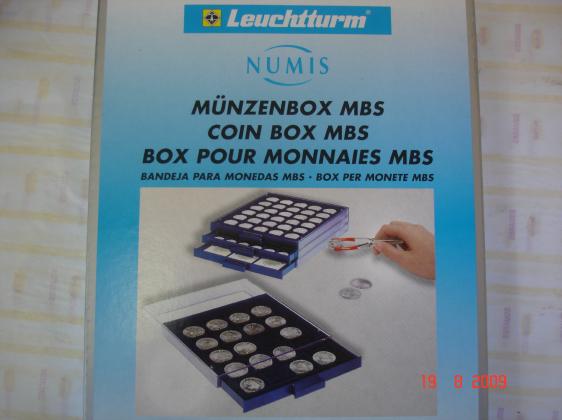
|
|
Moderator
 United States
23522 Posts |
Welcome to Coin Community, Bettaguy2. You've raised a couple of intelligent and useful questions; topics which should rightly be covered regularly in the forum. Quote:
He mentions being careful when removing coins from their holders so as not to disturb the oxide coating on the coin The point missing here is that oxidation is not always present on a coin. One with original color - the stereotypical "blast white" silver coin - has no oxidation, or at least none which will be visibly disturbed by being touched. That doesn't mean you can feel free to touch the faces of the coin, at least not Uncirculated ones, of course. Circulated examples are their own little kind of joy, because you can handle them without worry as long as you didn't just get done eating fried chicken.  . Me, I use and love CoinEdge holders. I've opened and closed them thousands of times on Morgan dollars, though, and never once had to put pressure on the coin itself - I place the coin in the "front" half and pressure the edges of the "back" half to close it. That's the only size I've worked with, though; other sizes might have a different fit which I'm unaware of. |
|
Bedrock of the Community
United States
20753 Posts |
Have you tried a hammer? Or just jump on them with hard leathe shoes.  One method is to place the coins in a freezer so they get smaller and then they will just fall into those holders. Or you could heat the folders so they get soft and then stretch over the coins. Sorry for that but I don't use them. I place most of my coins in Whitman Classic Albums, plastic rolls or 2x2's. All Albums are in Zip Lock plastic bags though. Normally they all fit in all of those easily so no hammer or shoe is required. Always be carefull of what you read on the internet. Many stories and so called facts are made up and for what reason I couldn't imagine. Prior to listening to anyone, keep on asking, asking, asking. Then too still wonder how much is true. |
|
New Member
 United States
44 Posts |
Quote:
I hate the CoinEdge holders. Turtleoverhead, thank you for your response. So you dislike the CoinEdge holders because you like handling your coins and ? May I assume you dislike all coin holders that impede handling coins easily? I appreciate the image of the Lighthouse coin box. I've seen this (and many other) product and it didn't appeal to me. To be certain, however, I'm still forming my preferences and opinions. Thanks again. |
|
New Member
United States
44 Posts |
Quote:
Welcome to Coin Community, Bettaguy2. Thank you SuperDave. And thank you very much for your response to my post. Your comments are very helpful. I thought my original post could go in two or three different directions depending on the replies. And of coarse, may need to be in a different sub forum. I haven't heard back from CoinEdge yet. I reviewed the instructions on their website. One thing I think I'm doing differently is pressing on the coin, rather than the coin rim. I'm talking about the outside of the holder to get it to close completely. I understand with larger coins, such as Morgans, the holders are not meant to seal on the outer most portion. I read that after really trying to "crowd" the holder closed on an Eisenhower dollar. From what you say, it sounds like I don't have many, if any, coins with much in the way of an oxide coating. Understood it is always best to not touch coin surfaces. I'm determined to keep trucking with the coin pursuit and eventually be able to contribute something here that I gained from experience. And hopefully don't spend a fortune in the process of gaining that experience. Thanks again. |
|
New Member
United States
44 Posts |
Quote:
Always be carefull of what you read on the internet. Many stories and so called facts are made up and for what reason I couldn't imagine. Prior to listening to anyone, keep on asking, asking, asking. Then too still wonder how much is true. True, true. Very good advice just carl. Certainly will apply it to the guy recommending the hammer and freezer for my dilemma! I did say I liked the sense of humor exhibited by members here, LOL. I do like 2 x 2's and 1-1/2's for smaller coins. My wife has a Whitman album for a nice mixed MM State Quarter set she put together. I'll have to admit, the coins looked a lot nicer in the album than I thought they would. I'm following you regarding the use of Zip Lock bags to minimize air exposure to the coins. Yes, and plastic tubes for bulk storage. I have enjoyed and appreciated your posts, just carl. I've learned a thing or two reading what you've wrote to others previously. Thank you. |
|
Bedrock of the Community
United States
20753 Posts |
Quote:I do like 2 x 2's and 1-1/2's for smaller coins. My wife has a Whitman album for a nice mixed MM State Quarter set she put together. I'll have to admit, the coins looked a lot nicer in the album than I thought they would. I'm following you regarding the use of Zip Lock bags to minimize air exposure to the coins. Yes, and plastic tubes for bulk storage. More tips. Instead of using staples on the flips, use a piece of clear, tape to seal the edges. Not translucent, but the completely clear tapes. I've checked with several manufacturers and no PVC. Same with plastic tubes. Some have pressure type caps but the screw on types do allow some air to enter. Same tape could seal those also but sort of a pain if opening often. With a flip it is easier than staples since all you need is a small knife to slip them open. And lesser of a chance damaging a coin attempting to remove a staple. I've done that one. On the Zip Lock Bags. Don't forget to push out as much air as possible prior to closing. |
|
Valued Member
United States
258 Posts |
Personally I prefer 2 x 2's (cardboard and plastic) for long term protection and storage. I use staples though and fully understand the risk of scratching a coin should I remove the coin without removing the staples first. I remember reading one story where a rare gold coin was removed and the staple scratched it costing the owner a whole lot of money in lost value due to the new damage caused by his carelessness and a staple left in the 2 x 2.
Additionally the 2 x 2's allow you to build books by using sheets. When you find a better coin (and you always will) you simply remove and replace the old coin with the new 2 x 2 without affecting the other coins sorounding it.
You cannot do this with a book (like Dansco) where the plastic cover has to slide over several coins in order to expose the one slot you need to get to. This risks scratching the coins every time you slide the cover.
Besides should I want to handle the coin and view details of it I can do so without risk to the coin since it is inside the 2 x 2. These also do very well in preventing tarnish on copper and silver as I have coins I "slabbed" in 2 x 2's 25 years ago still looking awesome because they were protected this way. A coin left in a dansco album or worse an open air book will not be as well protected from the environment unless put in a plastic ziploc bag which I recommend for long term storage should you use Dansco books. Sincerely, John Leckrone
|
|
Bedrock of the Community
United States
20753 Posts |
As to staples on a 2x2, a long time ago I USED to use a screw driver to pry up the staples and then pull them out with a needle nosed plyers. On a 1921S Lincoln Cent, graded as MS-63 by a dealer, my little, lousdy screw driver just had to slip accross the face of Lincoln while attempting to left the staples. From that day on I switched to clear tape. And it is so easy to just slit it open with any knife. And also, for those large coins that need a dollar sized 2x2, you don't have to worry about barely any room for the staple, just tape it shut. One more point for taping the edges shut on a 2x2 is if you have any that are stapled, just put them to your mouth and blow on a side that normally opens. You'll note that your breath does go through. Not so on one that is taped. |
|
New Member
United States
44 Posts |
Thanks for your input, John. just carl, you said you checked with the manufacturer of the clear tape you are using on your 2 x 2's verifying the lack of PVC in it. Is it poor form to say "who" the manufacturer is?
I also wonder if there are other compounds in the adhesive that could potentially cause a problem to the coin. Tape to air to coin contact. One consideration would be that if there is, the seal of the tape sounds far superior than staples in regard to preventing air infiltration.
|
|
Bedrock of the Community
United States
20026 Posts |
Quote:
As to staples on a 2x2, a long time ago I USED to use a screw driver to pry up the staples and then pull them out with a needle nosed plyers. Exactly how I do it. Tip for carl....only pry in a direction AWAY from the coin.  Tape is a great idea...until the adhesive fails in a few years. By using a staple, you can get close to the coin so it doesn't slide around in the 2x2. I admit, I have scratched exactly ONE coin in my life. Now I'm so careful and well-practiced, no way I'll ever do it again.  |
|
Bedrock of the Community
United States
12437 Posts |
Geez, ever hear of a staple remover? 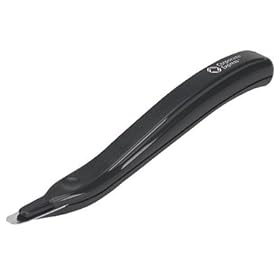 If more people used them, there would be alot less coins with big honkin' scratches from screwdrivers  |
|
Bedrock of the Community
United States
20026 Posts |
On silver, the toning is actually silver sulfide. The color of the toning is directly proportional to the thickness of the silver sulfide layer on the surface. A good book on the topic for you to read is Coin Chemistry by Weimar White.
A coin is instantly oxidized at the moment it is made. The layer will thicken somewhat over time, but in the absence of water, it will stabilize. However, if excessive moisture and air are continually introduced (i.e. improper storage), corrosive acids will be formed (carbonic acid), and the surface will corrode. This is why collectors must take strong steps to protect their coins from air and water.
I hope to have my book finished this year. I discuss the mechanisms for this process in detail for copper. It's very similar for silver.
|
| |
Replies: 13 / Views: 1,768 |
|








 Posted 01/31/2010 10:40 am


