| Author |
 Replies: 41 / Views: 4,819 Replies: 41 / Views: 4,819 |
|
|
|
Valued Member
 New Zealand
227 Posts |
Thankyou to everyone for your opinions on this coin.You have all convinced me that I should bite the bullet and have this coin certified.That way I will find out once and for all if it is real  I will of course let everyone no when I find out.In the mean time please keep letting me know what you think of my coin  |
|
Bedrock of the Community
United States
14454 Posts |
I would probably do the same thing just to ease my mind because it would drive me crazy until I knew for a fact what it was
|
|
Pillar of the Community
United States
7123 Posts |
Quote:Originally posted by grouse12Hi Metalman,is there any way I can tell?  Electrolysis altered coins may show some pitting or softening of the higher details,, Chemically altered are a bit harder to tell,, since some used leached copper to coat the coin, or other chemicals which can remove the nickel with very little effect on the design detail Here is an example of a chemically altered coin. 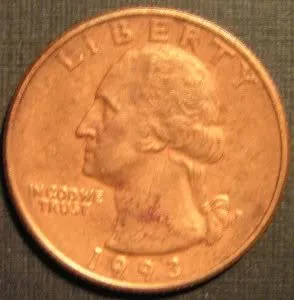 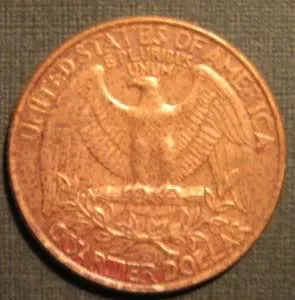 Rick Edited by Metalman
08/29/2006 12:52 am
|
|
Valued Member
United States
155 Posts |
It's an awesome looking coin, I think I like it better that way then in silver. Good luck, hope the grade comes back in your favor |
|
Valued Member
New Zealand
227 Posts |
Thanks for the info Metalman.The next question is who do I send it to? Thats one bad thing about living in our quiet little corner of the world, we are so far from everything!! |
|
New Member
United States
17 Posts |
look closely at the coin is there anything that looks like bubbles or pits
if not it is most likely missing plating
and when light hits it do you see an hour glass
|
|
Valued Member
New Zealand
227 Posts |
No pits or bubbles and no hourglass
|
|
Pillar of the Community
United States
891 Posts |
Drgnrdr57 what are you talking about with looking for an houglass. Something to do with removing the plating?
|
|
Pillar of the Community
United States
5362 Posts |
grouse12 - sorry to jump into the discussion so late. There are a great number of copper toned coins in circulation that are simple chemical alterations. I run into at least one of these a month. I just received a "copper quarter" for authentication from a local dealer. It was a fake. Usually, as happened in this case, you can find a place in the edge milling where a small nick exposes the inner portion of the coin. Look at the coin using no less than 30X magnification under a strong light. Don't forget to check the edge of the coin. Most SBA coins will show a clear seam between the copper and copper nickel layers. In most chemical surface alterations this seam line will still show. If you see a "layer" line - you have a real coin that has been altered. If the surface color is absolutely intact and UNIFORM over the entire surface (including the edge) - check the weight of the coin. The Anthony Dollar weighs 8.100 grams. Yours shows insignificant wear so I would expect it to weigh that amount. If the weight is correct you might want to check the specific gravity. But the Anthony dollar is a sandwich of Copper-nickel over pure copper. Pure copper has an SG of 8.96 and Nickel is 8.90. The actual alloy of the outer layer (which is not 100% standardized) will lower the differential so unless you have a scale capable of weighing to a thousandth of a gram you might not be able to tell anyway. So what do you do? I would very cautiously suggest that a small test cut can be made between the reeds which will expose almost any fraud without doing serious damage to the potential value of the coin. Make sure you do this TINY cut near both sides of the edge (within the same reed) so that you would hit one of the normal face layers. Remember the center is copper in any event. Draw the cut from the outer edge toward the center of the coin - not from the center out - so that no metal spurs would show on the faces. The vast majority of these "solid copper" coins are fakes. I have found only one - a US quarter dollar that is actually solid copper and that one is a counterfeit struck in copper. There are some (very rare) mint errors which have missing plate layers, but they are not at all common. If your coin passes these tests - definitely get it graded. Please let us know the results. |
|
Bedrock of the Community
United States
14454 Posts |
swamperbob, he already weighed it and it weighed less than a regular SBA, according to his posts above |
|
Pillar of the Community
United States
7123 Posts |
The coin was weighed on a rigged balance scale, this type of measurement is not nearly accurate enough to determine the authenticity of this coin.
Rick
|
|
Pillar of the Community
United States
5362 Posts |
I missed the comment about thickness - that is critical. I saw the reference to a crude balance but felt that it was not an accurate enough method to provide a good indication. From the description that it was too thin, it may very well be a missing layer. The details look too good to be the results of an acid removal of the outer layer. It clearly looks struck as is. So it must have started as a thinner than normal planchet. This could be an off metal planchet. Perhaps a piece of cent stock was run through a dollar blanking machine. You never know.
|
|
Pillar of the Community
United States
7123 Posts |
Cent stock for this year, is Copper plated zinc,, the edge would be very detectable if that were the case.
Rick
|
|
Pillar of the Community
United States
5362 Posts |
Metalman - the SBA dollar is dated 1979 which places it prior to the conversion to zinc - the 1993 quarter is after this time. I was referring to the SBA. |
|
Pillar of the Community
United States
7123 Posts |
My mistake,, the possibility exists that it could have cent stock,,
Sorry,, been a long day !!
Probly the only way this coin will find peace is to send it in to anacs and see what they say,, or perhaps submit it to coneca for an opinion.
Rick
Edited by Metalman
08/30/2006 12:34 am
|
| |
Replies: 41 / Views: 4,819 |







 First Page


 Posted 08/28/2006 11:19 pm





