| Author |
 Replies: 10 / Views: 1,537 Replies: 10 / Views: 1,537 |
|
|
New Member
United States
16 Posts |
Can anyone tell me if they have ever seen some red toning around the edges of an Indian $5 half eagle. Please see picture 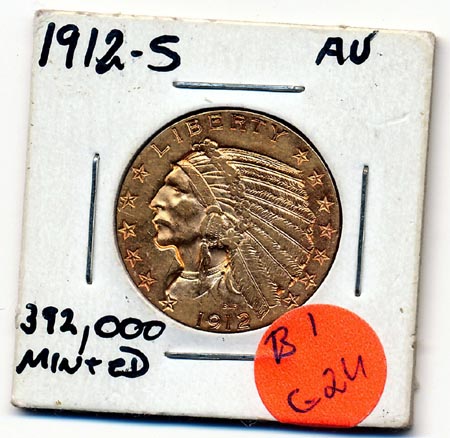 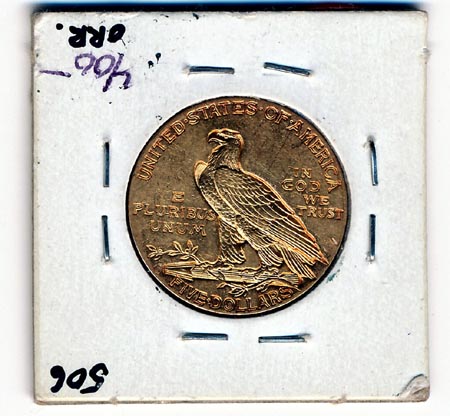 Edited by copiedoffme
11/19/2010 8:43 pm
|
|
|
|
Pillar of the Community
United States
4846 Posts |
I have not seen it before but I doubt its impossible.
Where are the pics?
|
|
Pillar of the Community
United States
4846 Posts |
Ah, see them.
Im sorry to say but them doesn't look like real toning
|
|
New Member
 United States
16 Posts |
Yeah I know...I just received this from ebay auction. I already sent return notice, but it suddenly is looking better than it did in the sunlight this morning. It's weird cause it's in pretty good condition other than the weird toning. thanks for you opinion. |
|
New Member
United States
16 Posts |
Wow, read this I just copied it from NGC's member area. Please read and comment on your opinion.
Given their stable nature, gold coins are less likely than others to tone. When toning does occur, it generally appears as a faint, reddish tint from the copper alloy. Thicker concentrations of copper near a coin's surfaces may cause vivid red spots, and the typical hobbyist finds these spots objectionable. Though these red spots can often be removed with a quick dip in a mild acid bath, many collectors find such accents quite charming. It's generally best to leave gold coins as you find them, since harshly cleaned or polished examples are shunned by experienced collectors, and grading services will not certify such pieces. Coins exhibiting a few light hairlines from a gentle rubbing still are eligible for certification, but will be downgraded in proportion to the severity of the lines.
|
|
Pillar of the Community
United States
4846 Posts |
hmm I guess it is real, it explains it in the exact same way in the pic.
|
|
Pillar of the Community
United States
1534 Posts |
I would keep it the way it is. The scans probably make the toning at least slightly different than how it looks in hand but to me it seems in hand it could be relatively attractive and not hurt the value of the coin.
|
|
New Member
United States
16 Posts |
Thanks for the comments everyone. I'm leaning toward keeping this one.
|
|
Pillar of the Community
United States
759 Posts |
I have a Liberty quarter eagle that's actually showing similar red toning around the stars and Liberty on the obverse and around the edge on the reverse. I completely understand the visual you're getting. It's just a bit different. I can tell you that I didn't think I liked it at first, but now it's very appealing. I'm glad I kept mine.
|
|
New Member
United States
16 Posts |
Thanks for the comment! This one has grown on me and I have decided to keep it. Hearing of yours gives me added confidence that the toning is natural.
|
|
Bedrock of the Community
Australia
21789 Posts |
The copper in the alloy near the surface can be responsible for slight toning of gold coins. The Incas of Peru used to dip gold alloy into acid and wash it then beat the surface of the metal to bring about surface enrichment of the gold. What they used for acid and how they made it up I have no idea. Maybe someone else on the CCF can tell us.
The Brits. for their 50% silver coinage from 1928 through to 1946 had 40% copper, 5% nickel and 5% zinc in the alloy, which they called 'Quaternary Metal'
The planchets before they went into the coining presses were washed in acid, rinsed and dried. The reason for this was to leach some of the copper and zinc out of the surface layer of the coin, thereby chemically enriching the surface layer with a higher percentage of silver.
It was not until the coins had undergone a fair amount of wear, say down to Fine, that the poorer alloy underneath was revealed. Even then, the effects of the poorer alloy did not detract too much from the appearance of the coin. The poorer alloy showed up as being slightly more grey.
I have not seen a quaternary metal coin with even a hint of verdigris.
|
| |
Replies: 10 / Views: 1,537 |
|







 Posted 11/19/2010 8:44 pm





