







 thanks.


 Posted 12/20/2010 1:59 pm


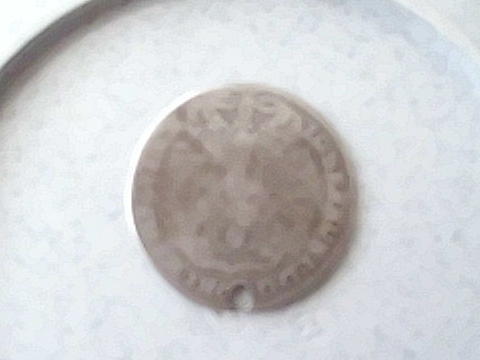
It is a Portuguese coin REIS.
A picture is worth a thousand words.
Joseph I, the Reformer (Port. o Reformador), 25th King of the Kingdom of Portugal and Algarves, was born in Lisbon, on June 6, 1714. He was the third child of King John V of Portugal and his wife Mary Anne Josepha of Austria. At the death of his elder brother, José became Prince of Brazil as the heir-apparent of the king, and 15th Duke of Braganza.
In 1729, Joseph married a Spanish princess, Marianne Victoria of Borbón, daughter of Philip V of Spain and Elizabeth Farnese, and his elder sister Barbara married the future Ferdinand VI of Spain. Marianne loved music and hunting, but she was also a serious woman, who disliked the King's affairs and had no problems about talking about them to everybody.
The reign of Joseph was famous for the great Lisbon earthquake of November 1, 1755, in which around 100,000 people lost their lives. The earthquake caused Joseph to develop a severe case of claustrophobia and he was never again comfortable living within a walled building. Consequently, he moved the royal court to an extensive complex of tents in the hills of Ajuda. The capital was eventually rebuilt at great cost, and an equestrian statue of King Joseph still dominates Lisbon's main plaza.
With Joseph's death on 24 February 1777 the throne passed to his daughter Mary I and Pombal's iron rule was sharply brought to an end.
A picture is worth a thousand words.
Joseph I, the Reformer (Port. o Reformador), 25th King of the Kingdom of Portugal and Algarves, was born in Lisbon, on June 6, 1714. He was the third child of King John V of Portugal and his wife Mary Anne Josepha of Austria. At the death of his elder brother, José became Prince of Brazil as the heir-apparent of the king, and 15th Duke of Braganza.
In 1729, Joseph married a Spanish princess, Marianne Victoria of Borbón, daughter of Philip V of Spain and Elizabeth Farnese, and his elder sister Barbara married the future Ferdinand VI of Spain. Marianne loved music and hunting, but she was also a serious woman, who disliked the King's affairs and had no problems about talking about them to everybody.
The reign of Joseph was famous for the great Lisbon earthquake of November 1, 1755, in which around 100,000 people lost their lives. The earthquake caused Joseph to develop a severe case of claustrophobia and he was never again comfortable living within a walled building. Consequently, he moved the royal court to an extensive complex of tents in the hills of Ajuda. The capital was eventually rebuilt at great cost, and an equestrian statue of King Joseph still dominates Lisbon's main plaza.
With Joseph's death on 24 February 1777 the throne passed to his daughter Mary I and Pombal's iron rule was sharply brought to an end.
 Thank you so much for that! If only coins could talk!


