Coin Community Family of Web Sites Join Thousands of Coin, Bullion, & Money Collectors
300,000 items to help build your collection! Specializing in Modern Numismatics Vancouvers #1 Coin and Paper Money Dealer Coin, Banknote and Medal Collectors's Online Mall Join Thousands of Coin, Bullion, & Money Collectors Shop for APMEX Bullion on eBay!Royal Canadian Mint products, Canadian, Polish, American, and world coins and banknotes.


Username:
Password:
Save Password
Forgot your Password?


This page may contain links that result in small commissions to keep this free site up and running.

Welcome Guest! Registering and/or logging in will remove the anchor (bottom) ads. It's Free!

2000-D Lincoln//Doubling Or Damage

To participate in the forum you must log in or register.
Author Previous TopicReplies: 1 / Views: 935Next Topic  
Pillar of the Community
wrongalot's Avatar
United States
608 Posts
 Posted 10/17/2006  5:43 pm Show Profile   Bookmark this topic Add wrongalot to your friends list Get a Link to this Message Number of Subscribers
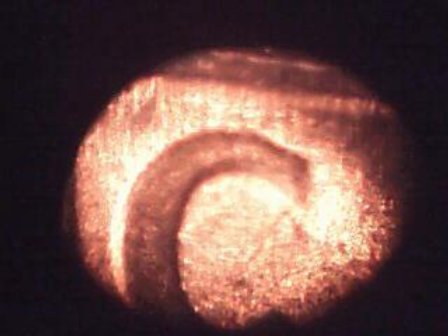
I see this sometimes, and have always wondered, is it doubling or damage. Could someone let me know. And what causes it?

Image: 2000-D-Lincoln//Doubling-Or-Damage 2000-D.jpg
25.41 KB
Valued Member
United States
380 Posts
 Posted 10/19/2006  8:33 pm  Show Profile   Bookmark this reply Add errorfinder to your friends list Get a Link to this Reply
taking a guess here; you are referring to the inside, of the upper part of 'C'? .first just to clarify 'doubling and the term damage ' are interchangeable. they are the same.ie.they have the same meaning.just pointing this out;due to not long ago I thought they were different too.this knowledge helps when searching auctions!!!the term doubled die(s), describes that the die(s).which are used in striking the (planchet)thus becoming a 'doubled die coin'.thus,these coins have the collectible(valuable)doubled(die)devices.coins which have devices;that exhibit doubling. are considered damaged.due to the 'doubling' is not part of the striking process.there are two main 'types or forms' of MDD -mechine doubling damage.credit goes to alan herbert .who in 1973 determined; *using a microscope* that the most common form of doubling was/is damage.now considered valueless and much to common to collect.1st form of MDD;push doubling damage happens when a die bounces upon a struck coin.effects; a scraping down of one side[or read]top or bottom of the design device(s).leaves the 'flat' shelf-like metal along:'side of'[read](also location can be top or bottom) the design devices.*note not reaching down to the field of the coin.2nd form of MDD;'slide' doubling,as the die is moving away from struck coin,die slides (sideways into sides of design devices.thus leaving tapered effect on the devices,*note the rest of the device (unaffected top)will be are have dished / rounded kinda 'converggence'where the damage(slide) ends and the normal(unaffected)part of the design device is or (begins). your coins appears to be of the second form 'slide'MDD. see how the inner part of the upper 'C' starts thin near the field and increases(thickens)as it nears the top part of the device 'C'.
  Previous TopicReplies: 1 / Views: 935Next Topic  

To participate in the forum you must log in or register.


Disclaimer: While a tremendous amount of effort goes into ensuring the accuracy of the information contained in this site, Coin Community assumes no liability for errors. Copyright 2005 - 2026 Coin Community Family- all rights reserved worldwide. Use of any images or content on this website without prior written permission of Coin Community or the original lender is strictly prohibited.
Contact Us  |  Advertise Here  |  Privacy Policy / Terms of Use

Coin Community Forum © 2005 - 2026 Coin Community Forums
It took 0.22 seconds to rattle this change. Forums