









 Posted 07/21/2011 6:41 pm


Westwood Arms Interesting coin.
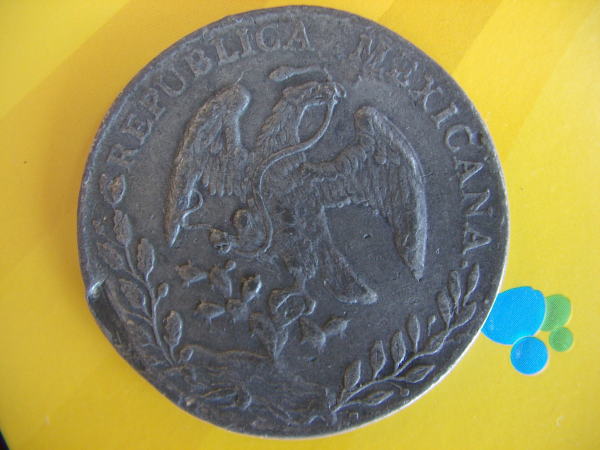
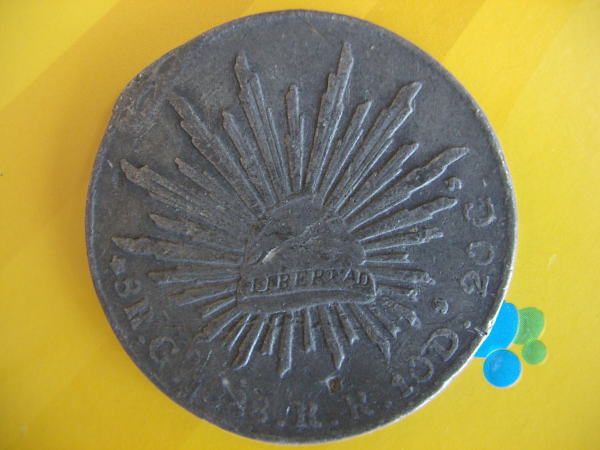
It appears you have a white metal casting made from a pair of impact transfer molds. Someone tested it with a blow to the edge. It is a malleable alloy based on the distortion transferred to the other side. But at least the test is out of the primary design area.
The process used to make this kind of forgery is simple, in fact many high school kids (at least when I was a kid) got adept at doing this to make slugs for vending machines. Remember this is illegal to do especially with US coins and I do not encourage anyone to try it.
All you need is a shotgun (gauge optional) some shells a Pipe a solid metal rod and three copper plates. The coin image is transferred by firing a coin into a copper plate at a high rate of speed. You mount a coin to the end of a rod just under the gauge size of the gun and longer than the barrel. Get three copper plates ground flat with one that is about as thick as the coin you plan to make. You can use some other soft metal that will not melt at 1000 degrees or so. You need to anneal the metal plates by heating them to cherry red and then slowly air cooling them. Then take the shot out of a standard shell leaving the wadding intact. Better if you are into shell reloading then you can adjust the charge. Too much powder and the image blurs hopelessly too little and it is only a partial image. Place the rod into the shotgun barrel so it touches the wad snugly (use a rod designed for your shotgun.) Get a larger thick walled iron pipe that is longer than the gun barrel and the rod sticking out and place it (the pipe) in contact with the plate. A vertical or horizontal set up can be used but safety is a big issue in the horizontal method. The containing pipe must be strong enough to withstand the blast and large enough to allow the escaping gases to blow back safely around the barrel. Fire the shotgun into the pipe with a travel gap designed so that the coin is moving at the highest rate of speed possible. Gun guys know burn times and distances of travel to peak pressure. That is tricky. (Use a lanyard to pull the trigger for safety). Every part of the apparatus needs to be firmly anchored using C clamps for example.
When you look at the plate after the shot it will have become a mold of the coin. If done correctly it will be a perfect image of the coin even across the entire face and not distorted.
This is a one shot kind of thing - no do overs. You need a new coin and plate each time you make an attempt. So I would not start by copying real 1804 Bust Dollars for example.
The process of making a complete mold destroys 2 real coins and expends two shotgun shells. What you get (after some practice) is a clear image of each side of the coin on two of the metal plates. Then you take the third plate and drill a 39mm hole (for an 8R to allow for shrinkage) and assemble your mold. If you are clever you can cut reeds into the edge of the filler plate. Drill a vent and a pouring hole on opposite sides of the filler plate to allow the pour. The pour hole is larger and tapered. Pour in melted zinc or any zinc/tin or antimony alloy that melts well under the melt point of the copper plates and you are in business. This is a skill that can be acquired by kids who casting their own bullets.
The finished casting needs to have all corners sanded - the seams smoothed and problem areas touched up. But once it looks decent it can be tinned or zinc plated or even spray painted to look like silver.
The result is a forgery even a child can make.
That is as long as you are descended from some long line of notorious criminals.
So that is the process. It was developed in the later part of the 1800's and was extremely popular in the early 1900's and many of the cheap zinc copies of US half dollars you still see on the market were made this way. It went out of vogue when high strength dental plastics became available in the 1960's and 1970's.
I wanted to explain the process because it is simple and requires virtually NO talent - unlike a die maker. You get most of the experience you need in any HS or JHS metal shop or in most rural farm settings.
So that is all to say this is a VERY common type of forgery with EXTREMELY limited value.
As you noted the coin is ridiculously underweight, it would be totally unbelievable to anyone familiar with the weight of a real silver dollar.
Is it contemporary? In my opinion the answer is a qualified YES. This method was not used in Mexico to make forgeries for circulation BUT was extensively used in China in the 1920s to produce 8Rs that could be slipped into bags of bullion. The hope of the forger was to make a small profit by passing small numbers of fakes INDIRECTLY. A face to face exchange using this type of crude copy was usually NOT successful because of the weight. But if the fake was properly colored with a passable edge (even ring die) a fake could sometimes pass the eyes of a merchant if it was mixed with a large number of originals.
I point to China as the likely area of manufacture because it was the last place on earth that monetized this coin. The 8R was a legal coin in China until 1933 when it was replaced in circulation by Chinese coins (made predominantly from recycled old Spanish American coins.
Since there are literally millions of possibilities to make a forgery like this, the value as a collectible is minimal. For a date, mint and assayer combination I have never encountered $15 is my personal limit for an undamaged copy with the plating fully present but for a test cut core with virtually nothing of the plate left, prefer to pay $1 or $2 each.
It appears you have a white metal casting made from a pair of impact transfer molds. Someone tested it with a blow to the edge. It is a malleable alloy based on the distortion transferred to the other side. But at least the test is out of the primary design area.
The process used to make this kind of forgery is simple, in fact many high school kids (at least when I was a kid) got adept at doing this to make slugs for vending machines. Remember this is illegal to do especially with US coins and I do not encourage anyone to try it.
All you need is a shotgun (gauge optional) some shells a Pipe a solid metal rod and three copper plates. The coin image is transferred by firing a coin into a copper plate at a high rate of speed. You mount a coin to the end of a rod just under the gauge size of the gun and longer than the barrel. Get three copper plates ground flat with one that is about as thick as the coin you plan to make. You can use some other soft metal that will not melt at 1000 degrees or so. You need to anneal the metal plates by heating them to cherry red and then slowly air cooling them. Then take the shot out of a standard shell leaving the wadding intact. Better if you are into shell reloading then you can adjust the charge. Too much powder and the image blurs hopelessly too little and it is only a partial image. Place the rod into the shotgun barrel so it touches the wad snugly (use a rod designed for your shotgun.) Get a larger thick walled iron pipe that is longer than the gun barrel and the rod sticking out and place it (the pipe) in contact with the plate. A vertical or horizontal set up can be used but safety is a big issue in the horizontal method. The containing pipe must be strong enough to withstand the blast and large enough to allow the escaping gases to blow back safely around the barrel. Fire the shotgun into the pipe with a travel gap designed so that the coin is moving at the highest rate of speed possible. Gun guys know burn times and distances of travel to peak pressure. That is tricky. (Use a lanyard to pull the trigger for safety). Every part of the apparatus needs to be firmly anchored using C clamps for example.
When you look at the plate after the shot it will have become a mold of the coin. If done correctly it will be a perfect image of the coin even across the entire face and not distorted.
This is a one shot kind of thing - no do overs. You need a new coin and plate each time you make an attempt. So I would not start by copying real 1804 Bust Dollars for example.
The process of making a complete mold destroys 2 real coins and expends two shotgun shells. What you get (after some practice) is a clear image of each side of the coin on two of the metal plates. Then you take the third plate and drill a 39mm hole (for an 8R to allow for shrinkage) and assemble your mold. If you are clever you can cut reeds into the edge of the filler plate. Drill a vent and a pouring hole on opposite sides of the filler plate to allow the pour. The pour hole is larger and tapered. Pour in melted zinc or any zinc/tin or antimony alloy that melts well under the melt point of the copper plates and you are in business. This is a skill that can be acquired by kids who casting their own bullets.
The finished casting needs to have all corners sanded - the seams smoothed and problem areas touched up. But once it looks decent it can be tinned or zinc plated or even spray painted to look like silver.
The result is a forgery even a child can make.
That is as long as you are descended from some long line of notorious criminals.
So that is the process. It was developed in the later part of the 1800's and was extremely popular in the early 1900's and many of the cheap zinc copies of US half dollars you still see on the market were made this way. It went out of vogue when high strength dental plastics became available in the 1960's and 1970's.
I wanted to explain the process because it is simple and requires virtually NO talent - unlike a die maker. You get most of the experience you need in any HS or JHS metal shop or in most rural farm settings.
So that is all to say this is a VERY common type of forgery with EXTREMELY limited value.
As you noted the coin is ridiculously underweight, it would be totally unbelievable to anyone familiar with the weight of a real silver dollar.
Is it contemporary? In my opinion the answer is a qualified YES. This method was not used in Mexico to make forgeries for circulation BUT was extensively used in China in the 1920s to produce 8Rs that could be slipped into bags of bullion. The hope of the forger was to make a small profit by passing small numbers of fakes INDIRECTLY. A face to face exchange using this type of crude copy was usually NOT successful because of the weight. But if the fake was properly colored with a passable edge (even ring die) a fake could sometimes pass the eyes of a merchant if it was mixed with a large number of originals.
I point to China as the likely area of manufacture because it was the last place on earth that monetized this coin. The 8R was a legal coin in China until 1933 when it was replaced in circulation by Chinese coins (made predominantly from recycled old Spanish American coins.
Since there are literally millions of possibilities to make a forgery like this, the value as a collectible is minimal. For a date, mint and assayer combination I have never encountered $15 is my personal limit for an undamaged copy with the plating fully present but for a test cut core with virtually nothing of the plate left, prefer to pay $1 or $2 each.


