The War of Jenkins Ear, the Acapulco Galleon, and the Lima Coins of George II (I think this coin has such a rich and interesting background, much more valuable then the coin itself in my opinion!)
Jenkins Ear? This is a coin story?
Absolutely. It's also a "lost treasure story", but this time the treasure was lost, not in a hurricane or through faulty navigation, but to enemy action on the high seas.
The WarThe War of Jenkins Ear (1739-1748) was a dispute between Britain and Spain over Britain's right to trade with Spain's Central American colonies. Spain had outlawed it, but trade at some level continued anyway (as will occur when both sides have benefited.) As evidence of a Spanish crackdown on the practice, a British merchant captain, Robert Jenkins, was relieved of one of his ears through the swordsmanship of a Spanish Coast guardsman.
Jenkins, complaining to Parliament, and brandishing a jar containing his pickled ear, stoked the popular outrage sufficient to deploy two English fleets against the Spaniards. One of these was dispatched to the Caribbean, the other down the Pacific Coast of South America, via Cape Horn.
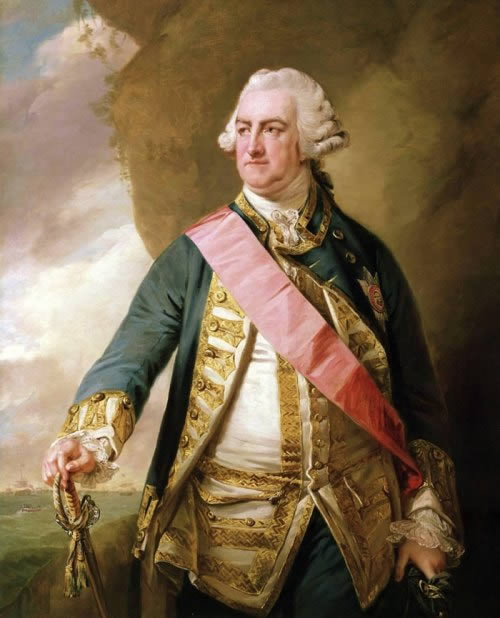
Commodore George Anson commanded the fleet heading for the Pacific. Its mission was to harass Spanish shipping, and especially, capture the port of Callao which was the shipping point for the output of Peruvian mines near the mint at Lima. Also, if he got lucky, he might capture one of the substantial Mexican silver and gold shipments to Manila.
Anson and the Manila GalleonThe famed Manila Galleon sailed every year or two between Manila in the Philippines and Acapulco on the Mexican west coast. When outbound from Mexico, the ship was called the Acapulco Galleon -- a tempting target of gold and silver coins and bullion.
Anson truly wanted that cargo!
After a stormy passage around Cape Horn at the southern tip of South America, all of Anson's ships except his flagship, Centurion, were either lost or had turned back. Centurion was considerably the worse for wear and put into the San Fernandez Islands off Chile for repairs.
Returning to sea, Anson's part in The War of Jenkins Ear continued -- but his search for the expected galleon from Acapulco was to no avail. Perhaps he had missed it while laid up for repairs, or the Spanish shipment was held over for a year in the knowledge that an English fleet was in the area.
At length, Anson set a course across the Pacific to Macao. From there his plan was to navigate south and west to the Indian Ocean, then home to England via the Cape of Good Hope -- a circumnavigation of the globe.
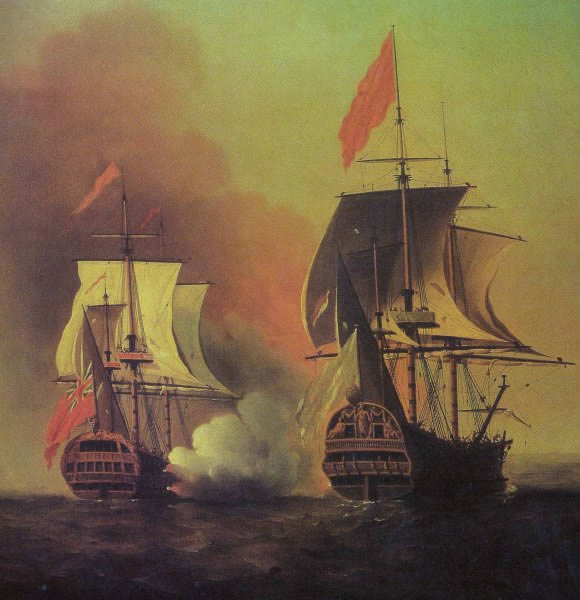
But First......one more try for the galleon from Acapulco, which Anson believed could be captured north of the Philippines. Sailing out from Macao, Anson positioned himself to succeed.
And so he did -- the Spanish being rather surprised to find the English in so remote a location!
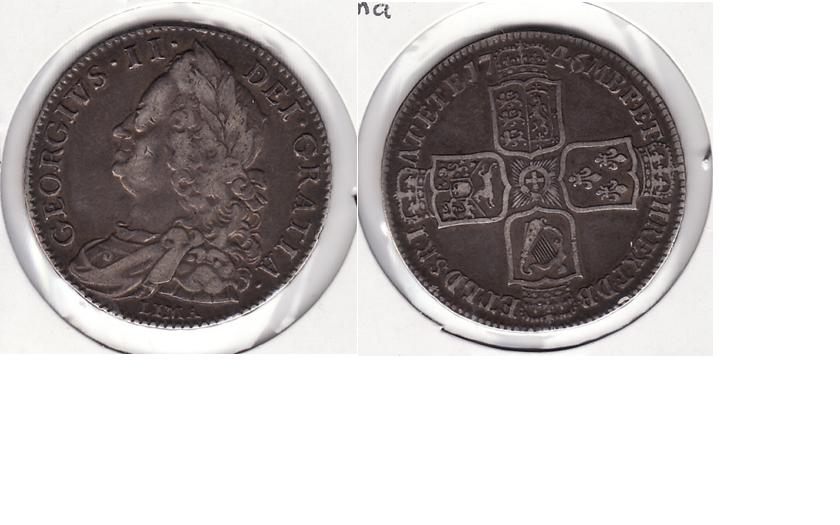
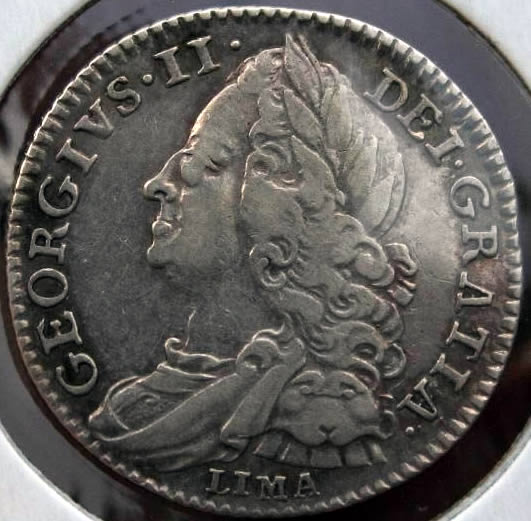
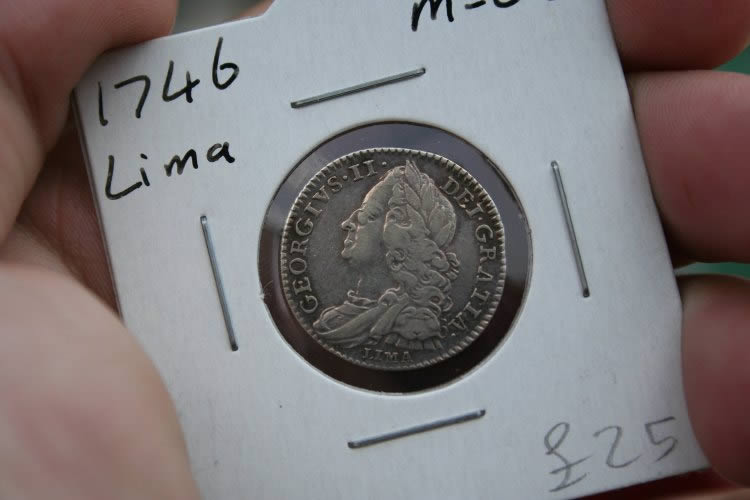
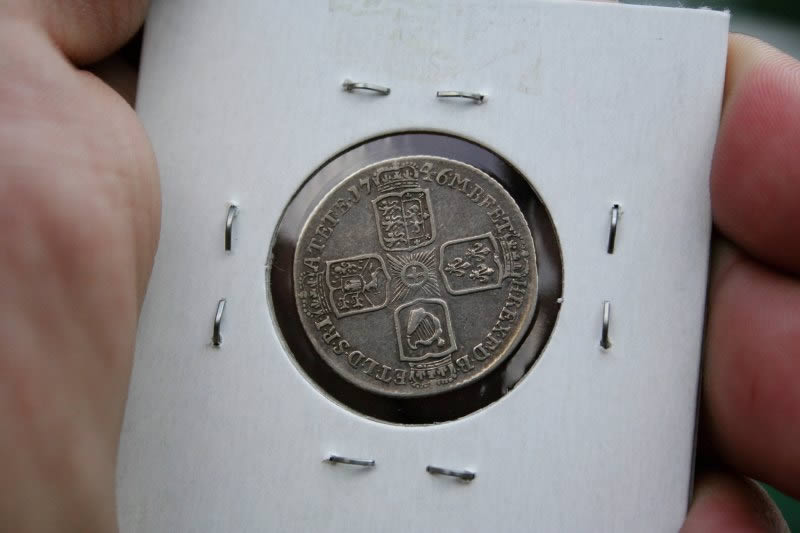
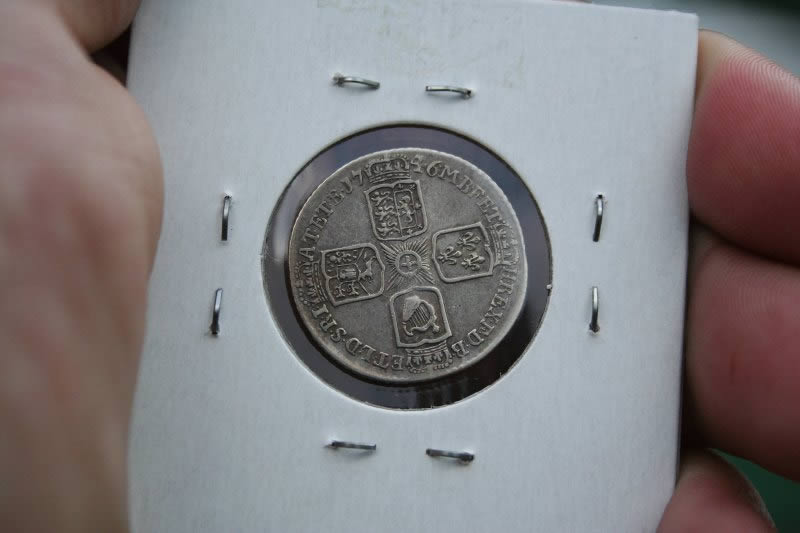
Upon completion of his four year round the world voyage, the one million Spanish pieces of eight he captured were re-coined in England. To each of these new English coins was added the word "LIMA" -- right under George II's bust -- referring to the original plan for interdiction of silver from the Lima mint.
(Found some more information on the British Museum's website.)
During the War of the Austrian Succession, Great Britain was the ally of Maria Theresa of Austria, and fought its two greatest maritime rivals, France and Spain. In July 1745, Captains James Talbot and John Morecock, commanding two privateers in the North Atlantic, the Prince Frederick and the Duke, captured two French treasure ships returning from Callao, the port of Lima. Their haul was £800,000 in silver coins and ingots, plus gold and other goods. When they landed at Bristol in October it took 45 wagons to transport the coin and bullion (which weighed over 78 tons) to the Tower Mint. There the silver was used in the production of the so-called 'Lima' coinage of 1746. It was requested that the word 'Lima' be used on the coins to celebrate the exploit. Here LIMA can be seen spelled out under the portrait of King George II (reigned 1727-60)
A letter from a lieutenant on the Prince Frederick was published in Gentleman's Magazine in August 1745:
'The 12th July (which is now the toast here) we took two rich ships... As we shot their masts away, we were obliged to tow them for three weeks, till we got here, in which we had the good fortune never to be disturned by Jack Spaniard or Frenchman. These ships went out four years ago to Peru and Chili and had on board (as by their bills of lading now come to hand) one million sterling in gold and silver coin, besides 800 tons of cocoa, and we are every day discovering more treasure that has been concealed... We have a marquis of France, a governor of Peru, friars in abundance, one of whom threw a gold chalice into the sea of great value that it should not come into our hands.'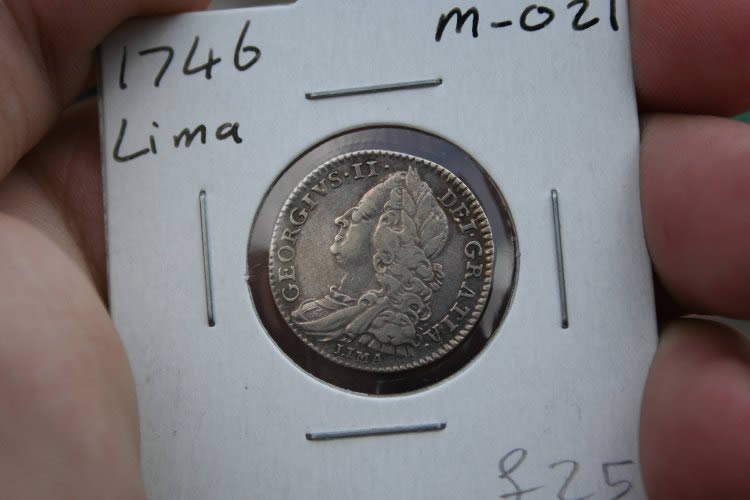







 Posted 08/16/2011 05:52 am