


Coin Community Family of Web Sites Join Thousands of Coin, Bullion, & Money Collectors
Specializing in Modern Numismatics Coin, Banknote and Medal Collectors's Online Mall Join Thousands of Coin, Bullion, & Money Collectors Vancouvers #1 Coin and Paper Money Dealer Royal Canadian Mint products, Canadian, Polish, American, and world coins and banknotes. 300,000 items to help build your collection! Royal Estate Auctions - $1 Coin Auctions


Username:
Password:
Save Password
Forgot your Password?


This page may contain links that result in small commissions to keep this free site up and running.

Welcome Guest! Registering and/or logging in will remove the anchor (bottom) ads. It's Free!

Is This 1900 Indian Cent An Error Coin?

To participate in the forum you must log in or register.
Author Previous TopicReplies: 9 / Views: 2,660Next Topic  
Valued Member

United States
136 Posts
 Posted 09/08/2011  10:00 am Show Profile   Bookmark this topic Add reports67 to your friends list Get a Link to this Message Number of Subscribers
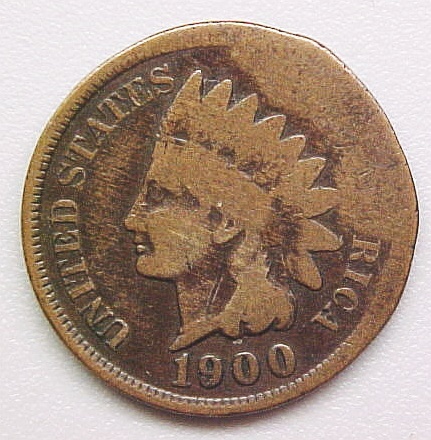
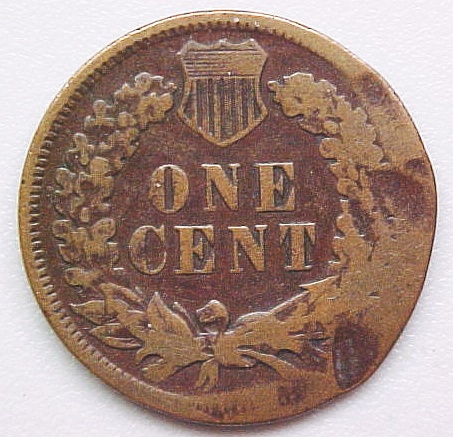
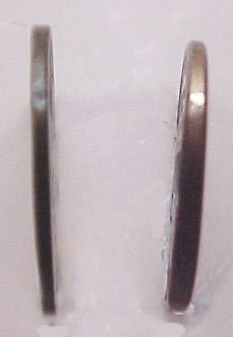
This coin is tapered and and thinner than a regular penny:
Is-This-1900-Indian-Cent-An-Error-Coin?

Is-This-1900-Indian-Cent-An-Error-Coin?

Is-This-1900-Indian-Cent-An-Error-Coin?

*** Edited by Staff to clarify topic title. Titles are important! ***
Rest in Peace
biggfredd's Avatar
United States
9104 Posts
 Posted 09/08/2011  12:08 pm  Show Profile   Bookmark this reply Add biggfredd to your friends list Get a Link to this Reply
Bedrock of the Community
biokemist6's Avatar
United States
12437 Posts
 Posted 09/08/2011  12:42 pm  Show Profile   Bookmark this reply Add biokemist6 to your friends list Get a Link to this Reply
smashed and out-of-round= damage
Bedrock of the Community
DVCollector's Avatar
United States
10045 Posts
 Posted 09/08/2011  12:47 pm  Show Profile   Bookmark this reply Add DVCollector to your friends list Get a Link to this Reply
This coin was smashed between two objects; the reverse indentations show the surface it has hit against. Being out of round is the first clue. Biokemist--I did not see your post!

Edited by DVCollector
09/08/2011 12:59 pm
Valued Member
United States
136 Posts
 Posted 09/08/2011  2:23 pm  Show Profile   Bookmark this reply Add reports67 to your friends list Get a Link to this Reply
This is what the person who sold the coin said: The 1900 Indian Head penny being described here was created during the first step of the many steps required in creating the planchet strip made at the rolling mill. The INDIAN HEAD was eventually DIE STAMPED on a tapered planchet punched out of the end of a roll of the planchet strip made at the rolling mill. The correct thickness is rolled out and then the strip is fed into a blanking press, where the raw blanks are punched out. Sometimes the end of the roll as it goes through the high pressure rollers at the rolling mill will be jagged on the edge and the tapering occurs as the end of the strip passes through the last rollers and the pressure is lessened as it passes through. and can cause a tapered and very thin edge at the end of the roll by being stretched and crushed slightly as the end of the planchet strip goes between the high pressure rollers. The strip then goes to the blanking press which punches out the planchets...generally the last planchets punched from the end of the strip are caught before going through the final die stamping process. The equipment has advanced since 1900 . So, will this may never happen again.
Bedrock of the Community
DVCollector's Avatar
United States
10045 Posts
 Posted 09/08/2011  3:47 pm  Show Profile   Bookmark this reply Add DVCollector to your friends list Get a Link to this Reply

Quote:
...and can cause a tapered and very thin edge at the end of the roll by being stretched and crushed slightly as the end of the planchet strip goes between the high pressure rollers. The strip then goes to the blanking press which punches out the planchets.
I am by no means the expert on errors here, but here is where I see the breakdown of his explanation--emphasized above. Sure--planchet stock can be rolled out to an uneven thickness, even with a ragged edge. But--consider how the blanking press punches out planchets--they will always be confined to the interior of a perfect circle, even if the planchet is punched from the ragged end of a strip. Next, the planchet goes to an upsetting mill, which raises an edge on the planchet. At this point, any irregularities on the planchet will be evident in rim weakness opposing the clip. Then, when the coin is struck from a planchet, a collar surrounds the planchet, again keeping its shape within a circle. Therefore, a coin which shows a strong rim opposing a tapered area extending beyond a circle could not be struck that way--it is simply damage.
That's how I would explain it--a real expert may have a better explanation of the process.
Bedrock of the Community
biokemist6's Avatar
United States
12437 Posts
 Posted 09/08/2011  4:45 pm  Show Profile   Bookmark this reply Add biokemist6 to your friends list Get a Link to this Reply
reports67,
the person that told you that had a nasty case of verbal diarrhea- spewing out all kinds of things and having no actual idea what it really means Nowhere did the seller address the FACT that the coin is out of round and thus, is larger on that side than a normal coin would be. Yes, you can have a coin struck on a tapered planchet and it will be slightly underweight but it will ALWAYS have the same diameter as a normal cent. I would bet that your coin has the full weight of a normal VG Indian Head cent.

I would recommend you see about getting a refund. The seller was either completely clueless or deliberately taking advantage of you, that coin is worth about 10 cents in its damaged condition.


Is-This-1900-Indian-Cent-An-Error-Coin?

The cent on the right was struck on a thin planchet, it is 0.4g lighter than normal. Notice that it appears to be relatively normal compared to the regular wheatie on the left. Visually, the wide rounded rims and the softness of the reverse at ONE are the best indicators of an abnormal cent. I actually found this one by sound though when I was sorting wheaties on a desk- a thinner lighter coin will ring with a higher pitch than regular coin. If I hadn't been plunking them down on a wood desk, this coin would have ended up in a bulk lot of wheats that I sold.
Edited by biokemist6
09/08/2011 4:46 pm
Pillar of the Community
macmercury's Avatar
United States
5833 Posts
 Posted 09/08/2011  5:36 pm  Show Profile   Bookmark this reply Add macmercury to your friends list Get a Link to this Reply
with Bio!

Look at the height of that **tapered** cent to the normal cent.
Pillar of the Community
ikandiggit's Avatar
Canada
1166 Posts
 Posted 09/08/2011  7:49 pm  Show Profile   Bookmark this reply Add ikandiggit to your friends list Get a Link to this Reply
Yep, it's PMD!
Valued Member
United States
136 Posts
 Posted 09/09/2011  11:44 am  Show Profile   Bookmark this reply Add reports67 to your friends list Get a Link to this Reply
biokemist6

Thanks for the advice, I did just that.
  Previous TopicReplies: 9 / Views: 2,660Next Topic  

To participate in the forum you must log in or register.


Disclaimer: While a tremendous amount of effort goes into ensuring the accuracy of the information contained in this site, Coin Community assumes no liability for errors. Copyright 2005 - 2026 Coin Community Family- all rights reserved worldwide. Use of any images or content on this website without prior written permission of Coin Community or the original lender is strictly prohibited.
Contact Us  |  Advertise Here  |  Privacy Policy / Terms of Use

Coin Community Forum © 2005 - 2026 Coin Community Forums
It took 0.3 seconds to rattle this change. Forums