









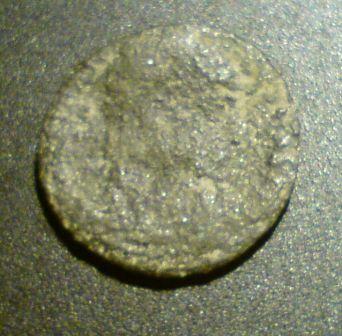
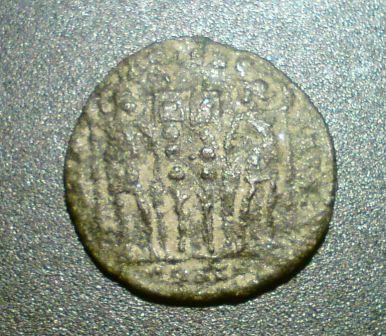


 Posted 09/18/2011 02:10 am


Quote:
...it looks like it has a possible date on the bottom of the coin - looks to me something like '1253'...
...it looks like it has a possible date on the bottom of the coin - looks to me something like '1253'...
They can't be numerals, because numerals like that hadn't been invented in Roman times. When writing numbers, the Romans used "Roman numerals" - you know, MCMLXXXVIII and such like. Our "Western" numerals were invented in India and brought to Europe by Arab merchants in the Middle Ages - which is why they are also known as "Arabic numerals".
The Romans also didn't commonly use a simple numerical calendar, where a certain year is "Year 1253". The AUC calendar (anno urbis conditae, year of the foundation of the city of Rome with AUC 1 being 753 BC) was used by Roman historians, but was not in general everyday use and very very rarely appears on coins; the Wikipedia page for this calendar illustrates two rare examples. Many Roman coins do not bear a date at all, and those that do usually use a system of numbering the year based on the reign and titles held by the emperor. This coin, for example:
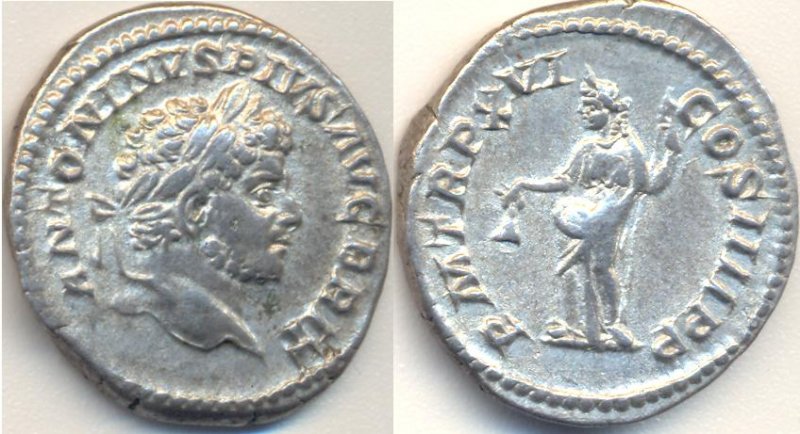
...is "dated" via the inscription "TRP XVI" on the reverse: the 16th year of tribunician power of emperor Caracalla coincides fairly well with 213 AD.
Coins that bear no dating information at all - like most Late Roman Bronzes - can only be dated by matching the archaeological evidence from hoards with the few surviving contemporary records of coin issuance.
Don't say "infinitely" when you mean "very"; otherwise, you'll have no word left when you want to talk about something really infinite. - C. S. Lewis


