| Author |
 Replies: 17 / Views: 3,863 Replies: 17 / Views: 3,863 |
|
Pillar of the Community
United States
4253 Posts |
I went out on a limb today and purchased two Constantine II coins mainly because I like the looks and I do not have either reverse in my collection. However, both coins the seller stated had rarity ratings which also intrigued me. This coin he said was rated R5. I have no idea where to even look for this rating. Can someone point me in the right direction or at the least verify this rating. I'll post the other coin in a separate thread later. This is a Constantine II AE Follis, RIC VII 65 struck at Antioch: OBV: CONSTANTINVS IVN NOB C - Laureate, draped, and cuirassed bust left REV: PROVIDENTIAE CAESS - Campgate with two towers, 10 rows and star above. SMANTB in ex. 2.81g, 18mm 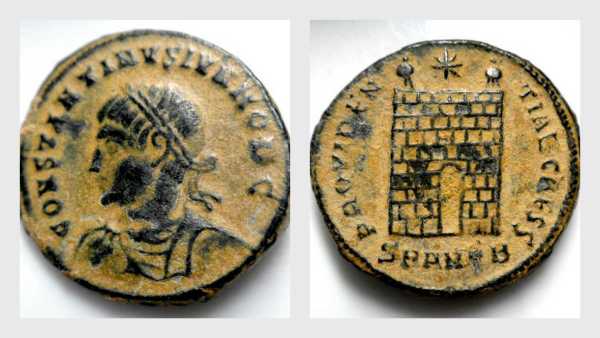 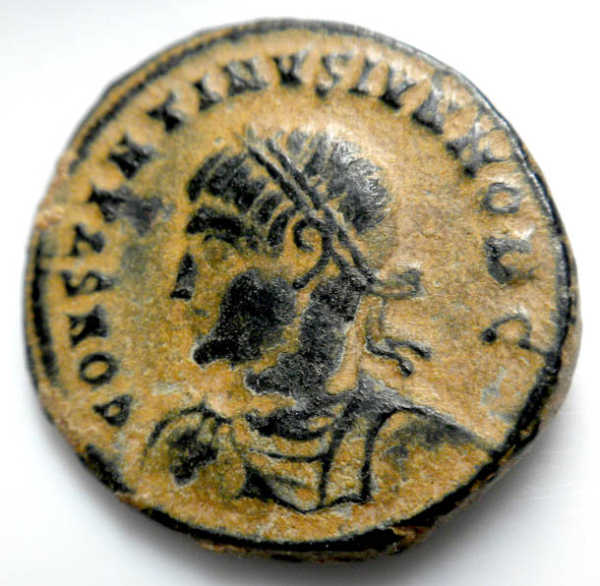 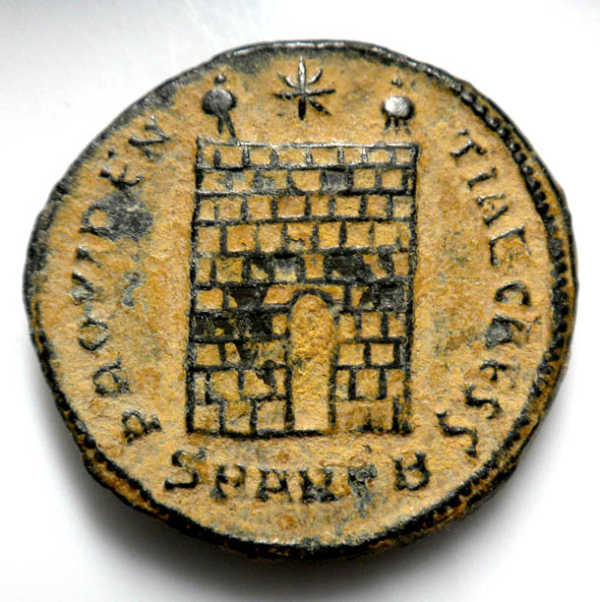 Thanks for any help JW |
|
|
|
Pillar of the Community
United States
1315 Posts |
|
|
Pillar of the Community
 United States
4253 Posts |
I've been on this site many times and am just now seeing the rarity ratings on the right. Sometimes I surprise myself at how dumb I can be. Thanks for pointing that out to me and before anyone can say anything about the ratings, I understand what they are and what they are not. This coin does show as R5.
Again, thanks
JW
|
|
Pillar of the Community
United States
1549 Posts |
The R5 part is workshop B since most of these were shop S or delta. Even those are R1 or 2 but with so many variations you might understand not every museum thinks they need every letter from a mint with more shops than any other. All you might want to know is on page 688 of RIC volume VI. This page is 2/3 taken by footnotes which is a lot even by RIC standards.
I know I sing the same old song but are numbers add interest to some and value to very few. The reason to be proud of this coin is that it has a nice looking sand patina. If you really want to go over the top, read the footnote to #65 where they discuss the available variations in the number of rows of blocks in the building and the sizes of busts available. A complete set of campgate coins from this one issue (four rulers, 10 shops, various busts and blocks) is a pile of coins. I also pick out of the note the interesting possibility that some of the workshops were reassigned following the death of Crispus which occurred during the time this coin was in production. What I failed to figure out from this note is what shop B usually was producing instead of this coin. Shop A primarily struck for Constantine I but B is less common than most for all of the rulers making me wonder what they were doing. I do not know if there are scholars currently working on questions like this but this is just another example of the sort of questions that are available to numismatists. It is quite possible that there was a meaning to the shop assignments, the bust details or the number of rows of blocks but it is not even proven that there was an ordered coded system let alone its details. 99% of RIC owners use the books to look up numbers and gasp over are ratings without reading the text and footnotes. The 1% gets a lot more for their money and the books are not cheap.
|
|
Pillar of the Community
United States
4253 Posts |
Quote:
the reason to be proud of this coin is that it has a nice looking sand patina And you would be absolutely correct in your assessment. It is a beautiful coin that plugs a hole in my collection. As for the footnotes, they are interesting as is the R5 rating. But for me its all about the coin. Thanks for the information Doug. Between you and Bobbyhelmet I learn something new everyday. JW |
|
Moderator
 United States
23731 Posts |
|
|
Pillar of the Community
United States
4778 Posts |
Real nice coin jw. I still need to add a campgate to my collection...
|
|
Bedrock of the Community
United States
10045 Posts |
Fantastic patina on the coin!
|
|
Pillar of the Community
United States
4253 Posts |
Now you know what made me buy this coin in the first place. I'm a patina freak as we've discussed in other threads. And sand patina has an allure that the others do not. Thanks for the comments. It helps me to justify the purchase and makes be think I made a wise decision.
JW
|
|
Pillar of the Community
United States
3499 Posts |
Great looking coin! I do have a question about sand patinas. Is this truly patina or is it soil/sand which has become encrusted upon the surfaces? So would olive oil take this off eventually or is the metal surface now this yellow color? Also, I too like this aesthetic, but I only have one coin which exhibits it: 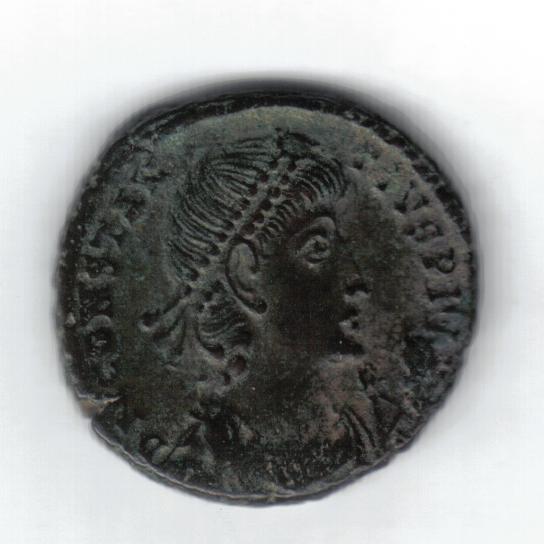 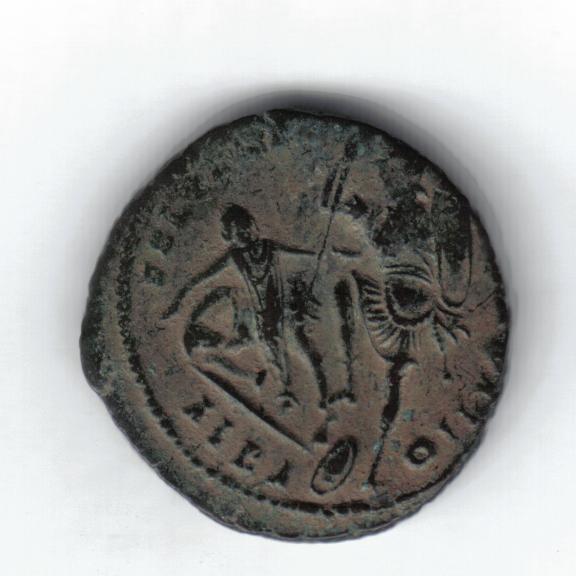 |
|
Pillar of the Community
United States
4253 Posts |
Sand patina or dirt. An age old question. I have seen coins from Europe with what is described as "sand patina", but this is only compacted dirt with the light coloring of sand.
In actuality, sand patina is not really patina at all either, but a layer of dirt or sand. Depending on what kind of dirt, it takes on different colors like Syrian red (highly sought after). Coins from middle east desert areas sometimes have this "patina". The sand on these coins is very dense and made up of extremely fine particles (different from their European cousins where the dirt is much less dense nor so fine).
Some coins look better with this "patina" in the fields making a nice contrast. Like my coin, this is called "desert patina".
JW
|
|
Pillar of the Community
United Kingdom
2838 Posts |
Nice looking coin JW - I also didn't really know what 'sand patina' meant, nice one  Would this be considered a Syrian red? 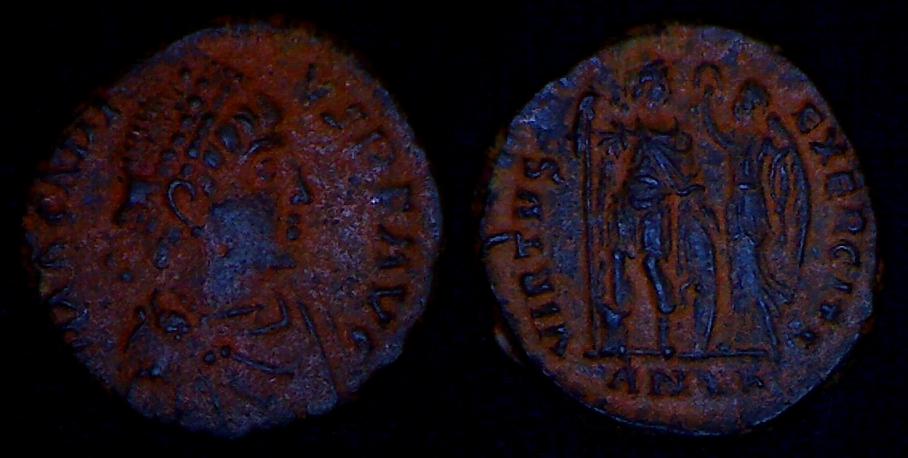 |
|
Pillar of the Community
United States
4253 Posts |
This image is dark, but from what I see, yes to your question. The Syrian Red coloration is connected to the ground where the coin/coins have been found. Basically the patina is a protection created by nature. In the case of this coin, I would surmise it was found buried somewhere (Syria?) where the sand takes on the color or tint of red. When I've been to the Middle East, I've seen areas where the landscape has a reddish hue.
There are three types of Patinas. The first is genuine patina created when there is interaction of the metal of the coin with the surrounding elements changing the coin's color. These are the strong brown, green, or brownish green hard outer shells we see so often in Ancients. It is truly a shame to zap this patina off a coin. In my estimation, this patina not only adds to the overall appearance, but adds to the value of any coin.
The second patina is "sand patina" which is sand that gets stuck to the coin after going through hundreds and thousands of years of seasonal changes that carry with it the heat, the cold, and the humidity. With all these changes and with time the sand around the coin stick to the coin like crazy glue and is quite difficult to remove. Sand patina comes usually in two colors: ordinary sand color like the one I posted and the red sand color that resembles the soil found in your garden like the one Bobbyhelmet posted. The red patina, as I said earlier, is highly sought after for some reason. Perhaps because of it's rarity, but I don't know for sure.
And the third patina is the fake patina created by chemicals like acids. I have no idea how this process works, nor how to go about making a fake patina. I've read that in some places they feed these coins to goats and then "harvest" the coins (yuk). The acid from the stomach of the goat interacts with the metal of the coin to create a fake patina. I don't know how this works since I have not owned a goat for some time now. I would suppose a chemist could tell us the particulars, but not me.
I hope all this helps a little. If someone else can chime in to make it clearer, be my guest.
Regards,
JW
|
|
Pillar of the Community
United Kingdom
2838 Posts |
Quote:
I don't know how this works since I have not owned a goat for some time now  Good info, its not an area I had thought about much until recently. |
|
Pillar of the Community
United States
4778 Posts |
Eww lol.... This is a longshot I know, but just wondering: does anyone here have an ancient that they know for sure has gone through a goat's gut? lol definitely want to see a pic of one. |
|
Pillar of the Community
United States
4253 Posts |
Quote:
Good info, its not an area I had thought about much until recently. What haven't you thought much about until recently? Patina or Goats? As a side note, I bought and drank coffee in the Philippines where the beans were eaten by mongoose (geese) and then harvested. The most expensive coffee in the world at about $400 an ounce. BTW the coffee was good but Starbucks is better. No after-taste if you know what I mean. JW |
| |
Replies: 17 / Views: 3,863 |







 Posted 10/08/2011 10:08 pm


