| Author |
 Replies: 25 / Views: 4,578 Replies: 25 / Views: 4,578 |
Page 2 of 2
|
|
|
|
New Member
 United States
47 Posts |
Dear All,
Thank you for all your informative replies. I myself thought plated as well, but if that were the case the weight would be fractionally higher but it is not. Both coins in the photo weigh 11.3 grams (i.e. both the coin in question and the one next to it that I included for a comparison).
Then I too thought polished, but if that were the case the high points would be pretty pronouncedly worn and while the coin shows signs of having circulated it is not really worn much ...
Later tonight I will try to take a half-way decent photo of the reading (edge) and post it to see what the thoughts are on it.
Thanks again for all your input.
|
|
Moderator
 United States
196320 Posts |
Quote:
I myself thought plated as well, but if that were the case the weight would be fractionally higher but it is not The actual amount of metal added during the plating process (even if it were on both sides) is insignificant. The total weight should stay within tolerance. Quote:
Later tonight I will try to take a half-way decent photo of the reading (edge) and post it to see what the thoughts are on it. Excellent!  |
|
New Member
United States
47 Posts |
Hello again, once again thank you for all of your reviews thus far. I have now taken photos of the reeding (edge) of the coin. The first photo is of the coin in question, the second is of a regular business strike, in both photos the "heads" side of the coin is facing upwards. Hopefully these are decent enough to view here. I appreciate any opinions based on these added pictures. Just to add, in vignette. Based on everyone's feedback and data. I see the following: - I don't think it is plated. The reasons to support this view are: A) The weight is the same as a regular business strike coin (11.3 grams) plating the coin would increase the weight slightly. This not being the case I rule out the possibility of the coin having been plated. B) Doing a one sided plating job would be extremely hard (in my humble opinion) - I know a lot of folks thought the coin had been polished. If it was only "shiny" then I would concur, but the thing is that it is mirror like -- not just shiny. Even inside the small "o" in the "in god we trust" inscription. Now I have done a lot of polishing of metals (aluminum, stainless) and even had to bring some of it up to near mirror like level. How anyone could polish a minute area (like that inside the "o") boggles me. I don't think it is possible (perhaps under a microscope with minute polishing tools and many hard hours... but then that is stretching it a little don't you think?) But then to say it is a bonafide one-sided proof is also not correct, the reason for this is: A) The only proofs made of this coin were in the San Fran Mint, however this coin bears no "S" mint mark B) The actual JFK head is not cameo Thus I would conclude that when this coin was struck the die had not been sandblasted yet (I read that this is done prior to minting with the die when making business strike coins) and thus left a mirror like impression on the coin in question here. I am not sure what type of error category this would then fall into... or if this reasoning is sound but that is what conclusion I have been able to arrive @ based on all the data I have been able to get and evaluate. Whats your take on that? (Sorry to go on for so long) 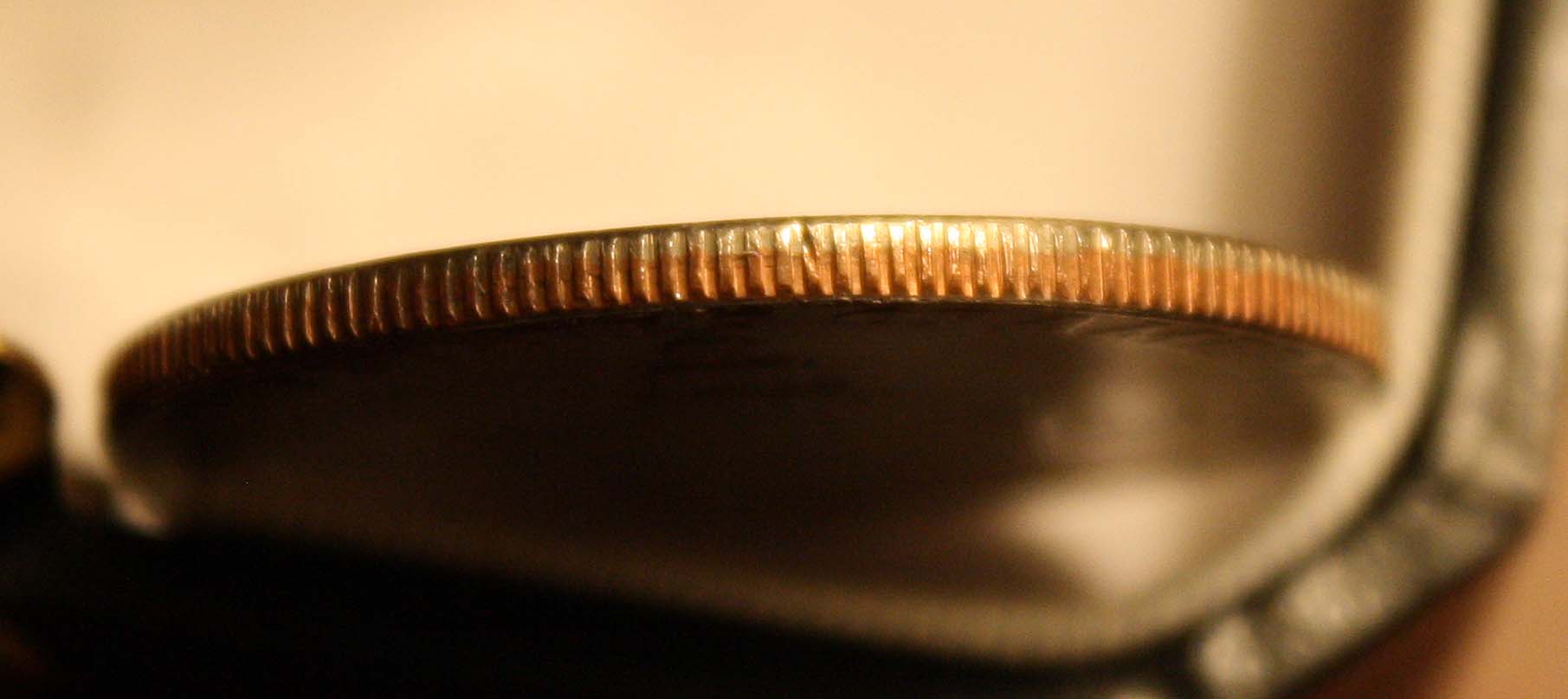 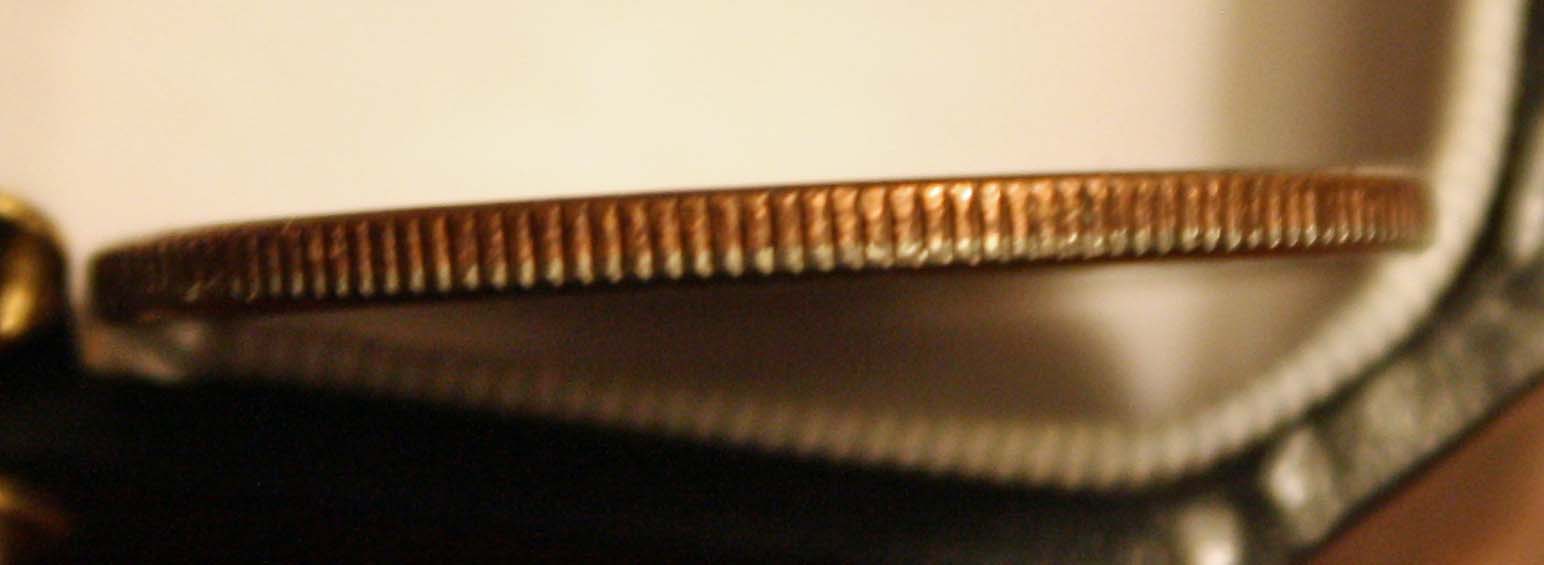 |
|
Pillar of the Community
United States
4132 Posts |
There is no such kind of error, the coin is just polished. The closest thing to what you describe are proof-like or deep mirror proof-like coins from very early state or polished dies (most well known from Morgan dollars). They can affect a single side of a coin, but they look nothing at all like your coin. It is very, very common to find polished and plated half dollars. I have at least half a dozen in my junk box. |
|
Bedrock of the Community
United States
17884 Posts |
Quote:
A) The weight is the same as a regular business strike coin (11.3 grams) plating the coin would increase the weight slightly. This not being the case I rule out the possibility of the coin having been plated. How do you know it is not the case? If it was plated you don't know what it weighed before it was plated. A clad half can weigh any where from 10.89 grams to 11.79 grams and still be within mint tolerances. So there is no way to know if the weight has been changed or not. Quote:
B) Doing a one sided plating job would be extremely hard (in my humble opinion) Take coin, paint one side with melted wax. Let cool. Plate coin. Warm coin and remove wax. Very simple. Dies are not typically polished to mirror finish at the mint. Usually they are shipped to the Canadian mint, polished and then sent on to San Francisco. Where would a polished Philadelphia die have come from? Slight chance it was shipped to Canada by accident, polished, noticed and returned to Philadelphia before sandblasting. But why would they have used it in that condition? And if they did there would be a lot more of these known. It is an interesting piece though. |
|
New Member
United States
47 Posts |
Hello, Submitted the coin to ANACS today along with a letter detailing what I have done so far to prove or disprove this being a tampered with coin. We'll see what I get back... will let you know once I do.  |
|
Bedrock of the Community
United States
12437 Posts |
I guess if you want to waste your money, that is your prerogative. However, you probably should have taken the time to read some of the other threads posted here by wishful collectors who also ended up wasting their money- https://goccf.com/t/112166There is a wealth of knowledge on this forum yet some people seem to completely ignore it. I am not sure what you are trying to accomplish by sending a letter, the graders will not see it and they will make an independent determination of the coin which will certainly be returned as Problem Code 02 ALTERED SURFACES. Edited by biokemist6
04/12/2012 6:34 pm
|
|
New Member
United States
47 Posts |
 okay, I read that post you linked ... well... I was not trying to be know-best... though it probably came across that way. The coin is in the mail now ... Your point is well taken though. |
|
New Member
United States
47 Posts |
So it came back today from ANACS. It was slabbed as "1976 AU 55 Details - Obverse Polished"
I assume that this means that either the die was polished or the planchet was polished prior to striking.
Anyone heard of this before? Does anyone know whether this refers to the planchet or die being polished?
I wasnt able to find this "variety" anywhere on the web... trying to weigh my options. I.e. keep it part of my collection or sell it. It if is worth enough to perhaps make a good dent in my mortgage then I'll probably sell it otherwise I would hang onto it. Anyone know where I could turn to to get some more data on this type of "detail" or variety?
|
|
Moderator
United States
196320 Posts |
It means that the coin itself was polished. That is, it was polished after it was minted.
|
|
Bedrock of the Community
United States
12437 Posts |
As many posters have already stated before you wasted your money, it is a post-mint polished and damaged coin worth exactly fifty cents whether it is in a fancy piece of plastic or not.
|
|
Moderator
United States
15950 Posts |
Sometimes the best lessons come from personal experience ... hoping that you gain some knowledge from this one. Quote:
It if is worth enough to perhaps make a good dent in my mortgage then I'll probably sell it As many knowledgeable CCF numismatic experts pointed out before you spent the money on grading this coin ... it is a damaged coin whereby the polishing happened in somebody garage. The coin is worth 50 cents as a USA legal tender issue half dollar ... Hoping you stick around and continue to gain knowledge from our experts. David Take a look at my other hobby ... http://www.jk-dk.art |
|
New Member
United States
47 Posts |
Dear All, Well I certainly learned many things and am, in retrospect, not aggrieved over the route I took - seeing that the lessons learned and data gained were, in my humble opinion, worth the trouble and $. I would have thought that if it were polished after-the-fact (of minting) it would not have been slabbed by ANACS as it would have been considered an altered (post minting) coin ... but I guess that assumption was in error. So do I have this right, ANACS will slab (certify) polished coins (post minting) but will not slab coins that have otherwise been altered post process (i.e. plated, whizzed, etc)? BTW, the box that I pulled that one out of also had 14 (fourteen) 65 to 70 Kennedy halves and a 64 half. So none the less the box was well worth the trouble. And yes, I will certainly stick around to learn more! |
|
Bedrock of the Community
United States
12437 Posts |
Quote:
And yes, I will certainly stick around to learn more!
Good, that is exactly what we want to see happen Education is the key to preventing mistakes such as that one. |
|
Moderator
United States
196320 Posts |
Quote:
Well I certainly learned many things and am, in retrospect, not aggrieved over the route I took - seeing that the lessons learned and data gained were, in my humble opinion, worth the trouble and $. I honestly believe that one should not put a price on a good education. Your attitude will take you far. Quote:
So do I have this right, ANACS will slab (certify) polished coins (post minting) but will not slab coins that have otherwise been altered post process (i.e. plated, whizzed, etc)? They will slab cleaned, polished, plated, and whizzed coins. This is why the "details" designation is used; it says "there is a problem with this coin." |
|
Page 2 of 2
|
Replies: 25 / Views: 4,578 |
Page 2 of 2
|







 First Page


 Posted 04/10/2012 5:56 pm


