| Author |
 Replies: 19 / Views: 5,125 Replies: 19 / Views: 5,125 |
Page 2 of 2
|
|
|
|
Pillar of the Community
United Kingdom
739 Posts |
|
|
Moderator
 United States
23731 Posts |
|
|
New Member
 United Kingdom
8 Posts |
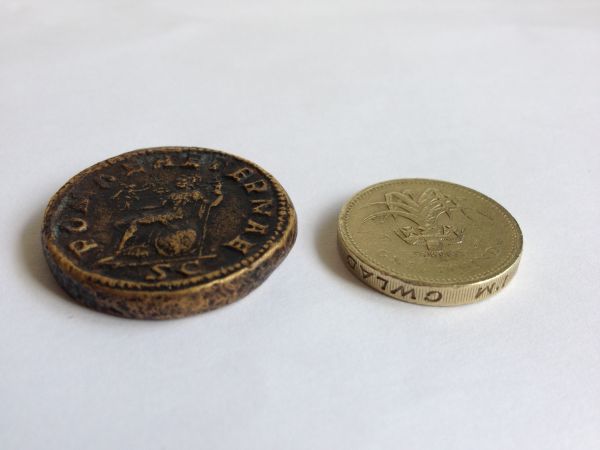
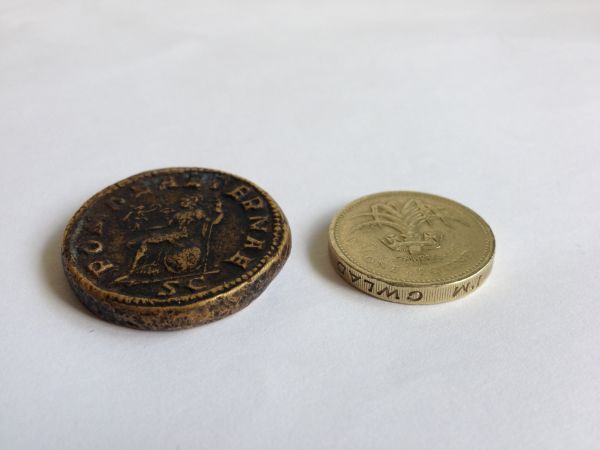
Ah that's a shame! I guess a pretty bad copy then, as the colour is different, and mine seems thicker than the picture of the genuine? Anybody know anything about these copies? When were they made, where, why etc? Also mine seems to have faded lettering, the strike (or not as it may be) seems slightly off centre giving an overlap effect etc, was this done to make it look more realistic as if it were struck?
Thanks for the answers so far
|
|
Pillar of the Community
United Kingdom
4208 Posts |
Make it more realistic or it was taken from a real one which would be like this.
Why? Because most of the money on planet earth is in the hands of people who like shiny things and dont know the difference between real and fake roman coins. Or perhaps it was a souvenir - a teaching aid, perhaps. Who knows? A lot of fake roman coins get sold in gift shops - these are properly marked. The unmarked ones are through more nefarious means - but this could simply be before the laws were imposed.
|
|
Pillar of the Community
United States
3497 Posts |
It actually is a rather nice copy and does have some 'value' as a placeholder in a collection. If I found it in a local shop or on ebay I know I would spring $20 for it ..... maybe a bit more. It is not completely without redeeming value ! |
|
New Member
United Kingdom
8 Posts |
That is a real shame, but I guess their are many fakes floating around.
Can I ask what the reasons are for everyone thinking fake? Is it the colour, the condition, something else? Would be nice to know what makes it stand out as a fake.
Thanks again guys
|
|
Moderator
Australia
17007 Posts |
Things that stand out, for me: - The colour. It is "supposed" to be brass and your piece is indeed brass, and ancient brass does turn black over time. But the black layer on genuine brass coins is rather thick; this layer on your coin is so thin it has worn away in patches. This is, however, what you would expect to find on a modern brass piece (or a genuine but overcleaned coin) that had a quick artificial ageing process applied to it. - The "porous" appearance. This, too, can appear on genuine coins as a result of corrosion, but it is more commonly a sign of being a cast copy. Related to this is the general lack of detail, especially on the reverse where seated Roma's head has all but disappeared. - The "cracks" visible running through the coin in places, most notably on the emperor's cheek and neck. Such cracks are almost always a sign of the coin being a cast fake that cooled too quickly in the mould. - The "green fuzz" showing up in places. his, too, can appear on genuine ancient coins - and it is usually bad news when it appears, as it is a sign of "bronze disease", an infectious form of corrosion - but it also appears on modern replicas which have been artificially aged by chemical means. As you can see, there's no one "Aha!" clue that definitively proves this is a fake - it's all the little clues, adding up. Quote:
Anybody know anything about these copies? When were they made, where, why etc? People have been making fake ancient coins for hundreds of years, for all sorts of reasons. I suspect this one has come from the tourist areas of Greece, Turkey or Italy. It is illegal for tourists to buy and sell genuine ancient coins in these countries, but it is perfectly legal to sell fake ancient coins. Don't say "infinitely" when you mean "very"; otherwise, you'll have no word left when you want to talk about something really infinite. - C. S. Lewis
|
|
New Member
United Kingdom
8 Posts |
-sap- Thanks for your detailed reply, I really apreciate the time taken to explain the points. I'm sure it is just my mind not wanting to accept it is a copy, but I still have a few questions, the main one being where it was found. All your points bar one can apply to a real AND a copied coin, so although you raised many points, surely their is still a slim chance it could be a genuine? I was looking through an earlier post where someone had purchased a genuine similar coin from an auction, and have put the 2 pictures side by side. Mine on the left the "Genuine" on the right. Please correct me where I am going wrong. They both appear to be brass in colour, they both have a black layer, and both are worn away in patches. They both lack detail in certain areas which you say is a good indicator of a fake (Feet and head on the genuine), so maybe it is just my amateur coin eyes, maybe it is myself not wanting to accept it is a fake, but they both seem to have a very similar condition about them. Is their anyway of finding out if this is a fake 100%? It's also that the story of where it came from doesn't fit. It was found under floorboards of a very old house (5-600 years old) Their were a few coins with this one, some tudor, but mainly from early 1700's to 1920's, all clearly fallen through the gaps at some point. Surely most of the copies have been made in this century for tourists, wheras this coin would have been under the boards for almost a century or more. I cant understand how this came to be under the boards of a peasants cottage? They wouldnt have been holidaying in Europe! Any more thoughts? 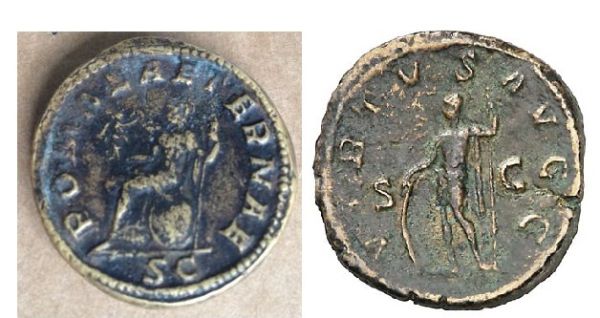 Edited by sainty
05/21/2013 12:21 pm
|
|
Pillar of the Community
United Kingdom
4208 Posts |
Note how the coin in the picture is rougher - flan mishapen, details dissapearing into the patina.
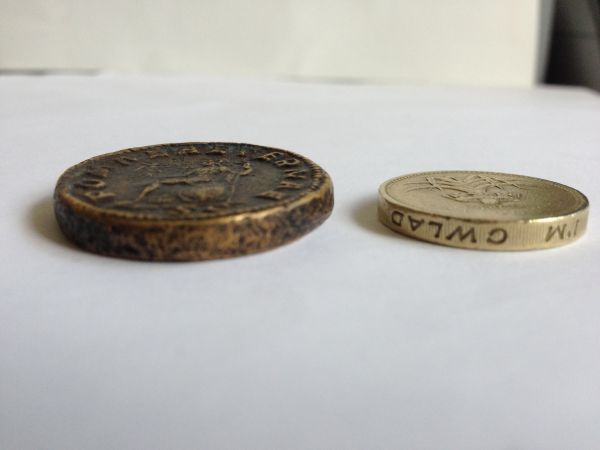
One thing which is pretty indicative of the old cast fake is the edge. Usually a seam is there - often they try and hide it though. Ig you could get a picture of the edge it would help.
Lots of fakes are very old - older ones are worth a bit on their own. Victorians loved historical stuff (especially egyptian) but without detectors coins were hard to come by. they would therefore produce these fakes.
And they were demolishing a 500 year old cottage?!? Why?!
|
|
New Member
United Kingdom
8 Posts |
|
|
Moderator
United States
23731 Posts |
If you are located in the UK an close to London, you can take it to the British Museum and have it checked out. If not you can send it off to David Sear and he will be able to certify if it's real or not. You will need to check his website to see how much it would cost you. You will need an expert in ancient coins to check it out. I wouldn't just take it to a local coin shop, most shop know very little if anything about ancients.
|
|
Pillar of the Community
United Kingdom
4208 Posts |
No seam, but it is a fake. The fake reports show many, all from the same original die, which match this exactly.  Unfortunately, there can be no doubt when it comes up on the fake reports. Sandcast for tourists, apparently in Turkey. But this could mark the start of a good collection - real roman coins are cheap and plentiful (albeit a real coin of this type would cost many hundreds). |
|
New Member
United Kingdom
8 Posts |
Ah their it is! Is their anymore information on the fake coin, and can I access it online?
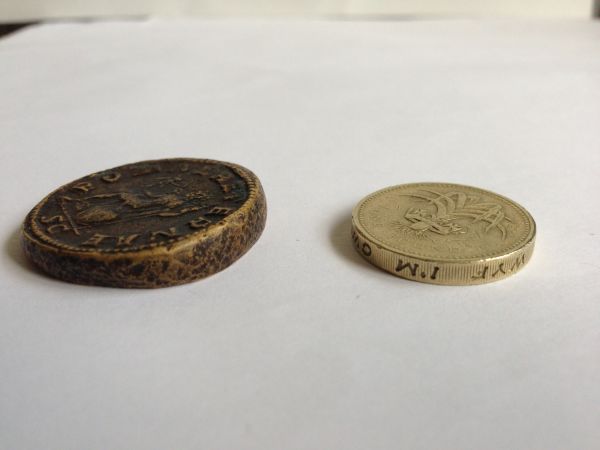
The ONLY difference I see is that my coin has a dotted pattern around the edge, whereas the picture of the copy doesn't. It actually appears the edge is smooth. Is this just because it has been worn on the copied coin? If they came from the same die I would expect the dotted edge to be on both?
Thanks again guys.
|
|
Pillar of the Community
United Kingdom
4208 Posts |
Dots have been worn - perhaps by the 'antiquing' process. The dots are there - just offset as this one is off center at a different angle. The depatinating process also highlights such things ans this one has been prepped to have a full patina.
Some variation is present in copies - be it from the flan, hows it struck or what happens to it afterwards. The key thing to do it to match the details of the coin.
So, now you have a (very high quality, in my opinion) fake, will you be going for a real coin?
|
|
New Member
United Kingdom
8 Posts |
To be honest, coin collecting has never really appealed to me. I can see the fascination of owning some very old and unique coins, but it's just not for me so I think I will just hang on to my fake.
Thanks again for everyone's help, and cheers Ben for your help.
|
|
Page 2 of 2
|
Replies: 19 / Views: 5,125 |
Page 2 of 2
|







 First Page


 Posted 05/20/2013 3:35 pm