| Author |
 Replies: 52 / Views: 9,715 Replies: 52 / Views: 9,715 |
|
|
|
|
Valued Member
United States
122 Posts |
that 19b is a tremendous coin
|
|
Valued Member
United States
462 Posts |
My 19b was 1st published in Error Trends Coin Magazine in the 80's. I purchased it for $50. from a small time coin dealer in Somerset, PA. who said he bought it from someone in Hawaii. My hobby was collecting error coins at the time, especially off metals and Cuds. I sold the coin to an avid Cud collector from Dayton, OH who passed away many years ago. His name was Keith Klopfenstein. I lost track of the coin until Fred Weinberg wrote an article many years later......not sure if it was in Error Trends Coin Magazine or the Errorscope. The coin appears to be my discovery piece which was a Ch. AU example but I can't tell for sure. Not sure if Fred still has it but I'll bet he does. I didn't know the VAM significance of my find until years later. I am not sure when the VAM listings even started. I often wish I had that coin back but my budget was tight during that time and I could not afford to hold on to every coin I purchased. At least I can say I was the first to find that one and it may be truly unique if my example and Fred's are the same coin. |
|
Valued Member
United States
122 Posts |
If I remember correctly I saw one passed around the dinner table at FUN in 2014. There is one listed on SSDC registry site - ANACS AU58. Nice Retained Cuds are tough to come by. |
|
Pillar of the Community
 United States
1551 Posts |
I love the collapsed die coins Dave. This is a note that will be on its way to Leroy, as well as the technical info from 2 of the guys I spoke with.
On that subject I have spoken with 2 die makers and a metallurgical engineer. Coins like the 1880 O V-45a and the 1891 O V-19 and alike from what I have been told are in fact "improperly hardened dies" They all stated that this effect is caused by the inside of the die being softer and as the die is struck the harder outer shell of the die stretches over the collapsing inner die. The reason why the relief's of these type coins hold onto their detail better, is due to the work hardening in manufacturing. I showed the 1880 O V-45a, 1891 O V-19, 1901 P V-20 to D. Dacone of Ohio High Speed Machine, he knew right away what the cause was. He stated that to properly harden a die the metal has to be the same temp inside of the die as the outside. If the core of the die or center part is not equal the metal will be softer and as the die is struck. The softer metal compresses and the outer shell of the die stretches into the collapsed or compressed area. This effect is best demonstrated on the 1880 O V-45a and the 1891 ) V-19
|
|
Pillar of the Community
United States
1700 Posts |
Mine would be my 1934 VAM 1A. I just can't imagine how a scratch this long and this deep could happen? 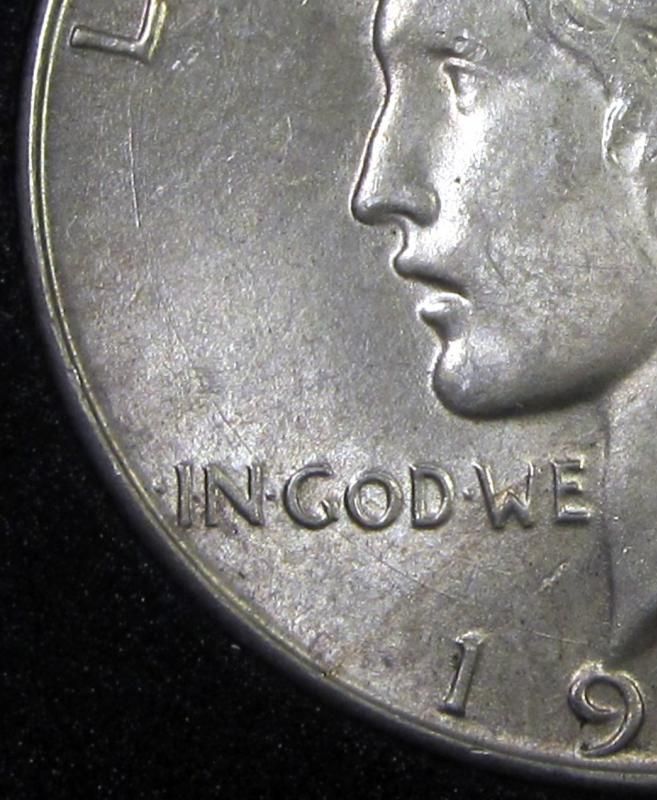 |
|
Moderator
 United States
23522 Posts |
There are VAMs across the spectrum which show evidence of dies collapsing; it'd make an interesting specialty.  |
|
Rest in Peace
United States
10625 Posts |
Edited by dave700x
02/24/2015 9:30 pm
|
|
Pillar of the Community
United States
1551 Posts |
Dave, I spoke with Dan Carr today and we spoke for about 1/2 hour on this subject. He stated that a die that is really soft will belly out of round. The diameter of the die will mushroom out like if you put a marshmallow on a table and apply pressure to the top, he has had this happen with a die he prepared improperly. He is under the impression that this would come from a combination of slightly softer inner center die metal (AND) improper annealing of the die afterwards. He stated that after you harden the die it becomes more brittle and would break or crack under the pressure in striking much faster. So after hardening the mint would (lightly Anneal the die's face). This is done to allow the striking surface a little give so the die life is extended. A combination of a more pliable surface and collapsing or compressing metal in a confined space will lead to this effect. The type of metal, imperfections within the die blank and workmanship in manufacturing all can play an effect. From what I can make out there are about 30 odd die pairs that show some form of this effect. Compared to the whole number of die's manufactured its a very small number, so I believe that both D Dacone and D Carr are correct. It is very fun to work on the "Why". As most issues are mechanical in nature, one would thing that things could be reproduced. None of us have a time machine, and the strange die states and clashing that occurred DID HAPPEN as we have the "Coins to prove something happened. When you eliminate the probable, we must look down the latter at the improbable.  Edited by twohawks
02/25/2015 07:20 am
|
|
Pillar of the Community
United States
2130 Posts |
well mine is the 1878 P 2nd rev VAM38 7/5 tail feather, long nock, largest die shift
|
|
Pillar of the Community
United States
1314 Posts |
ie 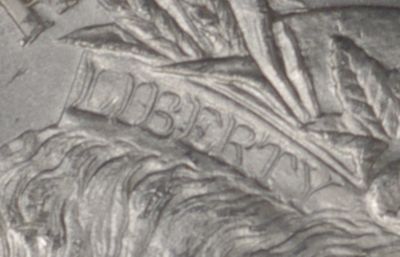 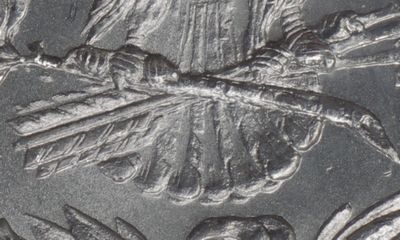 |
|
Pillar of the Community
United States
2130 Posts |
That's the one  |
|
Moderator
United States
23522 Posts |
38 is a fascinating coin, indicative of just how much a fire drill the Mint was in the first weeks of Morgan production. They went through the 8TF, B1 Long Nocks, 7/8TF's like 38, B2 Short Nocks and into the C Reverse in 4 weeks.  |
|
Pillar of the Community
United States
2130 Posts |
That's an interesting bit of history SD Thank you
I think I have two. Not really sure though. I'd have to have a look.
|
|
Pillar of the Community
 743 Posts |
|
|
Rest in Peace
United States
10625 Posts |
|
|
|
Replies: 52 / Views: 9,715 |
|








 First Page
 Previous Page

 Posted 02/22/2015 5:13 pm


