| Author |
 Replies: 56 / Views: 5,510 Replies: 56 / Views: 5,510 |
|
|
|
|
Pillar of the Community
United States
513 Posts |
I had a minor memory lapse and my Galerius isn't silvered, but I'll post the set up anyway. Clockwise from the top left, Diocletian, Maximian, Constantius, Galerius. The Maximian has a cool portrait with a helmet type I haven't seen too often on coins.  |
|
Pillar of the Community
 United States
2596 Posts |
|
|
Pillar of the Community
United States
836 Posts |
What metal are these coins, how does silvering happen?
|
|
Pillar of the Community
United Kingdom
3626 Posts |
The others can probably give more technical details, basically, the coins are bronze, but because the empire was becoming short of money, they started to give the coins a silver "wash" to make them look silver.
|
|
Pillar of the Community
United States
513 Posts |
There were a couple methods used to 'silver' coins, the one I know the most about was that they would make the blanks with a ~2% silver, 98% copper mix, then they would dip the coins in an acid that only ate away the copper, leaving a very thin silver layer on the outside. They would then strike them and end up with a very silver looking coin, with hardly any actual silver content.
|
|
Pillar of the Community
United States
1315 Posts |
I missed this topic first time around, but I'll add a couple to it. I have no idea how they were made. Here is Carinus and his brother Numerian. 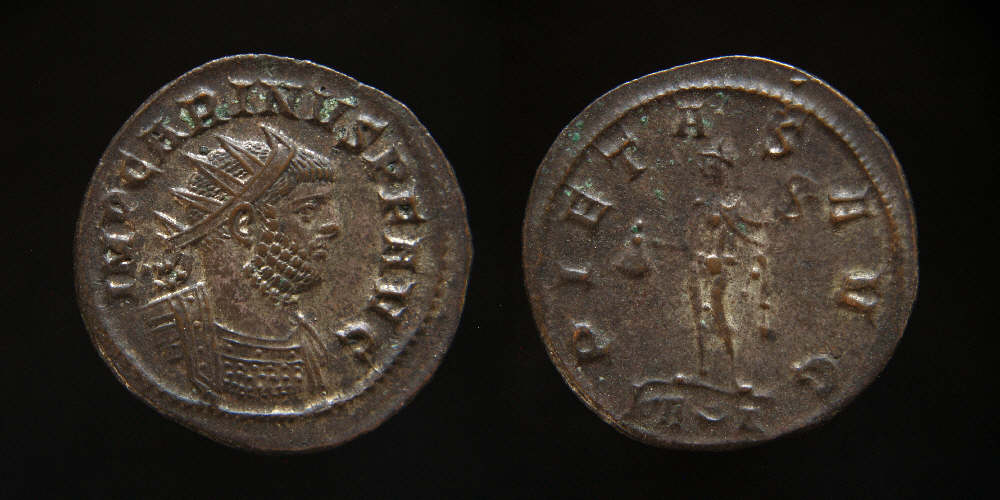 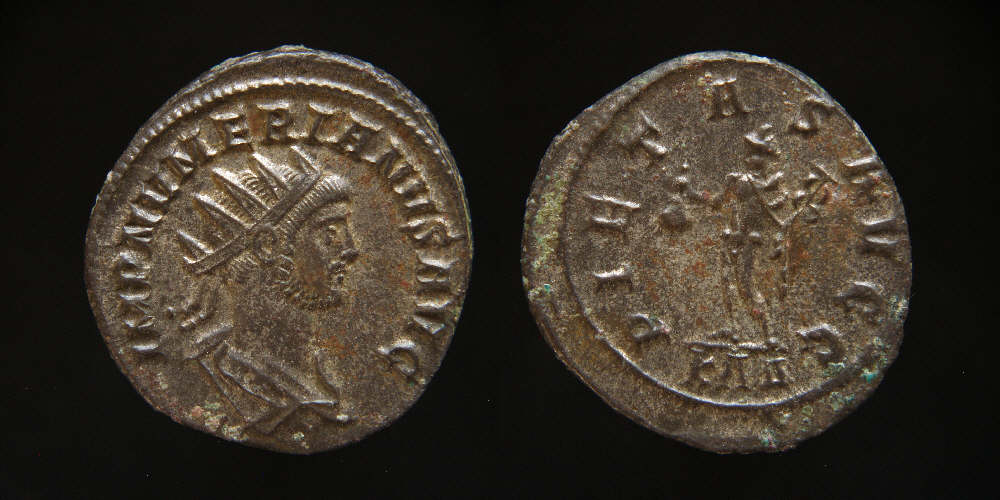 Then I have these two newer acquisitions, Gallienus and Probus. The Gallienus is fully silvered. These two are the seller photos, as my camera is down right now. 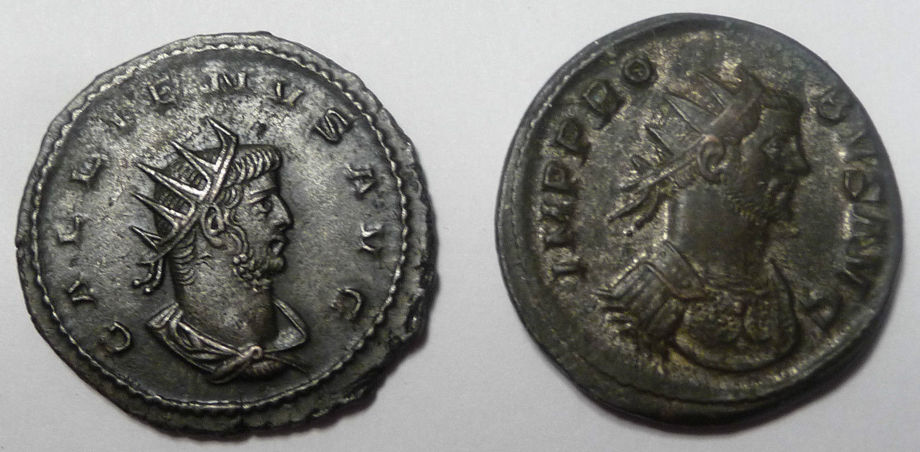 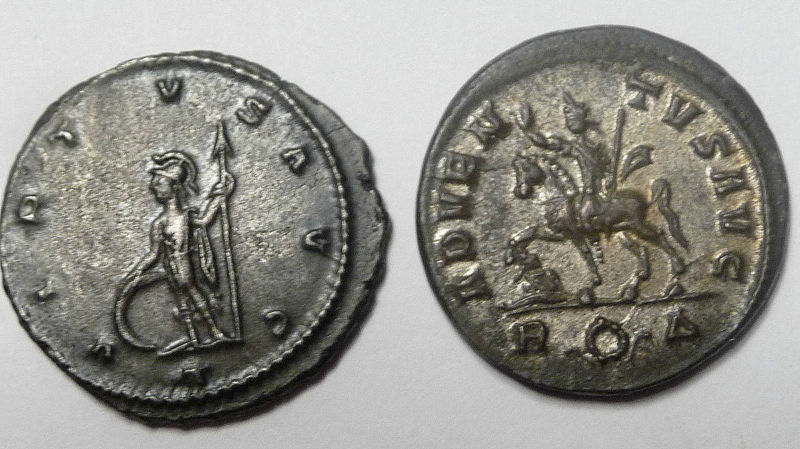 |
|
Pillar of the Community
United States
2596 Posts |
Nice coins doucet... I'm not sure anybody really knows how the ancient romans silvered their coins. I've heard a couple theories. The silver wash method and another method where they pickled the coins to bring out the silver color. I'm not even sure where I heard about the pickling method either.
|
|
Pillar of the Community
United States
2596 Posts |
|
|
New Member
United States
26 Posts |
Constantius I, father of Constantine the Great, silvered bl nummus 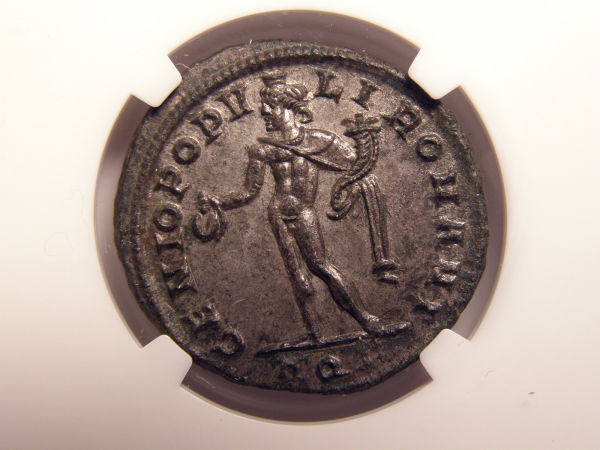 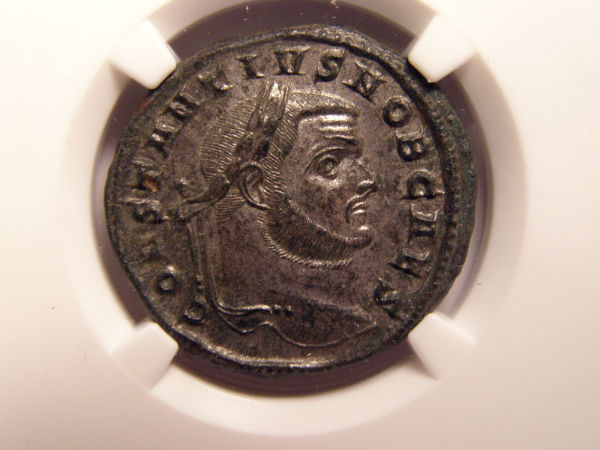 |
|
Pillar of the Community
United States
836 Posts |
Oh okay, so it was intentional. I thought it had to do with how the coins were conserved in the ground, and the silvering was just how the patina developed. So basically they did it to make there money appear to have a higher value then it really did, so they could buy/trade for more value of whatever then the coin was really worth?
|
|
Pillar of the Community
United Kingdom
3626 Posts |
That's about the size of it.
|
|
Pillar of the Community
United States
513 Posts |
Well, if you follow the trends in silver coinage at the time it's almost a logical progression. Denarii started out as basically totally silver. When mined from the ground silver has some impurities, and these remained, but besides that (and the occasional unscrupulous mint worker who threw in some bronze and stole some silver) they were about as close as they could get. In times of war they would sometimes debase the silver, and the denarii made then would end up getting traded much longer than normal, because it made less sense to melt it back down when you could spend it as a regular denarius even with the lower silver content. This is one of the reasons that the really cool Marc Antony denarii are usually in terrible shape; there is evidence that some were circulated for over 200 years. So then people started figuring something out: if I'm running short on silver, all I have to do is put a little less silver in a coin and I can make more of them! And they look practically the same, so it's basically free money! (Inflation was not well understood in the ancient world.) Nero was the first to make a policy of debased money in Rome, going from 4g of silver to 3.8g (64 AD). By the time of Septimius Severus (190s AD) it was down to 1.82g. Around that time people started wondering if maybe this was a problem and Septimius' son and successor Caracalla decided to make a new type of coin, the double denarius (commonly known as the Antoninianus, based on one of Caracalla's real names.) The reason it isn't commonly known as the much easier to spell double denarius is that it wasn't actually the silver weight of two denarii; it was the equivalent of 1.5. People realized this quickly and hoarded the denarii, but the denarii ceased to be minted after a while. The antoninianus was also debased, being reduced to 40% silver by 240 AD (still looks about right), to 30% silver by the 250s (wait a minute, why is this so much less shiny than my old coins?), 20% silver by the 260s (why'd you put silver in this bronze coin?) all the way to the 'who's leg are you trying to pull here' level of less than 5% silver in the 270s. This was an era of great trouble for the empire, and it must have been blindingly obvious, particularly on pay day. So along comes Diocletian who decided, like he did for most things in the Empire, that the currency system had to change. He declared that there would be a pure gold coin (the Solidus, which was wildly successful), a pure silver coin (the Argenteus, which was not successful), a 5% silver coin (the Follis, which was somewhat successful), and a couple other smaller bronze coins that didn't really take off. Do note that those names, other than the Solidus, were given to the coins by historians. Somehow we don't know what they actually called them. To get to the end of a long story, the follis, and some later double denarii from just before this period, were silvered. The method isn't exactly pinned down but it was very likely what I described earlier, where the <5% silver blank was soaked in an acid that attacked the bronze but left the silver, leaving it coated in porous silver. Once the blank was struck the silver was smoothed out and the coin looked basically silver. It was really the only way to make it clear that there was any silver at all in the coin. Whether this was a purely psychological ploy and everyone knew it was a thin layer or it was done to take advantage of those that didn't know I don't know, but it didn't seem to work that well in either case, and the western empire would experience massive inflation issues for the rest of its existence. Here are some examples of the degradation of the fineness of the silver coins during the crisis of the third century: http://en.wikipedia.org/wiki/File:D...ninianus.jpgEdited by chuy1530
05/20/2014 10:33 pm
|
|
Pillar of the Community
 Canada
9909 Posts |
Thank you for sharing that chuy1530.
"Dipping" is not considered cleaning...
-from PCGS website
|
|
Pillar of the Community
United Kingdom
2121 Posts |
There was another reform before Diocletian. Aurelian introduced a reform of the coinage and most coins had a value mark which is why we see coins from this period marked with XXI. This XXI gives an indication of the ratio of silver to base metal. There is some debate as to the exact meaning but the XXI (sometimes KA) is accepted as being 1 part silver to 20 parts base metal, which matches with the metallurgical testing on coins of this period. There appears to have been a few experiments during this period with the creation of a new double antoninianus with the value mark of XI. These are generally rare which would seem to indicate that the experiment was not very successful. Here is my XI value coin. Tacitus Double Antoninianus Obv:â€" IMP C M CL TACITVS AVG, Radiate, draped and cuirassed bust right Rev:â€" CLEMENTIA TEMP, Emperor in military dress standing right, holding short eagle-tipped sceptre in left hand, receiving a globe from Jupiter standing left, holding long sceptre in left hand Minted in Antioch (H//XI) Emission 3, Officina 8. January â€" June A.D. 276 Reference:â€" RIC 211 Bust Type C. RIC Temp No. 4096  |
|
Pillar of the Community
United States
836 Posts |
Thanks chuy1530 for the information and also thank you maridvnvm for expanding upon it a bit more. This is all really interesting. I don't know why it has taken ancient coins so long to catch my eye.
|
|
|
Replies: 56 / Views: 5,510 |
|




 First Page
 Previous Page


 Posted 05/17/2014 12:32 pm





