| Author |
 Replies: 28 / Views: 7,741 Replies: 28 / Views: 7,741 |
Page 2 of 2
|
|
|
|
Bedrock of the Community
United States
11951 Posts |
Quote:
Data from the work of others is dangerous, not useful. I do not totally agree. In the little problem solving training I have had, is the data to use from others work .. is what did not work ....so you don't repeat it. But of course your right .. in this case each coin would have different results. What might be nice to know .. is that max you might dip a coin. From coins I have dipped, I seem to get different results with copper, nickel and silver coins. (have never tried dipping a gold coin) After bad results with copper and nickel coins, I pretty have given up on dipping those. But would be willing to try again. My thoughts are, for a coin like a proof Ike, with milky toning. The amount of time it might take to dissolve the toning, would make the mirror surfaces dull and not very attractive. Again ...just my opinion ... |
|
Moderator
 United States
23522 Posts |
Just carl has a point. It should be stipulated that the term "dipping" has a precise numismatic definition involving the use of a thiourea solution to acid-strip the surfaces of a coin. The fact that the term can be used with other connotations doesn't change what most experienced numismatists hear when the word "dip" is used. The "standard" dilution considered "full strength" is what you get straight from a container of E-Zest. This stuff works well on silver and nickel, but in my experience (  ) turns copper an ugly unmistakable orange. One may assume (although I've heard stories of outliers) that a maximum of ten total seconds in dip will kill a coin. It may be diluted in water, and the speed of the effect is diluted in nice linear fashion. It's a subject which should never be discussed casually, as dangerous in its' way as acetone is in another. |
|
Pillar of the Community
2087 Posts |
This thread seems very much akin to the effect seen with a big red button with a label saying don't push has. Some one has got to push that button!
|
|
Moderator
United States
196100 Posts |
Do not push the button.  |
|
Pillar of the Community
 United States
6016 Posts |
Looks like AcesKings already pushed the button. And that pretty much answers my question...
|
|
Pillar of the Community
Canada
5420 Posts |
Do NOT open the jewel lustre and step away from the dipping jar!  . Any of us here have all tried dipping cleaning and various other methods of "conservation". Some are somewhat successful and some are disastrous. If the coin was a valuable early proof or mint state coin NEVER touch it, you can try NCS or a conservation service . For a cheap proof with hazy toning sure give it a go to see what happens. If you dip a US clad silver proof you can often tell it is a dipped coin as the edge copper colour will look off. |
|
Moderator
United States
196100 Posts |
Quote:
Looks like AcesKings already pushed the button. And that pretty much answers my question...  |
|
Moderator
United States
23522 Posts |
AcesKings' coin is an anomaly - thiourea cannot cause those lines on the coin. It might have been brushed and then artificially toned to hide the brushing. Seen that before.
|
|
Bedrock of the Community
United States
17884 Posts |
Agreed the dip did NOT cause all those hairline scratches.
|
|
Moderator
United States
23522 Posts |
Here's a relevant dipping story for you. Years back, I snagged a 1921-D Morgan from ebay. I didn't save the auction images, but basically this is what I had to go on: 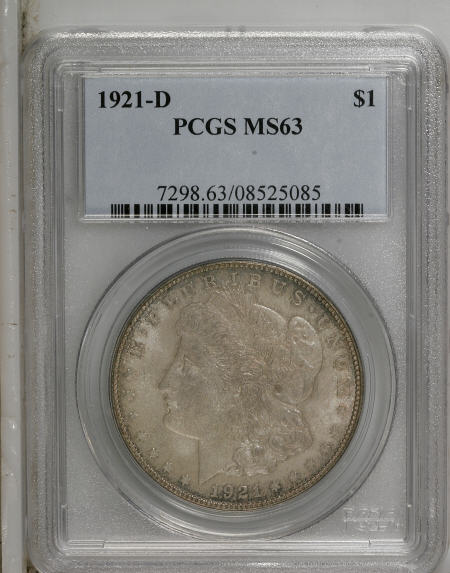 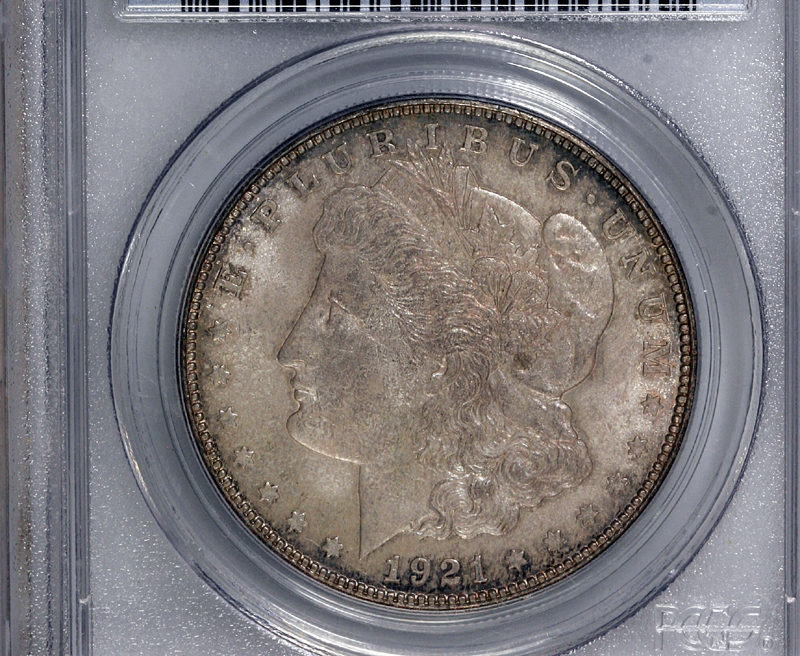 See the prominent die crack from the second star to the date? VAM-1F, one I really liked and had never owned in Mint State. Better yet, it sure looked to me like a candidate for a (careful) dip - seemed like the toning inhibited the grade. So, a potential Condition Census variety. I bought it with the intent of cracking, dipping and resubmitting. So, when I received the coin it immediately got cracked. It was duller in person, but I knew that to be an artifact of bright lighting. Under area lighting (a BR40 flood a few feet away), it was more like this: 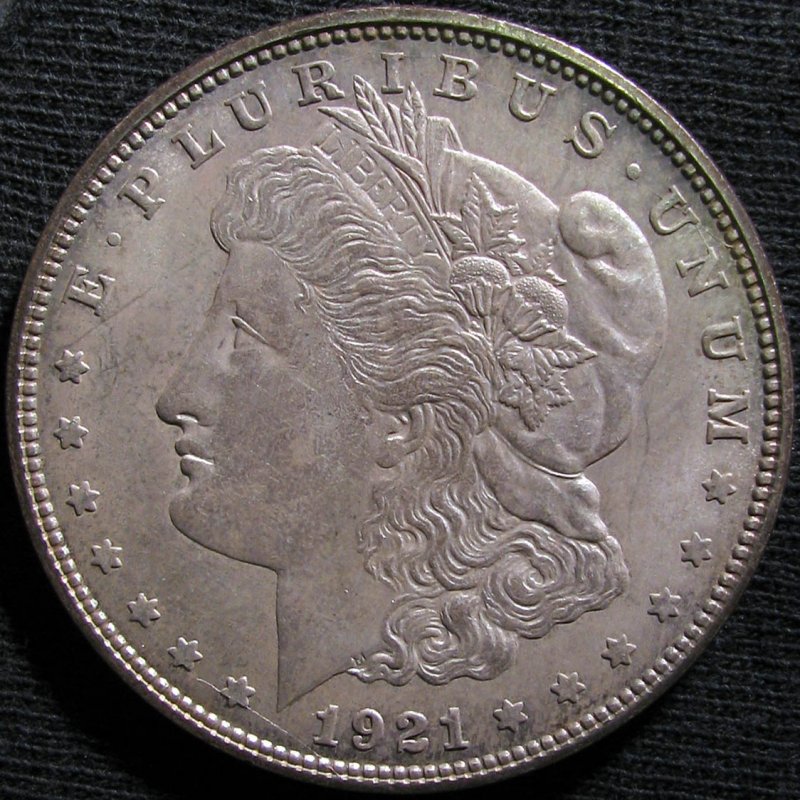 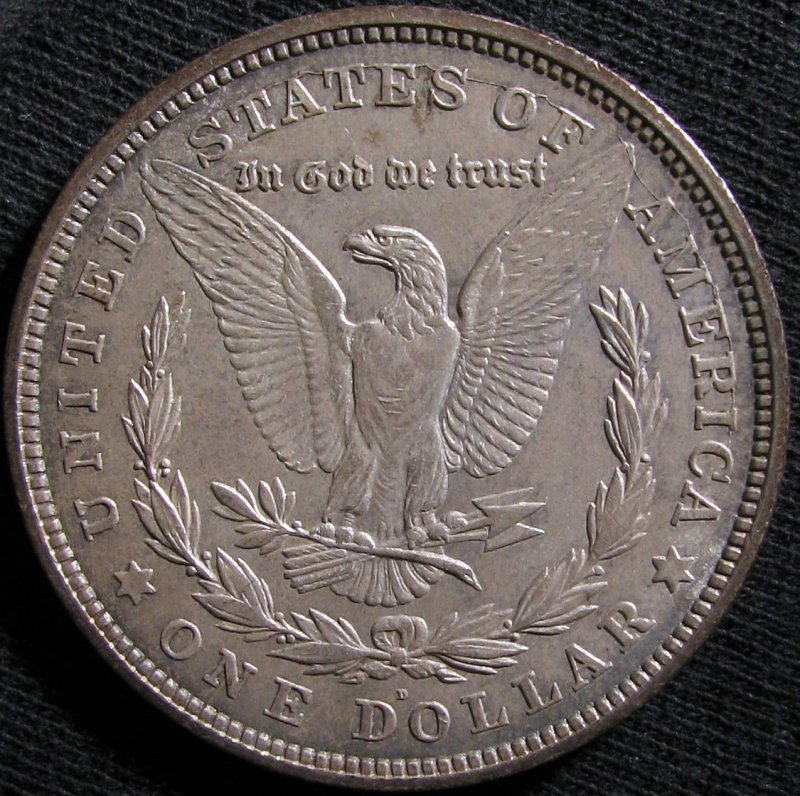 I was able to duplicate the brighter images with more direct lighting, and the duller real-world finish actually encouraged me. I saw easy 64+ detail under the ugly color. Now, the darker toning at the rims is problematic - it's about the maximum toning thickness you can remove with thiourea without destroying the coin so I contemplated things carefully. And dipped it. Here's what I got. Mind you, PCGS slabbed it. 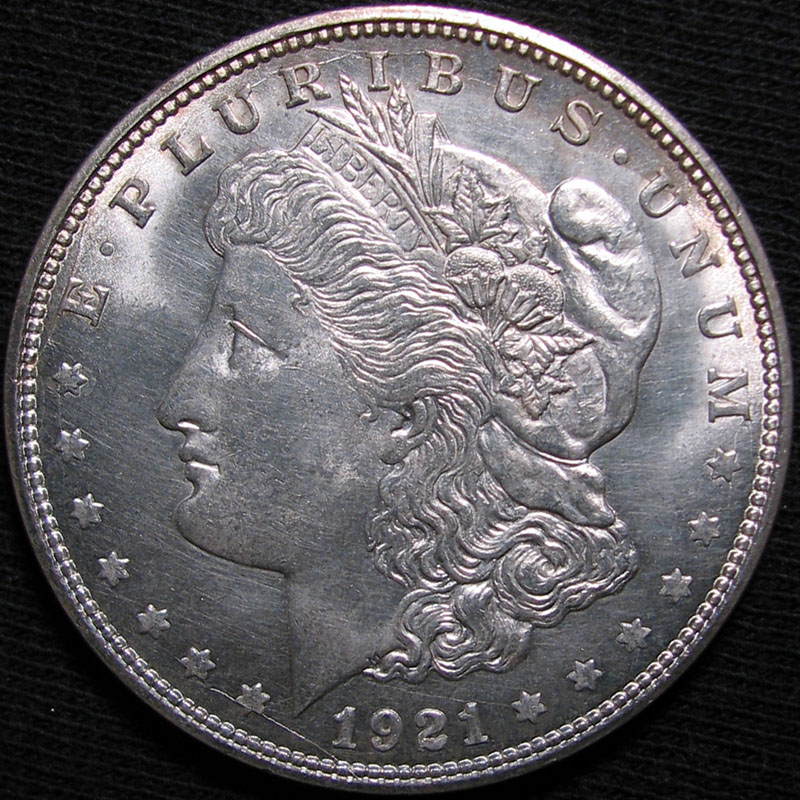 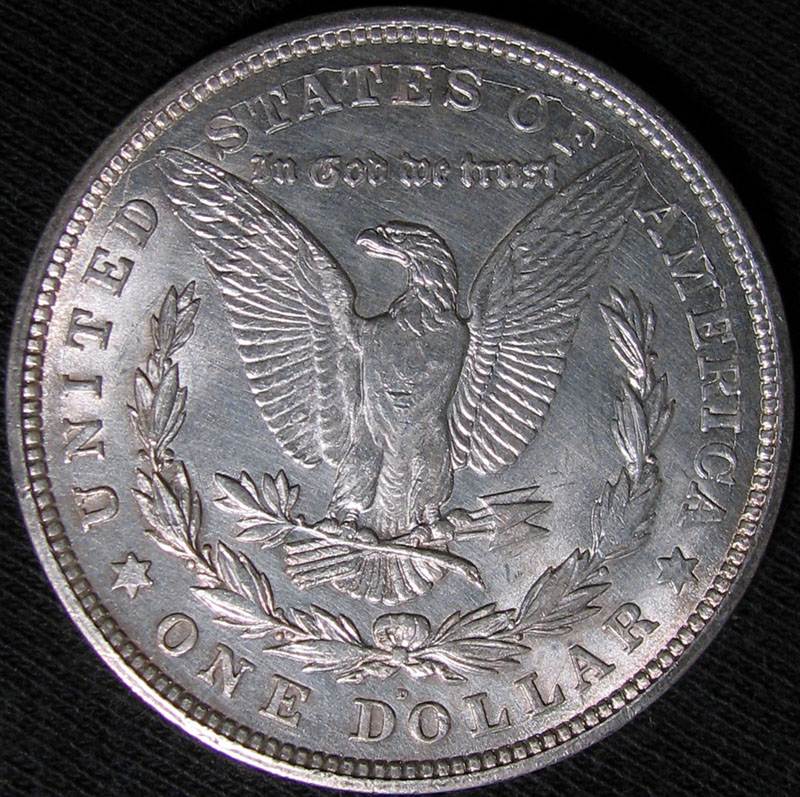 It wasn't toned, it was smoked. |
|
Pillar of the Community
United States
1709 Posts |
Quote:
Looks like AcesKings already pushed the button. Sorry, I have a problem with authority. Someone tells me not to do something, I just HAVE to test out why.  Quote:
AcesKings' coin is an anomaly - thiourea cannot cause those lines on the coin. True, I probably "wiped" the coin after dipping it rather than "dabbing" it. Which caused the hairlines. However, the coin still displays a hazy look that wasn't there before I dipped it. |
|
Moderator
United States
196100 Posts |
Quote:
However, the coin still displays a hazy look that wasn't there before I dipped it. The haze is what I keyed in on. I assumed the scratches were a secondary issue anyway. |
|
Pillar of the Community
United States
6016 Posts |
|
|
Valued Member
United States
327 Posts |
I have a number of proof nickles with that hazy, milky spotting and especially a kind of "rim" around the edges. I'd purchased a number of other proof nickles (building a set of proof Jeffs) from the dealer and he threw these in for face...didn't want them on his table! I'm going to try the "dip" method on these. After all, even as a compromised proof I'm into these for 5 cents...they won't lose any value!
|
|
Moderator
United States
23522 Posts |
Milk spots on Proofs do not come off with dip unless you kill the coin. They're not removable by any method which still preserves the coin.
This is why I don't like talking about dipping. Only one coin in a thousand is a realistic candidate for it, and to inexpert numismatists it's like buying your 16-year-old a Corvette for his first car. We're discussing an option only applicable in the rarest of cases as if it were a standard numismatic procedure. This is disturbing.
|
|
Page 2 of 2
|
Replies: 28 / Views: 7,741 |
Page 2 of 2
|








 First Page


 Posted 02/17/2015 9:02 pm


