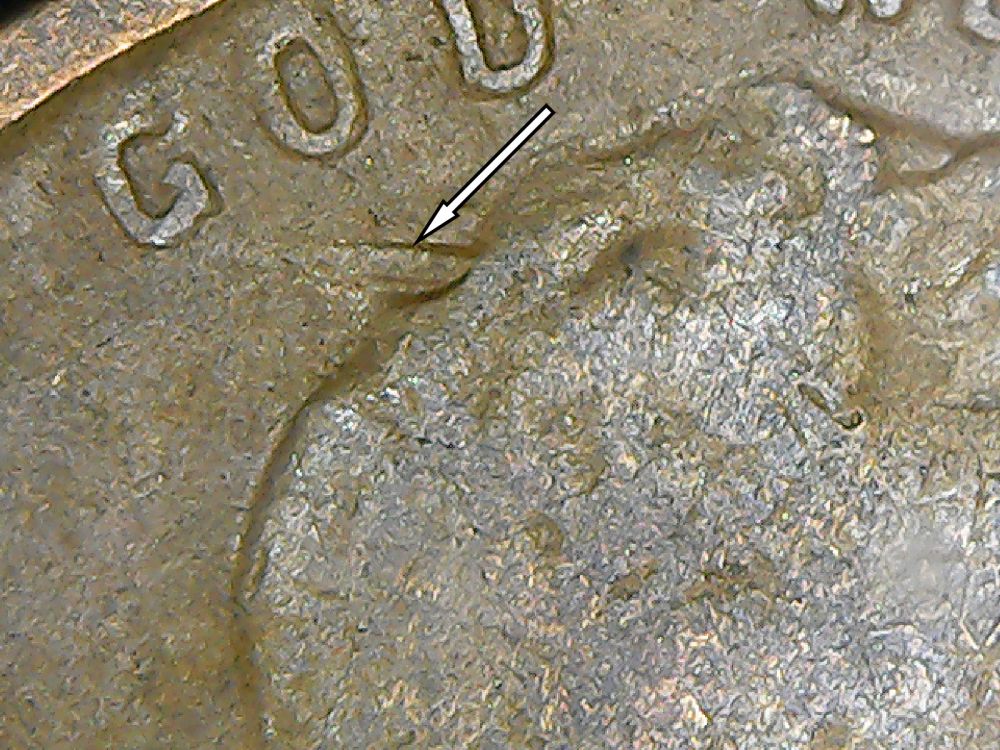
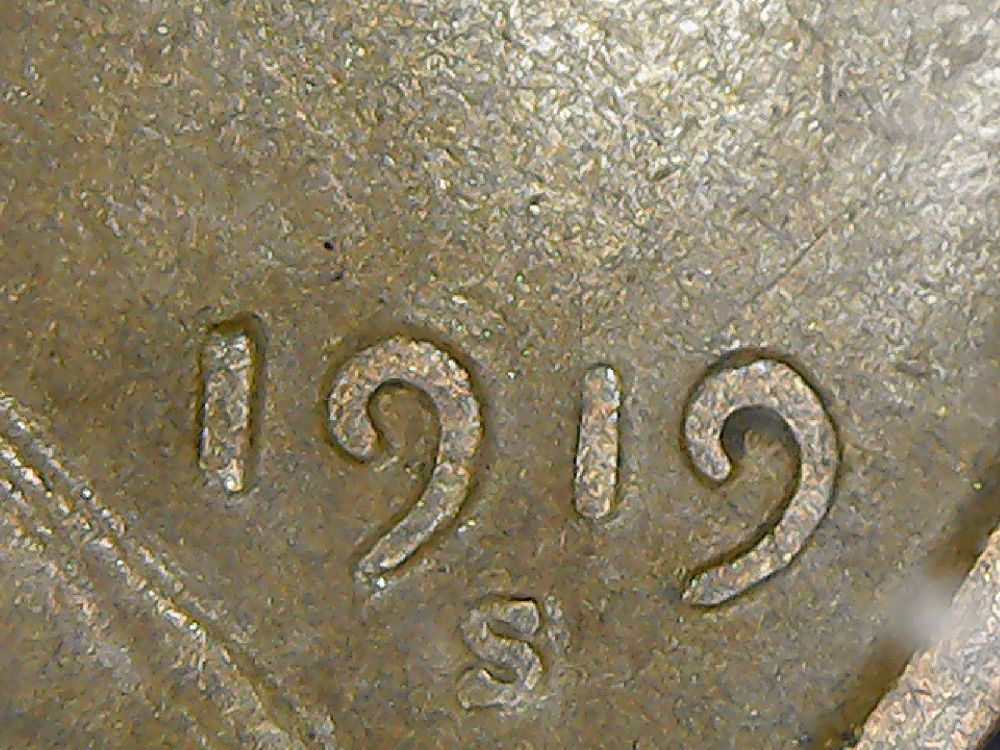
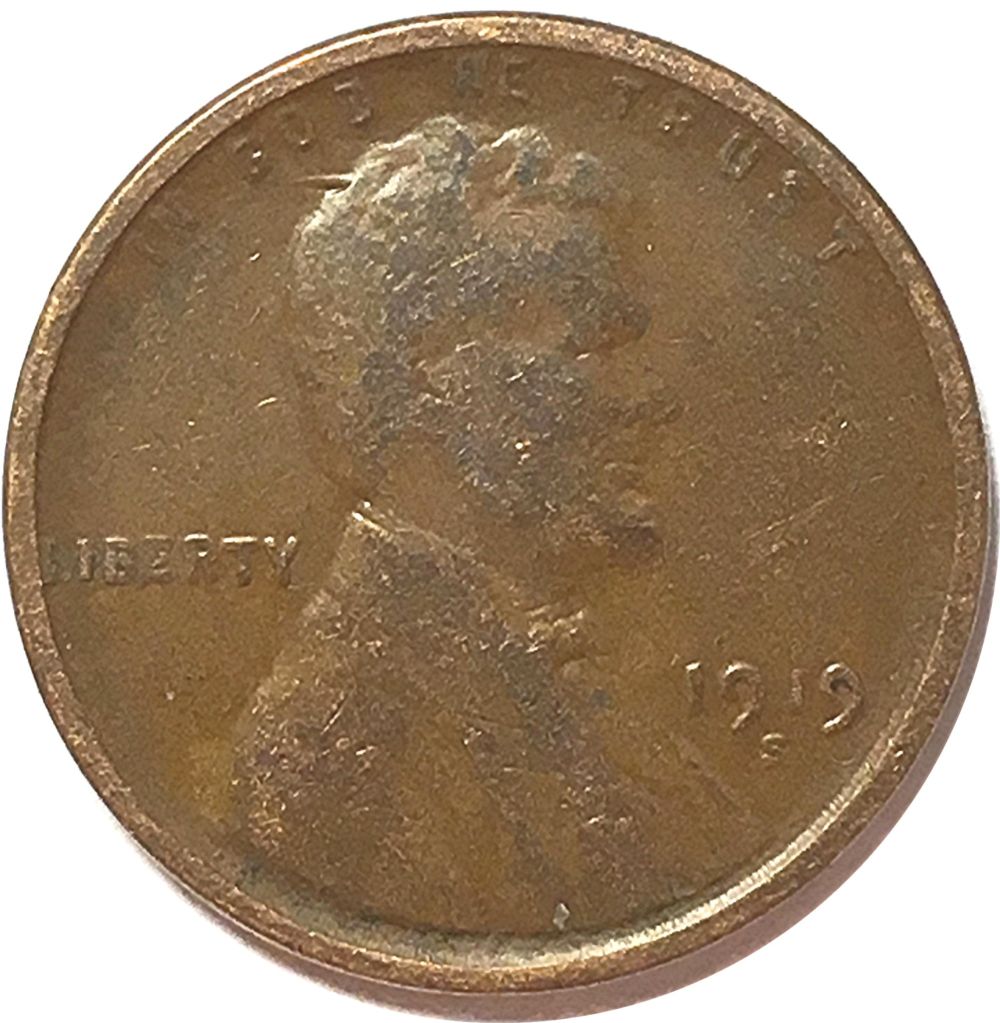
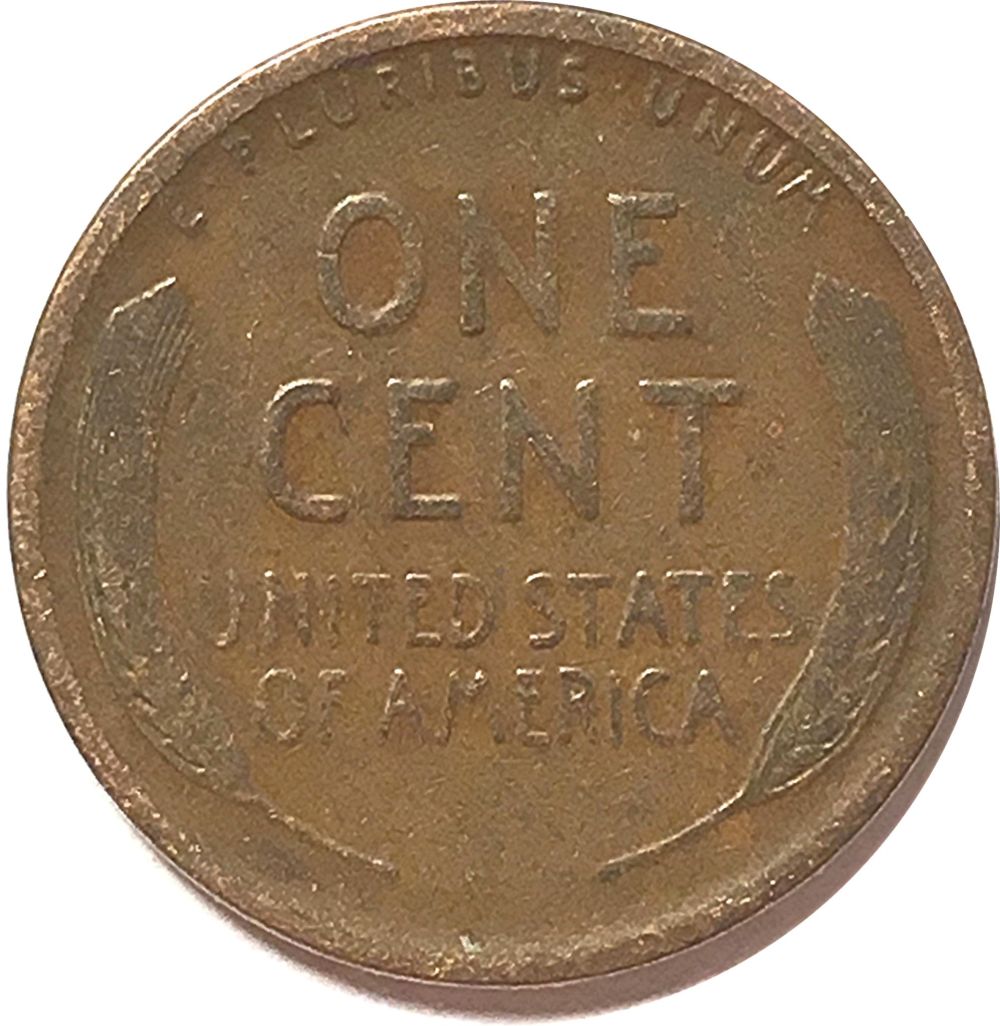
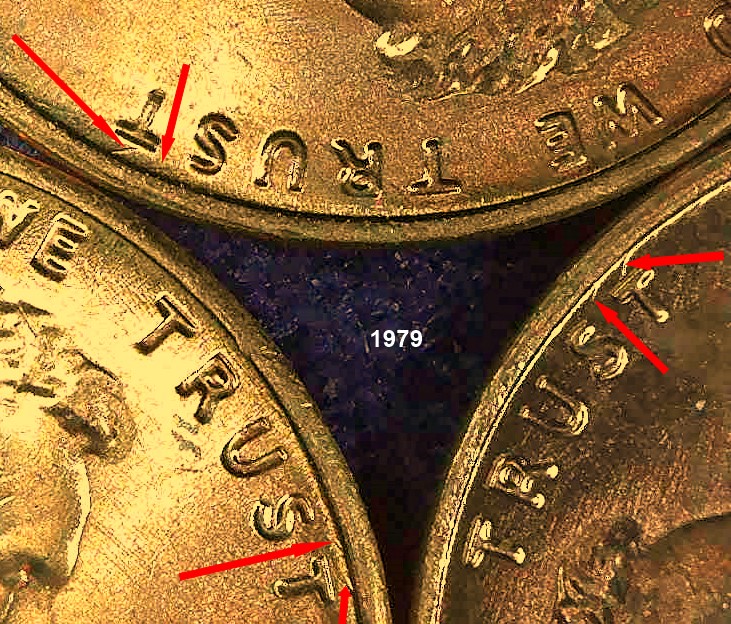
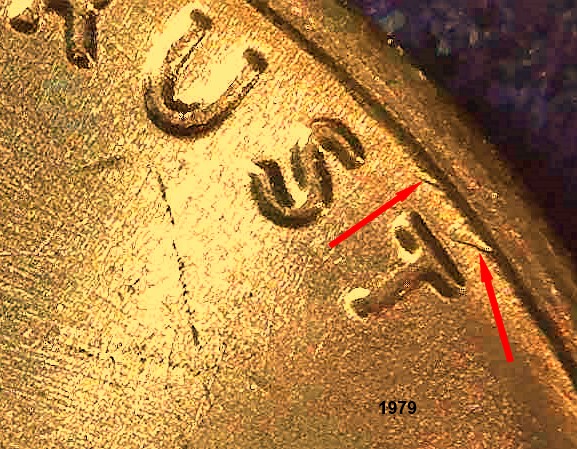
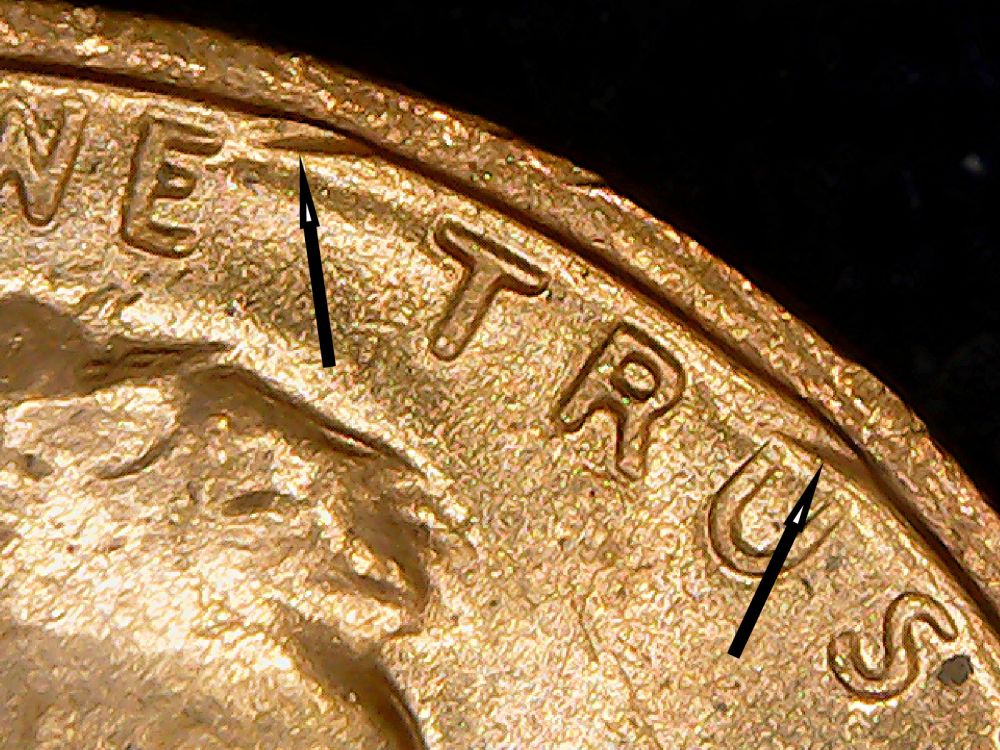
Keep in mind these die dents are really very small. Were are looking the the coins with a microscope. So even a slight bit of contact of the die, would look huge on a coin. (because we use a scope to see it)
I just saw another set of these marks show up on another forum. I am inclined to think that Ken Potter is correct in saying that there is no point in pursuing the question about their cause, but every time I see them my curiosity gets the best of me!
I can't help it! I keep returning to this question!
I am working on a hypothesis concerning how these die dents happen. If anyone is able to help me by providing comments, photos, or videos, I would be grateful!
I contacted the US Mint and have received a response. They don't know! (Surprise!) However, they did offer a list of possibilities. One of their most interesting possibilities of where or when this could happen is during the die installation and/or servicing process.
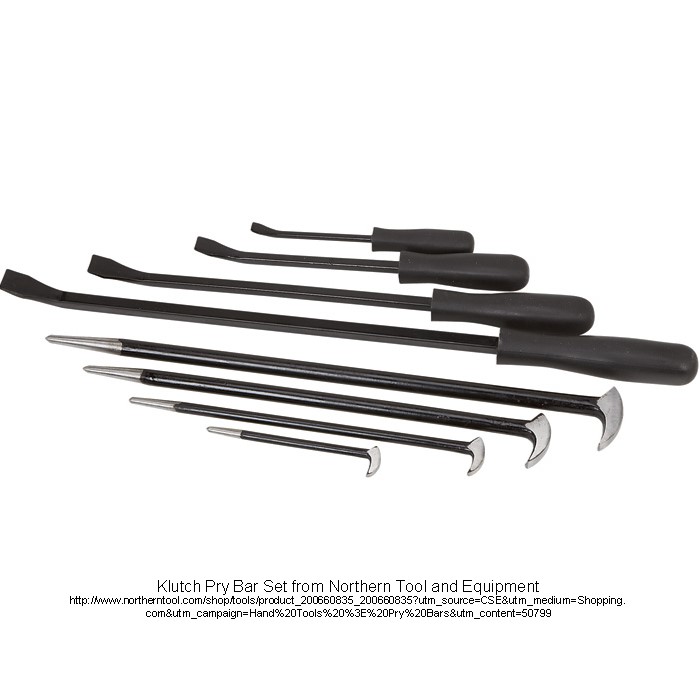
I am thinking that one of the tools with a high probability of causing these dents is a Die Setter Pry Bar. Here is a photo of some Pry Bars:
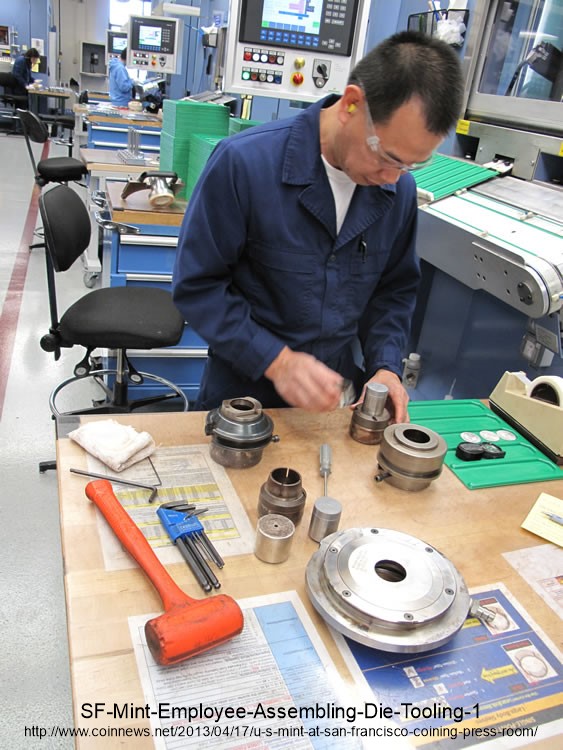
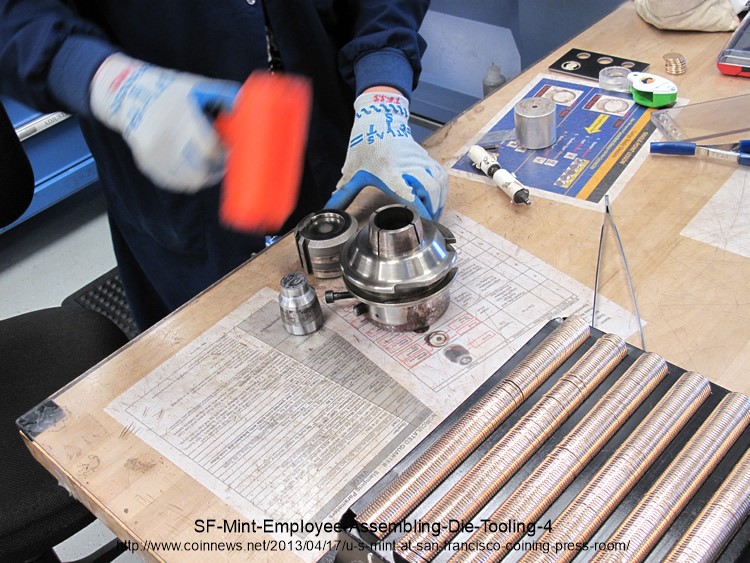
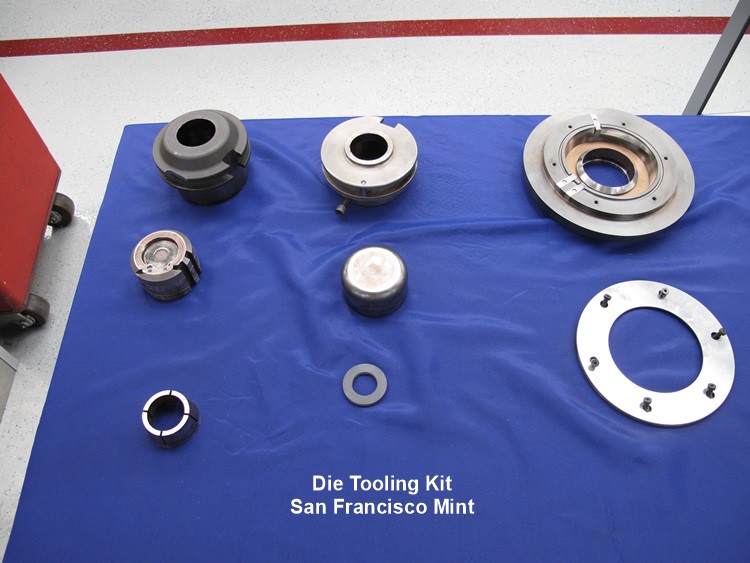
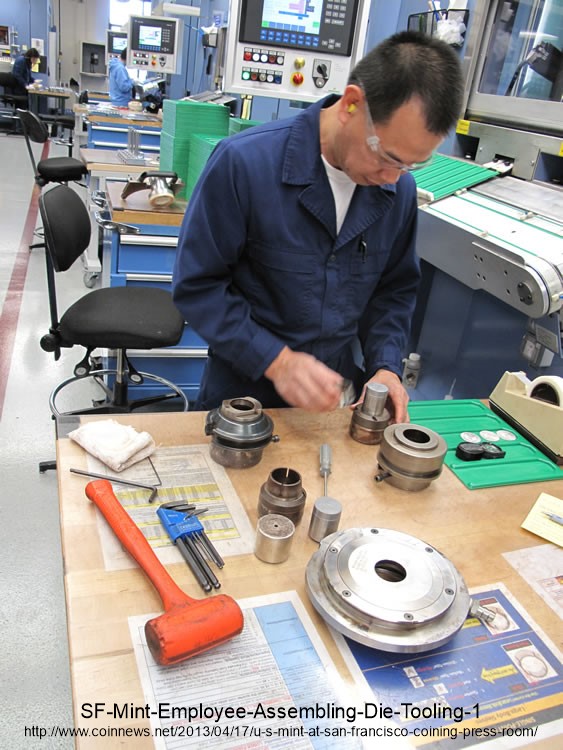
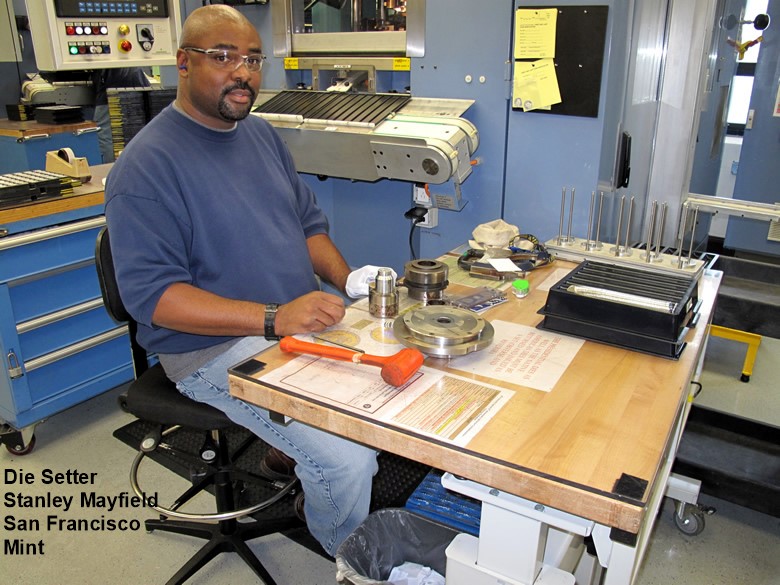
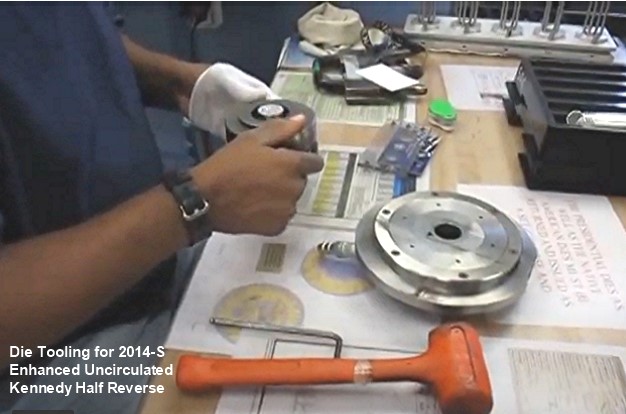
I have also found some photos of the assembling of die tool kits.
Quote: In my mind a die is just one piece of many that make up for the tooling or toolset process. Remember the mint is a manufacturing or production plant that just happens to manufacture dies to produce the end product coins. The die itself after creation I'm sure is handled more times than we might think. Can go from creation to QC, then to production, then to the tool setter, then to the machine operator.
The last image shows what I was referring to earlier. The die is just one piece of the tooling or toolset. I get the impression some might think the dies are popped in and out of the machine like a bit used in a cordless drill, when in fact theres a little more involved in setting up for a machining process. Thanks, Doug.
I saw that video too, but the dents we are seeing are more like lines, they have two straight sides. A dent from something like that would leave a beveled mark.
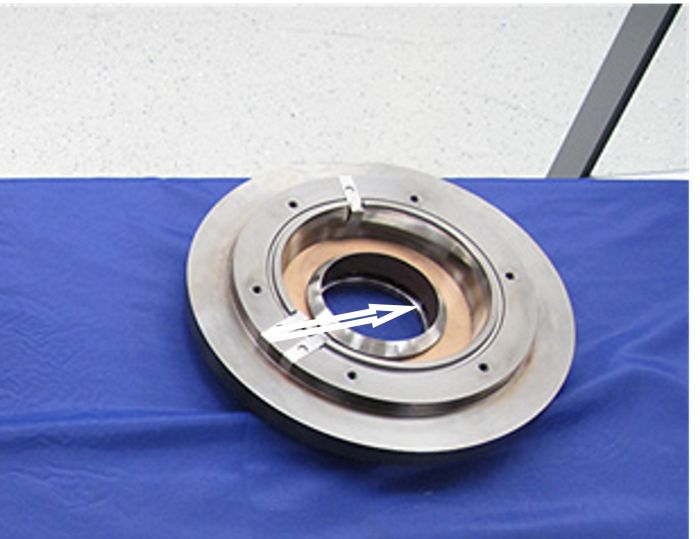
The dent on the coin in the OP has one obvious straight side.The other side seems to fade away. I still think it is possible that this dent could be made by the action of placing the collar (that is the collar, isn't it?). I have an image of the underside of that collar, which would be the portion to come into contact with the coin die. It is what seems like a circumferential ridge which would make contact. (See the white arrow on this image). Seems to me that it is very close to a "fit". There is room to maneuver the collar a bit before that portion reaches the die surface. It would not take but a slight movement for it to drop slightly off center.
This appears to be another similar gouge - but a bit away from the rim. I winder what kind of set up they had in 1919 in terms of feeder fingers, and etc.
I am working on a theory about these die dents, and planning to use some of your photos, unless you have objections?
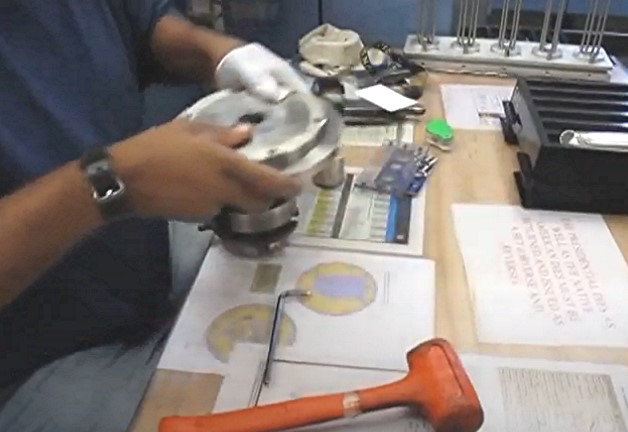
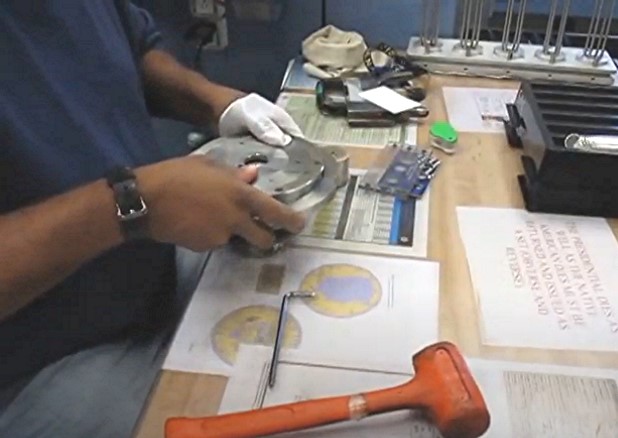
My (unprovable) theory is that these dents were caused by a die setter during the process of assembling a die tooling kit. The inner edge of one of the elements of the kit accidently slips and hits the edge of the die. The shape and direction of the dent is a function of the angle of the element at the time of contact. The angle of the dent to the rim is always small - less than 30 degrees.
Exploring a Possible cause of certain Die Dents. I make the argument that the features shown on these 1970-S and 1979 Cents are Die Dents possibly originating during the process of a Die Setter assembling a Die Tooling Kit. The fact that the exact same features are found on multiple 1979 Cents argues against them being struck in Rim Burrs and in favor of them being Die Dents. The US Mint states: "The faces of the dies are treated with extreme care, so it's unlikely that the feature depicted happened in such a repeated manner." {I had sent them a photo of a similar feature on a 1970-S coin.} Since I have multiple examples on a 1979 cent, and have photos of similar examples on a 1957 and a 1963-D Cent, I am discounting their statement about the occurrence being unlikely. The mint also speculates (admittedly so): "Another possible cause could be the precursors to creating dies. As you may know, there are several stages to creating a production die. First a master hub is created, then master dies, then work hubs, and finally production dies. It is possible, for example, that a work hub had the feature you depicted and was used to create several production dies which then created coins with that same feature." The Mint communication has already stated that it is unlikely that the feature happened in such a repeated manner, so attributing the origin of the feature as being found in the precursors to die creation would imply that it would happen more frequently in a repeated manner. If the feature originates even with a work hub, for example, one would expect it to be found across a greater number of cents. Since the feature appears only sporadically is an argument against it being caused during the precursors to die creation. I think it possible (even probable) that the feature originates during the process of a Die Setter assembling a Die Tooling Kit. There are at least 2 steps in the assembly process where a piece of the kit is placed over and around the die. It is entirely possible that the inner circumference of those pieces accidently makes contact with the outer edge of the die thus creating the dents. The fact that the dents are slightly different between one expression and another may simply be a function of the angle and pressure as that piece is placed over the die. To illustrate. I am showing some photos of the process of a Die Setter assembling a Die Tooling Kit. They were taken from a video here:
Disclaimer: While a tremendous amount of effort goes into ensuring the accuracy of the information contained in this site, Coin Community assumes no liability for errors. Copyright 2005 - 2026 Coin Community Family- all rights reserved worldwide. Use of any images or content on this website without prior written permission of Coin Community or the original lender is strictly prohibited. Contact Us | Advertise Here | Privacy Policy / Terms of Use







 First Page
 Previous Page


 Posted 12/27/2016 9:10 pm