| Author |
 Replies: 19 / Views: 3,719 Replies: 19 / Views: 3,719 |
Page 2 of 2
|
|
|
|
New Member
 United States
24 Posts |
I keep it in one of those circular hard plastic containers that snap together. When I run a toothpick over it it does feel raised.
|
|
Bedrock of the Community
United States
20059 Posts |
Looks like a nice example.
64/65RD
Lincoln Cent Lover!VERDI-CARE™ INVENTOR https://verdi.care/
|
|
Pillar of the Community
United States
1901 Posts |
That's is a die crack all the way down the left wheat stock. Very nice coin I'm with the others it's about mid MS
|
|
Bedrock of the Community
United States
79935 Posts |
Quote:
I don't think it's a crack.
I think it's from a scratched/damaged die. You say this all of the time, and I don't get it at all. It's clearly a Die Crack. Anyways, for the grade, I would say MS-63. Errers and Varietys.
|
|
Pillar of the Community
 United States
5029 Posts |
I am in at MS64RD. Nice coin  |
|
Pillar of the Community
United States
5825 Posts |
Quote:
Quote:
I don't think it's a crack.
I think it's from a scratched/damaged die.
You say this all of the time, and I don't get it at all. It's clearly a Die Crack. Anyways, for the grade, I would say MS-63. Although interior die cracks do occur they are rather unusual, particularly for 20th century coins. I base my opinion on the fact that the feature doesn't extend into the fields, never mind to the rim. I visualize a metal thread from something like a wire brush getting into the striking chamber when a previous coin was struck. That item when struck imparted its image on both a previous coin and the die. After that the item fell out and all subsequent coins were struck with the now altered die. |
|
Bedrock of the Community
United States
37220 Posts |
|
|
Pillar of the Community
United States
3402 Posts |
Quote:
I visualize a metal thread from something like a wire brush getting into the striking chamber when a previous coin was struck.
That item when struck imparted its image on both a previous coin and the die. After that the item fell out and all subsequent coins were struck with the now altered die. Occam's razor (also Ockham's razor or Ocham's razor; Latin: lex parsimoniae "law of parsimony") is the problem-solving principle that the simplest solution tends to be the right one. When presented with competing hypotheses to solve a problem, one should select the solution with the fewest assumptions...= die-crack. KK  |
|
Pillar of the Community
United States
1901 Posts |
Kanga it does indeed go to the rim you can see it from the top of the crack to the rim it's faint but there.
|
|
Pillar of the Community
United States
8715 Posts |
It goes to the rim so it's a die crack. No reason to think it's die damage IMO.
MS-64RD.
|
|
New Member
United States
24 Posts |
Yes it is very faint but it does go all the way to the rim. Thank you all for looking at my coin. I have several other wheat pennies that are in even better condition.
|
|
Pillar of the Community
5464 Posts |
Plus a faint Greasy Ghost on the rev.
|
|
New Member
United States
24 Posts |
What exactly is a greasy ghost?
|
|
Pillar of the Community
5464 Posts |
Quote:
What exactly is a greasy ghost? Progressive Indirect Design Transfer: A form of Die Deterioration that manifests itself in the form of a "ghostly" image of a design element on the opposite side of a coin. The force of a die strike travels through the planchet and into the opposite die. After hundreds of thousands of strikes, the outline of the designs begin to transfer to the opposing die and show on the coins that are struck. In the case of Lincoln cents, it is common to see a ghostly outline of Lincoln's bust on the reverse of wheat cents that are struck in later die states. It is especially visible on uncirculated coinage. This should not be confused with a die clash or a "greasy ghost." 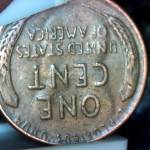 |
|
New Member
United States
24 Posts |
Ahhhh I see. That's just one of the many reasons I love this site, I am always learning new stuff. Thank you
|
|
Page 2 of 2
|
Replies: 19 / Views: 3,719 |
Page 2 of 2
|




 First Page


 Posted 09/02/2018 12:32 pm





