| Author |
 Replies: 24 / Views: 4,444 Replies: 24 / Views: 4,444 |
Page 2 of 2
|
|
|
|
Pillar of the Community
 Canada
1505 Posts |
Quote:
You don't give us much to work with here. As Okie says, there are other markers on the coins to define the desirable ones. SPP: my question was actually very simple and obviously asked before any detailed replies were offered. I had no idea it was going into a ton of "technical" aspects and die cracks etc. Otherwise, I would have posted every one of the coins individually, both sides. Was looking for a way to show all 6'es in the date together, as, again, the question was about identifying a possible FAR 6 in the image. It is obvious now that there is a lot more to it than just distance to the 9. Thanks everyone for some great information. |
|
Pillar of the Community
New Zealand
1679 Posts |
Quote:
fourmack ... Where did you get that information regarding the 3 "easily identifiable types? Good question Okie? I really don't know as its been attached to 1 of my 1896's for 7 years so it must have come from the old copper coin site. Cheers Don
Vickies cents and GB Farthings nut.
"Old" is a figure of speech and nothing more
|
|
Moderator
 Canada
10477 Posts |
Quote:
SPP: my question was actually very simple and obviously asked before any detailed replies were offered. Your question was simple, your image was not. There are literally thousands of posts on this site reminding people to post photos of their entire coin(s), both sides. Yours was no exception. Quote:
There are two or three dies that PCGS will certify as a far 6. Essentially all of them are such that an imaginary line from the edge of the center serif of the E in ONE running along the left serif of the T in Cent will cut the 6 of the date nearly in half This is the main criteria, which some of your photo collage does not show. "Discovery follows discovery, each both raising and answering questions, each ending a long search, and each providing the new instruments for a new search." -- J. Robert OppenheimerContent of this post is licensed under a Creative Commons Attribution-NonCommercial 3.0 Unported License. See: http://creativecommons.org/licenses...0/deed.en_USMy eBay store
|
|
Pillar of the Community
 United States
1378 Posts |
http://www.victoriancent.com2011 & 2025 Fred Bowman Literary Award, 2025 Guy Potter Literary Award, 2022 Paul Fiocca Award, & 2020 J. Douglas Ferguson Award. Life Member of RCNA.
|
|
Pillar of the Community
Canada
5660 Posts |
Bosox .. yes, the 65 Brown that you attached is not, in my opinion, a "far 6. It is one of the plethora of coins that has a tad wider space between the 9 & 6 and the 8 & 9., but not wide enough or high enough. It is for this exact reason that ICCS quit certifying far 6's because it became the "eye of the beholder" rather than specifics that came to dictate what was put on the holder. That's like saying that there are a multitude of 1859's that can be called "far 9's". I also think that there is no other marker for the far 6 that can be specified. The initial certification by ICCS was a coin that had a D/C between the D & A of Canada (a heavy one), but had nothing to do with the variety itself. PCGS can do and say what they want, but the initial find and the more than a year discussion on what could be called a "far 6" and what wasn't had specifics and dictates of the width of the spacing, the height of the 6 and the clockwise rotation or canting to the right. You should remember this and all the surrounding CCRS discussions as well as I do, bosox. And then we all celebrated when Brian C from ICCS actually certid it for our friend from Hamilton (who no longer collects BTW). I was there when we passed all the info to Rick Simpson from the ONA , Bill Cross from Charlton, and Brian from ICCS. At the time Rick S was a major dealer and ICCS customer.
Edited by okiecoiner
02/25/2021 4:14 pm
|
|
Pillar of the Community
Canada
5660 Posts |
fourmack ... The quote didn't come from the old CanadianCopperCoin site. I was the sole moderator of that site and answered over 50% of the questions on varieties. The other experts on the site were Dan in CL, bosox, Zonad and papeldog. It was a short-lived site (maybe a year or two, maybe more) but got eaten with spam and the owner didn't renew the registered name or fees. Poof! and it was gone and couldn't be rescued. A have some problem with the 3 "types" that you put down. It sounds like someone had some to sell and invented ID markers to increase his/her profits. I can think of only one person who would put something like that down on a coin site and he has been removed from any number of sites. He lives out West (not West Coast) and his name/monikor started with a "D".
Edited by okiecoiner
02/25/2021 4:24 pm
|
|
Pillar of the Community
United States
1378 Posts |
I remember well the initial find and the discussions. Confusingly, after that one or two other dies came to light with the 6 just as far out there as the initial find. As you say, ICCS chose to stop certifying Far 6s at that point. PCGS began certifying the two or three dies that were way out there (minus the occasional mistake like the 65 brown). I really have no problem with PCGS doing so, since more than one die struck coins with the six about equally as far out as the initial find. I don't think there is any right or wrong here. Nor do I see the big attraction with this variety, since as you pointed out, each 1896 die had the six in a different spot.
http://www.victoriancent.com2011 & 2025 Fred Bowman Literary Award, 2025 Guy Potter Literary Award, 2022 Paul Fiocca Award, & 2020 J. Douglas Ferguson Award. Life Member of RCNA.
|
|
Pillar of the Community
Canada
5660 Posts |
I agree, Rob and have no problem with PCGS cert'ing them according to their specific dictates that accurately delineate the actual variety. It was from all discussions that many of us had after the first ICCS cert that the far 6 variety was not as uncommon as we initially thought. After the 2011 Charlton with the Vicky variety guide, I don't think that there a collector who didn't have 2-3 of them. Dealers and ebay sellers started putting far 6 on many holders as they could find. I certainly no longer agree with the 5X value that we put on it, although higher UNC grades are quite scarce. |
|
Pillar of the Community
Canada
2784 Posts |
this coin has some serious cracks. 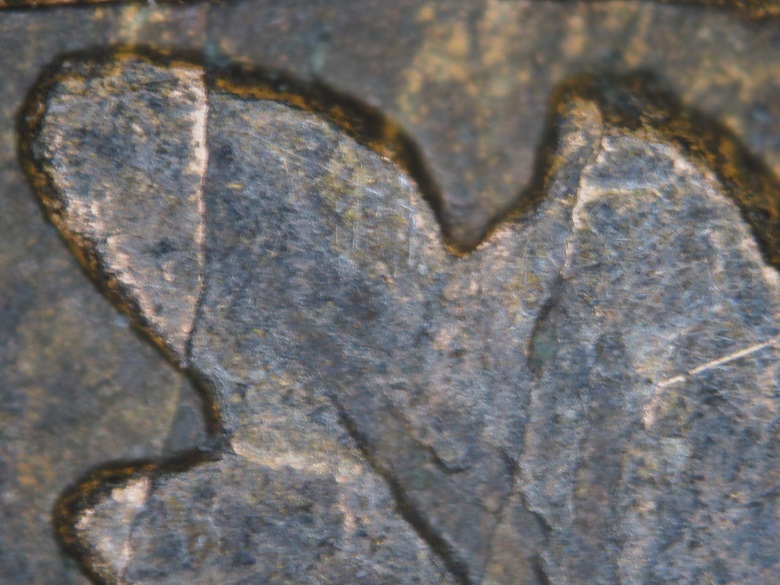 |
|
Pillar of the Community
Canada
2784 Posts |
okiecoiner question can tell me is there anymore. than 2 styles of queen Victoria hair. I have 2 different types of hair bun styles. this is for the 1876 H pennies. I have one obverse OC1. the other coin not quit sure yet. I was wondering is there 2 different. obverse for this year. thank you okiecoiner if you can help. again thank you
|
|
Pillar of the Community
Canada
5660 Posts |
I've never studied or looked at the hair on 1876's. It is probably just a factor of how crisp a strike and how new the die. However, ALL 1876's for circulation were Obv 1's. The 1876 specimens (with no H) were struck as Obv 1A. I was not aware of any significant differences between the portraits on 1's and 1a's except the neck truncation and angle. Without going back to bosox's Dies and Diadems, I don't know if any of the "specimen" Obv dies were used for circulation strikes. I personally have never seen an 1876 Obv 1a circulation coin and I've looked at 10's of thousands.
Edited by okiecoiner
03/05/2021 08:01 am
|
|
Pillar of the Community
Canada
2784 Posts |
okiecoiner thank you so much for that information. I just checked a bunch of 1897s okiecoiner. I want to share a few picture with you. I want to show you 2 varieties in the 1897s. I would like to know your thoughts. the differences are not great but different size letters and spacing has to mean something.
|
|
Pillar of the Community
Canada
2784 Posts |
okiecoiner I want to explain see this way you can help me learn how to use that die catalogue. I hoping thank you so much
|
|
Pillar of the Community
Canada
5660 Posts |
I really don't need pictures of any of your coins, Rocky, and your reference to a "die catalogue" is not familiar to me. I know of many very nicely offset varieties in the 1897's and really don't need to see any more, but others on this site might enjoy them. You mentioned some different size letters and numbers .... just remember that many of the 19th century dies that were used had handpunched digits because the hubs were used for more than one striking year.
I would have serious doubts about different size letters that weren't caused by strike crispness or tired dies. I'll be glad to help you if you wish, the same as I do with anyone who has a question or problem, but please go easy on the 80-100X magnifications and highly reflective lighting. And, please start a new thread if the info will deal with 1897's and NOT the 1896 far's!
Edited by okiecoiner
03/06/2021 07:06 am
|
|
Pillar of the Community
Canada
2784 Posts |
okiecoiner thank you so much. I appreciate all your help. yes Okiecoiner I am going to try to find away to get videos up. I am going to see if I can sink a video enough to fit here. if not I may have to load videos to youtube. I could do it that way. see videos I will show you guys what happens when you populate between 2 images. there is nothing that is not uncovered. right down to the fines detail. I hope I can show you that. thank you for all your help.
|
|
Page 2 of 2
|
Replies: 24 / Views: 4,444 |
Page 2 of 2
|








 First Page


 Posted 02/25/2021 1:05 pm


