| Author |
 Replies: 22 / Views: 2,550 Replies: 22 / Views: 2,550 |
Page 2 of 2
|
|
|
|
Moderator
 United States
16697 Posts |
Now that you point it out KurtS, I see it now. Ya, it has the right signs of zinc corrosion  swcoin.ecrater.com
|
|
Bedrock of the Community
United States
20053 Posts |
To me it looks like a standard lamination issue then, at some point (probably during circulation), I piece of debris was pushed into the peel. Notice the slide marks to the west.
Lincoln Cent Lover!VERDI-CARE™ INVENTOR https://verdi.care/
|
|
Moderator
United States
16697 Posts |
I guess that would be considered damage then swcoin.ecrater.com
|
|
Pillar of the Community
United States
7629 Posts |
To set the record straight:
This is a planchet defect - lamination. It also has something else going on that was done at the mint - it's not damage.
Furthermore, lamination is very common on cents from around 1938 through 1964. On other dates it is somewhat scarce, and this is the first I have ever seen on a 1972 cent, which makes it interesting.
|
|
Valued Member
 United States
322 Posts |
With a 14x loupe I can see the metal further up and down the lamination. Even where it's not torn open. I'm not sure what to make of it. I find the strangest things. Two more photos. 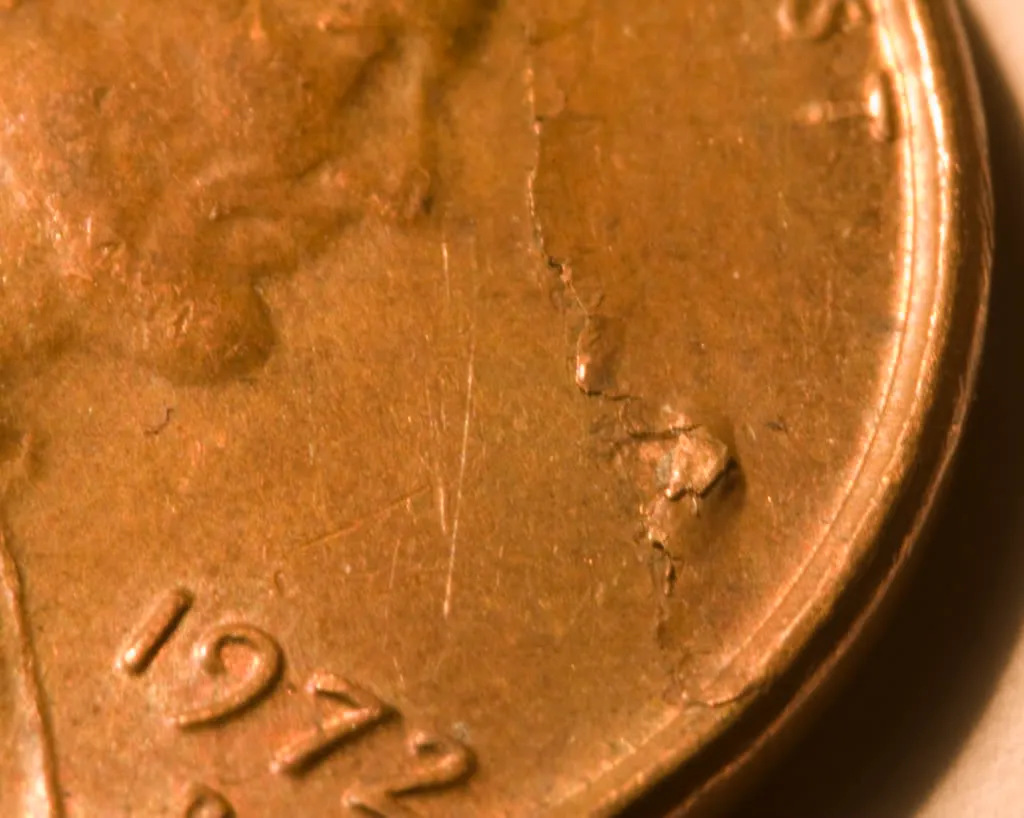 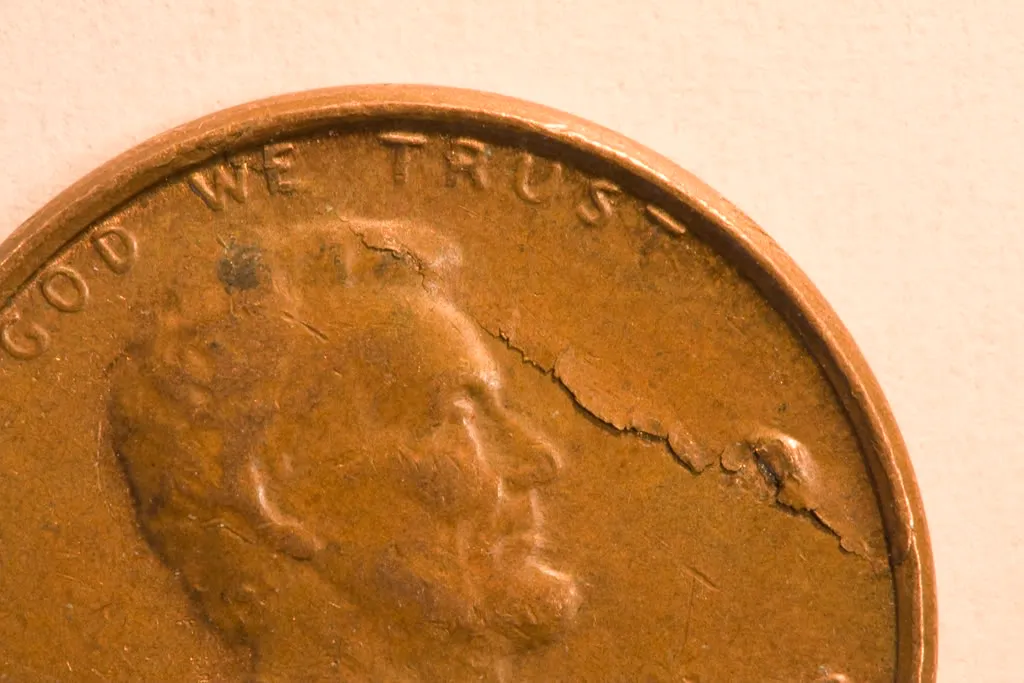 |
|
Pillar of the Community
United States
7629 Posts |
Well, the coin is interesting, no doubt. It's not just a typical example of lamination, there's something else going on. While I do not have the 'complete' answer as to exactly what it is, I can tell you it is unusual. I have seen many thousands of 1972D cents, and can tell you this is an oddity for sure, and it's not post-mint damage.
My next step would be to show it to someone who deals in errors regularly and find out what caused this issue, and whether it might be worth enough to bother with certification. Perhaps Mike Diamond might find this and respond. He's about the best error guy I know. My specialty is in die varieties - die doubling to be precise - and errors have never really caught my interest, so I can only go so far as to know when a coin is an error and when it's odd enough to warrant further investigation. Yours does.
|
|
Bedrock of the Community
United States
17884 Posts |
Quote:
I can tell you it is unusual. I have seen many thousands of 1972D cents, and can tell you this is an oddity for sure, and it's not post-mint damage The lamination is not post mint damage but the "whatever it was" that either pushed the edge of the lamination back into the crack or folded it back over on itself IS post mint damage. (In some pictures it looks pushed under but in the first picture in mikep's last post it looks like the edge of the lamination has been folded back over itself.) I think the light colored stuff in the crack is a remnant of whatever caused the damage. |
|
Valued Member
United States
270 Posts |
I agree a lamination error with post mint damage!
|
|
Pillar of the Community
United States
5318 Posts |
I'm going to agree with CC here. Not that I'll add any expertise, but it's simply fun to approach the question of "post-mint" damage from an observational angle.  To test the "post-mint damage" idea, we might ask: "does the coin show evidence of a foreign object forced directionally under the lamination? To that end, it might be good to ask a few more questions: If a. points to the foreign object in question, we might ask how this material was forced into the coin, as it appears under both the lamination and embedded within the field before the fold of metal. If the lamination folded back on itself due to an object forced into the coin, then we might reasonably conclude this force was directed perpendicular to that fold of metal ( c.). Is there any evidence in the fields before the lamination to suggest an object forced into the coin, such as directional gouging)? However, if the object was forced in the direction as shown by c., how does this explain that bulge ( d.) perpendicular to this force? And why does the object stop cleanly at the lamination layer and not break through to the other side? That's a very neatly applied force, imo. Since I do not see how post-mint damage explains what I see, I have eliminated it as a possible cause. But that's just me. |
|
Bedrock of the Community
United States
62064 Posts |
The splitting occurs from the metal in the planchet separating. It is snags on another coin it would bend the lamination in a direction. But I don't feel anything caused the separation, just the metal not adhering to itself was the problem. It happens.
|
|
Valued Member
United States
322 Posts |
Hi everyone, Happy holidays. Thank you for the replies. I'm still not sure what to make of this, but I should be able to get some closer photos for you guys. My girlfriend gave me a microscope for Christmas. I haven't received it yet, but it's coming. |
|
Valued Member
United States
301 Posts |
That is a lamination crack and they bring a nice premium what a great find I think there considered on the rare side. The planchets have metal pieces peeling from them the lamination can be completely missing or retained on the planchet the larger the lamination the greater the rarity This is not post mint damage, and this is defined as a lamination crack
Jazzcoins Joe,
Edited by Jazzcoins
12/26/2008 10:11 am
|
|
Pillar of the Community
United States
2752 Posts |
Condor101 is correct. A lamination crack that was damaged after the strike.
Error coin writer and researcher.
|
|
Pillar of the Community
United States
1807 Posts |
Nice save mikep, where did you find it?
|
|
Pillar of the Community
United States
5318 Posts |
Ok...I guess that's settled, and I learned something too.  So much for my long-winded analyses, lol. Coop, that's a cute kid! |
|
Page 2 of 2
|
Replies: 22 / Views: 2,550 |
Page 2 of 2
|






 First Page


 Posted 12/23/2008 9:34 pm





