| Author |
 Replies: 18 / Views: 2,065 Replies: 18 / Views: 2,065 |
Page 2 of 2
|
|
|
|
Pillar of the Community
 Canada
3328 Posts |
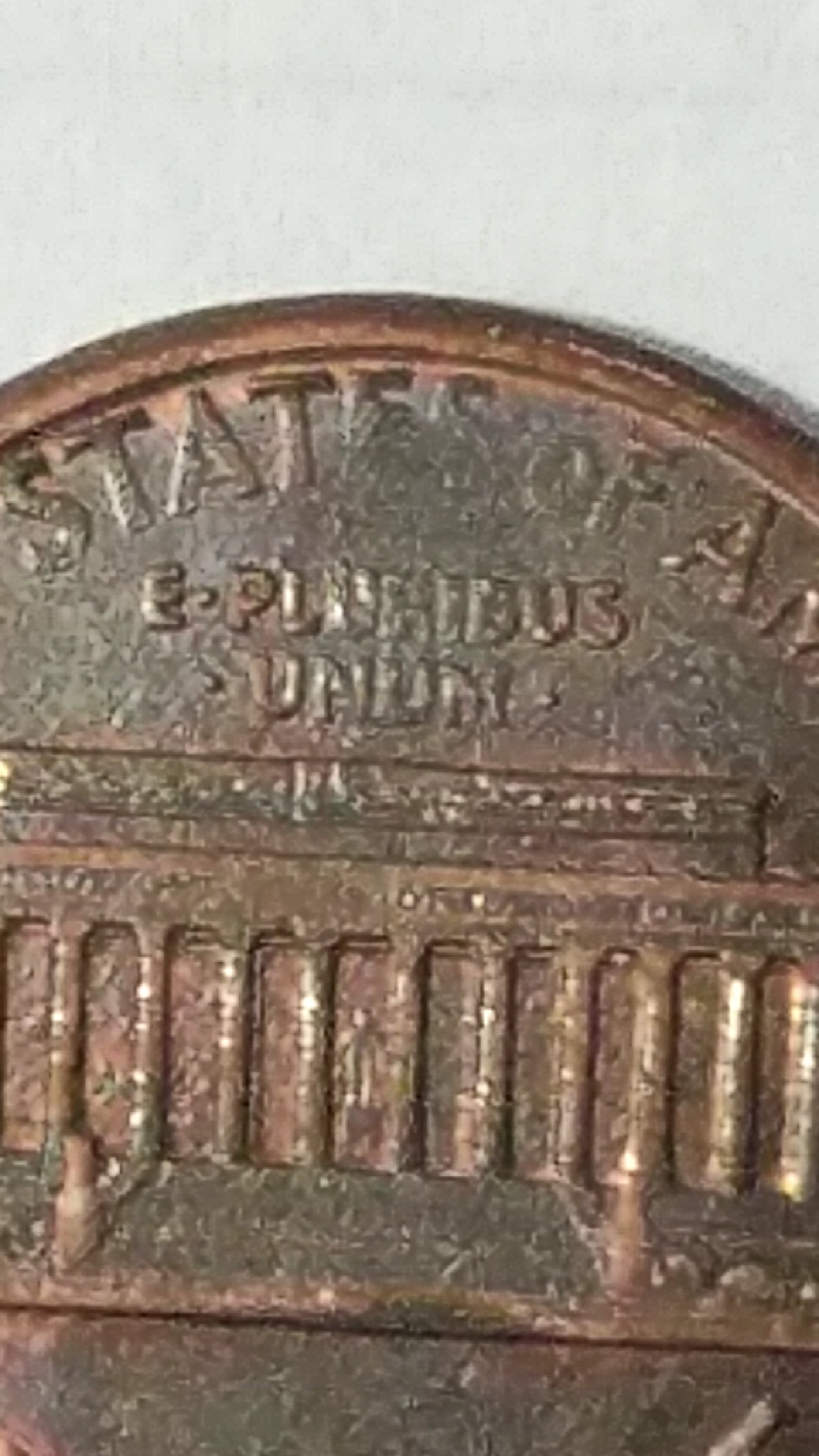 I think it might just be like sanded or something but I can't tell, idk if this pic will help |
|
Pillar of the Community
United States
591 Posts |
Most people will say that's a Struck Through Grease, but it's usually caused by the failure of the coin to strike up properly. If you'll notice that on the obverse side of that spot is the bottom of the bust of Lincoln. That's the part of the coin that is actually the thickest post strike and as a result it needs maximum metal flow into the strike area to fully form. If the thickness of the planchet is off by a very, very small amount, the planchet is slightly uneven, or the strike pressure is slightly off, that will show up. It's actually very common on Lincoln cents of that era and doesn't really add any value. |
|
Pillar of the Community
Canada
3328 Posts |
Weird, idk how to tell the difference. A lot of grease strike examples iv seen have been at this same spot so your probably correct.
|
|
Bedrock of the Community
United States
10635 Posts |
Yes, struck though grease ( Grease Filled Die). That spot is known to be where greasers show up. You didn't have an example, now you do!  |
|
Pillar of the Community
Canada
3328 Posts |
Now I'm curious if it's a Greaser or not lol |
|
Moderator
 United States
56855 Posts |
That is a known weak area and sometimes it is also a grease issue. John1  |
|
Pillar of the Community
Canada
3328 Posts |
So how can I tell if it's a Greaser or not? |
|
Bedrock of the Community
United States
10635 Posts |
There is a search box top left of every page on CFF, including this one, Type " Grease Filled Die" into the box and press "entre". Within the pages of CFF you'll find lot of examples of greasers and lots of other cool stuff! Bonne chance! |
|
Pillar of the Community
Canada
3328 Posts |
Hiw can I tell if it's what HGK3 said? To me it looks filed or a Greaser |
|
Bedrock of the Community
United States
62064 Posts |
I feel this is not a Struck Through Grease issue as the tops of the devices are present: 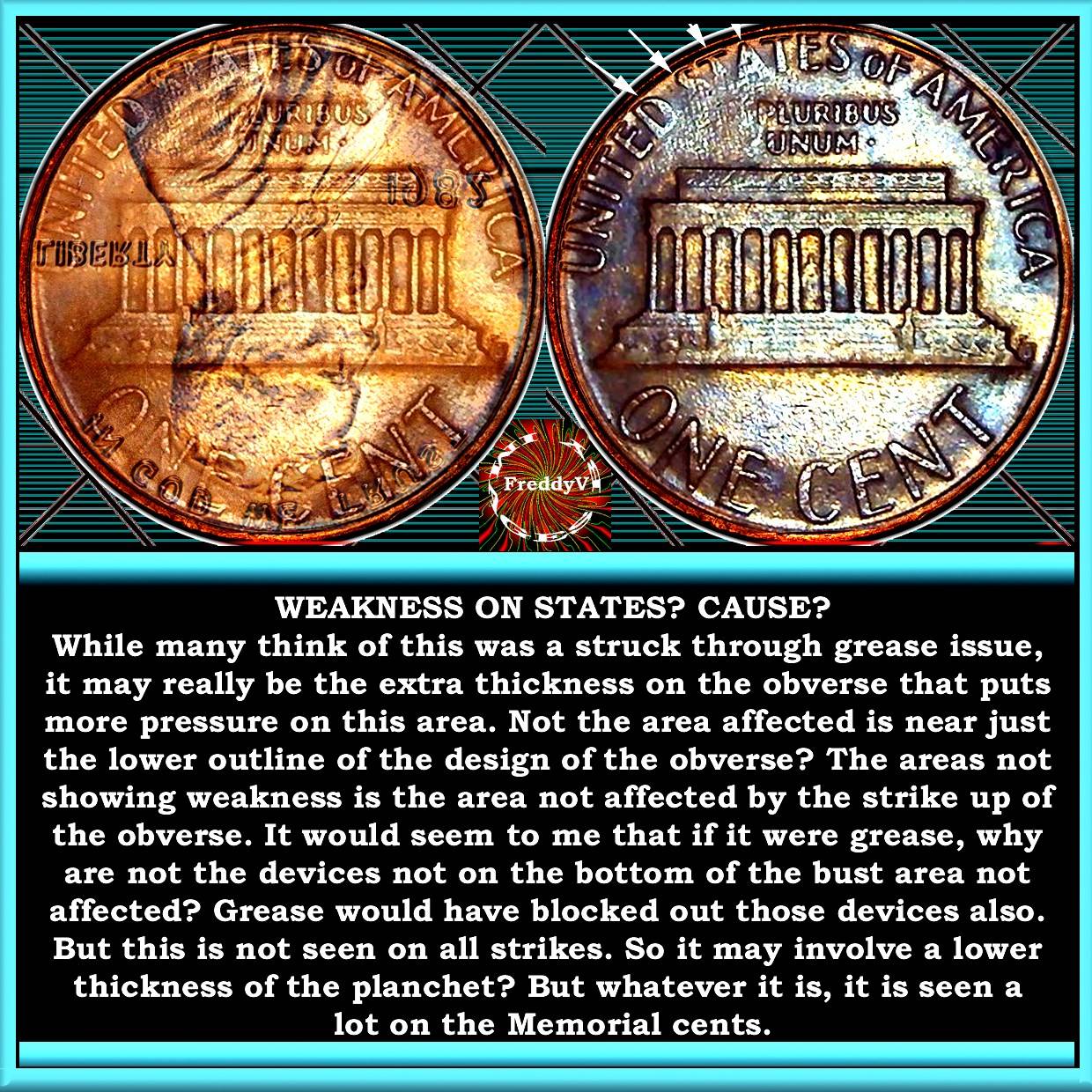 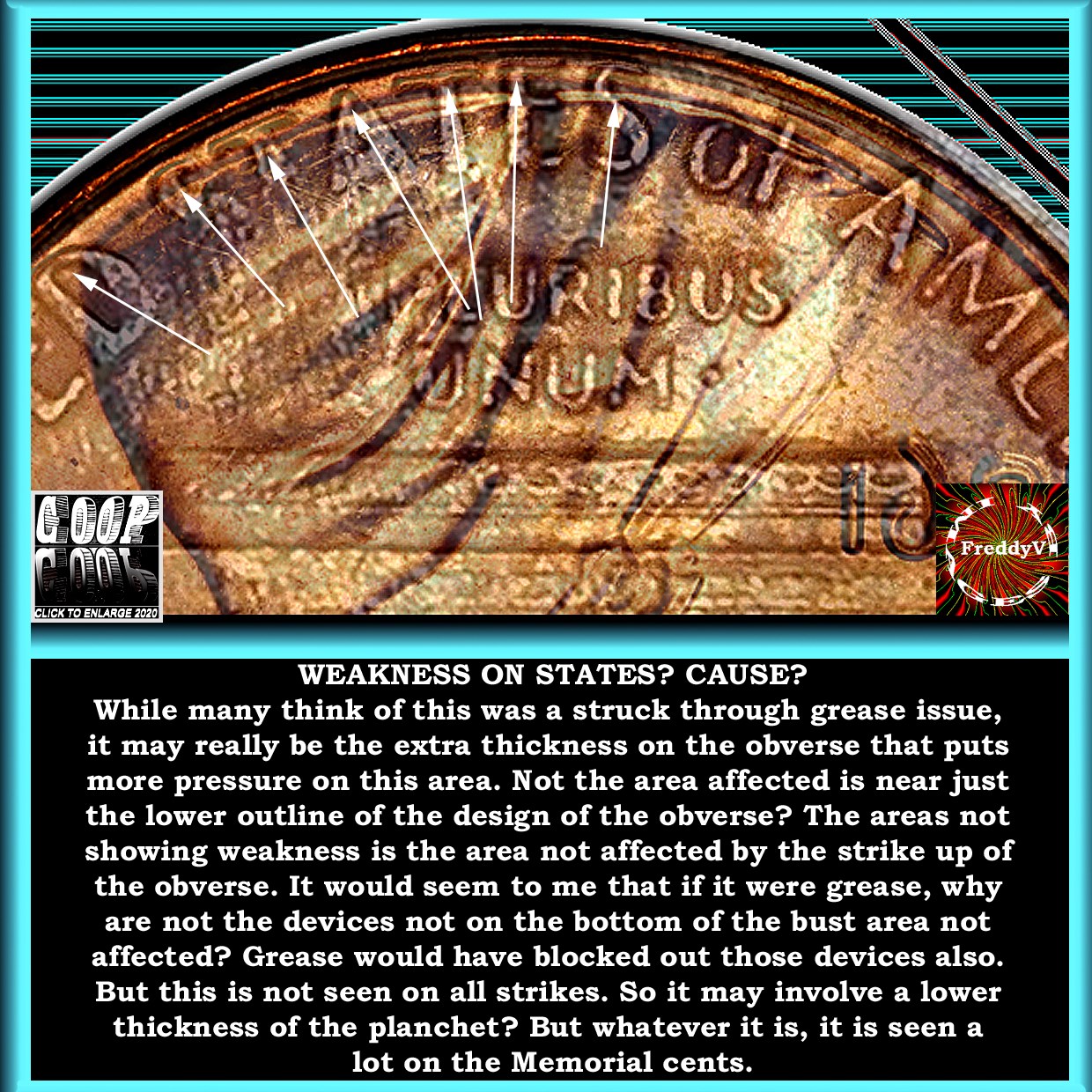 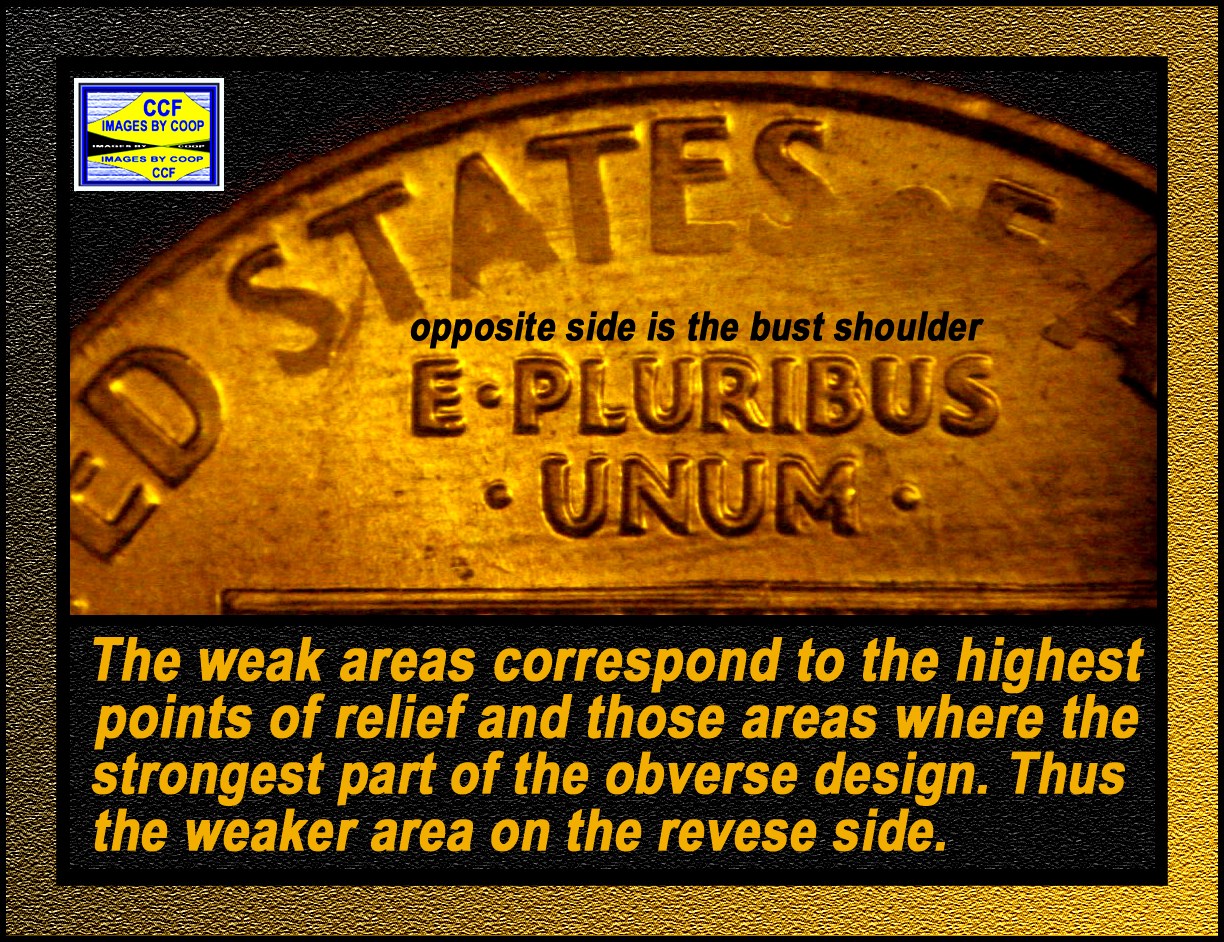 On a Struck Through Grease the devices would be enlarged even on the tops of the devices. 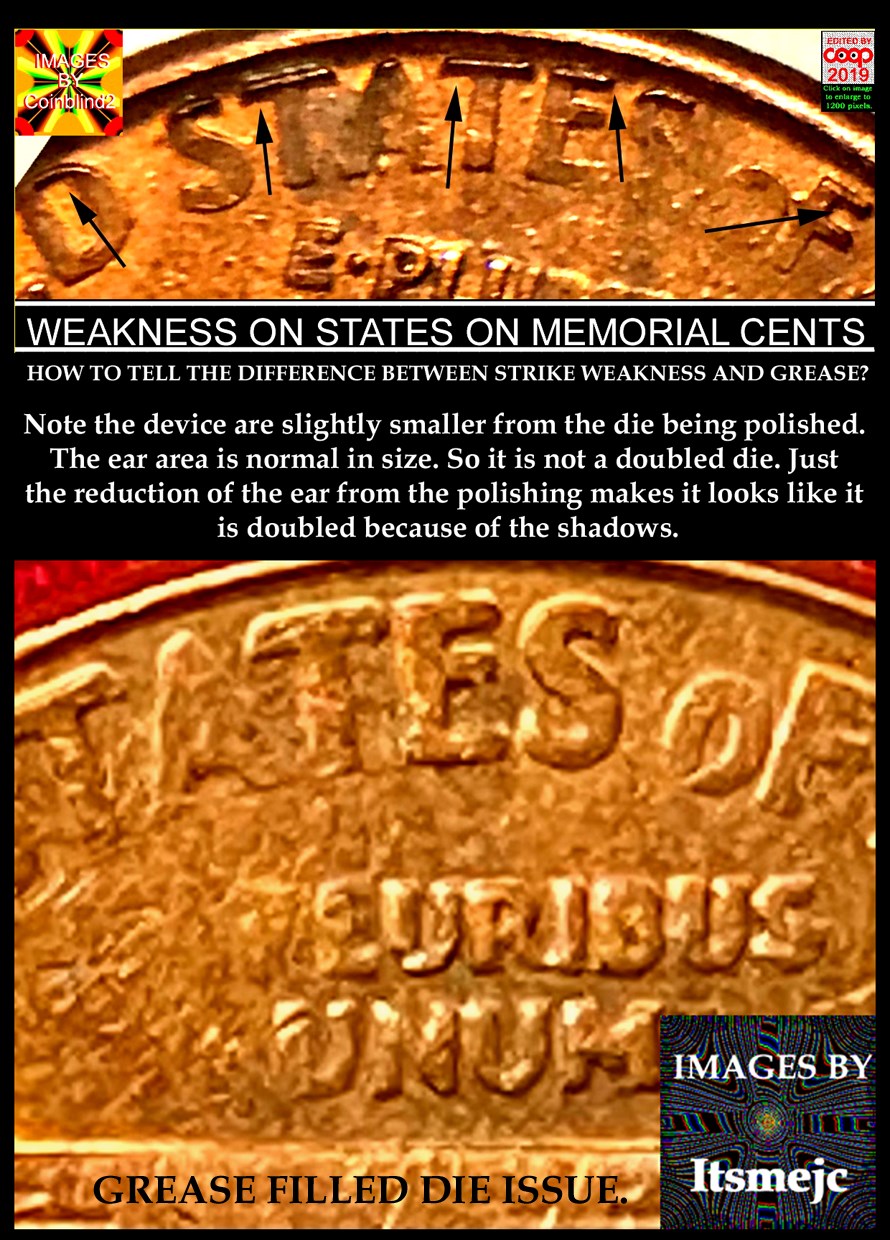 So the metal filled the obverse side first and what was left over is seen on the reverse. What is the weight of this coin? If it is slightly under weight, it could confirm my theory? (looks like a zinc coin, so it maybe less than 2.5 grams?) No date mentioned. |
|
Pillar of the Community
Canada
3328 Posts |
Sorry coop I mentioned the weight in the other thread. Did you still want the weight?
|
|
Pillar of the Community
Canada
3328 Posts |
My scale is not great. I'd have to have one the same year or close to it which I should
|
|
Pillar of the Community
Canada
3328 Posts |
My scale says it's around 2.48 but it's not grams
|
|
Moderator
United States
108142 Posts |
I'd have to say that HGK3 and then Coop nailed it down to a weak strike due to the metal flow on the obverse. Notice the way the letters affected start out sharp at the rim then taper into the field towards the center of the coin. the obverse bust took up most of the metal to form it
|
|
Pillar of the Community
Canada
3328 Posts |
Can this thread and the one about the off center cent be fused, as they are the same coins with Die Deterioration. |
|
Page 2 of 2
|
Replies: 18 / Views: 2,065 |
Page 2 of 2
|








 First Page

 Posted 08/13/2021 1:45 pm


