| Author |
 Replies: 26 / Views: 5,368 Replies: 26 / Views: 5,368 |
Page 2 of 2
|
|
|
|
Pillar of the Community
United States
2408 Posts |
 It'd be interesting also to figure out how the obverse rim got that.  |
|
Bedrock of the Community
United States
62064 Posts |
If the cladding was removed, the the devices would be ghost like. This is a struck on a partial clad missing planchet. Partial clad missing: 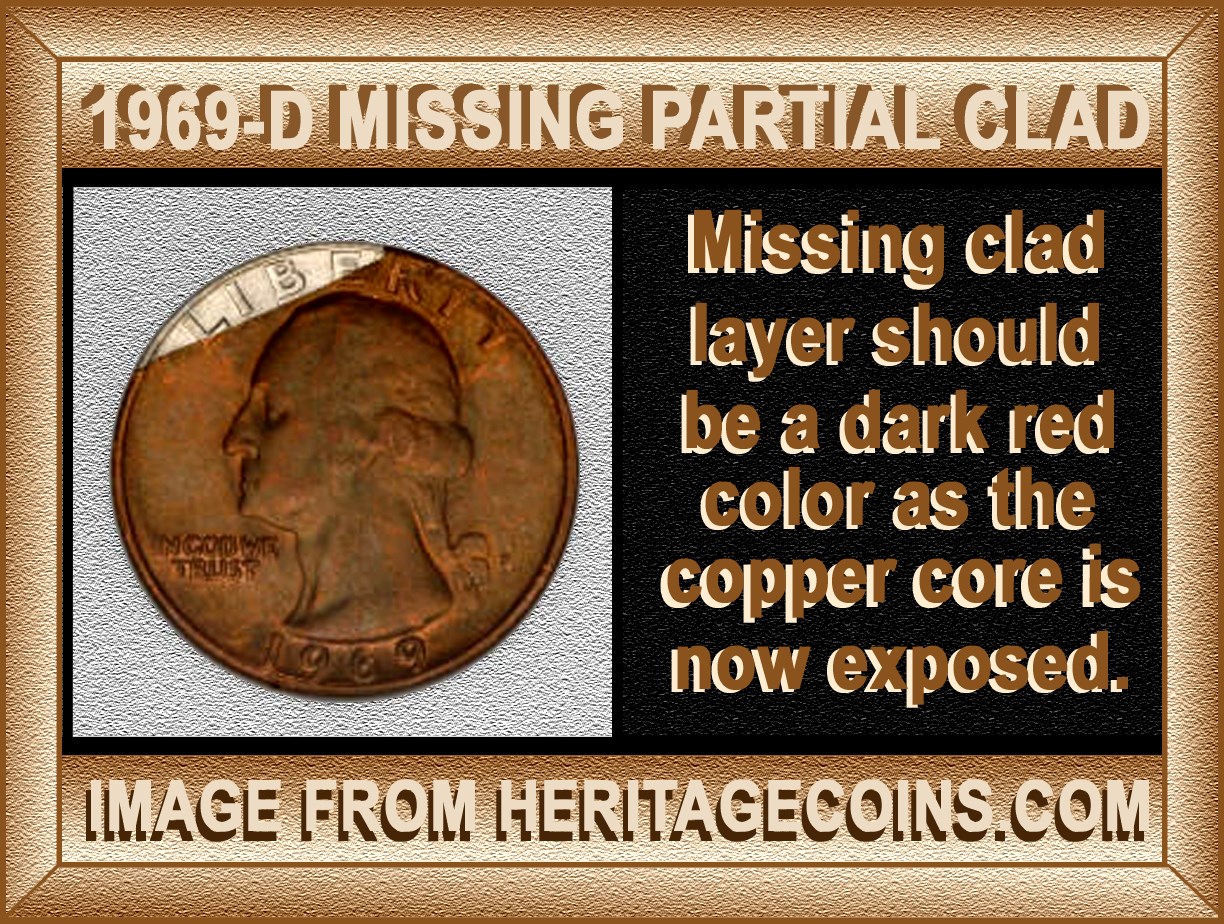 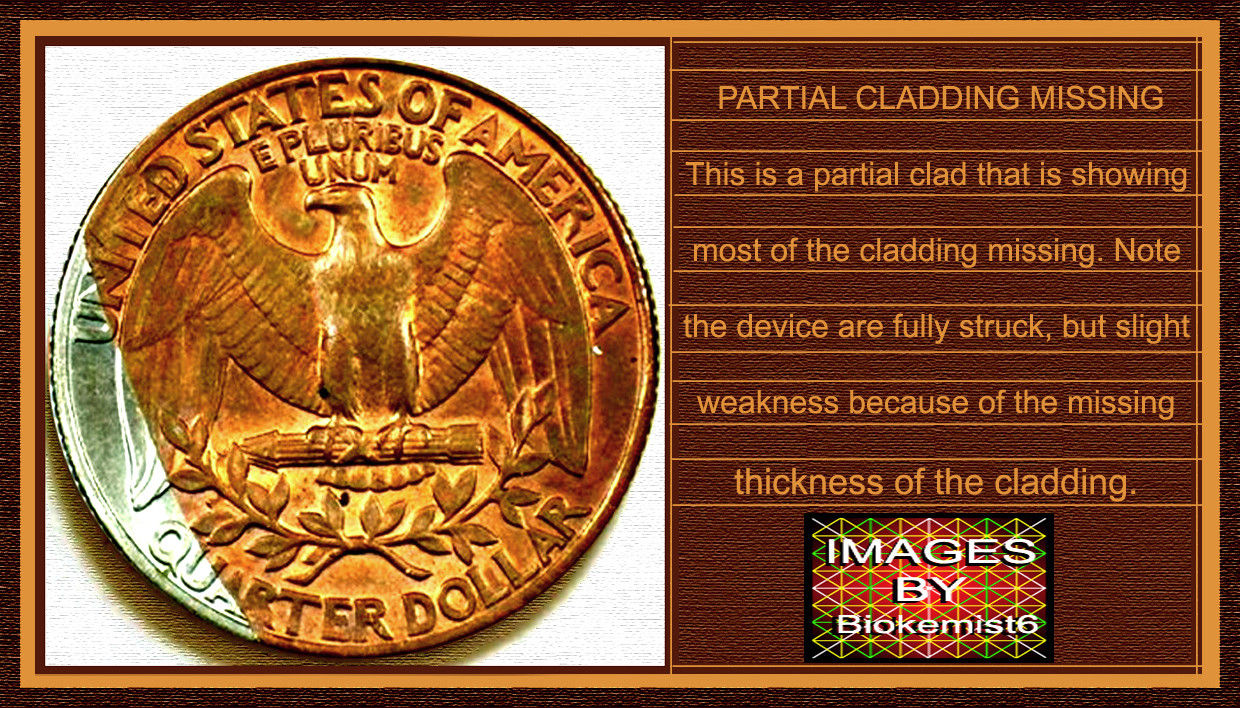 Removed clad:  If the cladding was removed it would look like the top coin on this image. Just a ghost image of the devices. Edited by coop
05/05/2022 3:43 pm
|
|
Pillar of the Community
United States
2408 Posts |
Thanks coop. That makes sense on that part. But doesn't arby96 rim look different? 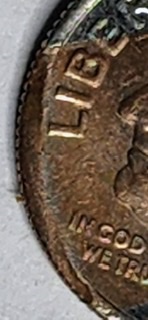 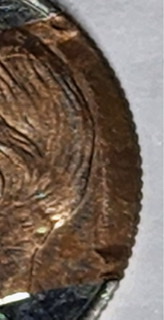 |
|
Pillar of the Community
United States
1406 Posts |
Perhaps we have a little of both going on here. Missing clad layer and then PMD on the reverse rim. The color change on the copper suggests that the nickel took a hit and moved up. |
|
Pillar of the Community
United States
4429 Posts |
Wow really nice find!
Definitely missing clad layer. But I think this is more due to pre-strike damage? Thus the flat rims on the obverse and weak rims on the reverse.
|
|
Pillar of the Community
Canada
6244 Posts |
Ok folks, I read all explanations and I agree with the photos of COOP's for the #2 of the quote of causes for missing clad. Quote:
#1 - Chemical impurities in the bonding process
Clad coins are created from bonding different metals together to form multi-layered metallic sandwiches.
When impurities get in the way during the bonding process, these impurities can cause the nickel clad layers to split off from the copper core — exposing the copper inside the sandwich. The clad layer may come off the entire coin, or it might flake off in segments. This can occur before, during, or after striking of the coin.
#2 - Manufacturing errors
Another way these missing clad errors are created involves a different type of manufacturing error.
Sometimes, error coins that are missing their outer layer of nickel clad happen when the outer strip of metal isn't wide enough to overlap the copper core layer — which results in only part of the coin being cladded with its outer layer. Now, this coin is impossible to happened at the mint facility and I can tell you is not my first FAKE see to try to do an missing clad. 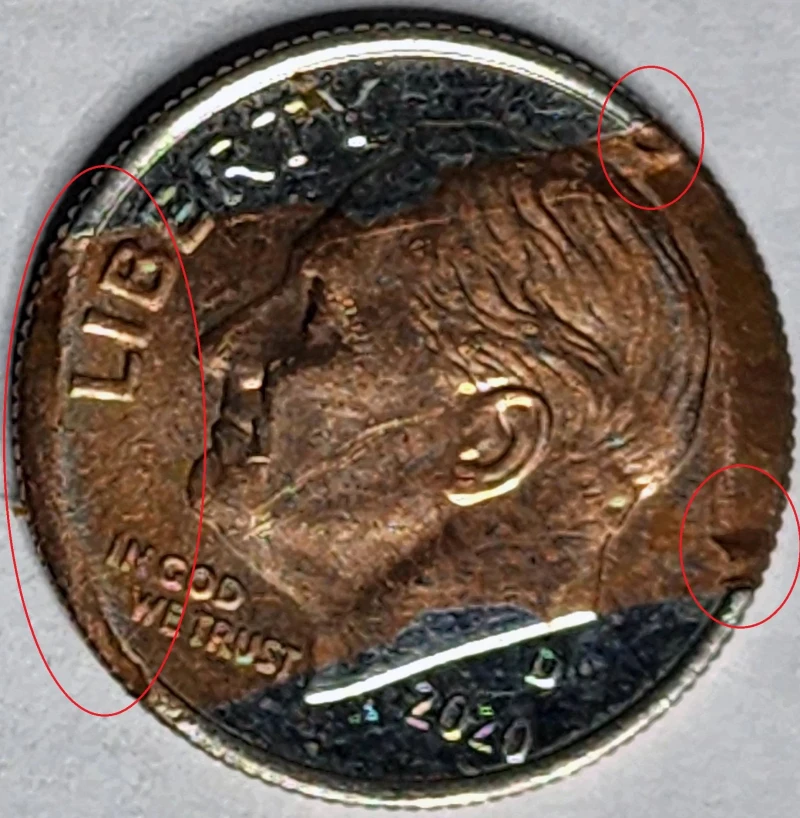 NOW: #! Yellows line= rim deteriorated #2 Red Circles: very strange marks on the rims. Seem someone want to take out the clad #3 Green circle= unidentified way to produce those marks. #4 Yellow circle= rests of the clad on surface #5 High part of the Observe= have not an strait line of missing clad which it is characteristic of all mint missing clad errors. #6 Surface of the coin= show acids action on Cu and Ni #7 Reverse= very clear acid denaturation Extra: I suppose that the side of the coin show Ni. This it is my opinion for this coin and it is not the first see like this. PS: If was Mint problem of the point 1 of missing clad we can see marks of chemicals (those are alkaline and not acidic) |
|
Bedrock of the Community
United States
62064 Posts |
I left the rims to be from the lack of cladding on those area, left the rims weaker. On a missing cladding, the strike can be weaker.  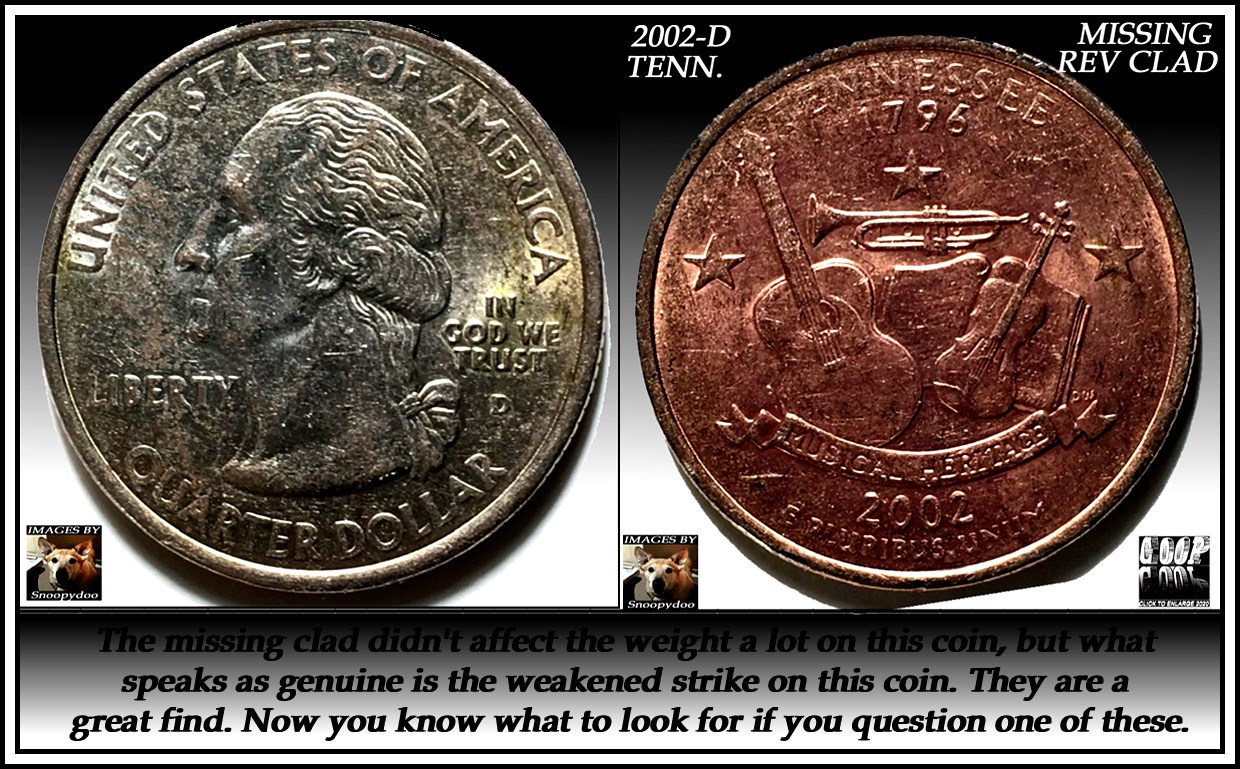 Note the weakness of the strike on this quarter. Both sides of the coin are weaker because of the missing cladding layer from just one side of the coin. 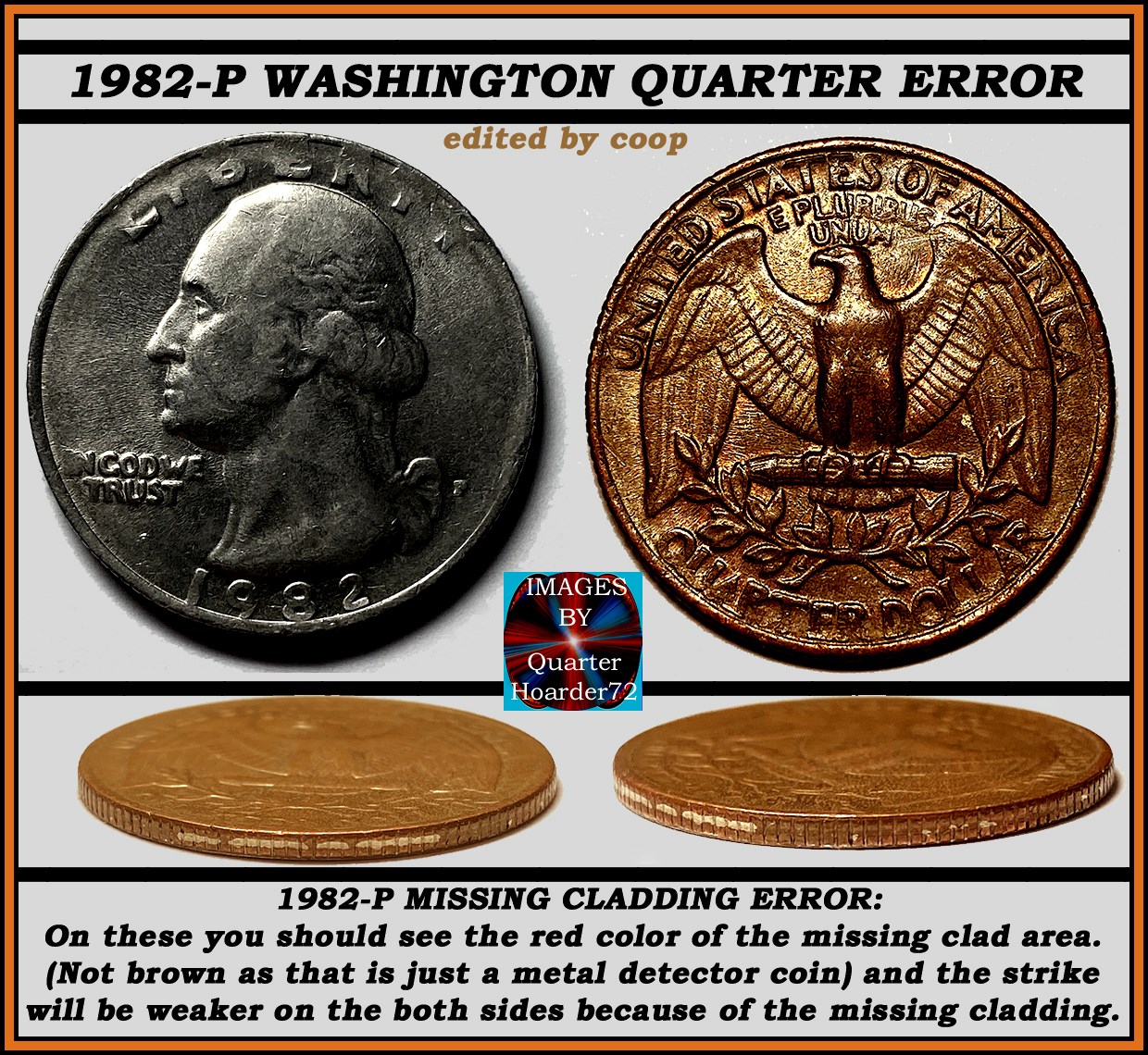 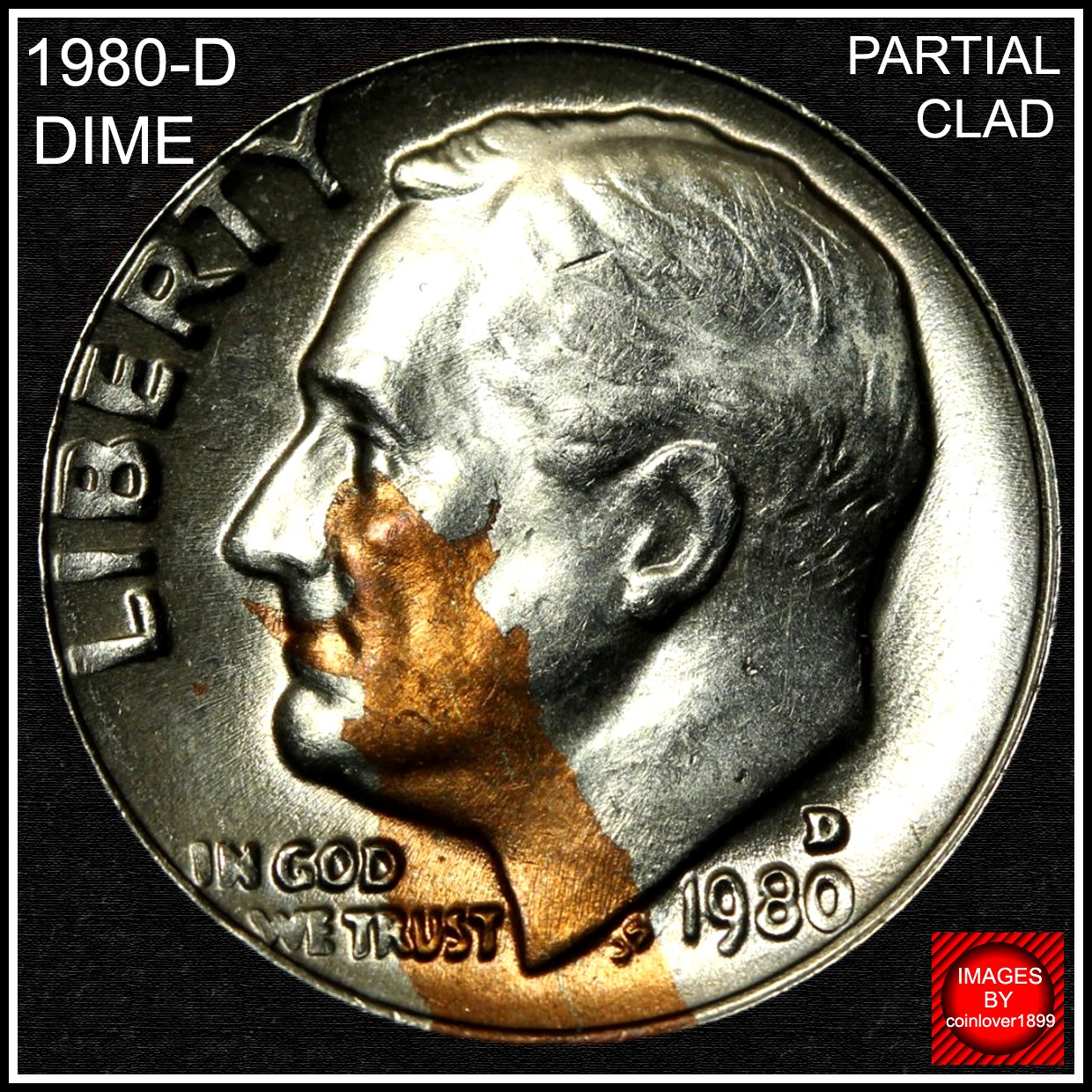 Seem to be less affected on slight missing cladding on strength of strike. 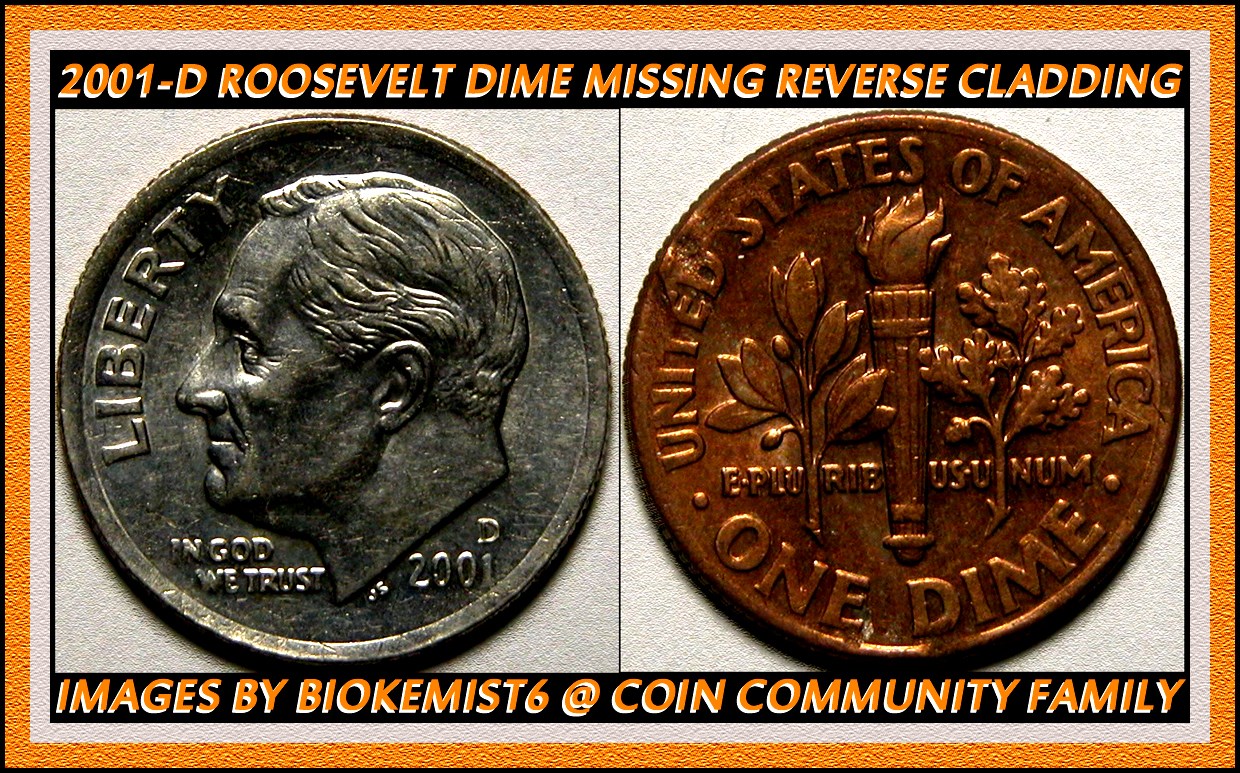 The more the cladding that is missing, the weaker the strike becomes. |
|
Pillar of the Community
 United States
2112 Posts |
I guess the only way to know for sure is to send it in for grading or to an expert that truly knows their stuff. Thanks everyone for your input.
"LOVE THE HUNT!"
|
|
Pillar of the Community
 United States
5905 Posts |
I'm definitely with Coop and Tanman on this one.
Looks like a great example of missing part of a clad layer. There would be no way to peel that layer off without causing other damage.
Words of encouragement are one of the major food groups.
We need to consume them regularly to thrive and grow.
|
|
Valued Member
United States
426 Posts |
Yeaup def a missing class layer
The weakness of strike on the reverse dead giveaway. You always see this with a coin missing it's clad layer
Awesome find
|
|
Pillar of the Community
Canada
6244 Posts |
If someone will explain me how could happened that two almost parallel line of the gad is present and the meddle of the coin miss clad, Then me I will eat this coin.
|
|
Bedrock of the Community
United States
62064 Posts |
A hole in the clad material that was a defect.
|
|
Pillar of the Community
Canada
6244 Posts |
Agree with you COOP, that possible a hole in the clad. But those holes are never strait. I see some in the clad rolls and all are deform.
|
|
Pillar of the Community
United States
2752 Posts |
It's a partial missing clad layer. There's no damage that I can detect.
Error coin writer and researcher.
|
|
Pillar of the Community
Canada
6244 Posts |
Thank you very much for intervention Mike. Now I know how is look in this time for those "anomalies". Do I agree it is missing clad? NO.
The production of the clad has the two sides of clad rolls under and upper the core material. In general those rolls of clad are 1/2 inch larger then the core roll. This it is the main. Rich, put a good point of holes in the clad material which happened due to the carbonated impurities of the melting process. I answered to his hypothesis.
To peal a clad from a coin will take me 3 to 4 minutes , with no problem, and will be the form I want.
In fact it is not the main topic. In fact it is how could be parallel missing clad? Is no way to have to clad 2 depart rolls over the core.
Personally I do not understand this possibility, but if you discern it is miss clad, I agree. You are all the time with this errors, me till 1 of July I will stay will the fake coins. Your words, I can say is cement done.
Edited by silviosi
06/05/2022 9:58 pm
|
|
Page 2 of 2
|
Replies: 26 / Views: 5,368 |
Page 2 of 2
|





 First Page

 Posted 05/05/2022 3:26 pm


