| Author |
 Replies: 23 / Views: 2,710 Replies: 23 / Views: 2,710 |
Page 2 of 2
|
|
|
|
Moderator
 United States
196946 Posts |
Very interesting!  I would like to see the edge as well. Skeptical, but hopeful.  |
|
Bedrock of the Community
United States
62064 Posts |
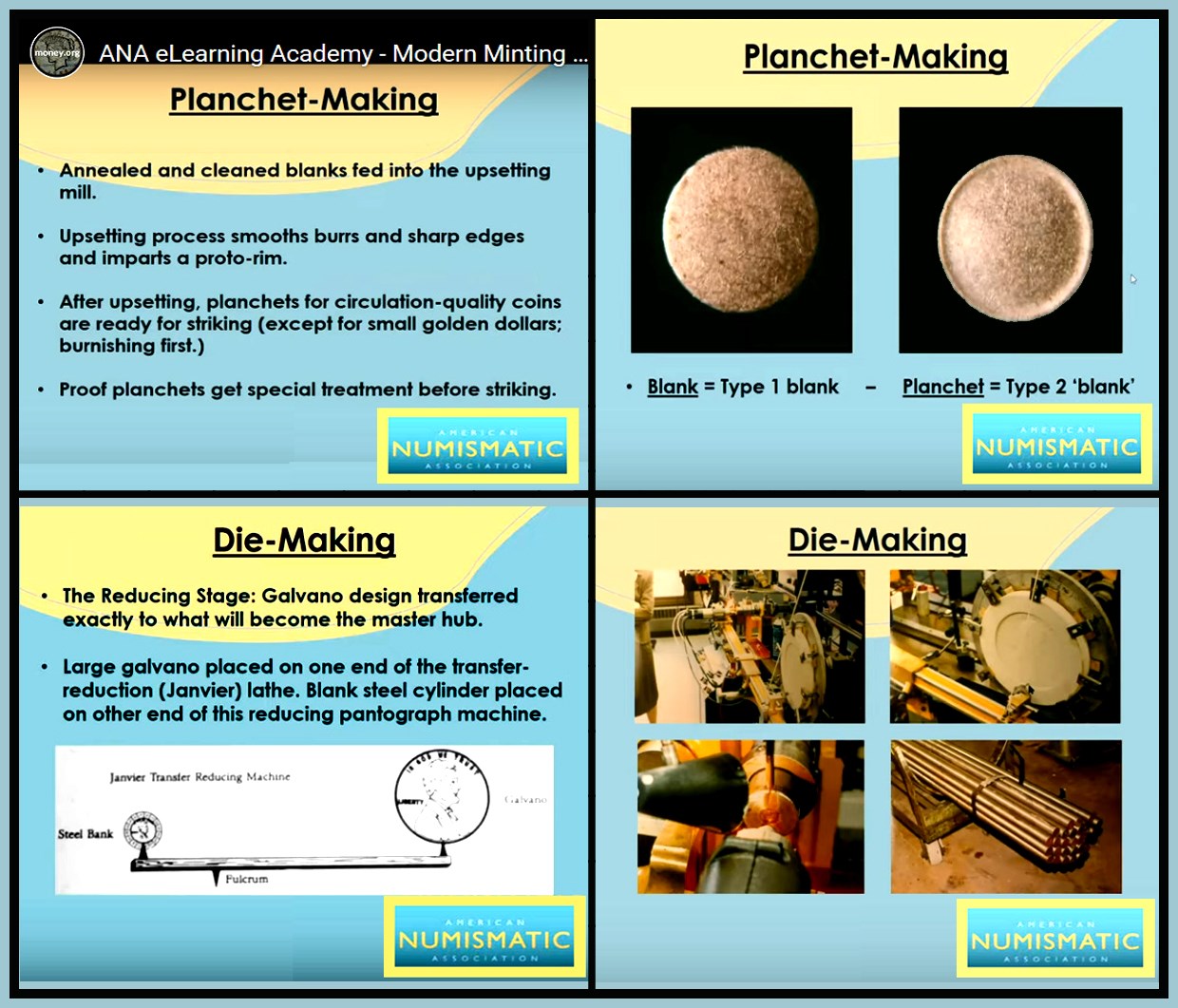
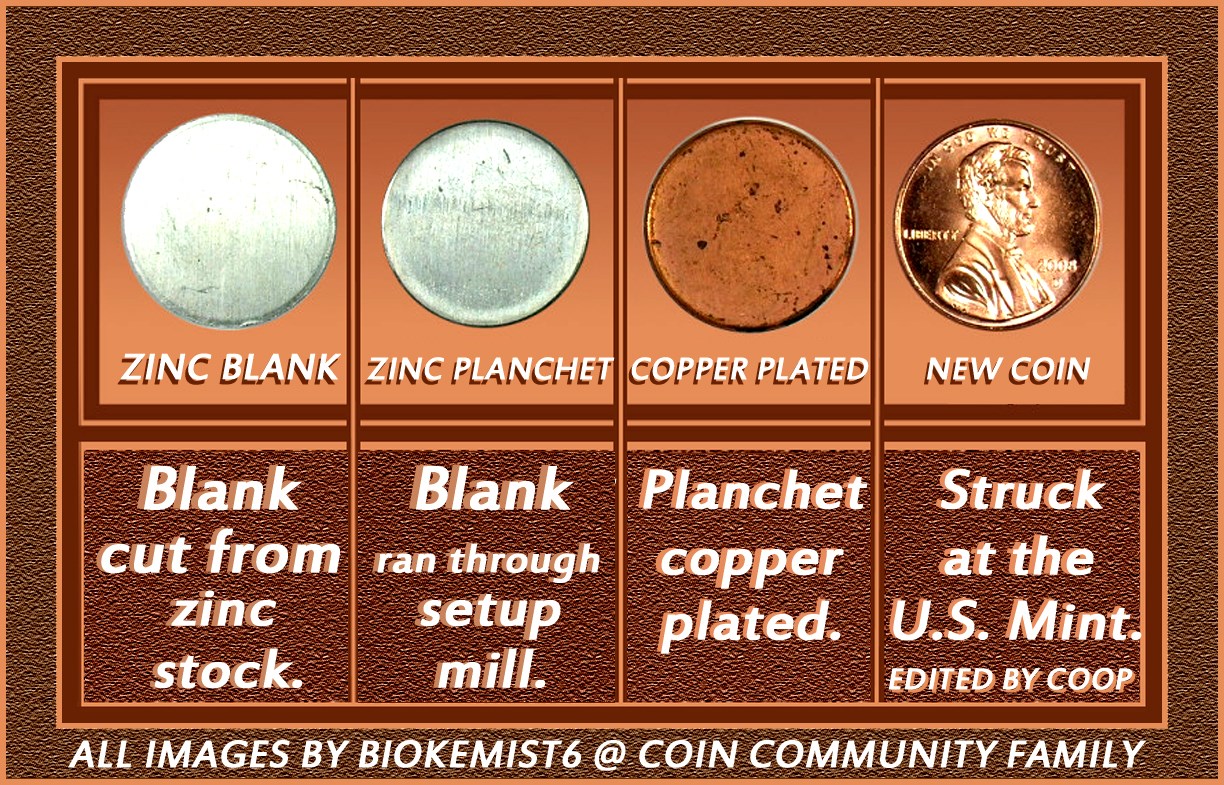 These are cents, but I see the setup rim on your coin: 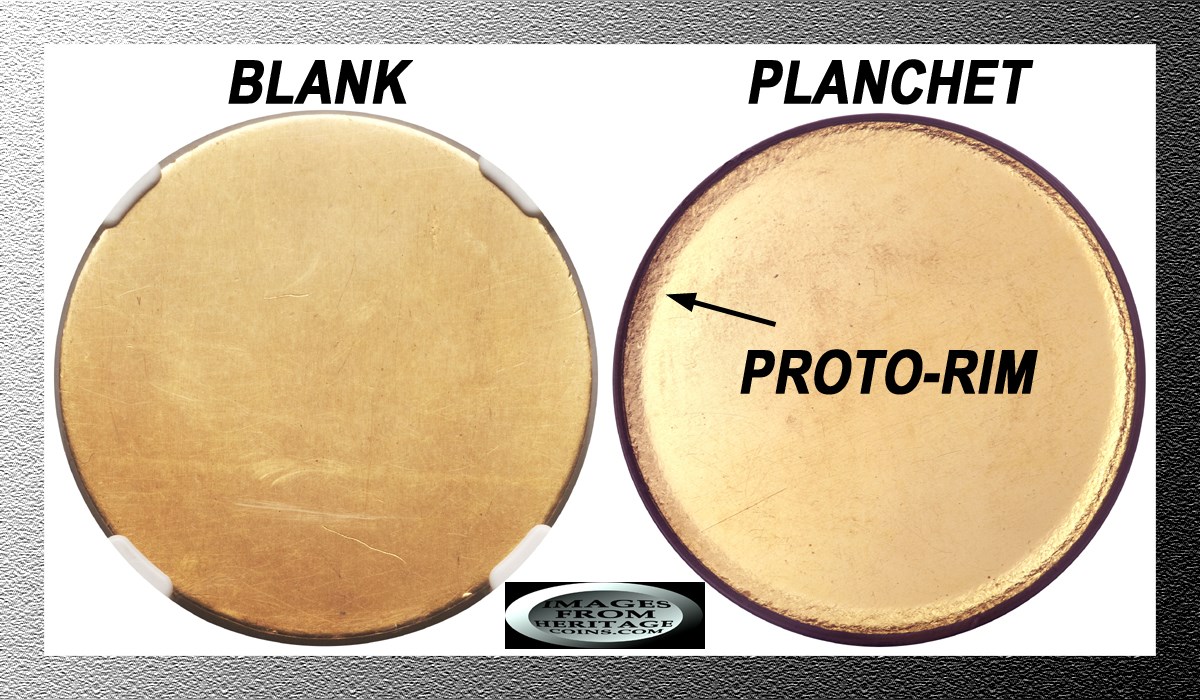 |
|
Pillar of the Community
 United States
3013 Posts |
Update: I was busy all day and couldn't be around... Anyways, a few more things about this. It weighs 22.65ish grams as an approximation, and about 37.0mm for the unstruck one. The regular dollar has a diameter of 38.5mm and weighs nearly the same at 22.7 grams. The picture with another comparison Ike: 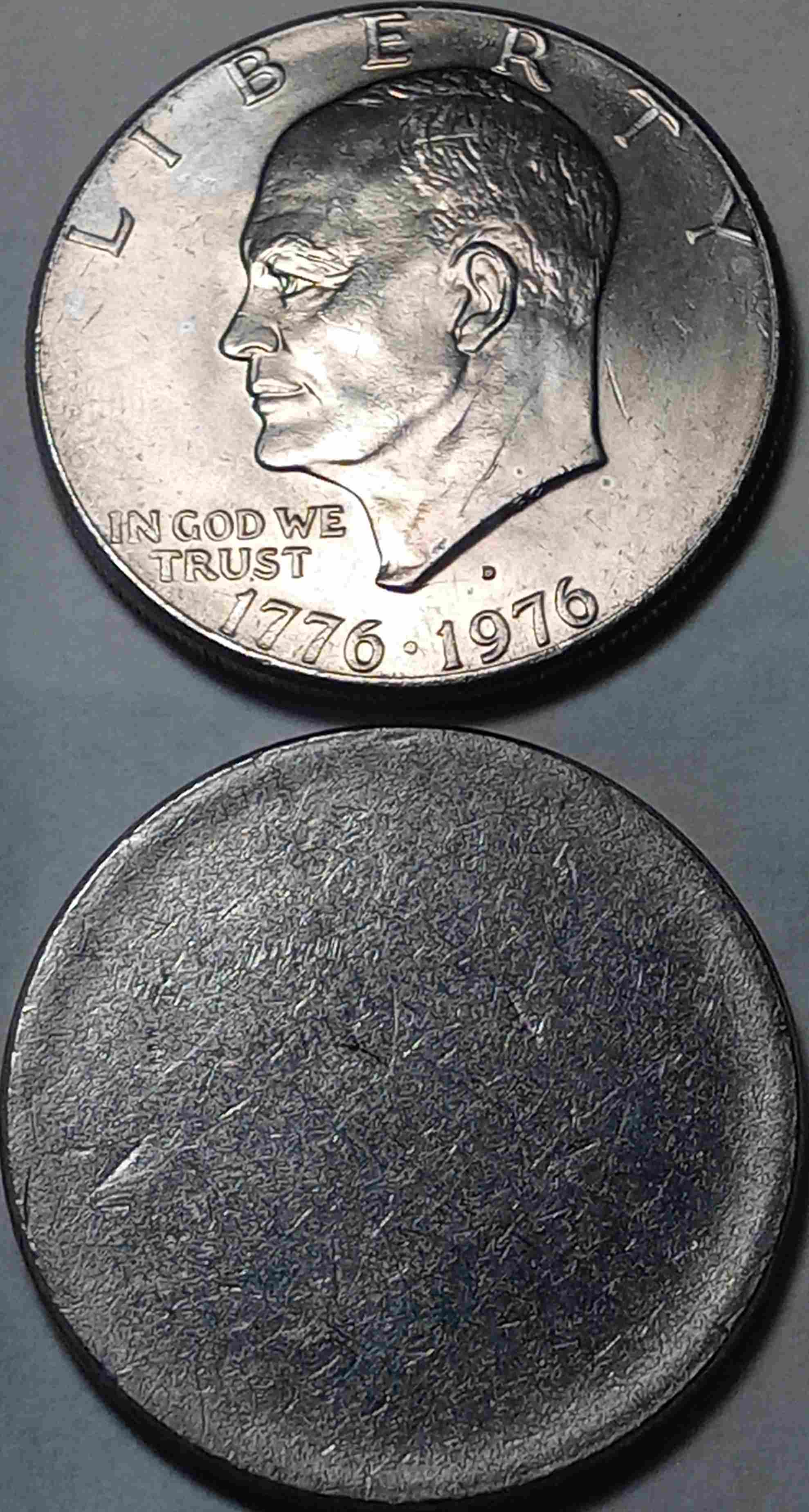 And a couple of rim shots: 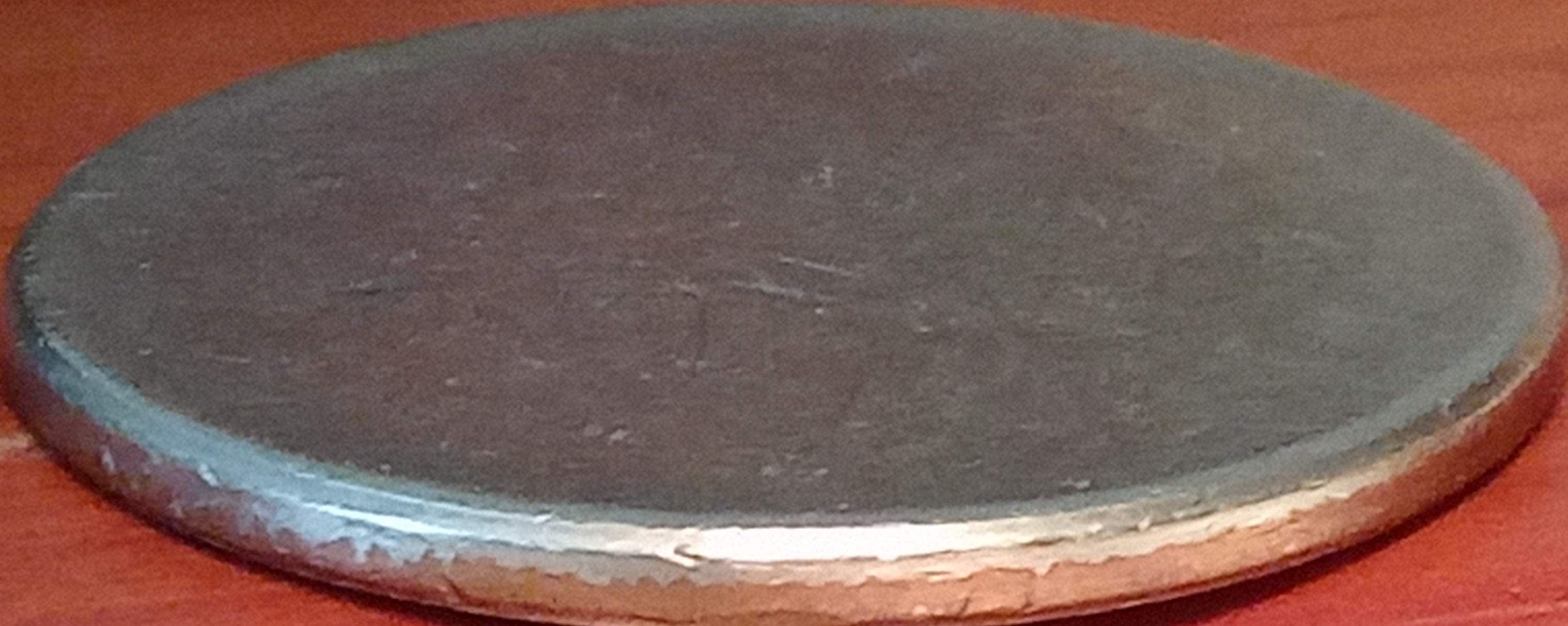 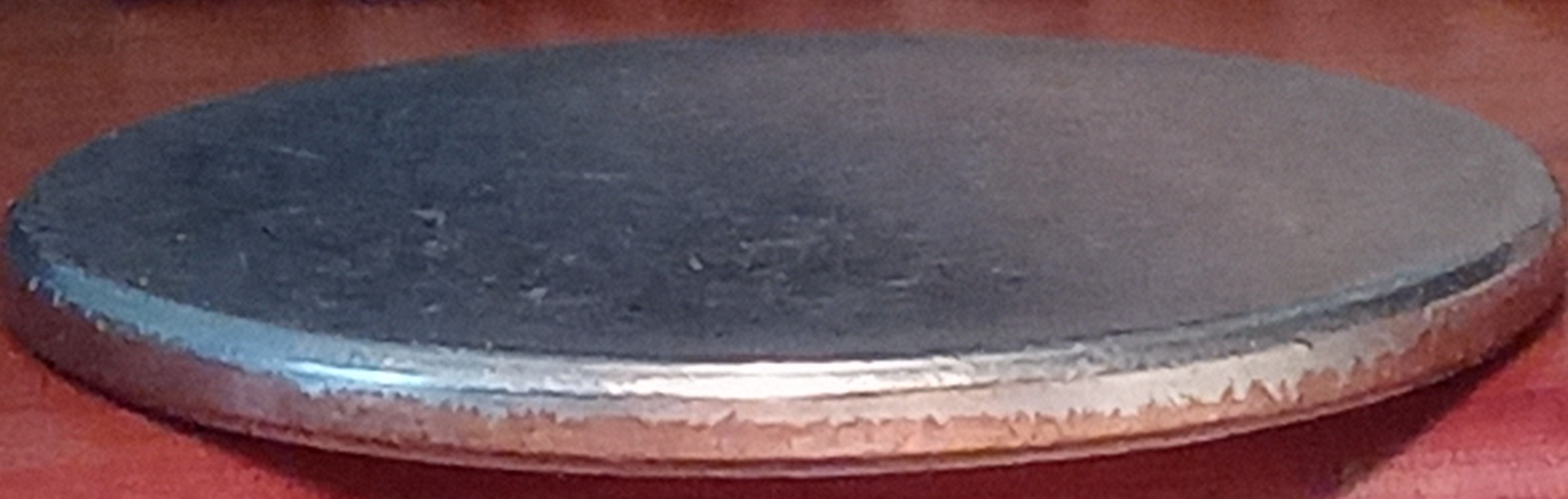 |
|
Pillar of the Community
Canada
6244 Posts |
By the side, seem to be a plated blanc. Also for me the side is not like a legitim coin. The Diameter is far to small. Is my opinion, let see the others.
|
|
Pillar of the Community
United States
593 Posts |
The weight is spot on, it certainly appears to be clad and it's clearly been through the upset mill.
The only slight issue is the diameter, which is short by 1.5 mm. Not a large amount and certainly that can be explained by very minor expansion into the collar at striking on a struck coin.
Team genuine here. Very cool find.
|
|
Moderator
United States
108675 Posts |
Quote:
The only slight issue is the diameter, which is short by 1.5 mm I think that smaller diameter is fine - after all it has to fall easily into the striking chamber and has to expand into the collar to create the reeded edge of the dollar. I say that this is a very cool find. |
|
Pillar of the Community
Canada
6244 Posts |
I never saw an blanc clad after milling process to have this kind of side irregular and also the "clad" been like a liquid metal fall 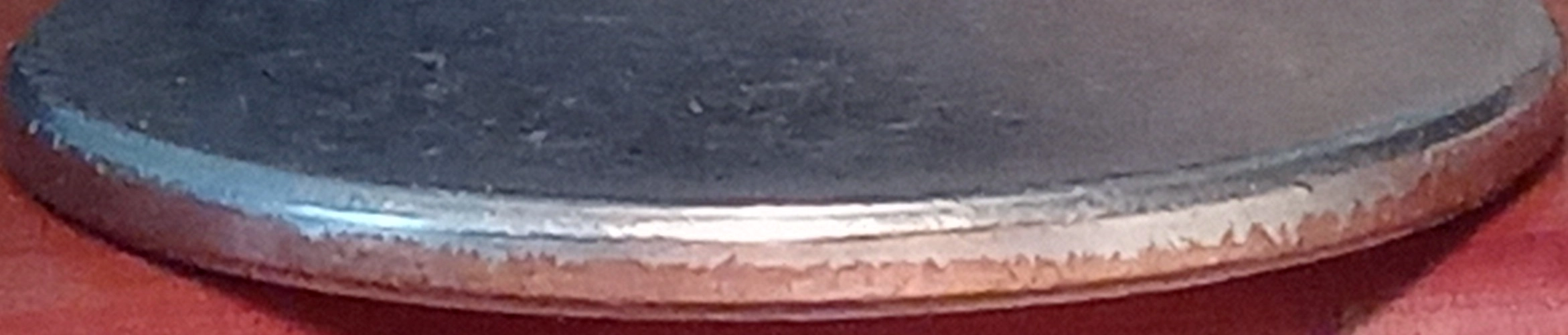 |
|
Pillar of the Community
United States
3013 Posts |
When the blanks get punched by the blanking machines, I would expect the nickel surfaces to get somewhat pushed down into the copper core from the pressure during blanking hence the irregular looking rim. It's a smooth rim since the collar with reeding had not struck the coin yet. This is how I understand it at least  |
|
Moderator
United States
108675 Posts |
Quote:
When the blanks get punched by the blanking machines, I would expect the nickel surfaces to get somewhat pushed down into the copper core from the pressure during blanking I agree completely. In fact someone here (Coop I think) had an illustration of this blanking process. Quote:
It's a smooth rim since the collar with reeding had not struck the coin yet. Yep, you are correct. |
|
Moderator
United States
196946 Posts |
Looks legit to me. |
|
Pillar of the Community
Canada
6244 Posts |
Quote:
When the blanks get punched by the blanking machines, I would expect the nickel surfaces to get somewhat pushed down Correct, but when the blanc is cut the Ni push down is always strait line and equal. the cutting blanc machine is 90 deg with a tolerance of the .05 deg., so the blanc sides are strait, which it is not the case of this example. Second: The blanc type I is bigger in diameter then the finish coins. Why, because the milling process will adjust the blanc to the normal dimension. If a blanc is to small 1.5 mm in diameter (this case). the blanc will pass the milling process without been touch by the rolls, and will pass the machine because will be push by the next blanc. Maybe COOP has the photo of the milling process or cutting machine to be understood by all. I know if we do not have the opportunity to see the minting process line is hard to understand and imagine exact how it is work. Other thing here it is the weight. At 1.5 mm smaller in diameter blank, this weight do not fit exactly with the normal clad planchet. Edited by silviosi
05/11/2022 11:06 am
|
|
Bedrock of the Community
United States
62064 Posts |
Edited by coop
05/11/2022 11:44 am
|
|
Pillar of the Community
United States
593 Posts |
Quote:
Correct, but when the blanc is cut the Ni push down is always strait line and equal Not necessarily. Check out the photo of the edge of the dime planchet on the page below. There are two on the page, one pre upset mill and the second post upset mill. I'm referring to the post upset mill edge, which clearly shows an uneven copper/nickel line. https://www.error-ref.com/?s=blankQuote:
Second: The blanc type I is bigger in diameter then the finish coins. I'm not sure that's accurate, but since this one has clearly been through the upset mill its not a type 1, but rather a type 2. The upset mill reduces the diameter of the type 1 blank slightly by compressing the edges to form the proto rim, hence the minor loss of diameter. Since the upset mill reduces the diameter of a planchet slightly due to compression and the collar has to have the exact inside diameter of the finished coin, there has to be a little expansion of the planchet when smashed with 50 tons of pressure. |
|
Bedrock of the Community
United States
62064 Posts |
The blank/planchet may have been stored not in a holder to protect the edges. If this is a Eisenhower example, where has it been kept all this time. If not protected, it may have damaged the edges of the piece in question.
|
|
Pillar of the Community
Canada
6244 Posts |
@HGK3 the dollars are struck at 120 tone. the smaller struck it is 60 tone for penny. The upset mill show by COOP show you clear the differences of the diameters. It is work like this. Just think of smaller (1.5 mm) diameter entering mill machine, no rolls will press in any ways. Coop has the best example for this process, me I have the engineering design for this machine which it is very technical and hard to understand if you do not work with.
|
|
Page 2 of 2
|
Replies: 23 / Views: 2,710 |
Page 2 of 2
|




 First Page


 Posted 05/09/2022 8:04 pm