The 1781 Battle of Yorktown was one of the most historically significant battles of the American Revolution. The defeat of the British Army under the command of Lieutenant General Lord Cornwallis by American and French troops under the command of General George Washington and the Comte de Rochambeau, respectively, ultimately forced Britain to the negotiation table and brought about the end of the war.
(Note: Washington was in overall command of all troops in the battle.)In the years leading up to the battle's 150th anniversary in 1931, Congress fully supported a national celebration for the event. It created the United States Yorktown Sesquicentennial Commission, appropriated funds for the US' participation in the sesquicentennial's celebration, authorized the President to invite foreign governments to participate and actively monitored the Commission's progress and activities via a number of Congressional hearings and reports.
On January 21, 1930, Representative Roy Fitzgerald (R-Ohio) introduced a bill into the US House of Representatives calling for "coinage of a 50-cent piece in commemoration of the sesquicentennial of the surrender of Cornwallis at Yorktown." The bill specified the coinage of up to 500,000 coins for the Yorktown Sesquicentennial Commission. One would have imagined that a coin commemorating an event of such historic significance would have no trouble finding support, but the previously unimpeded approval process for commemorative coin legislation was about to face a major obstacle.
The Yorktown coinage bill was reported out of the House Committee on Coinage, Weights, and Measures with a recommendation for passage on April 15, 1930. Less than a week later, however, President Herbert Hoover vetoed a commemorative coin bill for the 75th anniversary of the Gadsden Purchase; it was the first presidential veto of a commemorative coin bill. Among Hoover's reasons for the veto were the potential for commemorative coins to divert our monetary system to uses other than its intended purpose (commerce) and the Treasury Department's opposition to such coinage. Hoover's veto most definitely changed the climate for new commemorative coins (at least for a couple of years).
In such an environment, the Yorktown bill did not gain the necessary support in the House or Senate and no coinage bill was presented to the President for consideration. Eventually, a bill was introduced in the Senate for a Yorktown Sesquicentennial commemorative medal to be produced by the US Mint, an approach favored and supported by the Treasury. The bill was ultimately passed into law on February 20, 1931.
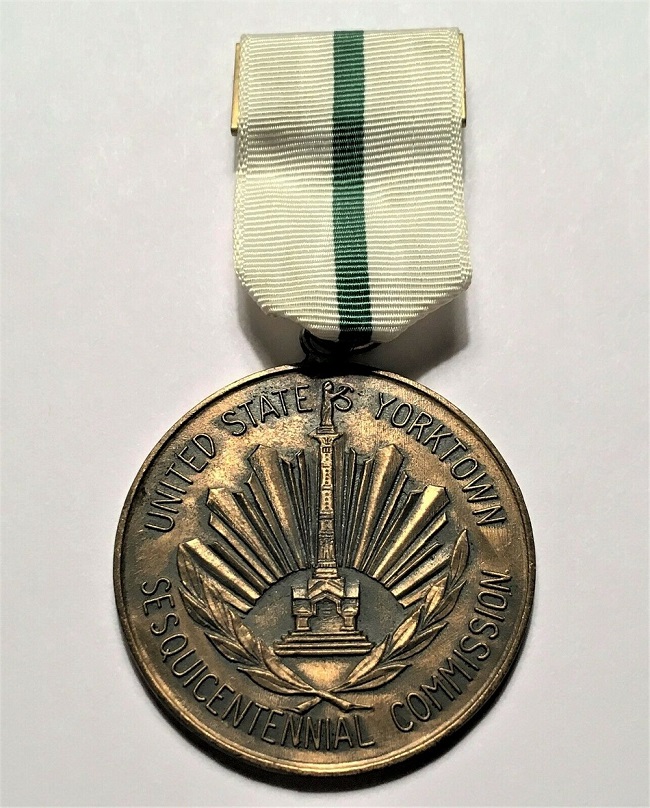
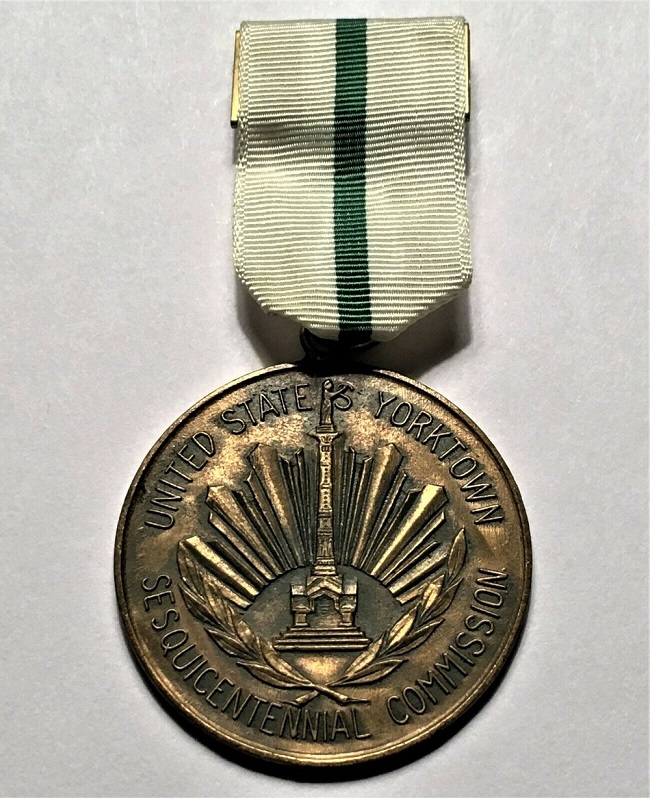
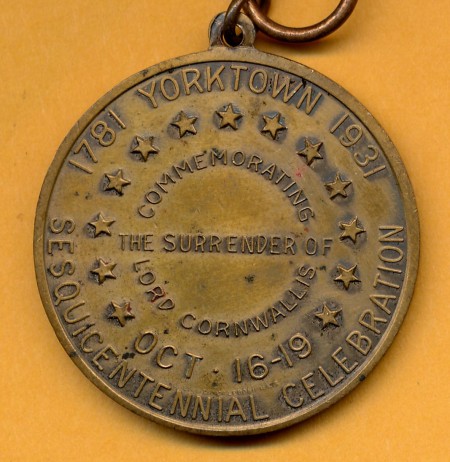
The Yorktown Sesquicentennial Commission, unsure that it had available funds to pay an artist for the design and required models for a medal, decided against having a commemorative medal struck by the US Mint. It did, however, have a hanging badge produced for Commission members, State Commission delegates and special invited guests. The medal part of the badge was designed by William Haussmann, a junior architect within the National Park Service.
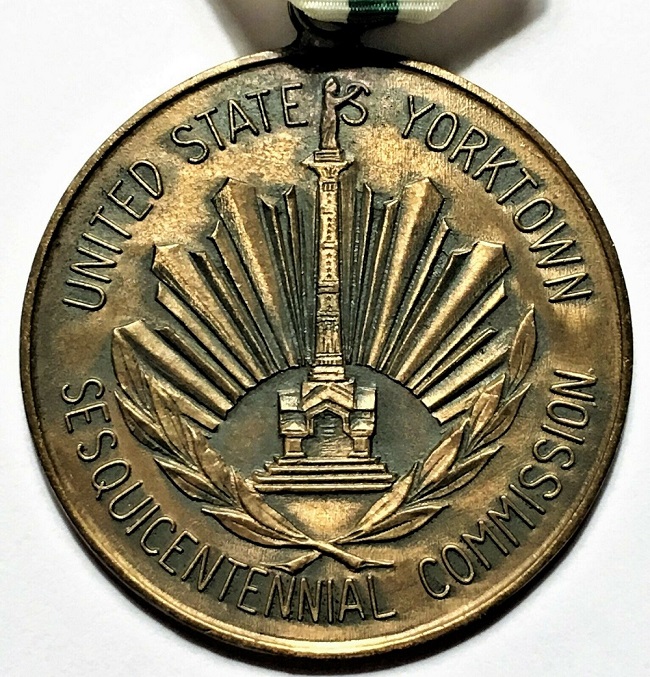
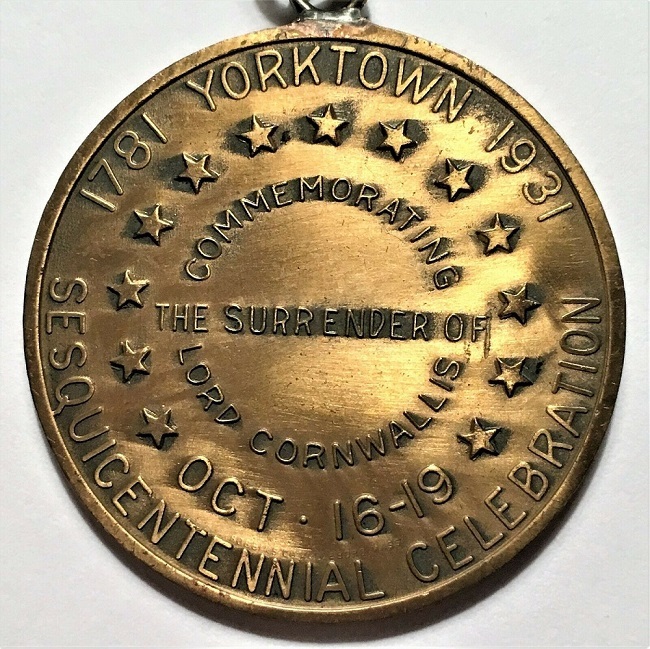
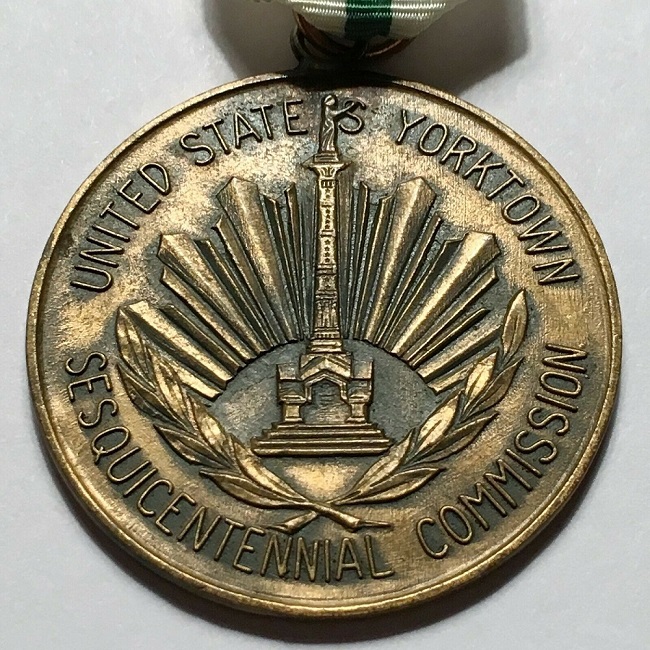
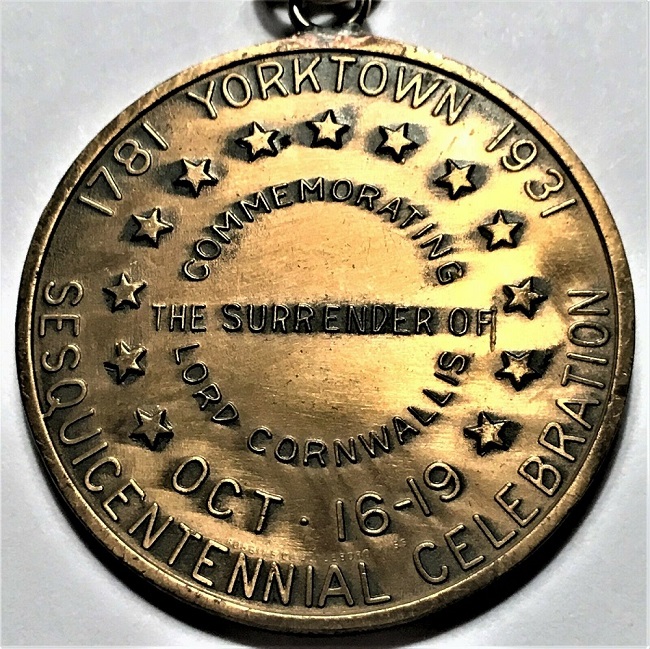
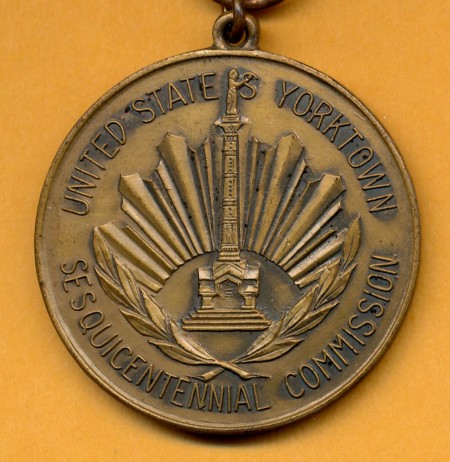
The obverse of the medal depicts the Victory Monument in Yorktown superimposed upon a semi-circular ray burst; a laurel wreath partially encircles the Monument from below. The medal's reverse features only commemorative inscriptions. The medals were produced by The Robbins Company, Inc. of Attleboro, Massachusetts. The Robbins Company was founded in 1892 and was a well-respected private manufacturer of medals, tokens and badges.
Shown below is an example of the official Lexington Sesquicentennial Commission badge with its original hanging bar and ribbon. The name on the piece is Virginia Harding. Ms. Harding was one of the first women to be elected to the Ohio General Assembly; she served in 1927-28 and then again in 1930-32. She was one of Ohio's delegates to the Yorktown Sesquicentennial celebrations in Yorktown, Virginia - this was her badge.
Here's a link to the National Park Service's write-up on the Victory Monument:
http://www.nps.gov/york/historyculture/vicmon.htm Yorktown Sesquicentennial Commission - Hanging Badge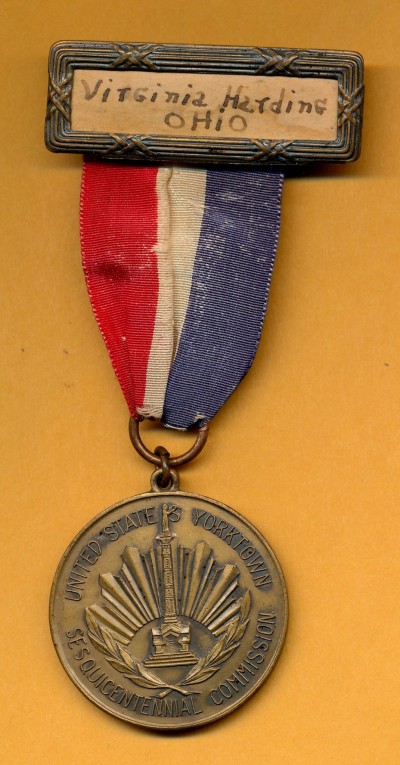 Yorktown Sesquicentennial Commission - Medal Obverse
 Yorktown Sesquicentennial Commission - Medal Reverse
 Yorktown Victory Monument
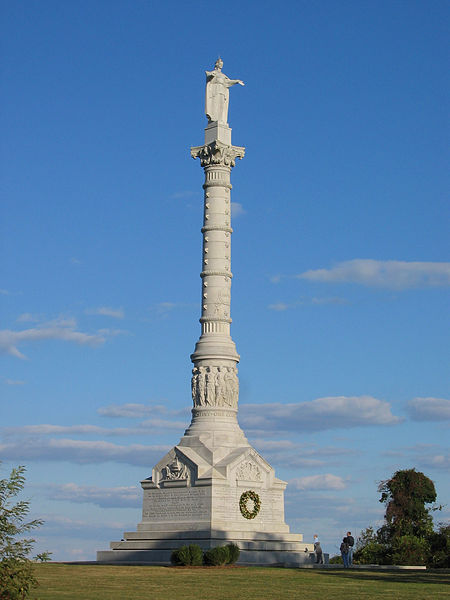 (Image courtesy of Wikemedia Commons/AudeVivere.)Read More: Commems Collection






 Posted 05/10/2013 7:41 pm