For my 2,500th post, I thought I'd discuss one of the more unusual twists within the classic US commemorative series.
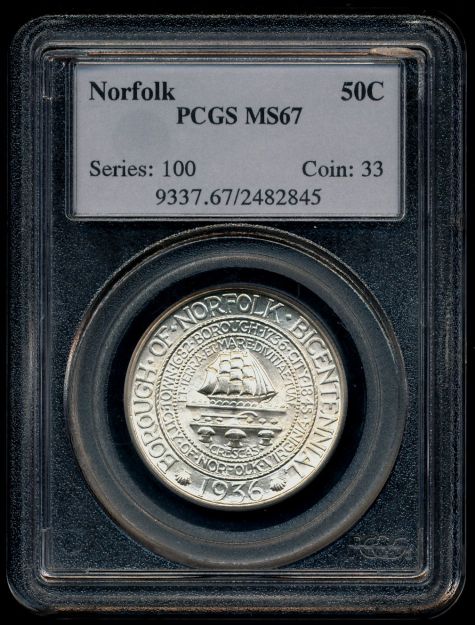
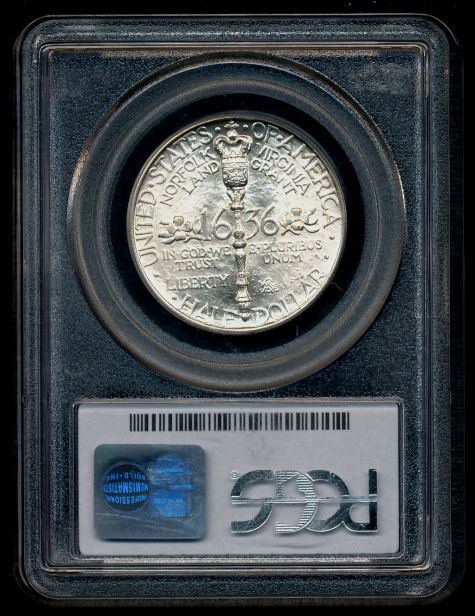
Collectors of the series are likely familiar with the 1936 half dollar issued to mark the "three-hundredth anniversary of the original Norfolk (Virginia) land grant and the two-hundredth anniversary of the establishment of the city of Norfolk, Virginia, as a borough." I posted about the coin here:
http://goccf.com/t/116267The coin, however, came very close to never being issued.
In May 1936, during the 74th Congress, Senator Carter Glass (D-VA) introduced a bill calling for a Norfolk 50-cent piece; it was soon joined by a companion bill in the House introduced by Representative Colgate Whitehead Darden, Jr. (D-VA). The bills called for 20,000 half dollars to be struck at a single US Mint facility and for them to be provided to the Norfolk Advertising Board, Inc. for distribution.
The Senate bill was referred to the Committee on Banking and Currency for consideration. Congress had been busy to that point in 1936 introducing and passing new proposals for numerous commemorative coins. Realizing the situation was getting out of hand, legislation had also been introduced in the Senate calling for the issuance of commemorative medals rather than coins; it had passed similar legislation in 1935.
The Norfolk bill was brought up for discussion in the Senate Committee in June, along with a bill calling for the coinage of half dollars to mark the 160th anniversary of the arrival of General George Washington in Morristown, NJ. Reflecting the current thinking within the Senate, both of the bills were amended to replace the call for coins with wording calling for silver medals.
The bills were reported out for consideration by the full Senate. After some debate, the Norfolk bill passed and was referred to the House where it also passed. President Roosevelt signed the Norfolk medal bill into law on June 26, 1936. The amended Morristown medal was never taken up by the full Senate; it appears to have died to a lack of interest by its sponsor who had been focused on a souvenir half dollar.
With its approval, it appeared as if collectors would soon have a silver Norfolk medal to collect alongside their silver Norse-American Centennial medals from 1925. The Norfolk Advertising Board was not overly enthused by the turn of events, however, and delayed moving forward with the striking of a medal - even though 1936 was the anniversary year it sought to commemorate.
When the 75th Congress convened in January 1937, one of the first bills to be introduced was one calling for a 50-cent piece to commemorate Norfolk. This time, the bill was reported favorably by the Committee on Banking and Currency and was soon passed by the Senate and House; it was signed into law on June 28, 1937. The Board had gotten its coin!
At that point, the Norfolk Advertising Board was in the unique position of having both a commemorative medal bill and a commemorative coin bill approved and available for its use; the coin Act did not contain any language stopping the previously-approved medal Act from being acted upon by the Board.
As history informs us, the sponsor chose to move forward only with the half dollar and collectors got yet another 1936-dated commemorative coin rather than a much more novel silver medal. It was the sponsor's way of saying "Thanks, but no thanks!" to Congress and the Mint regarding the approved medal. As a collector of medals, I would have enjoyed adding a Norfolk medal to my cabinet.
Here's my example of the 1936 Norfolk
medal half dollar.






 Posted 05/24/2015 07:23 am





