| Author |
 Replies: 20 / Views: 7,165 Replies: 20 / Views: 7,165 |
|
Valued Member
United States
127 Posts |
Think this is my last topic of the day so I don't hog the forum..ha!..I posted a 1983-Lincoln cent earlier that I thought may be missing copper plating....this is a 1999-Lincoln cent that looks different...and also..I can pick this coin up with a refrigerator magnet....PM alteration? 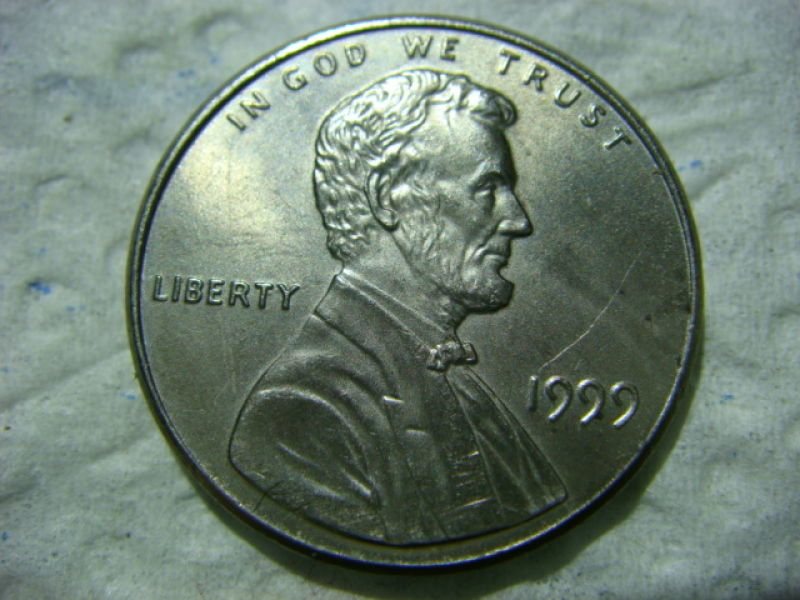 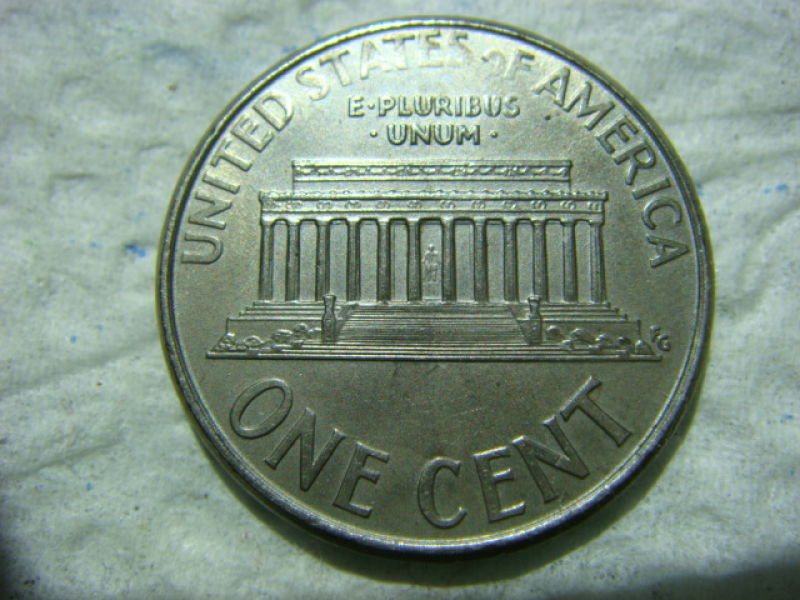 |
|
|
|
Valued Member
United States
117 Posts |
It doesn't look like it was plated to me, but there are those dull metals like iridium. there's a chance its an unplated zinc penny.
|
|
Bedrock of the Community
United States
62064 Posts |
Not if it sticks to a magnet. It maybe be plated. I notice the tops of the devices are glaring from the light source. On the missing plating examples, they don't have a glare from light. 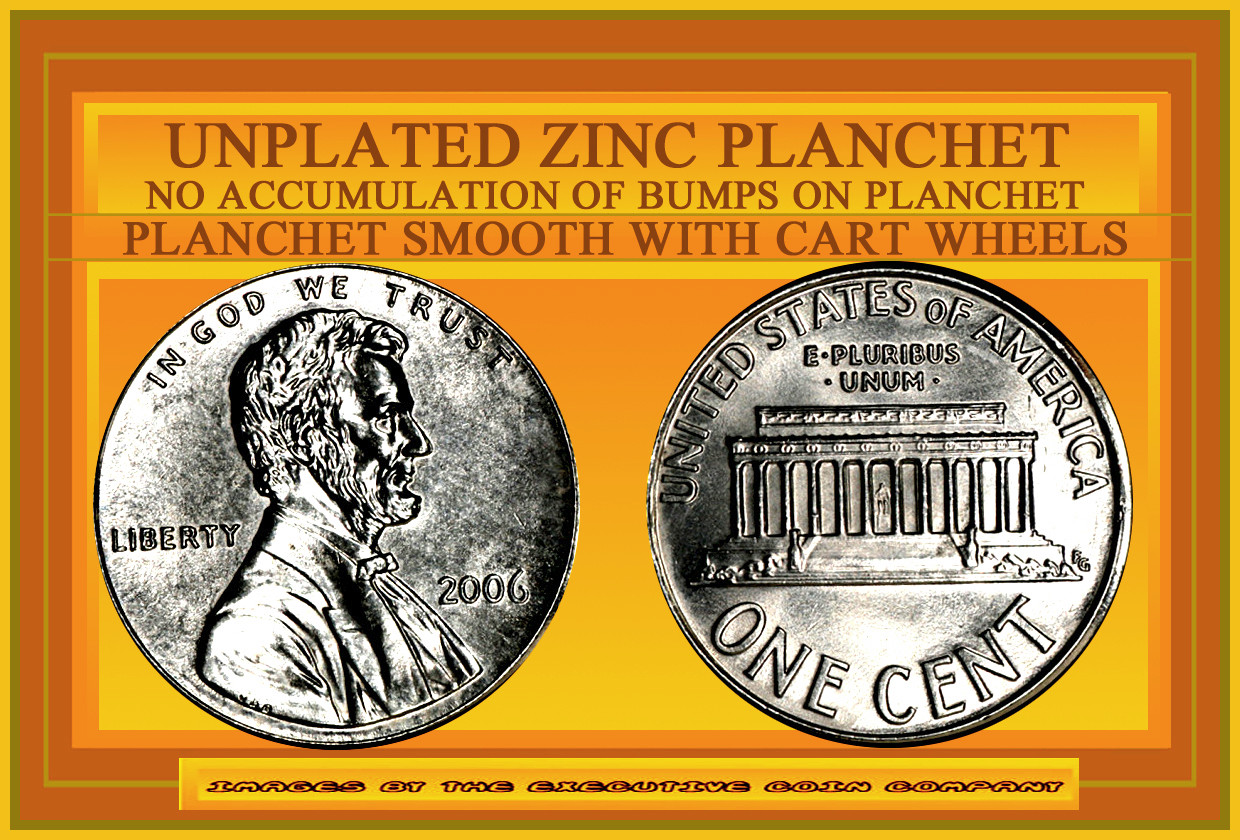 Edited by coop
10/28/2016 9:51 pm
|
|
Bedrock of the Community
United States
94367 Posts |
Almost certainly plated. God that 2006 visage of Lincoln is ugly.
|
|
Pillar of the Community
United States
3363 Posts |
Coop - in your example it says "No accumation bumps". I have no idea what they are talking about? I think that "accumation" is not even a word. Do they mean "accumulation"? If so, I still don't know what an "accumulation bump" would be?
|
|
Pillar of the Community
United States
3463 Posts |
This is kind of a tough one. I think a person would have to have this coin in hand to tell for sure what it is. Looks unplated to me.
|
|
Bedrock of the Community
United States
62064 Posts |
LOL. Spell check doesn't work on Photoshop. 'accumulation of' was the correct words. Brain must have been a quart low that day. LOL
Fixed it.
Edited by coop
10/28/2016 9:52 pm
|
|
Pillar of the Community
United States
5964 Posts |
I think it's been plated and that's what the magnet is attracted to.
|
|
Pillar of the Community
United States
3463 Posts |
I missed the part about it being magnetic. It cannot be an unplated cent if it sticks to a magnet.  |
|
Pillar of the Community
United States
3363 Posts |
What should an unplated CENT weigh?
|
|
Bedrock of the Community
United States
17884 Posts |
The plating weighs .05 grams or a little less, and the Weight Tolerance on the cent is +/- .1 grams. So the tolerance range is four times the weight of the plating. |
|
Pillar of the Community
United States
3363 Posts |
Quote:The plating weighs .05 grams or a little less, and the Weight Tolerance on the cent is +/- .1 grams. So the tolerance range is four times the weight of the plating Good information - thanks. I just wish it helped with an attribution, but, as you indicated, unfortunately it does not! |
|
Pillar of the Community
United States
1027 Posts |
Aside from iron and most steels, the next most magnetic metal is nickel but I doubt that a plating would be enough to allow it to stick to a magnet. It looks to be in great shape with maybe a little softness of strike on the reverse top. There is a very remote possibility that it is a test metal strike that escaped the mint but I would exhaust all other possible explanations first.
|
|
Valued Member
 United States
127 Posts |
There is a weak strike in "states of"...I can pick it up with a refrig magnet but if I just tap the magnet it will fall off...I have a few other obviously plated cents that have no magnetic effect at all.
|
|
Pillar of the Community
United States
3363 Posts |
Quote:
There is a very remote possibility that it is a test metal strike that escaped the mint This is an intriguing idea. However, I think that it is not a likely possibility. My reason for thinking this is that the Mint Commissioned an Alternative Metals Study. This was authorized by Public Law 111-302 (the Coin Modernization, Oversight, and Continuity Act of 2010), in which the Secretary of the Treasury was given "authority to conduct research and development on all circulating coins." The final report on this study was submitted to the mint in August 2012. For an experimental metal planchet to be struck in 1999 would be just a bit premature. |
|
Pillar of the Community
United States
3363 Posts |
Quote:
There is a weak strike in "states of" I am thinking that this area is frequently the subject of a weak strike because of the rather heavy bust area on the other side of the coin. Therefore, I am not convinced the weak strike in this area is material to trying to determine anything about what has happened with the coin. |
| |
Replies: 20 / Views: 7,165 |










 Posted 10/28/2016 4:26 pm


