| Author |
 Replies: 14 / Views: 1,370 Replies: 14 / Views: 1,370 |
|
|
Valued Member
United States
131 Posts |
Edited by closelook
08/08/2008 8:04 pm
|
|
|
|
Valued Member
United States
405 Posts |
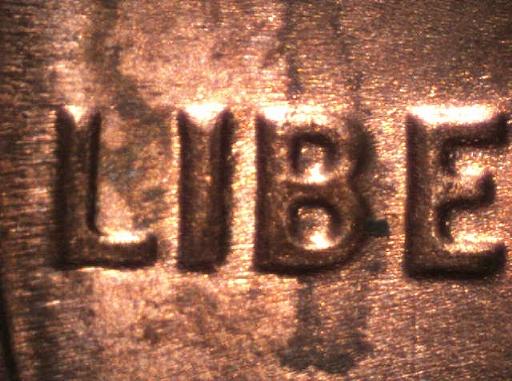
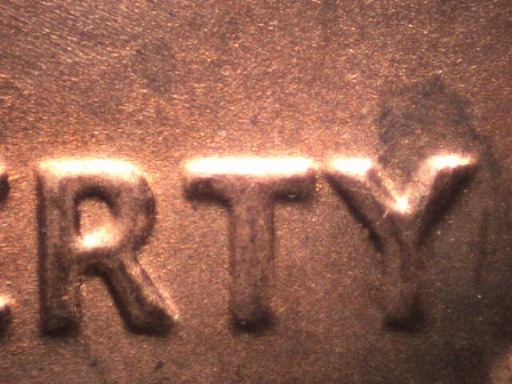
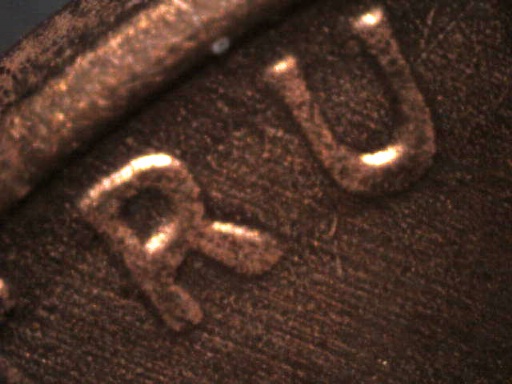
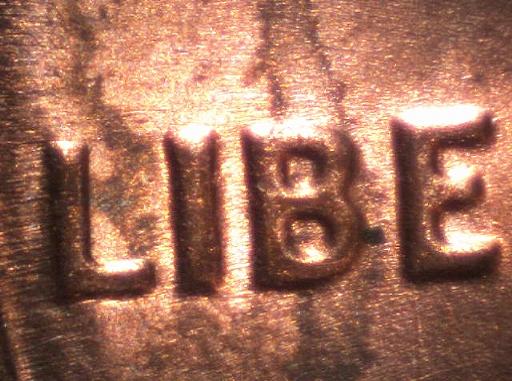
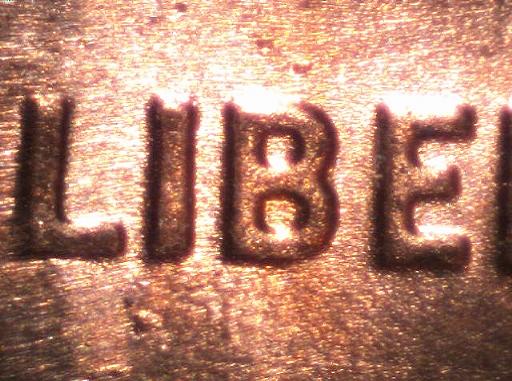
I dunno. I think I see light separation lines on the date and stronger ones on LIBERTY, but these faint separation lines seem to be common on many cents between 85 and 89, so I wouldn't necessarily attribute that as DD. I definitely don't see any notching.
|
|
Pillar of the Community
United States
3507 Posts |
I cant tell from the pictures.
Thanks,
Bill
|
|
Pillar of the Community
United States
7629 Posts |
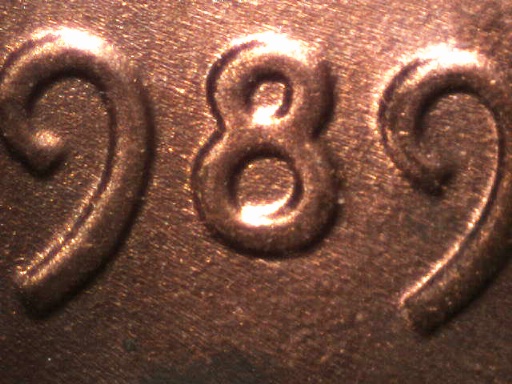
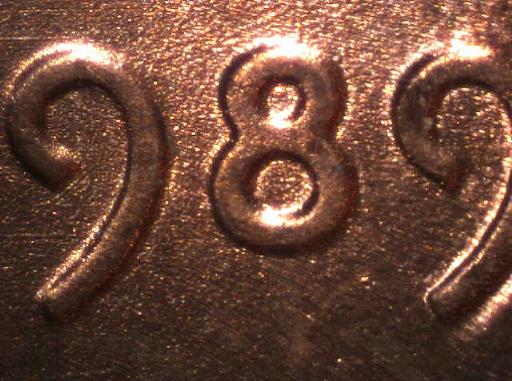
This is a class 6 doubled die - I can tell because the digits of the date are thicker toward the rim than they should be. No form of Machine Doubling makes letter thicker than they should be. On class 6 doubled dies there is commonly no form of notching or separation lines, which distinguishes class 6 doubled dies from the other classes. |
|
Bedrock of the Community
United States
62064 Posts |
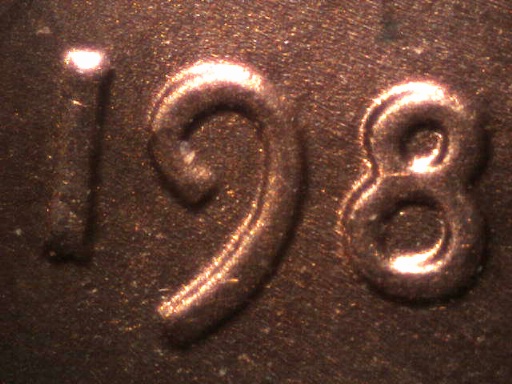
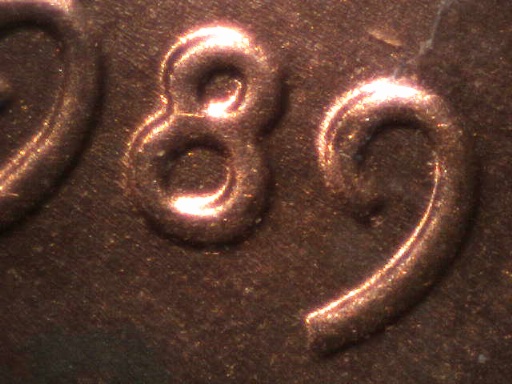
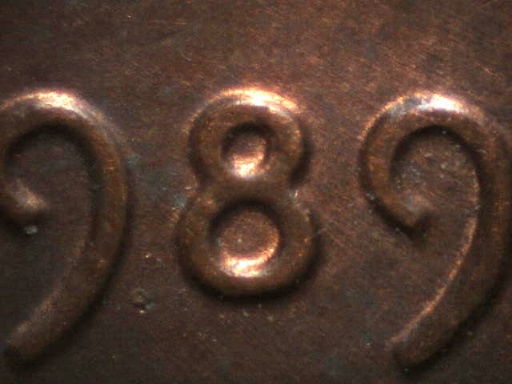
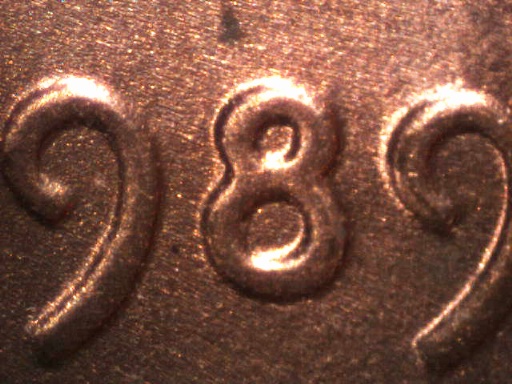
Probably the greatest help would be an image of all four digits of the date together to see how they compare to a normal coin. Some years have wider digits, but the rest of that year were also. So an image like that may help.
|
|
Valued Member
 United States
131 Posts |
This is as much of the date that I can get in one pic using a microscope at x60. The first pic is the DD and the second one is a regular at the same magnification, it might help in comparing the two Image:  1989DD7.jpg 1989DD7.jpg94.26 KB Image: 1989REG.jpg60.33 KB |
|
Valued Member
United States
131 Posts |
|
|
Pillar of the Community
United States
526 Posts |
1989 seemed very popular for obverse doubled dies with a Class VI doubling. I have somewhere around 15 or so different dies, all fairly minor in the collection that I have.
BJ Neff
|
|
Valued Member
United States
405 Posts |
What, if not separation lines, are the lines I'm pointing to in his photo of the date? 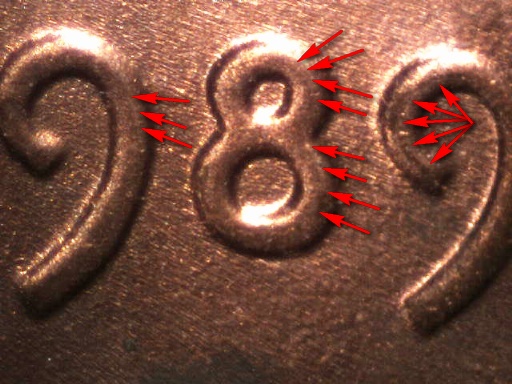 |
|
Pillar of the Community
United States
3507 Posts |
They are grooves. Some variety folks call them separation lines but it is better in my opinion to call them grooves when the spread is this close. Separation occurs when the details are spread in such away as to actually have a separation between the images. Their may be debate on this but this is where I fall on the definitions. Also, these pictures make it clear that this is, as Chuck called it, a Class VI DDO. I don't remember anymore if it was John Wexler or Ken Potter who told me at least ten years ago that there were 29 or so, known 1989 DDOs at that point. It's probably more by now. Thanks, Bill |
|
Valued Member
United States
405 Posts |
Are grooves ALWAYS an indication of this class of doubling, or does this type of grooving occur on non doubled devices as well?
|
|
Pillar of the Community
United States
3507 Posts |
You will see grooves on earlier strikes of Class VI doubled dies. As the die wears the evidence of doubling looks more like wider letters and numerals.
That is not to say that wider letters and numerals makes every coin that appears that way a doubled die.
Thanks,
Bill
|
|
Bedrock of the Community
United States
62064 Posts |
Sometimes ejection doubling distorts devices as well. Size would have to be determined with a few other example of the same year/mint mark.
|
|
Pillar of the Community
United States
3507 Posts |
Excellent point coop!
Thanks,
Bill
|
|
Bedrock of the Community
United States
62064 Posts |
Edited by coop
08/09/2008 4:55 pm
|
| |
Replies: 14 / Views: 1,370 |
|






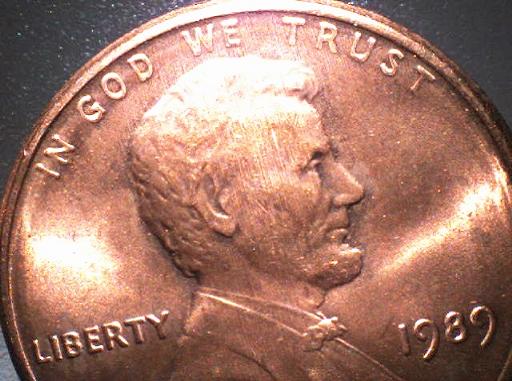


 Posted 07/09/2008 6:25 pm





 1989DD7.jpg
 1989REG.jpg
 1989dd8.jpg
 1989reg9.jpg
 1989dd10.jpg
 1989reg11.jpg


