If you were to count the design types of classic US commemorative coins starting from 1892 and continuing through 1926, you might be surprised at what you find. During its first 35 years, more than a third of the types issued in the classic US commemorative coin series were gold issues. There were 10 individual gold types and 18 silver types issued over the 35-year span.
(Note: I counted issues of the same coin design in more than one year as one (e.g., Columbian 1892 and 1893 counted as one) and only one type was counted for each variety of the Alabama, Missouri and Grant issues.)There could have been at least one more gold $1 coin in the series, however, if the bill introduced by Senator Frank Lester Greene (R-VT) during the opening days of the Second Session of the 68th Congress had become law. On January 9, 1925, Greene introduced a two-coin bill calling for a gold $1 coin and a silver 50-cent piece to mark "the one hundred and fiftieth anniversary of the Battle of Bennington and the independence of Vermont." A few years earlier, the same approach had worked for the 1922 Grant Memorial program!
Read More: Commems CollectionThe Bennington-Vermont bill proposed 20,000 $1 gold coins and 15,000 silver 50-cent coins, both to be minted using the standard specifications for their respective denomination. The bill was referred to the Senate's Committee on Banking and Currency where it began a journey through Congress that took a number of twists and turns before it ultimately was signed into law.
A Hearing was held on the bill on January 31, 1925. During the Hearing, the Treasury Department voiced its opposition to all such commemorative coin programs and proposed instead the striking of a medal for the Battle of Bennington-Vermont Independence Sesquicentennial. One of the objections they noted was the typically local focus of the commemorative coin proposals vs. those of true national interest; another was the large number of commemorative coins returned to the Mint by their sponsors for melting (or, in the case of the 1923
Monroe Doctrine coin, released into general circulation at face value).
Senator Greene did not take part in the Hearing, but his coin bill interests were well-represented at the Hearing by Representative Frederick Gleed Fleetwood (R-VT), a member of the House. Answering the Treasury's objection, Fleetwood expressed his view that the events to be commemorated by the coins were of "tremendous national importance" and were "deeds which were the inception of liberty of the entire country."
Fleetwood also outlined the purposes of the coins, listing "to encourage and advise the study of Vermont history and the publication of researches therein" and "supporting the Bennington battlefield historical museum" which was then in the process of being formed. He believed each of these purposes supported his contention of the national character / importance of the coins.
The Treasury also argued that a stand had to be taken against the proliferation of commemorative coin proposals at some point and that it was of the opinion that the Bennington-Vermont coin was as good as any for which approval should be denied and the stand made. One particularly interesting comment was made by Representative Robert Milton Leach (R-MA) in answer to the Treasury's position; he noted the fact that the sitting president, Calvin Coolidge, was from Vermont and that choosing the Vermont coin to stop the approval of commemorative pieces might not be the best of ideas. Ah, politics!
Over Treasury's objections, the bill was reported out of Committee but with amendments, namely: the dropping of the gold $1 coin and the upping of the maximum mintage of the silver 50-cent piece from 15,000 to 40,000.
When the amended bill was later brought up for consideration in the Senate and House, provisions for the California Statehood Jubilee half dollar and the Ft. Vancouver Centennial half dollar were added. The three-coin bill was eventually passed by the House and Senate and signed into law by President Calvin Coolidge on February 24, 1925.
Though other gold commemorative coins were proposed in the years that followed (you can read my post about one here:
Crawford Long Gold $1.50), only the 1926 Sesquicentennial of American Independence quarter eagle (gold $2.50 coin) was approved and struck. (Gold commemorative pieces were resumed with the modern US commemorative program beginning in 1984).
It's hard to say if approval of the Bennington-Vermont gold coin would have set a precedent for future gold-plus-silver commemorative proposals - approval of the 1926 American Independence Sesquicentennial bill certainly didn't - but we'll never know for sure!
In lieu of a gold dollar coin, here's my Battle of Bennington - Vermont Independence Sesquicentennial half dollar.
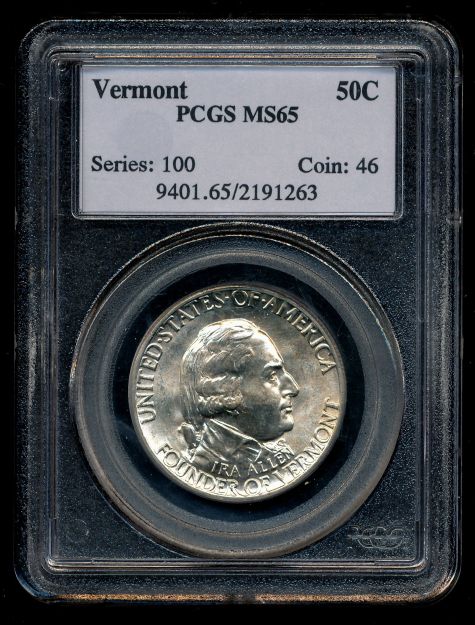
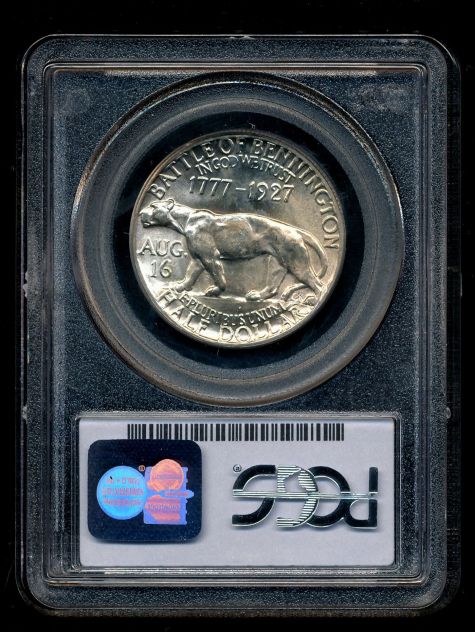
You can view my previous post on the Bennington-Vermont coin here:
1927 Bennington-Vermont Half dollar.
I've also posted about the commemorative medal that was issued by the Vermont Sesqui-Centennial Commission here:
1927 Bennington-Vermont Sesquicentennial Medal and about a small contemporary newspaper clipping I have in my collection about the closing of sales for the half dollar:
1927 Bennington-Vermont Ephemera





 Posted 09/08/2020 1:51 pm





