Enthusiasts of the classic series (1892-1954) of US commemorative coins are likely aware that the 1951-54 George Washington Carver-Booker T. Washington half dollar resulted from the original legislation for the Booker T. Washington (BTW) coin (1946-51) being amended in 1951.
Read More: Commems Collection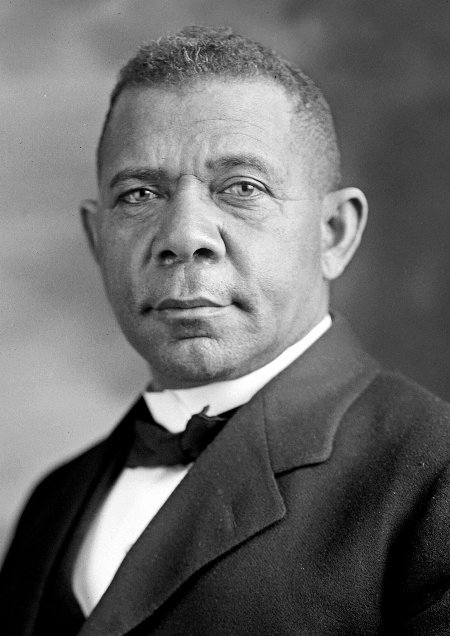 Portrait of Booker T. Washington. Public Domain.
The enabling legislation for the BTW half dollars included an expiration date of five years from the approval of the bill. As it became law on August 7, 1946, the authority to strike BTW coins was set to expire on August 7, 1951. This clause in the legislation gave the Booker T. Washington Birthplace Memorial of Virginia (the coin's sponsor) and Sidney J. Phillips (President of the Birthplace Memorial group) six calendar years in which to have the Mint strike the coins; it took full advantage of this by having coins struck in 1946, 1947, 1948, 1949, 1950 and 1951 at the Philadelphia Mint, as well as at the Denver and San Francisco Branch Mints each year.
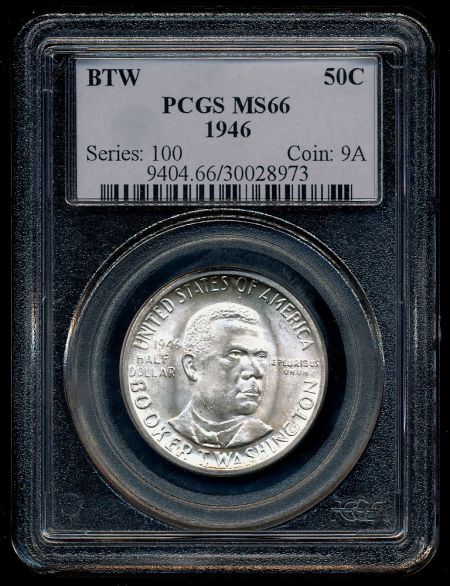
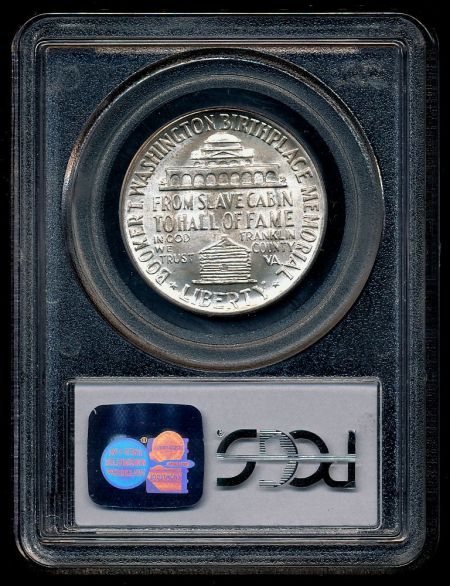
As the coinage expiration date included in the legislation drew near, the Memorial found itself well short of its sales goals. Up to five million coins had been authorized, but the Memorial had not sold near the number of coins it had targeted; by mid-1951, sales had reached just 1.3 million coins (approximately). Naturally, the lower-than-expected sales volume meant the Memorial also failed to reach its fundraising goals. Sidney Phillips reached out to members of Congress in early 1951 to lobby for an amendment to the Memorial's original BTW Act that would enable it to continue to raise funds for the Memorial through sales of a new coin. The Amendment called for the addition of George Washington Carver to the obverse and was to be struck to "to oppose the spread of communism among Negroes in the interest of the national defense." It was the time of the
Red Scare in the US and fears over the possible spread of communism gripped many in the nation - including Congress. So, a bill purporting to oppose communism gained quick traction.
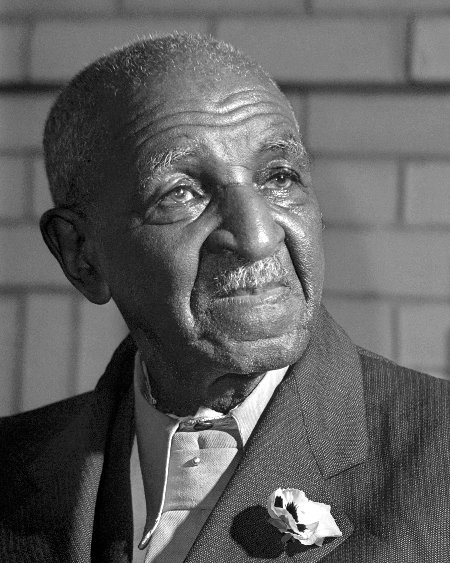 Portrait of George Washington Carver circa 1942. Public Domain.
Bills offering an amendment to the original BTW bill were introduced in March 1951, but it was not until until September 21, 1951 that the House bill was approved and signed into law - it missed the original legislation's expiration date by just over six weeks. The brief lapse in issuing authority had no impact, however, as the Memorial group had plenty of the original BTW coins on hand for the trickle of orders it was then receiving.
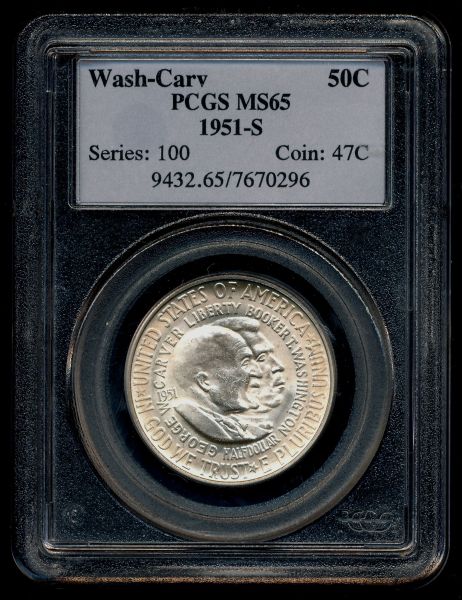
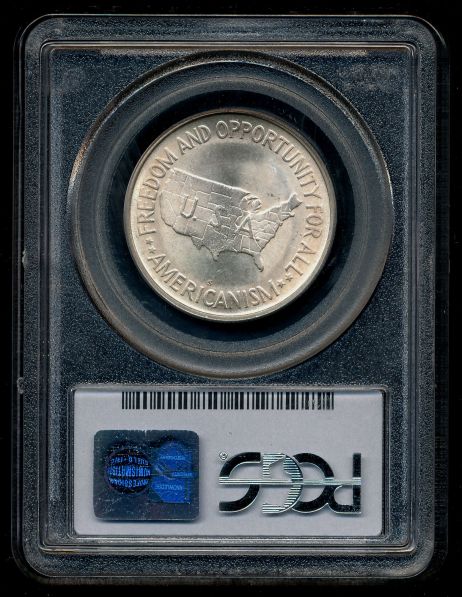
The new Act gave new life to the coin program for Phillips and his efforts to fund the memorial at Booker T. Washington's birthplace. The new coin law, however, also included an expiration date that was based on the original BTW half dollar legislation; the Carver-Washington coins could only be issued to the sponsor through August 7, 1954. As with the original coin, Phillips made sure to maximize his window and requested Carver-Washington coins to be struck in 1951, 1952, 1953 and 1954 from all three Mint facilities.
Though the new Carver-Washington coin did generate reasonable initial sales, it soon became clear that even its multi-year distribution would not generate the "Sold Out" level for which Phillips and the Memorial had hoped.
In June 1956, the Booker T. Washington Memorial Birthplace group sought a new amendment to its original BTW bill, this time it looked to replace the Carver-Washington amendment with one that tied in to the centennial of BTW's birth; BTW was born on April 5, 1856.
Three identical/parallel bills were introduced; each requested the same 100,000 new coins that were to be coined from the silver the Mint collected from the Carver-Washington coins returned by the Memorial to be melted. The amendment did not specify any new design details and actually left the door open to return to the BTW half dollar's original design.
Once again, the bill included expiration language. The legislation specified a relatively short window, however, one that would close on January 31, 1958. This time around, Congress was not disposed to grant the group another coin; the amendment bill was referred to Committee and never reported out.
So, in the end, collectors had to make do with just two design types of the BTW half dollar, though, once all date and mint mark combinations are considered, the two types were struck on 30 different coins!
In case you were curious...US Mint records indicate that 1.584 million BTW half dollars were returned for melting, and 1.329 million Carver-Washington coins had the same fate. Thus, combined, over 2.913 million coins struck for the BTW / C-W programs were returned by the sponsor after going unsold.





 Posted 09/24/2020 5:08 pm





