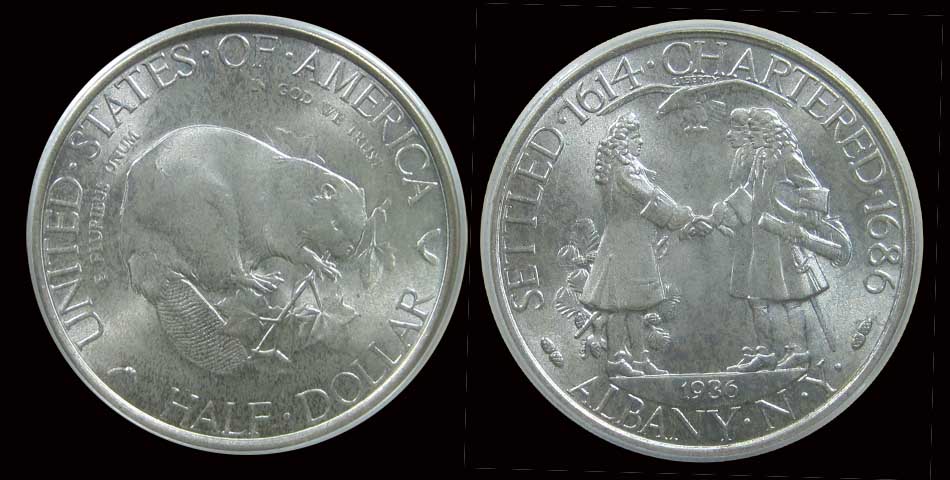
While assembling lists of classic commemorative coins that fit the various themes over in the "Post Your..." area, I spent a good bit of time taking close looks at the designs of the coins in the series. This led me to notice a "shared artistic vision" between the 1936 Cincinnati Music Center 50th Anniversary and 1936 Bridgeport, CT Centennial half dollars. I use the term "artistic vision," however, with tongue planted firmly in cheek.
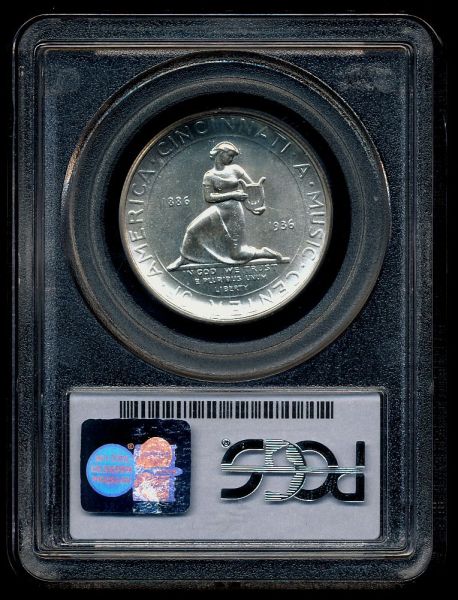
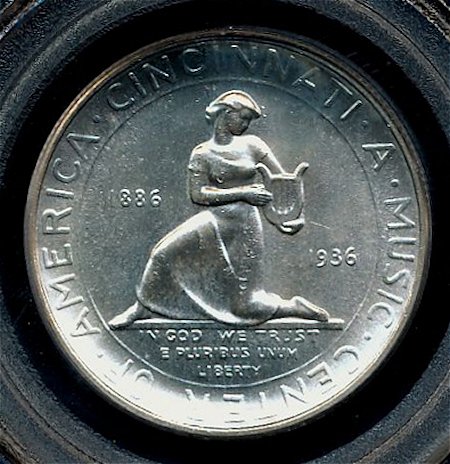
If you look at the coins of the classic series, most designers distributed the now-familiar mottoes of "LIBERTY" "E PLURIBUS UNUM" and "IN GOD WE TRUST" across their designs so as not to crowd them together and disturb the design's overall balance. In some cases, this meant splitting the mottoes between the obverse and reverse, in other cases it resulted in the mottoes being spread between multiple locations on a given side.
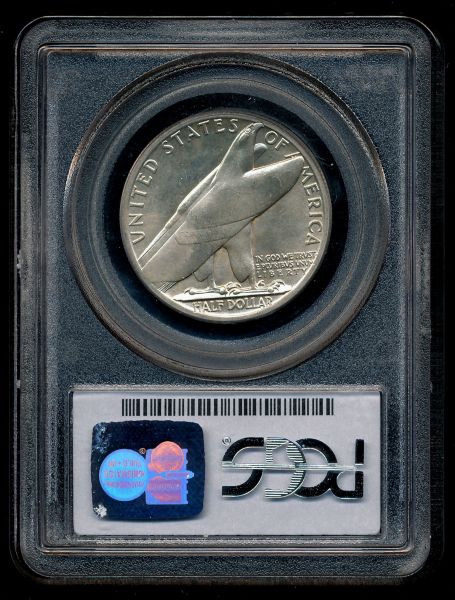
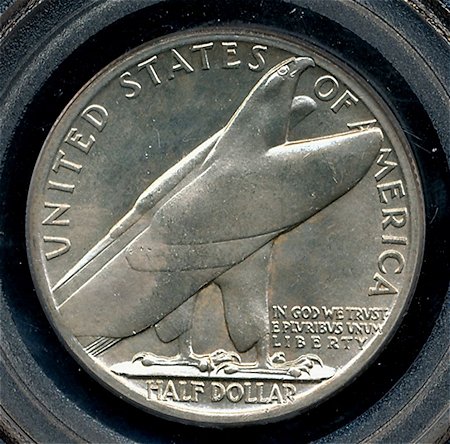
Note: Early in the series, some issues did not include any mottoes (e.g., 1892-93 Columbian Exposition Half Dollar, 1893 Columbian Exposition Isabella Quarter, 1921 Missouri Statehood Centennial), others included just one (e.g., 1915 Panama-Pacific International Exposition Half Dollar, 1926-39 Oregon Trail Memorial Half Dollar) or two (e.g., 1915 Panama-Pacific International Exposition Gold $50, 1922 Grant Centenary Half Dollar and Gold $1). The 1918 Illinois Statehood Centennial Half Dollar was the first US commemorative coin to include all three of the mottoes.The Cincinnati and Bridgeport coins took a different approach - they used a very small font for the mottoes and stacked them all together in a small column on the coin's reverse. On the Bridgeport, the mottoes can be found at the bottom right under the eagle's wing; on the Cincinnati, all three are located below the figure described as the
Goddess of Music.
In both cases, it is easy to imagine the same real estate on the coin being occupied by just one or two of the mottoes, in a larger font. Each coin has enough open space in its fields to support separating the mottoes and placing at least one of them in a different location. That's not what each coin's designer opted for, however, and so we have been given small-font mottoes bunched together. The designs foreshadow what was done on the reverse design of the
Franklin half dollar, first issued in 1948, to bring it into compliance with US code requirements - namely, silver coins larger than the dime needed to include a bald eagle in their design. Thus, a very small, and seemingly out-of-place, eagle was added to the reverse design of the
Franklin half dollar.
(The story of the Franklin half dollar and its design is an interesting one, for more about it, check out CCF's reference article on the coin here:
Franklin Half Dollars.)
The Cincinnati coin was designed by Constance Ortmeyer; the Bridgeport coin was the work of Henry G. Kreis.
Just a quick bit of commemorative coin design trivia...1936 Bridgeport, CT Centennial Half Dollar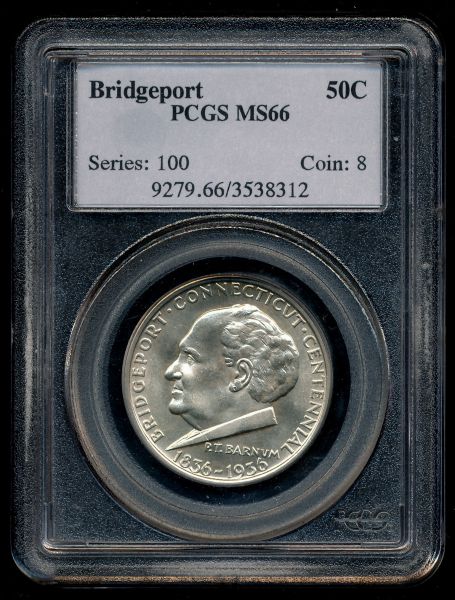
 1936 Cincinnati Music Center Half Dollar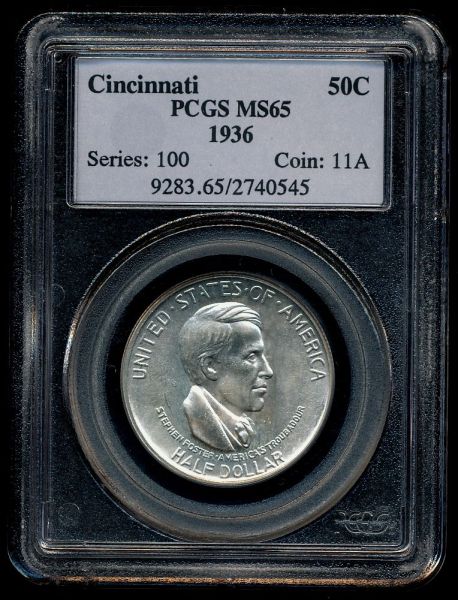
For more about the Bridgeport and Cincinnati half dollars, check out:
Read More: Commems Collection.










 Posted 03/31/2021 11:28 am