NGC -
A mismatched obverse and reverse is the first clue that this coin might be a fake.The
Standing Liberty quarter series began with the 1916 issue struck only in Philadelphia, which is one of the key dates that a collector should explore the cost of if they are aiming for a complete set. For
Standing Liberty quarters, the following year saw a fascinating amount of variety, with coins being struck in Philadelphia, Denver, and San Francisco (with the 'D' and 'S' mintmarks positioned by the star that is to the left of the date). There were also two designs employed for that year, identified as Type 1 and Type 2, and each was struck at all three mints.
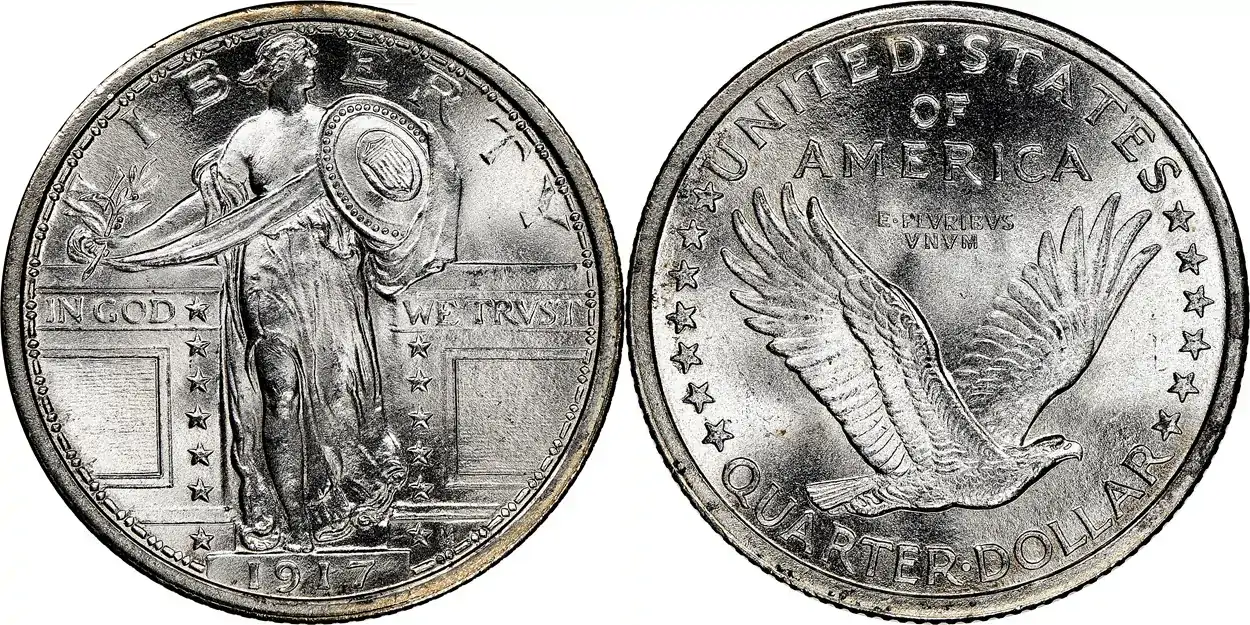 Genuine 1917 Standing Liberty quarter - Type 1
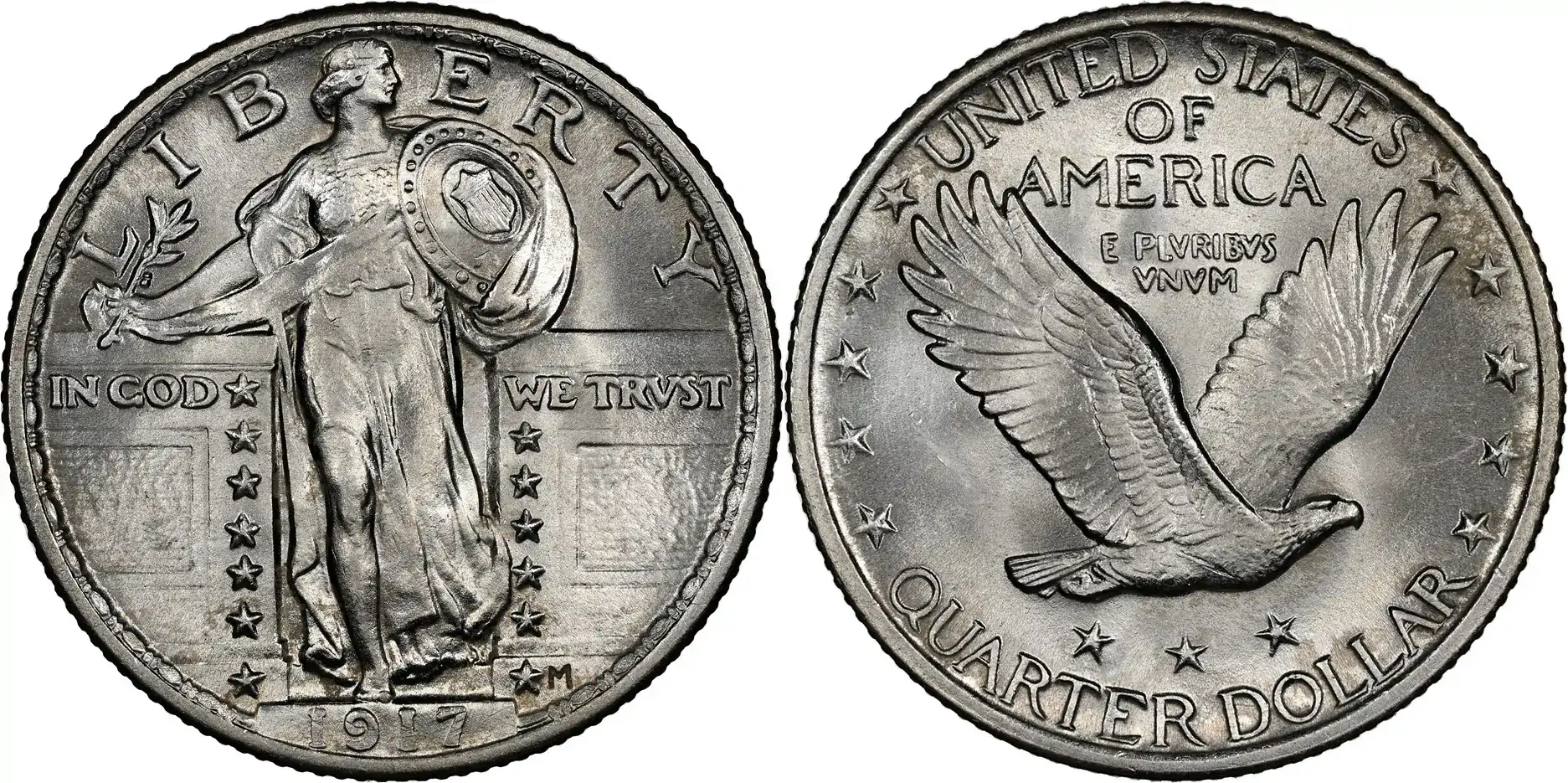 Genuine 1917 Standing Liberty quarter - Type 2
That means there are six different 1917
Standing Liberty quarters — and you can double that number to an even dozen to account for whether each coin has enough detail in Liberty's head to earn the Full Head designation. Setting aside that coveted designation, examples in About Uncirculated are typically found in the $200-to-$500 range, with the Type 2 Philadelphia being the least expensive and the Type 1 San Francisco the most expensive. The trend continues well into Mint State as each type-date-and-mintmark combination exceeds $1,000.
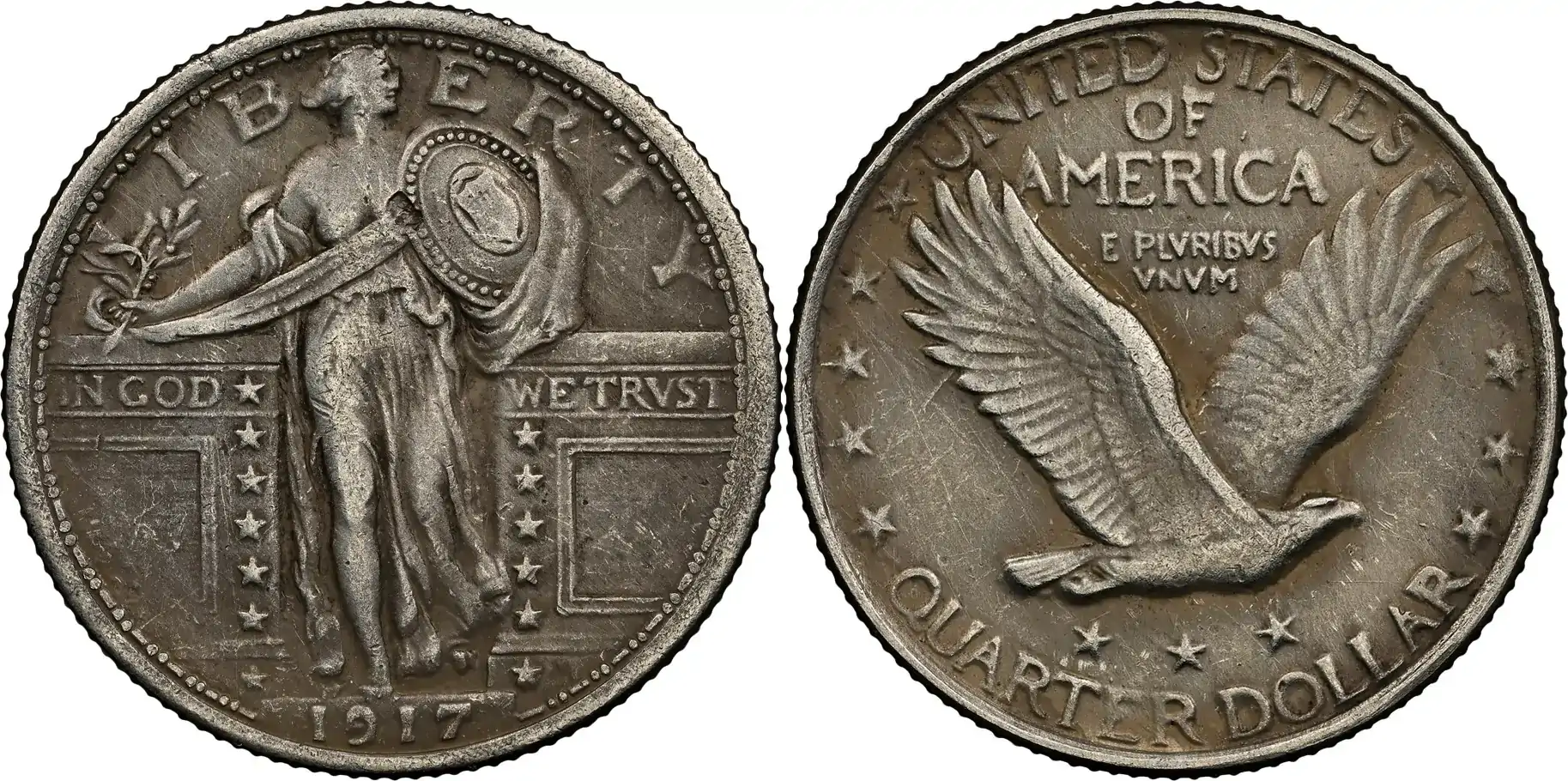 Counterfeit 1917 Standing Liberty Quarter
NGC recently received a purported example of a 1917
Standing Liberty quarter with no mintmark, indicating it is supposedly a Philadelphia issue. The reverse of the coin has three stars beneath the eagle, which is one of the quickest ways to tell that a 1917 Quarter is a Type 2. However, the obverse has more rivets in the shield, a lack of chainmail stretching up to Liberty's neck and hair that flows to the left of her head (instead of seeming to tuck behind it) — all indications that the coin is a Type 1.
This would be a very exciting coin if indeed a Type 1 obverse were muled with a Type 2 reverse (or a reverse from a later year). Unfortunately for the coin's owner, this is nothing more than a crude counterfeit.
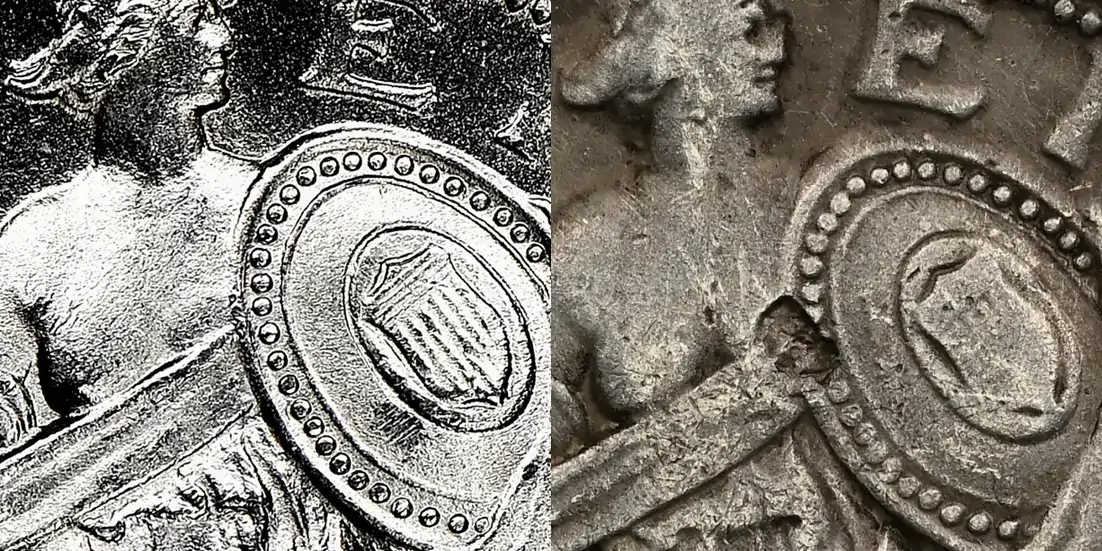 Close-up of the obverse of a genuine Type 1 (left) and counterfeit
Overall, the counterfeit has rough, porous surfaces. Note the large depression affecting the left edge of the shield on the obverse. In addition, the coin is not even struck in silver. The coin has also been artificially worn and toned to appear darker, helping to make its inferior craftsmanship less glaring.
 Close-up of the reverse of a genuine Type 2 (left) and counterfeit
On the obverse, the designer's initial 'M' — near the edge at 5 o'clock— is nearly gone. Meanwhile, on the reverse, the stars and letters fade into the field in places. This is particularly noticeable in the final 'A' in AMERICA and the nearby stars. Notice also how close the eagle's feathers get to these stars on the fake.
While collectors might be on guard for fakes of a key date like the 1916 Standing Liberty, they might not be as cautious about the 1917 issues. But they still have enough numismatic premium for a counterfeiter to target.
Read More: Counterfeit Detection Series Check out 1917 Standing Liberty Quarters on ebay
.










 Posted 06/18/2025 3:00 pm





