Mining is not a prevalent theme for issues within the classic-era US commemorative coin series, but there are a few that share such a connection through the mining tools they depict.
First up...
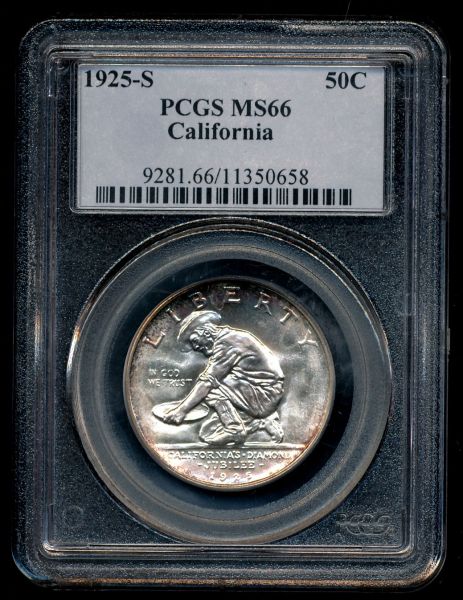
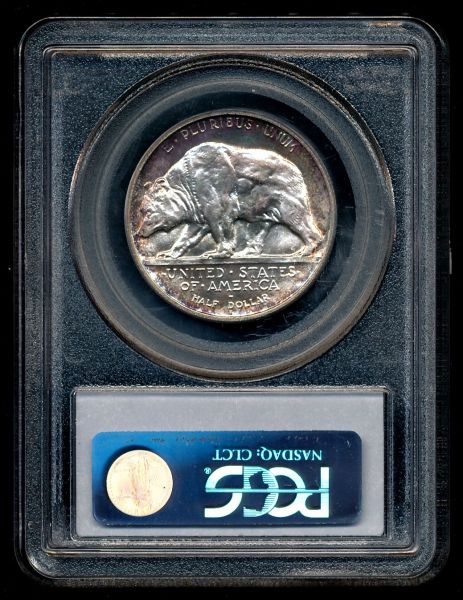
1925 California Statehood Diamond JubileeCalifornia attained Statehood on September 9, 1850 - accelerated by the California Gold Rush that kicked off in January 1848 and caused a massive influx of people to the area.
To help celebrate the 75th Anniversary of California Statehood in 1925, a US commemorative half dollar was issued that featured a gold miner/panner actively using his panning bowl on its obverse and a California Grizzly bear on its reverse.
Next...
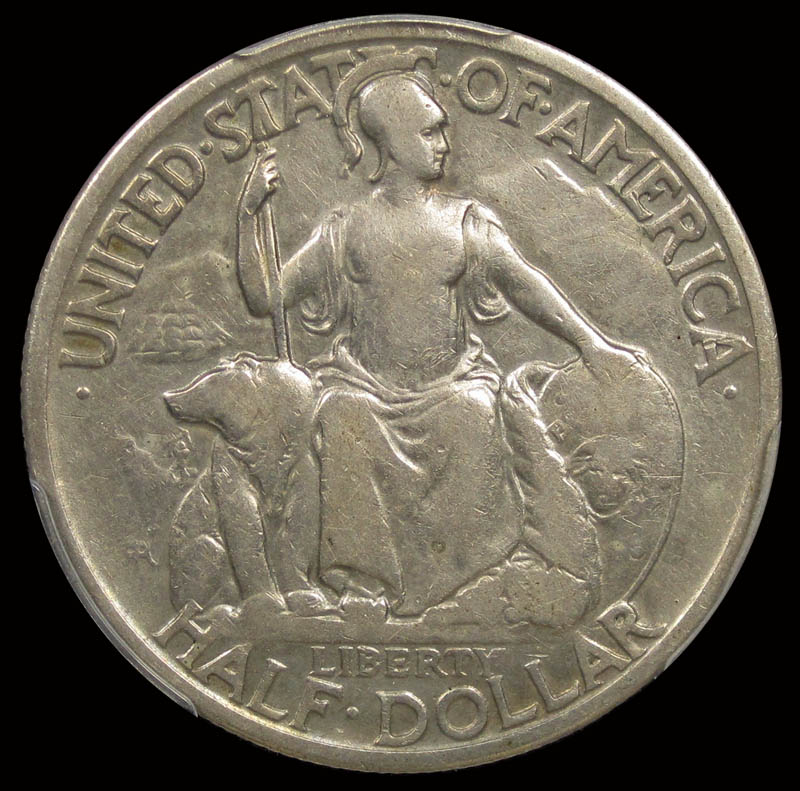
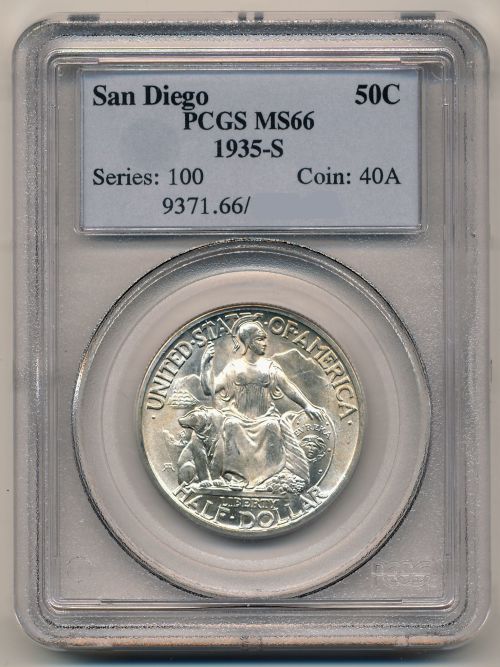
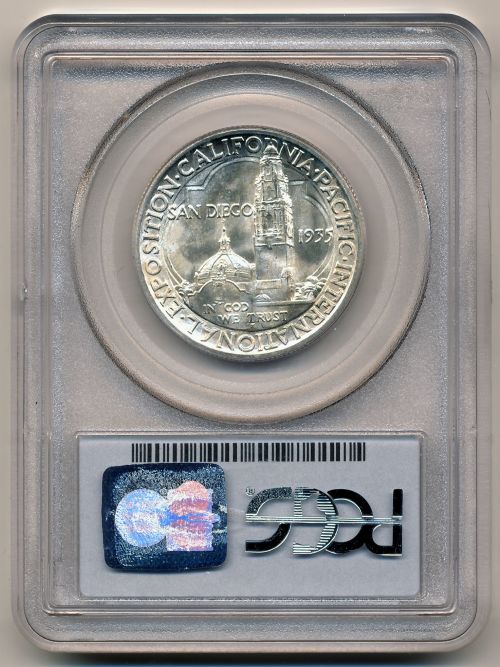
1935 California-Pacific International Exposition (aka San Diego) Half DollarIn 1935 (and 1936) the California-Pacific International Exposition was held in San Diego, California. The Exposition Company sponsored a commemorative half dollar to help financially support the staging of the Exposition.
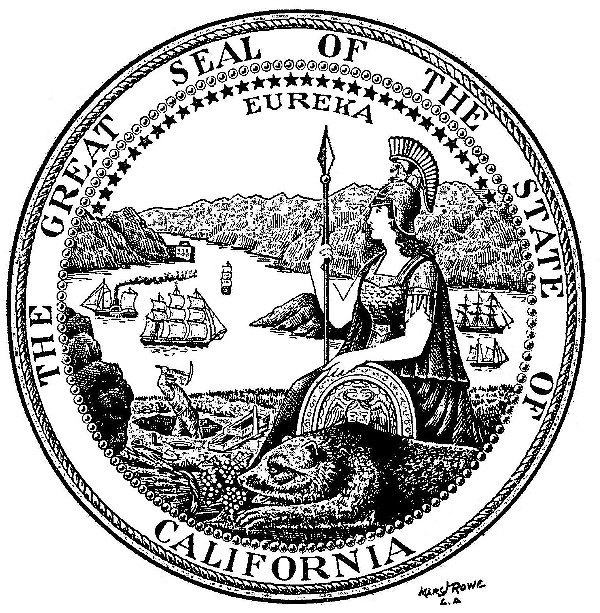
The coin's obverse presents an adaptation of an early California State Seal that depicts multiple elements from California's history - including a small miner with pickaxe seen below the snout of the bear. Its reverse presents two buildings from the Exposition grounds within Balboa Park (San Diego): the California Building, identified by its dome, and the California Tower which rose beside it. The two structures were among the most popular attractions on the Exposition grounds.
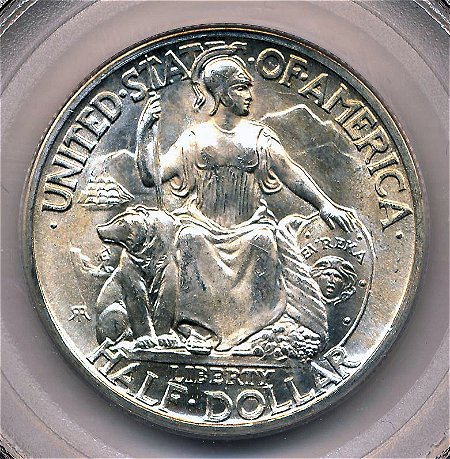
Here's an illustration of an early California State Seal that should help you locate the miner:
And finally...
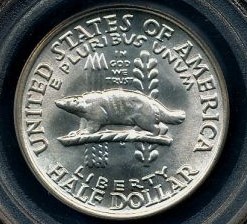
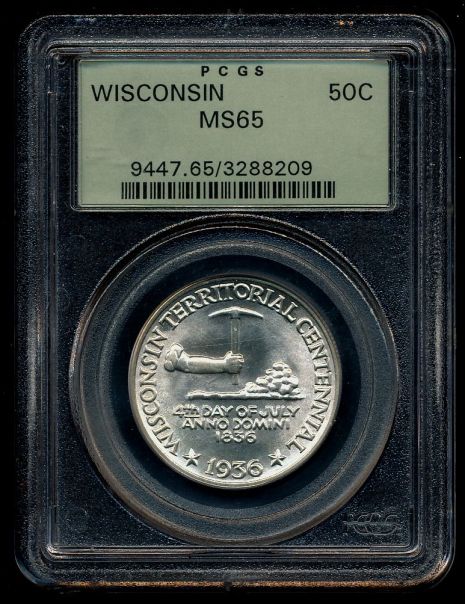
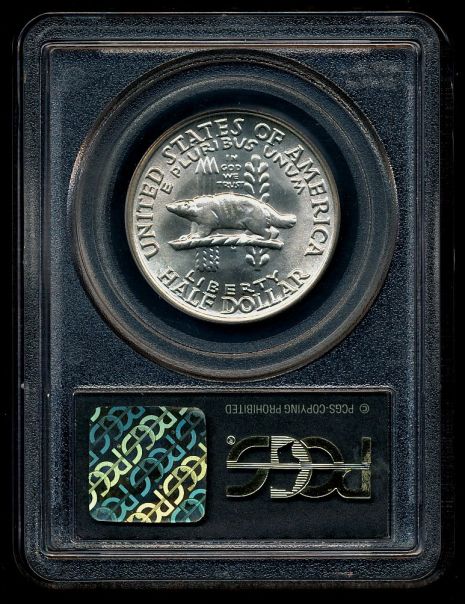
1936 Wisconsin Territorial Centennial Half DollarThe Wisconsin Territory was formally established in July 1836. The area was originally part of the Northwest Territory, then included within the Indiana Territory beginning in 1800. In 1809 it became part of the Illinois Territory, before becoming part of the Michigan Territory in 1818 (when Illinois became a State). When Michigan was about to be admitted to the Union, the Wisconsin Territory was split from Michigan. The new territory originally included the present-day States of Wisconsin, Minnesota and Iowa, plus the eastern portions of North and South Dakota. The other areas were eventually split off to form new territories; Wisconsin became the 30th State in 1848.
The reverse of the coin is dominated by a disembodied arm wielding a pickaxe. The obverse of the coin features a badger on a log with arrows (left) and an olive branch (right). (Side designations per US Mint.)
For more of my topics on commemorative coins and medals, including more on each of the coins introduced here, see:
Commems Collection.






 Posted 07/31/2025 6:59 pm


 (I still like it)