The US classic-era commemorative coin series honored the memory of Daniel Boone - the spotlight was turned to fellow frontiersman-turned-politician Davy Crockett in the modern-era series.
Davy Crockett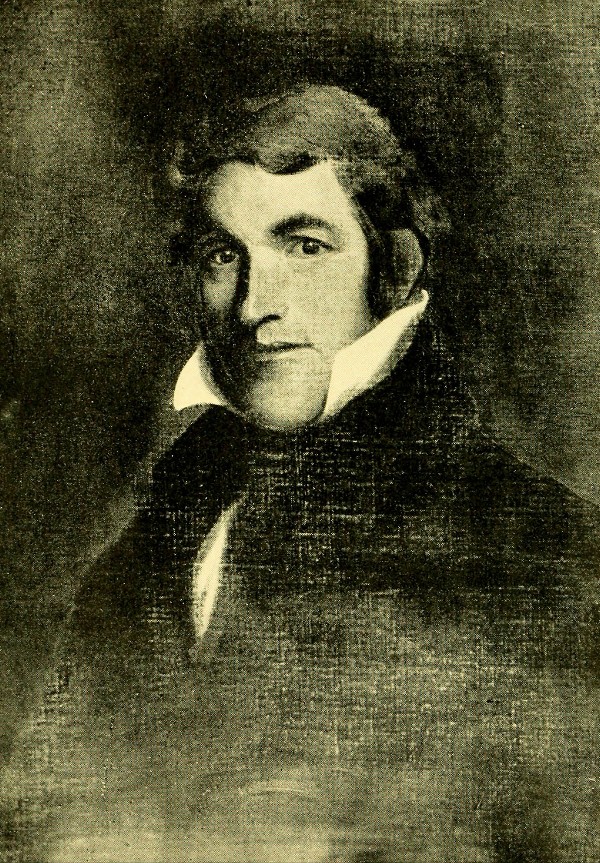 (Image Credit: Daniel Boone, Sprague, William C., 1915)
The 108th US Congress saw the introduction of a two-coin commemorative bill - up to 100,000 Gold Half Eagles and up to 500,000 Silver Dollars. John J. Duncan, Jr. (R-TN) introduced the bill in the House of Representatives ("House") in November 2003. The bill called for the minting of "coins in commemoration of David Crockett and his contributions to American history."
Note: Bonus points to anyone who can sing along with Fess Parker on the Ballad of Davy Crockett
-- "Davy, Davy Crockett, King of the Wild Frontier..." I wasn't around in the 50s when the show/song was first-run, but I do remember it from re-runs years later!The coin bill included a lengthy "Findings" section that provided a brief backgrounder on Crockett and context for the coin proposal.
The Congress finds as follows:
(1) The year 2005 marks the 175th anniversary of a courageous vote on the floors of Congress by David Crockett.
(2) In 1830, during the 21st Congress, Representative David Crockett rose to speak out in opposition to a bill for the funding of the removal of Southeastern Native American tribes to the west of the Mississippi River.
(3) He was the only Member of Congress from his State to oppose the bill, was fully aware that the majority of his constituents favored the bill, and understood that he was providing his political foes with an issue that they could - and did -use to attack him.
(4) Undaunted by threats of political retaliation, he refused to support a bill designed to remove what he called "the poor remnants of a once powerful people'' from their ancestral homes, claiming instead that he would "sooner be honestly and politically damned, than hypocritically immortalized''.
(5) The year 2005 also marks the 50th anniversary of the release of a feature-length motion picture that returned David Crockett to the position he had enjoyed 125 years earlier as the classic image of the American frontier and the best reflection of the frontier spirit.
(6) As "Davy'' Crockett, he was popularized in movies and television, and he became a cultural icon of the 1950s.
(7) David Crockett first appeared on the national scene as the representative of a new, proud, and irreverent American character and culture, unique and apart from European customs and mores.
(8) As a young man from the backwoods of East Tennessee, David Crockett mastered the skills necessary for life on the American frontier, including marksmanship and hunting.
(9) The first rifle he owned, with which he developed those skills, is included in the collection at the East Tennessee Historical Society and will be featured prominently when the Historical Society opens its expanded museum exhibit in 2005.
(10) His quick wit and natural leadership abilities allowed him to move from the humblest of settings to the halls of Congress.
(11) David Crockett was a committed public servant serving 2 terms in the Tennessee General Assembly and 3 terms in the United States House of Representatives.
(12) During the last 3 months of his life, he fought with others to secure independence for the Republic of Texas before he died a hero's death at the Alamo at the age of 49.
(13) His life was chronicled during and immediately after his lifetime through theatrical productions, biographies, and in a series of almanacs from 1835-1856, galvanizing his persona as a true American folk hero.
(14) He has been the subject of at least 17 motion pictures and 12 television programs during the 20th century.
(15) David Crockett personified the spirit of independence, individualism, and justice in his opposition to the Indian removal bill, a position that was opposed by powerful political opponents, unpopular with a majority of his own constituents, dedicated to principle.
(16) He was guided in this, as he was throughout his life, by his best-known maxim: "Be always sure you are right, then go ahead.''.The bill included only a generic design specification, stating that the designs "shall be emblematic of the legacy of David Crockett and his importance to Tennessee, Texas, and the history of the United States." In addition to the standard inscriptions - "United States", "Liberty", "In God We Trust" and "E Pluribus Unum", the coins were also to feature "David 'Davy' Crockett 1786 - 1836". (The design might have gotten a bit crowded on the smallish Gold Half Eagle with all of these inscriptions!)
The final designs for each coin were to be selected by the Secretary of the Treasury in consultation with the Commission of Fine Arts ("CFA") and the Board of the East Tennessee Historical Society. The Citizens Coinage Advisory Committee ("CCAC") was to serve in a design review capacity.
The striking of Proof and Uncirculated versions was specified, along with an authorized minting period of Calendar Year 2005.
The Issue Price of each coin was to include the "standard" surcharge:
- $35 for each Gold Half Eagle
- $10 for each Silver Dollar
Collected surcharges were to be paid to the East Tennessee Historical Society and were to be used:
(1) to fund capital improvements for The East Tennessee Historical Society and its museum; and
(2) to establish an endowment to be a permanent source of support for The East Tennessee Historical Society and its vital mission of preserving, interpreting, and promoting the history of Tennessee, focusing on East Tennessee.The bill was referred to the House Committee on Financial Services, with a further referral to its Subcommittee on Domestic and International Monetary Policy, Trade, and Technology. It stalled in Committee, and was not considered further. (I guess there weren't many Crockett fans on the Committee!)
For other of my posts about commemorative coins and medals, including other What If? stories from the classic and modern eras see:
Commems Collection.
I'll leave you now to sing to yourself - "Davy, Daaa-vy Crockett, King of the Wild Frontier..."








 Posted 08/31/2025 2:46 pm





