Sometimes, "dirt" is just literal dirt. This washes off easily in water, no scrubbing or rubbing required.
Sometimes, "dirt"; is some kind of organic goo that's stuck to the coin. Organic solvents such as acetone, ethanol, methanol etc will remove this kind of debris better than water will.
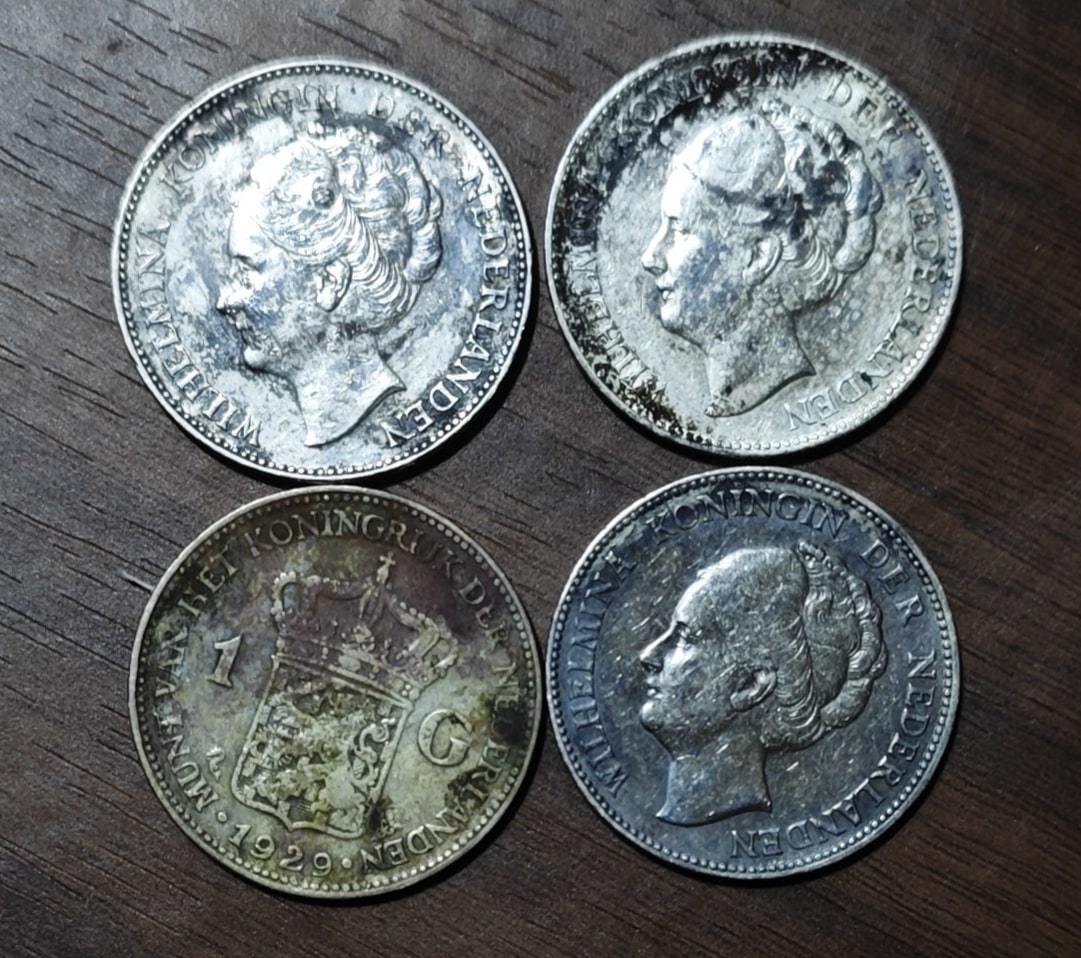
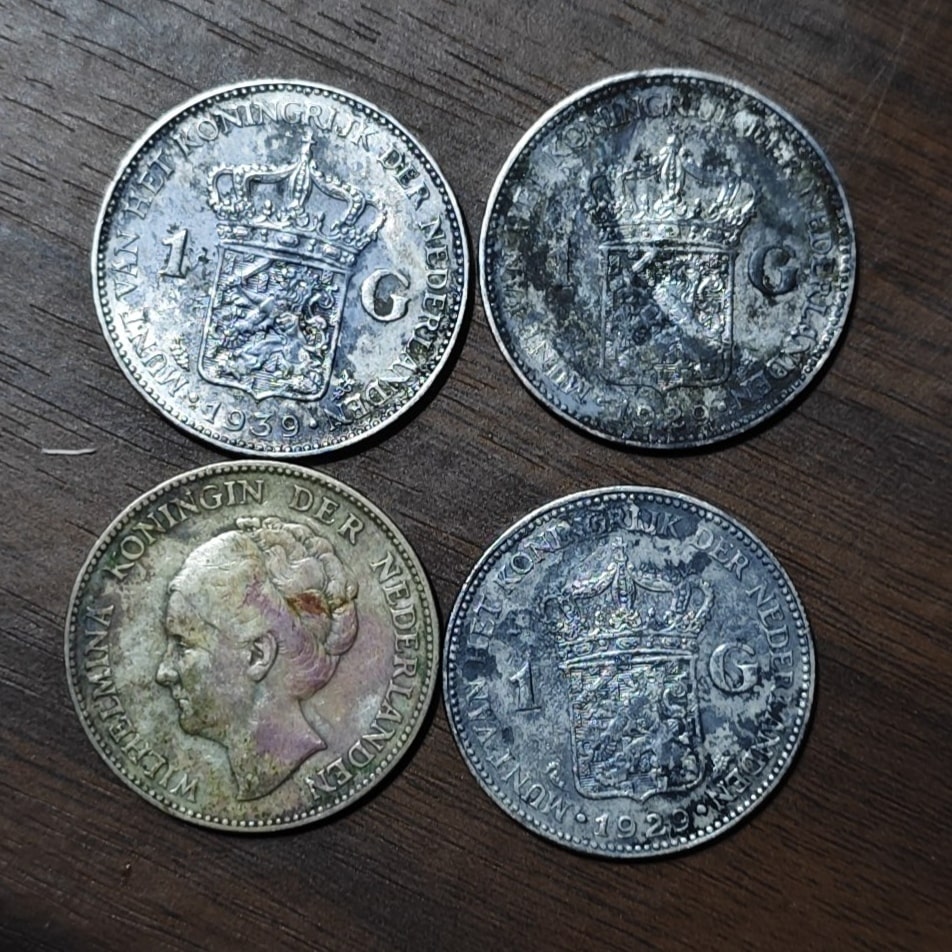
More often, the "dirt" isn't really dirt at all, especially for base-metal coins or coins containing high levels of base-metal (such as those .720 fine silver coins). A chemical reaction has taken place - in other words, corrosion has happened. No amount of washing or scrubbing will remove this "dirt", because the metal of the coin itself has reacted with its environment and the corrosion by-products remain bonded chemically to the surface of the coin. To remove it, you will need to do some chemistry, but be aware that in such cases you will result in a "cleaned-looking coin", which collectors will not want.
You are already doing chemistry to the coin's surface, with the alfoil/bicarbonate method of removing silver tarnish (which is a form of corrosion that appears on silver coins, and can only be removed chemically).
Quote:
The solution turned light blue which I assume was copper chloride...
Copper chloride is green. There's no hydrochloric acid or chloride salts in your reagent mixture to create copper chloride, so the pale blue substance being formed will be copper carbonate-hydroxide.
Quote:
Some of the coins cleaned off pretty easily while others retain this reddish or green colour...
Since only one of the coins has turned this colour, it is not a property of the coin itself, nor a result of the treatment applied to it, but rather of the chemical environment which that specific coin found itself buried in. Not all soils are the same; some soils are acidic and actively corrode a coin's surface, other soils are high in sulfur compounds and will cause rapid and blotchy darkening of the surface. Soils high in salt will cause horn silver to form on the coin, if given enough time (I'm not sure 100 years would be enough time; it's more often a problem on ancient coins that have been buried for over 1000 years).
The "red colour" may be from being buried in humic soil, where humic acid in the soil has reacted with the copper to form a greenish-brown layer of copper humate. This would need acid to be removed.
Quote:
...and others yet have a really stubborn layer of black dirty that won't come off after vigorous scrubbing with a toothbrush.
Black deposits on a mostly-silver coin should be silver sulfide, and should be easily removable with tarnish remover. The fact that it hasn't budged with your alfoil-bicarbonate treatment makes me think it might be something worse. Horn silver is one option, but there is another possibility: the coins are not burial-damaged, but fire-damaged, and the coins are actually burned. I would recommend trying a stronger tarnish-removal agent (such as sulfuric acid-thiourea "silver dip" such as E-Z-est); if the black stuff doesn't come off in silver dip, then it's highly likely it won't come off at all without completely destroying the coin.
You have here some coins that most collectors would shun, either in their cleaned or pre-cleaned state, and any coin dealer given them would promptly hand them over to the melters for destruction. So feel free to experiment away on them.
Don't say "infinitely" when you mean "very"; otherwise, you'll have no word left when you want to talk about something really infinite. - C. S. Lewis






 Posted 12/17/2025 12:01 pm





