Quote:
I don't know enough about the masons to explain all the symbols...
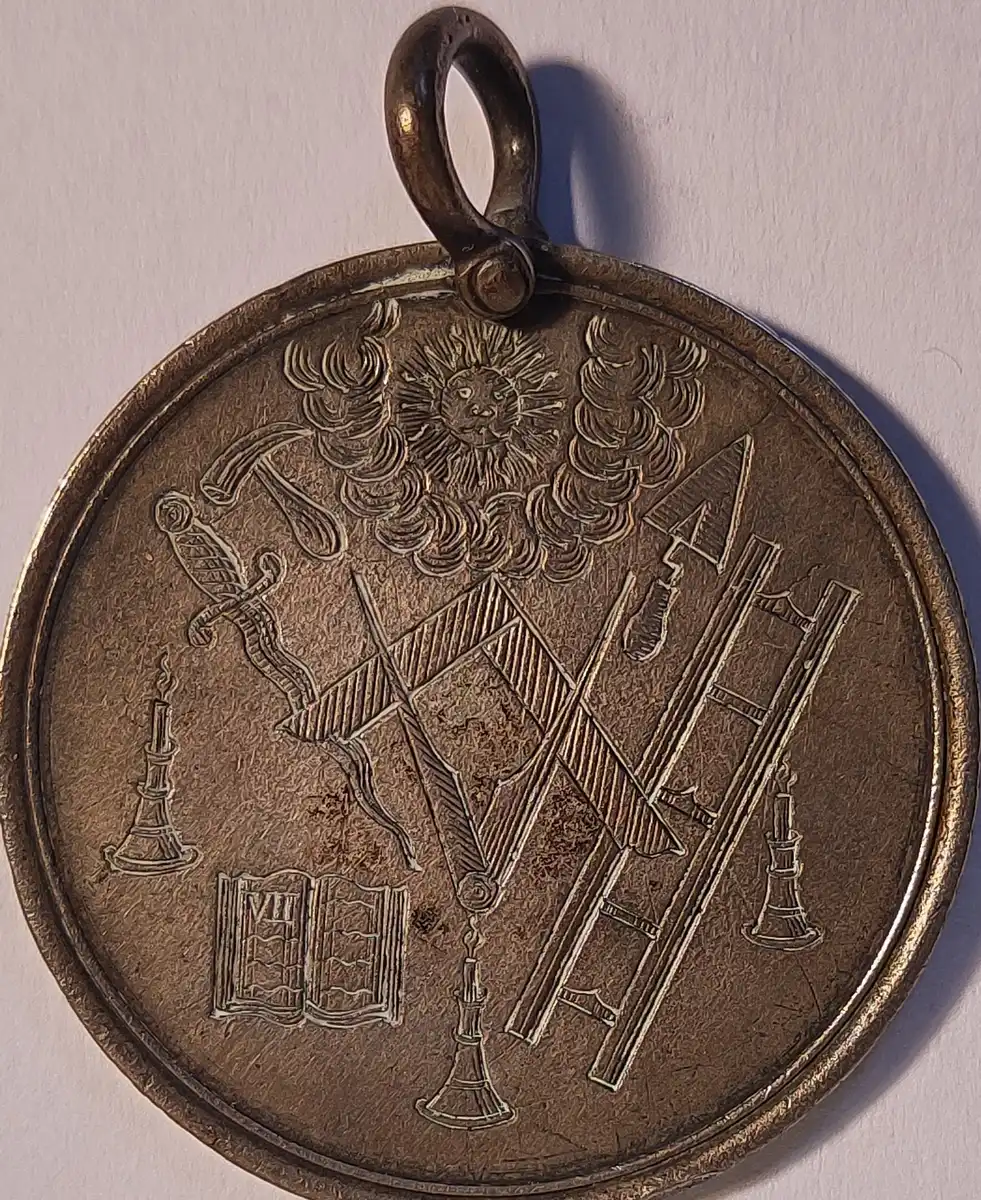
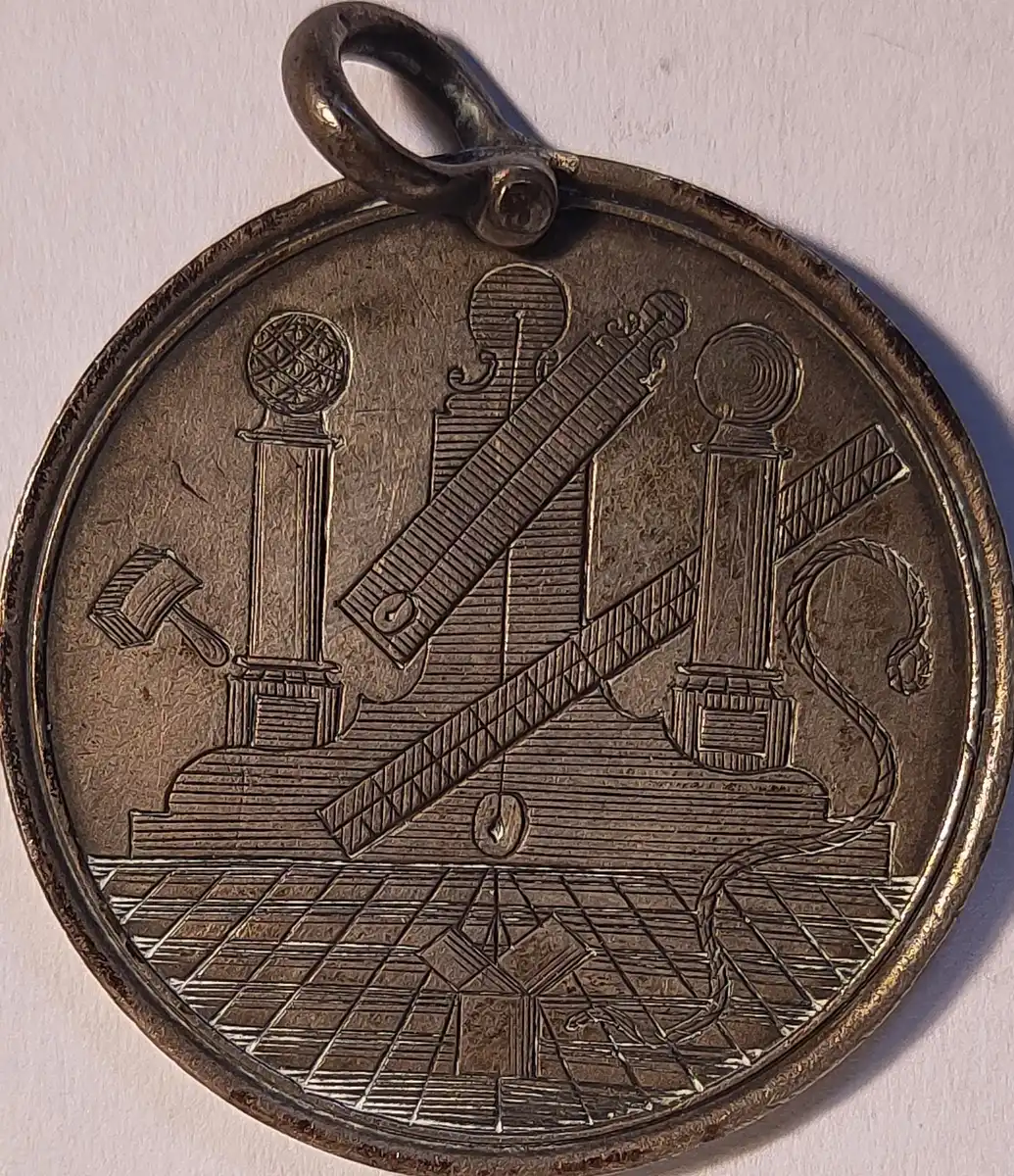
Many of the symbols seen on the medal are stonemasonry tools: compass, square, trowel, mallet, plumb-line, and so forth - hearkening back to the more literalistic days when the "Masonic Lodge" was more akin to a stonemason's trade union than a social club. Some of the other symbols - such as the chequerboard-tiled floor and the two pillars - are features of Masonic temples. But the Freemasons love their secrets, and their rituals. Most of the signs and symbols used in Freemasonry have obvious-to-outsider or even told-to-outsider meanings, but these objects are assigned deeper secret meanings which are told to you as you progress through the Masonic degrees. You then swear oaths to never tell anybody about those secret meanings and rituals. You can search the Internet and find hundreds of ex-Masons prepared to risk the oathbreaking by spilling the beans about those secret meanings, but since the Masons themselves will never confirm nor deny such people's stories, there is always going to be doubt about "the real meaning"... and that's the way the Freemasons like it.
Quote:
...or why 2 people's names are on the edge.
As with your POW medal in one of your other threads, we have a mystery as to why two people would be "sharing a medal". One possibility is that, in Freemasonry, all the regalia (uniforms, medals, etc) you are given while a member still belong to that lodge, and you're supposed to give them all back to the lodge when you resign, move or pass away. So we may have a "re-gifted jewel" here: someone won it (for whatever mysitcal reason), then was no longer in that lodge so returned it, and the lodge re-issued it to a second person.
If you examine the two names, does the lettering appear to have been all engraved by the same hand at the same time? Or is the "two separate awardees at two different times" theory plausible?
A second possibility is that "Alex McNeil John Hamilton" is just one person, with two middle names.
Don't say "infinitely" when you mean "very"; otherwise, you'll have no word left when you want to talk about something really infinite. - C. S. Lewis









 Posted 06/30/2026 11:55 am





