| Author |
 Replies: 13 / Views: 437 Replies: 13 / Views: 437 |
|
|
New Member
United States
6 Posts |
Hi everyone, I was hoping some of the VAM experts here could help me identify a die marker or possible die variety on two of my Peace dollars. Both coins show what appears to be the exact same unusual marking on the front of Liberty's neck/throat, almost making it look like she has "fish gills." I've labeled the two coins "Strong" and "Weak" based on how clearly the marking is visible. On the Strong example, you can clearly see that the marking is raised above the surface of the neck, which makes me believe this is a die-made feature rather than post-mint damage. I included several photos, although I apologize that a few of the microscope shots are slightly blurry because the microscope moved while I was zoomed in. The fact that I've found what appears to be the same feature on two separate coins makes me pretty certain it is a die artifact and and potentially something that appears on dozens or hundreds of other examples. However, I haven't been able to find a matching variety. I went through the 1921 Peace dollar VAMs on VAMWorld and haven't found anything that seems to match this feature. Most of the VAM markers I've come across seem to be relatively fine, hairline die-polish marks, whereas these are fairly obvious markings that can easily be seen with the naked eye. I'm also curious what could have caused it. One possibility I wondered about is a die clash involving the reverse rays, but I'm having trouble seeing how a clash could produce something localized entirely within the deepest area of the obverse die while leaving the surrounding fields clean. The reverse also doesn't appear to show any obvious abnormalities. Another possibility I came across is that a foreign object or piece of debris was struck into the die. That seems like it could potentially explain both the raised nature of the marking and why it is localized to one small area of the coin, rather than affecting the surrounding fields. I'm relatively new to coin collecting, so I may be completely misunderstanding how these things occur and apologize if this post doesn't belong in the VAM subcategory. I'm driving myself nuts trying to find another example or an explanation for it! Thanks in advance! 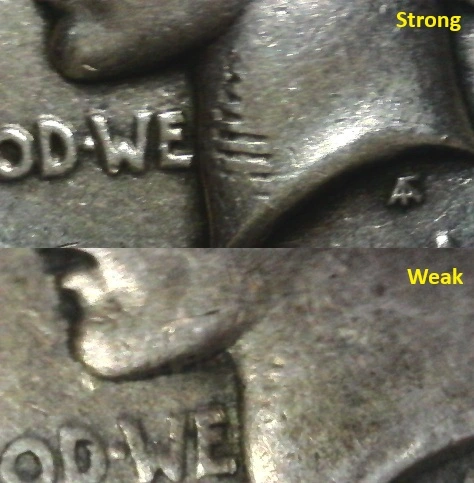 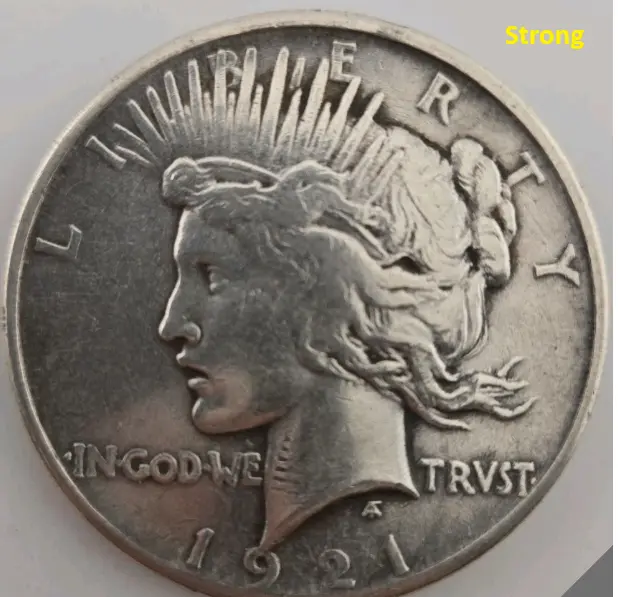 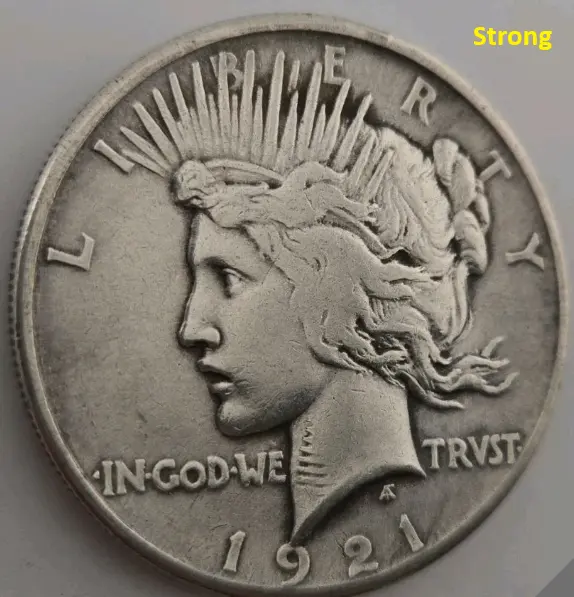 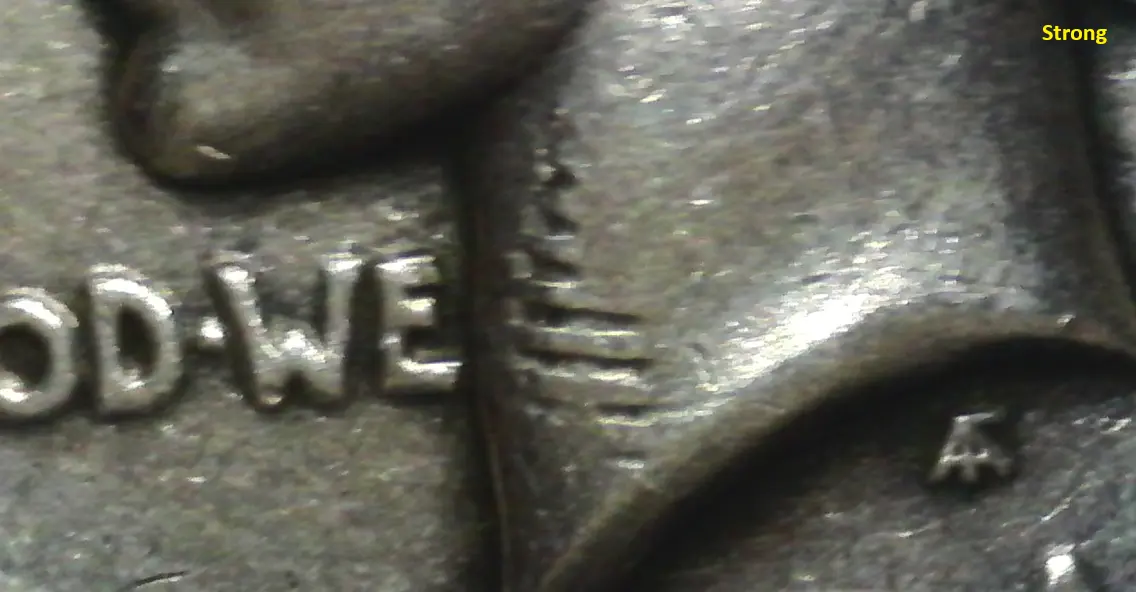 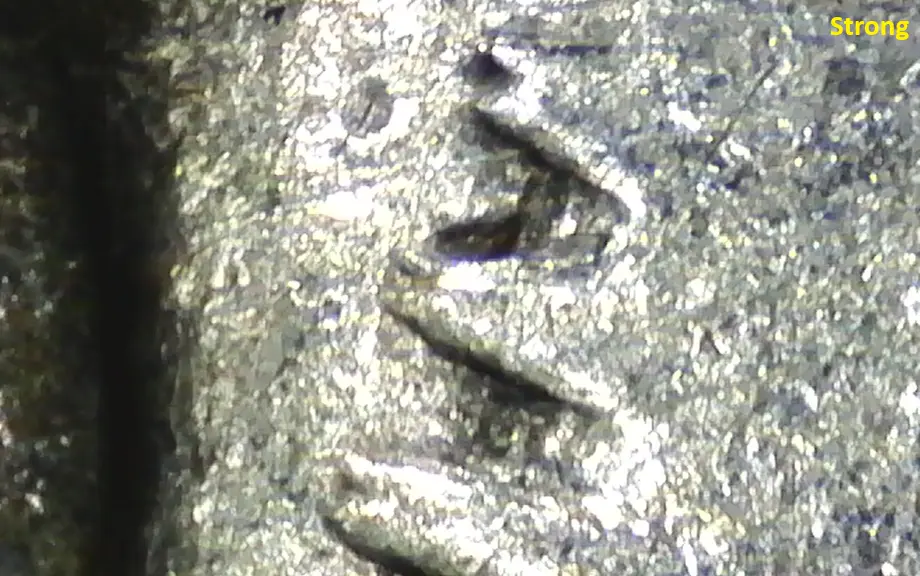 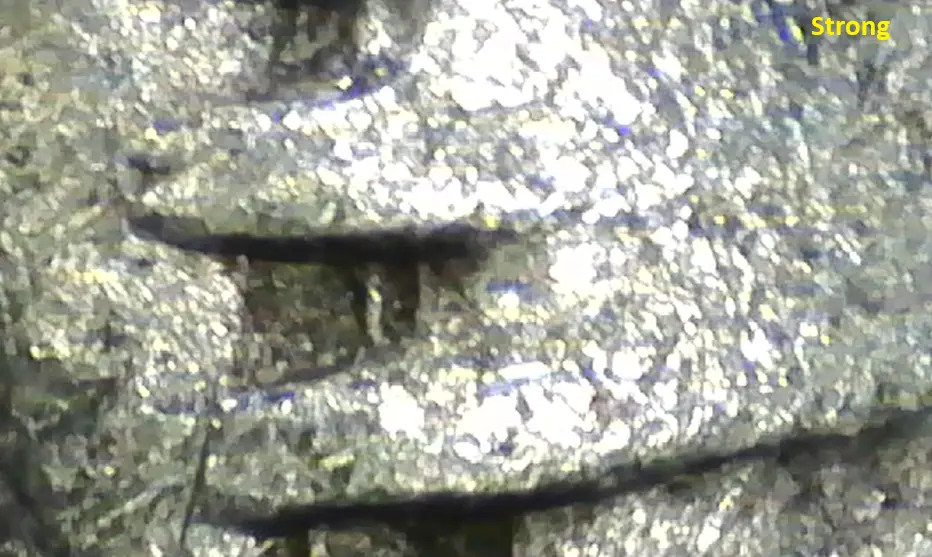 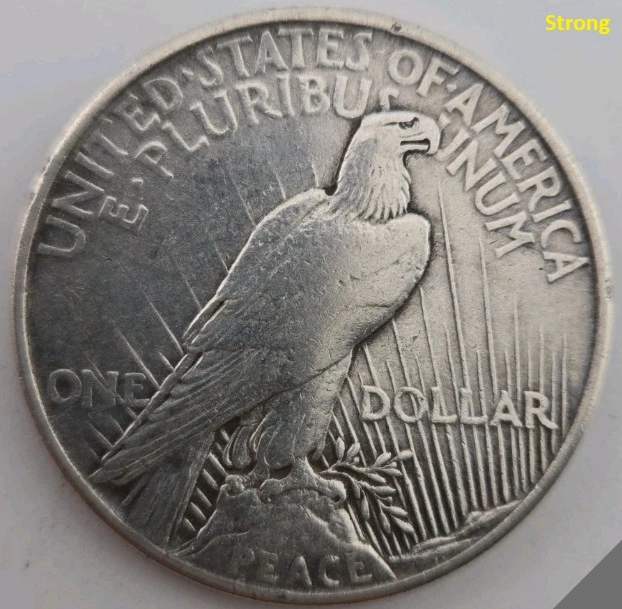 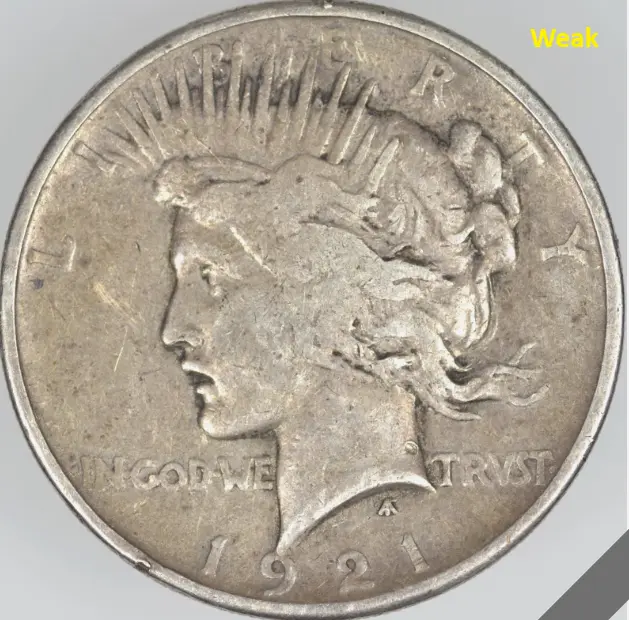 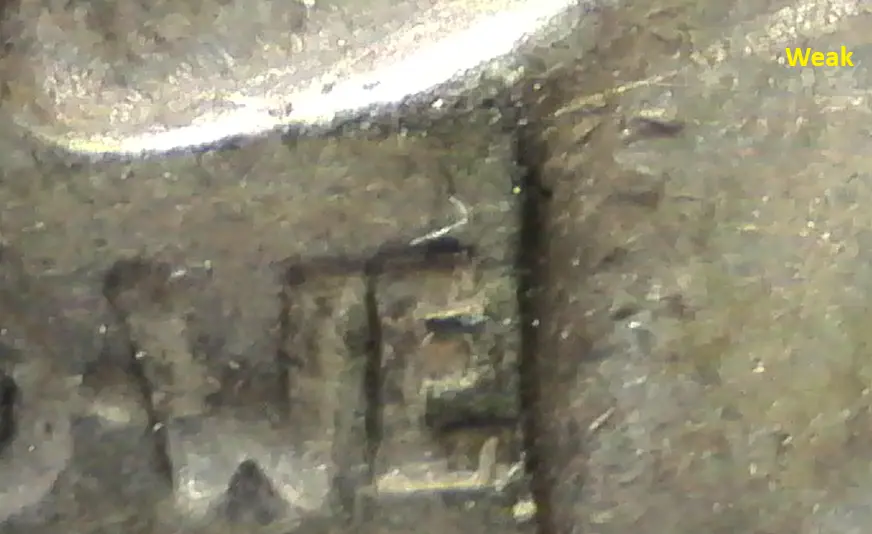 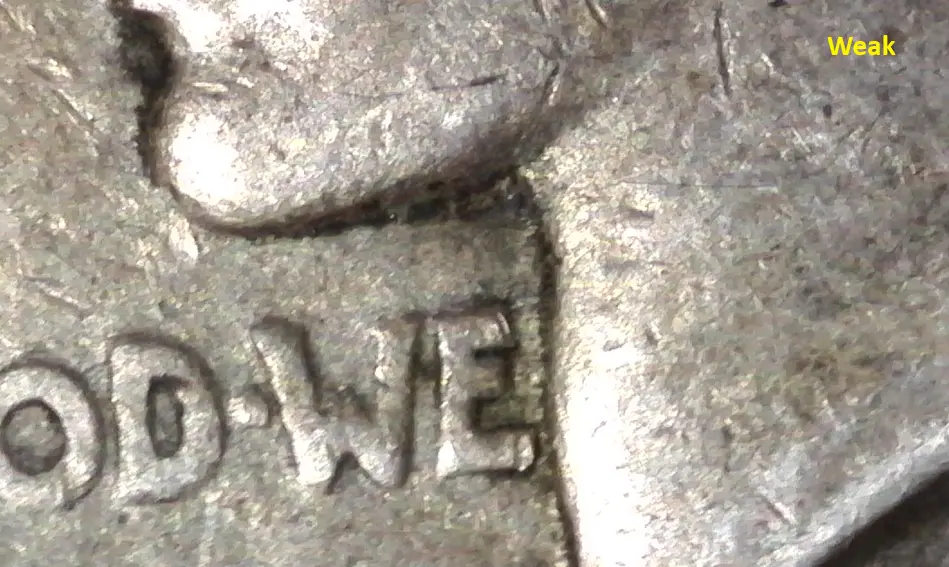 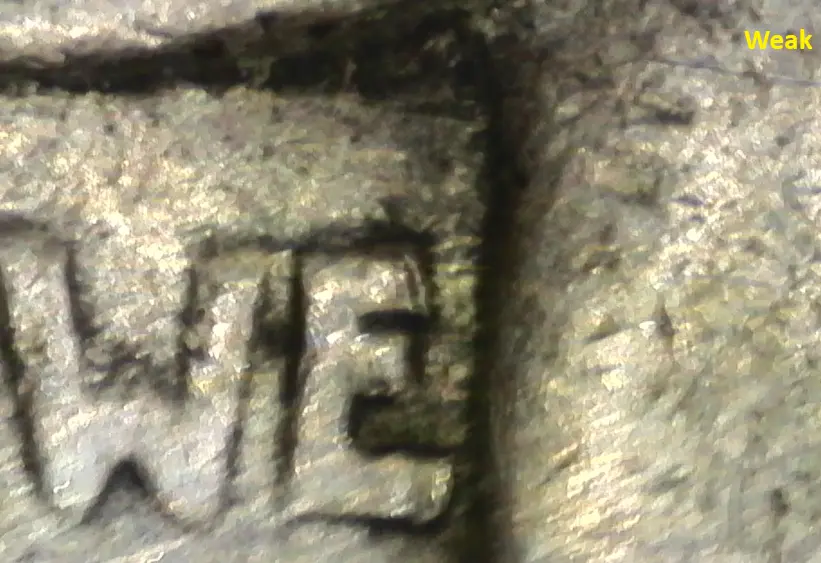 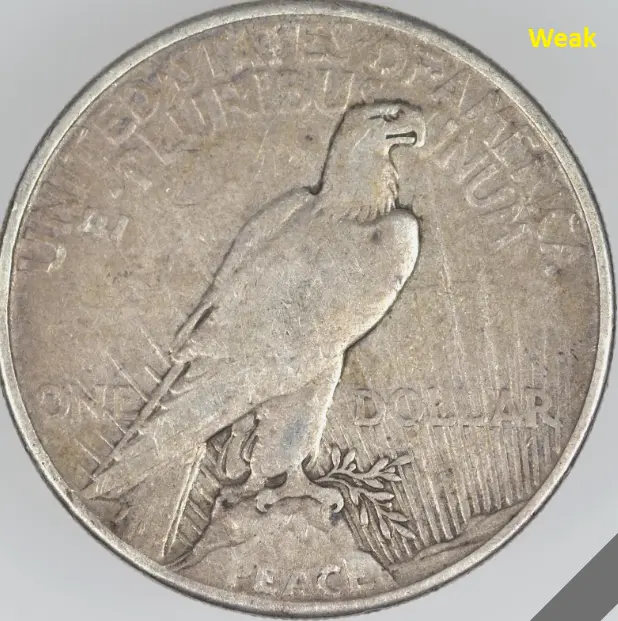 |
|
|
|
Pillar of the Community
United States
7349 Posts |
IMO coins in question are fakes.
|
|
Bedrock of the Community
 United States
27514 Posts |
 to the CCF, heyoka! Before we proceed, could you tell us the weights of these two coins? Thanks! Inordinately fascinated by bits of metal with strange markings and figures
Edited by HondoB
08/12/2026 8:44 pm
|
|
New Member
 United States
6 Posts |
Thanks for the reply and for taking a look. I appreciate the input.
A little more info, they were purchased at different times from different dealers. Both passed weight, dimensions, ping test, magnet test, and specific gravity tests. If there were only one coin, I'd probably be more open to the possibility of a good counterfeit, but having two coins with what appears to be the same die mark makes me lean away from that, although I certainly understand it's still a possibility.
I'm curious, though, are there known counterfeits that have an obvious die-like deformity or unusual feature such as this? From what I've read, counterfeits often miss unique die traits. I appreciate the help though and would be interested in understanding how plausible that possibility is.
|
|
New Member
United States
6 Posts |
Strong Gills weighs 26.53g and had diameter of 38.1mm Weak Gills weighs 26.45g with a diameter of 38.12mm 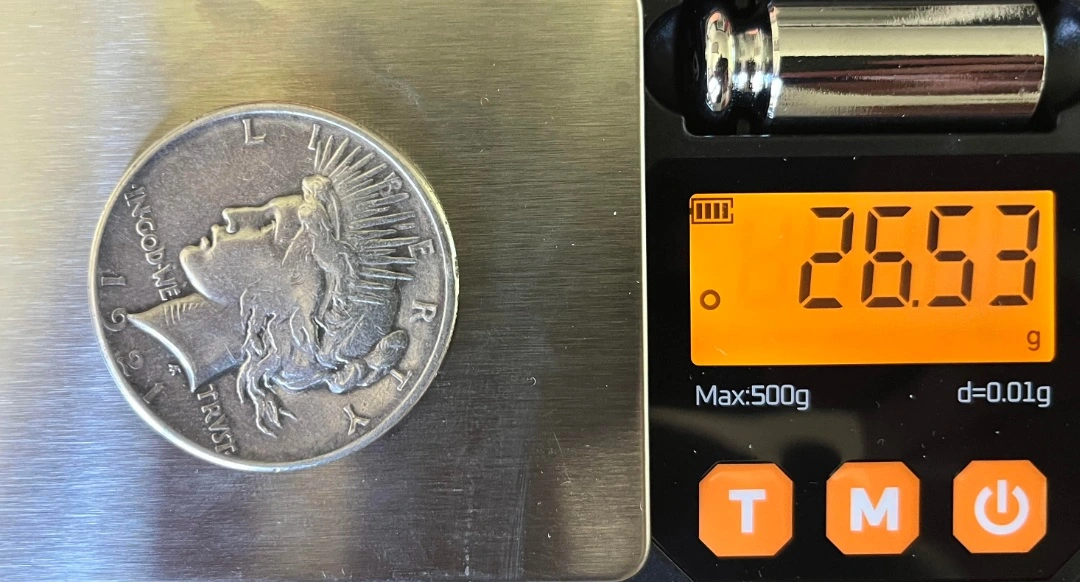 |
|
Bedrock of the Community
United States
27514 Posts |
I don't think that there is any way that these marks resulted from the minting process. They look like Reed Marks on steroids. I'm thinking PMD of some sort. Inordinately fascinated by bits of metal with strange markings and figures
|
|
New Member
United States
6 Posts |
Hondo, could post-mint damage cause a raised feature like this? The gills are clearly raised above the surface of the neck under 40x magnification.
It's hard to say with certainty that the marks on both coins are identical since the Weak example has considerably more wear (and could potentially be from a later die state), but they do appear to follow the same pattern in the exact same location.
Assuming they are the same feature, I'm having a hard time coming up with another explanation besides some kind of die-related issue.
|
|
Bedrock of the Community
United States
27514 Posts |
I just compared the pictures of your coins to some of mine, and your coins are fake.
Inordinately fascinated by bits of metal with strange markings and figures
Edited by HondoB
08/12/2026 9:32 pm
|
|
New Member
United States
6 Posts |
Hondo, could you elaborate a bit so I can learn. what are you seeing on my coins that lead you to say they are fake? I'm looking at them side by side with a Peace dollar I know is genuine and don't see a difference. Is there a specific feature that I should look at to compare to my known genuine one? thanks |
|
Bedrock of the Community
United States
27514 Posts |
Hang on, I need to look at your photos in greater detail.
Inordinately fascinated by bits of metal with strange markings and figures
|
|
Pillar of the Community
United States
5904 Posts |
Have you try the ping test? You can hear the sound from a genuine silver dollar vs. fake ones.
Plenty of copies from Esty that sellers offer made over sea, aka. China, some time they mixed photo of real one's with fake one.
|
|
Moderator
Australia
17006 Posts |
I think people are looking at things like the spikes on Liberty's head. On a genuine Peace dollar, they're thin, elegant, and end at a point. On your coins they're thick and stubby - Liberty looks like she's wearing a sea anemone. They're so thick the "B" is barely visible through the forest. And it's not "wear" making the spikes seem thicker. Looking at examples of heavily worn Peace dollars, the spikes don't "wear fat" like that. Quote:
I'm curious, though, are there known counterfeits that have an obvious die-like deformity or unusual feature such as this? Counterfeits can have distinguishing tell-tale marks. An obvious example would be the "broken R" on the Henning nickels. Don't say "infinitely" when you mean "very"; otherwise, you'll have no word left when you want to talk about something really infinite. - C. S. Lewis
|
|
New Member
United States
6 Posts |
Thanks for the specifics, Sap. I do see what you're saying regarding the spikes on her crown. They do look a bit fat and, like you said, almost like a sea anemone, haha. You definitely have me second-guessing whether my home authentication process may have failed. I will say that in-hand, the crown doesn't appear nearly as chunky as it does in that photo. I put together a side-by-side comparison with a slabbed 1921 in similar condition to compare the wear patterns. On the right is my original image, where the crown does look noticeably heavier. As you pointed out, the points on and to the right of the "B" definitely look pretty thick compared to the graded example. On the left, I added a photo I just took under slightly different lighting, and the crown points look much more in line with the graded example. Do you still think the crown points are a red flag? Also, thank you for the information about known counterfeits with die errors. I had never heard of the Henning nickels before, but I read up on them last night and found that fascinating. It definitely shows there is precedent for counterfeits having unusual die-related characteristics. When I originally posted, I had no doubt these two coins were genuine and was only looking for help identifying whether the "gills" might be a VAM or something else. You've definitely introduced some doubt on my end regarding authenticity now. Aside from the ping test, diameter, weight, specific gravity, and magnet tests that these passed, is there anything else I can do at home to check their authenticity? Also, would it be considered rude or bad etiquette to walk into a local coin shop and ask if I could use their Sigma machine to test a coin I didn't purchase from them? I'd obviously be happy to pay for the test if they charge for it (is that a thing?) thanks! 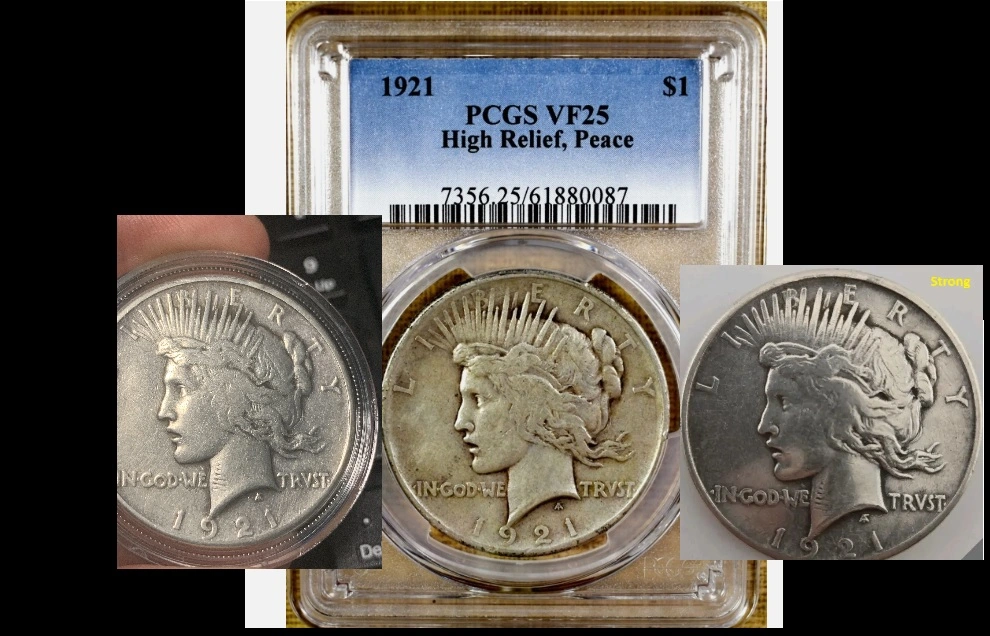 |
|
Moderator
United States
196278 Posts |
to the Community! |
| |
Replies: 13 / Views: 437 |
|










 Posted 08/12/2026 8:43 pm


