| Author |
 Replies: 34 / Views: 7,549 Replies: 34 / Views: 7,549 |
|
|
|
Pillar of the Community
 United States
6017 Posts |
Great story, Carl! Thanks for that insight.
|
|
Valued Member
United States
66 Posts |
Here are a few paragraphs on cleaning coins from the 1963 Coin collecting book mentioned in this thread. I love the figure of the little guy cleaning a coin! 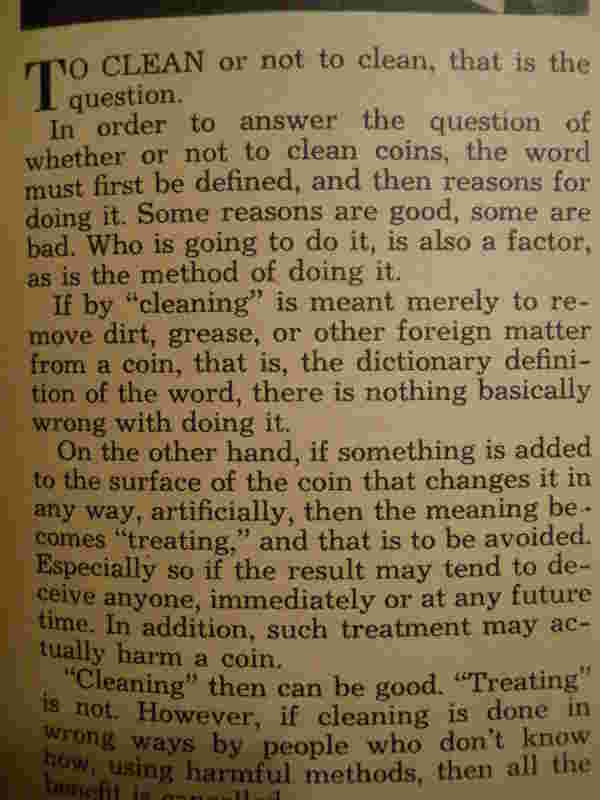 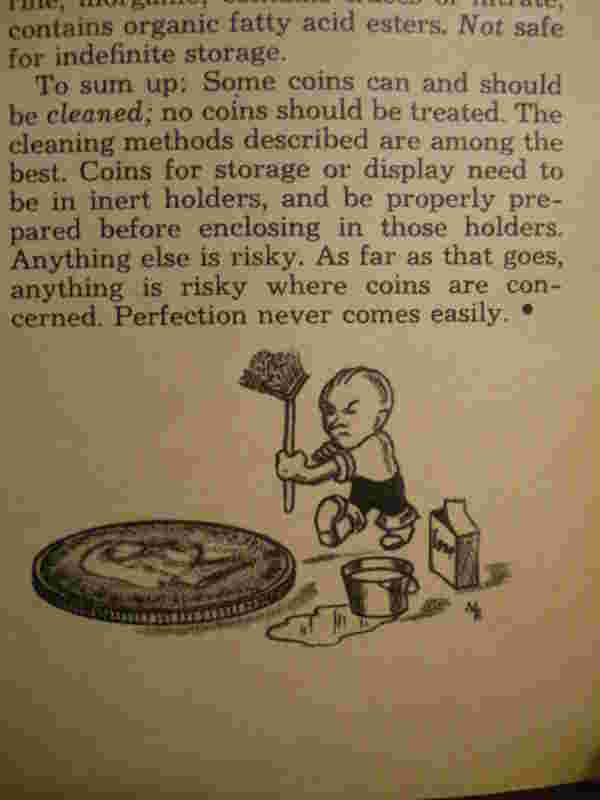 |
|
Valued Member
United States
321 Posts |
Barryg,
I collect British hammered coins from the 1300's - 1600's. Most of these coins have been cleaned somewhere along the line. It's all a question of how it was done. The problem with cleaning coins today is that the chemicals used today literally destroy the coins over time. If you truly collect coins for the fun of it, it makes no difference if a coins has been cleaned or not.
|
|
Valued Member
United States
426 Posts |
Quote:
"Cleaned" can mean anything from soaking in distilled water or acetone to scrubbing with grinding powder. This is why the first response is always don't! I agree that scrubbing with grinding powder is a huge no no but soaking a non proof coin in distilled water or acetone is not harmful to a coin. It can actually be beneficial in preserving a particular piece unless you are rubbing it when drying. Edited by RealPeso
12/15/2011 11:38 pm
|
|
Bedrock of the Community
United States
17884 Posts |
The problem is that you have no idea how the other person, usually a beginner, is planning to "clean" the coin. Rather than go into a lengthy involved explanation of exactly how a safe cleaning can be accomplished for each type of metal and for every type of reason for needing cleaning, the simple answer is to keep them from possibly doing damage by simply saying DON'T! Once you have stopped them from jumping in and doing whatever they had planned, then you can start the careful discussion as to what if anything the coin actually needs.
|
|
Bedrock of the Community
United States
20753 Posts |
Quote:
I agree that scrubbing with grinding powder is a huge no no but soaking a non proof coin in distilled water or acetone is not harmful to a coin. It can actually be beneficial in preserving a particular piece unless you are rubbing it when drying. The real problem is as Conder pointed out. Saying using distilled water or Acetone is sort of like saying all you need for brain surgery is a scalpal and saw. Maybe a few napkins for the blood though. What I mean is unless it is really clear as to exactly what to do, many will take short cuts and wander off doing something similar. Why use distilled water? Isn't a bottle of pop as good?  |
|
Valued Member
United States
140 Posts |
My opinion is that cleaning coins is only for those who are experienced and know what they are doing. The problem with beginners cleaning coins is that more often than not they get scratches on them, which most collectors don't like to see. And as above posters have stated the chemicals people tend to use have the potential to be very damaging to the coins. I like the patina most older coins tend to gather over the years, I think it adds to the authenticity of the coin's history. It doesn't really matter to me how clean a coin is unless the coin was buried at some point, then maybe minimal cleaning at best to clear the loose dirt.
Edited by Stutzman108
12/16/2011 11:15 pm
|
|
Valued Member
United States
123 Posts |
That's exactly it. The problem isn't cleaning, it's improperly cleaning. It always amazes me to read stories of Corey preservation, like those NCS puts out and than realize the number of detail graded TPG coins. It's all about the technique and the skill of the cleaner, not just if it is cleaned. |
|
Valued Member
United States
321 Posts |
Let's now add to this discussion- Should coin dealers tell potential buyers about cleaned coins in their inventory? I say yes. I've bought a few cleaned coins in my time, during my novice collecting years, and I never once had a dealer tell me a coin I was buying was cleaned. I did once overhear a coin dealer brag about all the ways he cleaned coins. Needless to say, I never bought from him again.
|
|
Rest in Peace
United States
9104 Posts |
Similar question:
What kind of putty should I use on the dent in the fender of my Rolls?
|
|
Moderator
 United States
23522 Posts |
Sometimes I simply cannot understand you, Fredd. This is not one of those times. |
|
New Member
United States
6 Posts |
Fact is that the chances of ruining a coin via a short dip and finger rub in hot water and baking soda is hogwash. There are many other ways to clean coins. The key is not to over do it. I wish folks would get off this 'never clean coins' nonsense. Yeah, you 'could' ruin a coin if you're really wreckless at cleaning said coin but the fact is that they're ALL cleaned. Always have been, and always will be. I think time would be better served explaining how to clean coins properly with all of the available and popular cleaning solutions we all know folks use (like baking soda). They really do make waaaaayy too much on this subject for some unknown and God awful reason. Educate and teach, but don't scare people from doing what is generally safe to do.
|
|
Valued Member
United States
338 Posts |
Interesting thread. Question, do some buyers use the 'cleaned' ding to purchase a sought after coin for a substantial discount?
|
|
Moderator
United States
196424 Posts |
|
|
Bedrock of the Community
United States
17884 Posts |
TommyP reread my last post in this thread.
Edited by Conder101
02/22/2017 1:07 pm
|
| |
Replies: 34 / Views: 7,549 |








 First Page


 Posted 12/15/2011 8:09 pm


