The authorization for the 1936 San Francisco-Oakland Bay Bridge ("Bay Bridge") commemorative half-dollar set a limit of 200,000 for the coin's mintage. The Mint produced an initial run of 100,000 coins in November of 1936 and delivered them to the coin's sponsor. The coin, though reasonably popular with collectors, was not near a sell-out -- more than 28,600 coins of the initial mintage were returned to the Mint for melting.
In 1937, a bill was introduced in Congress that would have reassigned the 100,000 coins that were not minted for the Bay Bridge commemorative to a new half-dollar commemorating the opening of San Francisco's Golden Gate Bridge (GGB). Considering the worldwide fame the GGB has achieved for its engineering and architectural beauty -- around the world, it is likely the best known symbol of San Francisco and one of the best known images associated with the United States -- a coin featuring it over the SF-Oakland Bay Bridge may have been a better
first choice for a commemorative half-dollar. Ultimately, the proposed coin's bill did not make it out of committee, so no GGB half-dollar was ever struck. (See GGB image below, used with permission of its owner Rich Niewiroski, Jr.)
The GGB may not have gotten its coin, but in 1962 an attractive commemorative medal was issued to mark the famed bridge's 25th anniversary; the high-relief 2.5-inch medal was struck by the Medallic Art Company and was available in silver and bronze. The medal shown weighs 7.5 ounces and was struck in 0.999 fine silver. The "SA" initials seen on the obverse are the designer's - Spero Anargyros. There were 2,000 silver medals available for $33.00; the bronze medals were $4.00 without a specified mintage.
Golden Gate Bridge, San Francisco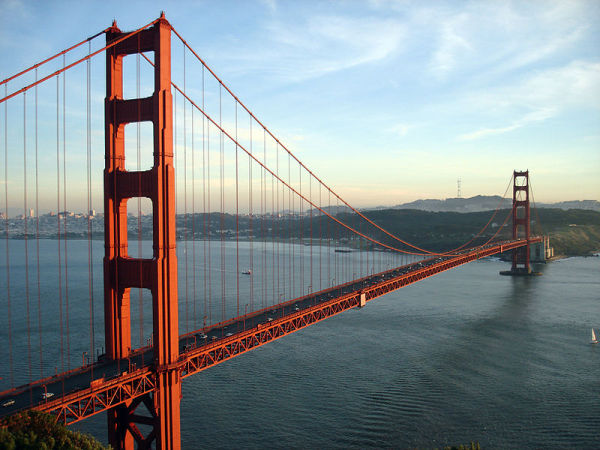 1962 Golden Gate Bridge Commemorative Medallion -- Obverse
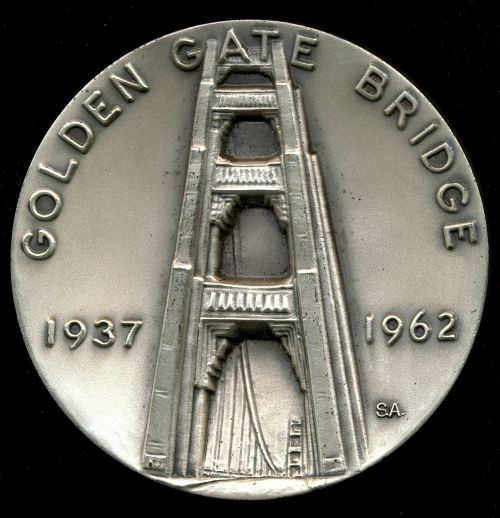 1962 Golden Gate Bridge Commemorative Medallion -- Reverse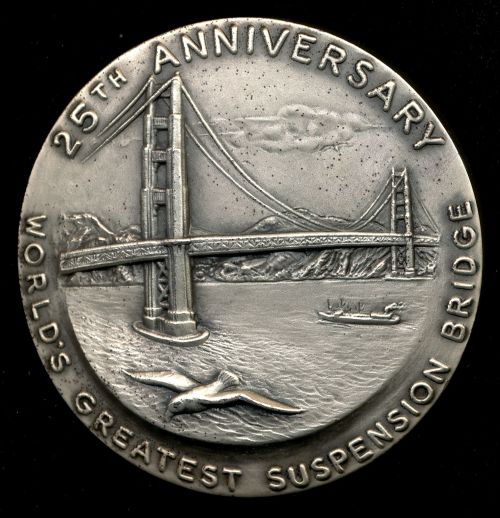






 Posted 06/05/2012 5:08 pm





