| Author |
 Replies: 109 / Views: 12,678 Replies: 109 / Views: 12,678 |
|
|
|
Pillar of the Community
United States
8904 Posts |
WOW!Now I know why I could never find any scarce Barbers!! You have them all! Most impressive! (2012 RedBook: your display = $4,500+ worth of 1896S's and $11,000+ of 1913S's? UNBELIEVABLE!! ) 
|
|
Pillar of the Community
United States
3253 Posts |
And one collector used to own all five 1913 Liberty nickels! Really? Is that necessary? My kindergarten teacher taught me to share. |
|
Pillar of the Community
United States
917 Posts |
My rarest coin is undoubtedly one of my colonials. Mintages on them are not the most reliable or known for that matter. My rarest known is probably my 2009 P $25 Australian Sovereign mintage 2500.
|
|
Pillar of the Community
United States
1007 Posts |
Rarest American coin I have : 1871 - 2¢ piece, mintage 721,250
Rarest Canadian coin I have: I have many under 500,000 minted along with Newfoundland coins.
|
|
Bedrock of the Community
United States
37163 Posts |
51,000 1832 Half Cent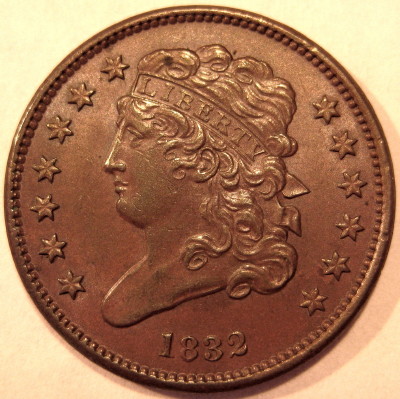 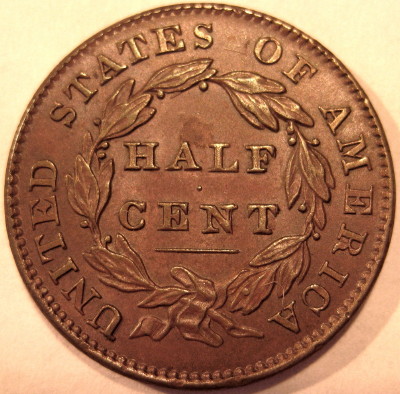
|
|
Valued Member
United States
438 Posts |
TreasHunt....WOW!!! GORGEOUS AND I'm SUPER JEALOUS!
|
|
Pillar of the Community
United States
7315 Posts |
I like that 1832 Half Cent. What is that dot between half and cent?  |
|
Pillar of the Community
United States
2250 Posts |
|
|
Moderator
 United States
14463 Posts |
I don't know the population numbers, my 1884-CC Morgan dollar seems a bit common. So, I am guessing my 1909-S VDB LWC as My Rarest Coin 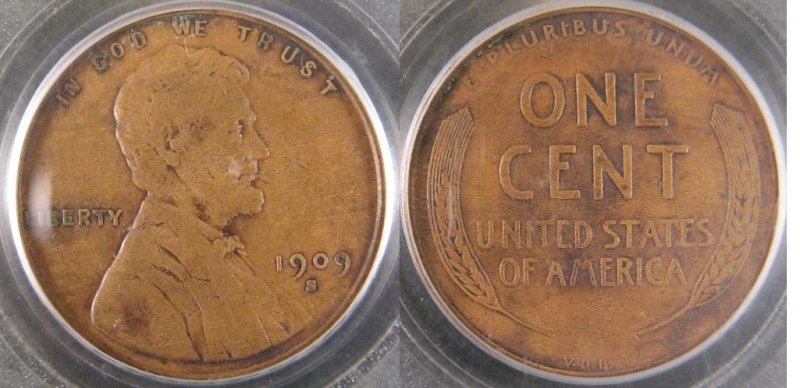 Edited by Fuzzy317
09/10/2012 6:13 pm
|
|
Bedrock of the Community
United States
37163 Posts |
Quote:I like that 1832 Half Cent. What is that dot between half and cent? Just part of the design, it was also used on Large Cents of that era. |
|
Bedrock of the Community
United States
17884 Posts |
Quote:I like that 1832 Half Cent. What is that dot between half and cent? It's what is called a center dot. Back then the dies were to a large part created by hand, especially the lettering. In order to lay out the positioning of the lettering a compass would be used to lay out the positioning and to score light base line arcs onto the face of the die. The base line would allow the die sinker to punch in the letter all on the same arc and not wandering up or down. The point of the compass in the center of the die created a small dimple which created the raised dot on the final coin. (On high grade early die stage coins traces of the base lines can sometimes still be seen as well. Usually though these faint scratches in the surface of the die would be polished away before the die went into use.) |
|
Pillar of the Community
United States
7315 Posts |
It's great to continue to learn about our hobby, thanks.
|
|
Bedrock of the Community
United States
37163 Posts |
Conder, thanks for that info, I learned something today.
|
|
Rest in Peace
United States
4849 Posts |
|
|
Pillar of the Community
United States
3755 Posts |
Johnny...WHOA! An 1856 FE! Talk about jealous...
|
| |
Replies: 109 / Views: 12,678 |







 First Page
 Previous Page


 Posted 09/10/2012 3:22 pm





