| Author |
 Replies: 99 / Views: 10,666 Replies: 99 / Views: 10,666 |
|
|
|
New Member
Australia
8 Posts |
enworb, yes all print layers are missing totally blank,
|
|
Pillar of the Community
Australia
1874 Posts |
|
|
Pillar of the Community
Australia
1047 Posts |
OK,I'm certainly no expert and wouldn't know a genuine error note from a fraudulent one but rumours concerning tampering of the Poly notes have been around since 1988.Surely a major Auction House would know this and would want to know the probity of the note as its 99% sure it didn't come from a Bank or general circulation.
Edited by Basil
01/02/2013 9:44 pm
|
|
Pillar of the Community
Australia
507 Posts |
Thanks enworb - I hadn't considered a possible service component lol The RBA website has some very useful information (and a video) regarding banknote production, that gives you a good insight into the stages involved which also assists in determining the likelihood in certain errors coming into existence, let alone make it past QC into circulation. "The first printing process involves the background colours and patterns being printed onto both sides of the polymer sheets at the same time by simultan printing machines. These machines can print up to 8,000 sheets per hour.
Following the simultan printing the major design elements such as the portraits are printed using intaglio printing machines, with ink being transferred to the substrate under great pressure. Separate print runs are required for each side of the sheet. The resulting raised print is one of the important security features of Australia's polymer banknotes.
Serial numbers are then added to the sheets using a letterpress printing process.
In a final print run, the banknote sheets are given two coats of a protective overcoating ink using an offset printing press. This overcoat contributes to the extended durability of polymer banknotes as it protects the printing. It also helps to keep the banknotes clean."For a note to retain a completely blank side through *all* stages of the printing process, the only way for this to conceivably occur is for two sheets to be stuck together, but even then this would be extremely unlikely to escape the QC process (which would appear to be mostly effective based on checks of substantial consecutive sequences of brand new notes and seeing how many numbers are missing.) In the extremely unlikely event a sheet was to genuinely make it through the multiple phases of the production process and into circulation the note would have to display zero evidence of *any* print features on that side. What we can safely assume is that in the case of the serial number side of a note being the blank one, there would be no way to determine the serial number, as it relies on a direct impact letterpress method which (if we recognise that an all pass scenario would require two sheets to be stuck together) would not leave any discernible impression on the lower sheet. To claim a "blank" side note has a known serial number means you either knew it before you removed it, or it received a direct impact from the letterpress process and is still visible after been removed. We can also assume that for such an extremely rare error to pass undetected, there would probably only be a maximum of 1 or 2 sheets in existence at any one time, which would rule out multiple denominations over multiple years, beginning with shockingly crude portrait removals, escalating to whole sides, and culminating in Unc's and first prefixes etc etc Furthermore, there would be no "blotches" indicating a "print was attempted". The most accurate descriptor of the notes I have seen on ebay is "the ink may have transferred off the note while still wet". While still wet? Wet with acetone! Polynote, it may be possible that the notes you purchased were extremely rare genuine notes, but they would need to be very closely examined. While purchasing from a reputable source is a protection, it is not a guarantee. I'm sure many would be familiar with the likes of the acetoned Millenium 50 cent proofs. |
|
Pillar of the Community
Australia
750 Posts |
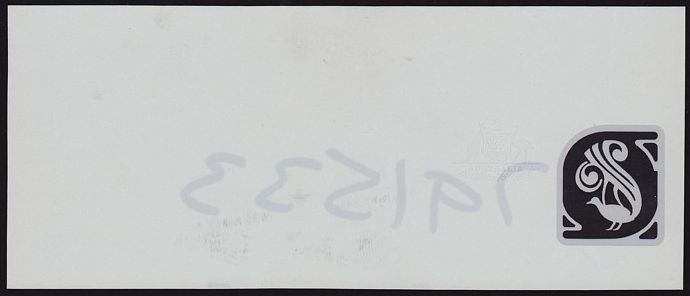
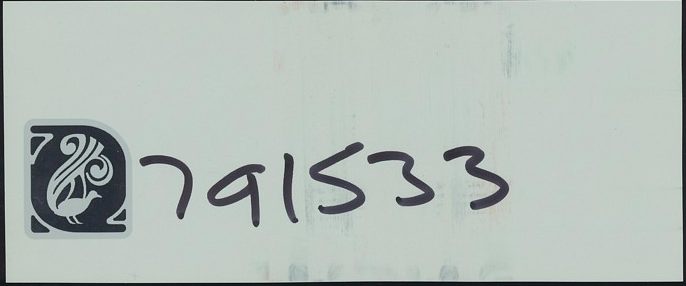
In the image above, the 791533 is actually Quang's old ebay id. (prior to qban1610 and prior to him understanding that it was actually the jpg IMAGE you put the watermark on). PS: Thanks for digging that one out flippy and thanks to FNQ for the note printing info above. |
|
New Member
Australia
8 Posts |
thanks for the useful information PNQ, once I get the notes and paperwork out, I'm going to take to a few dealers and see what they come up with, I will also take back to the same auction centre and see what they think now, will let you no what happens hopefully get this done next week.
|
|
Valued Member
Australia
318 Posts |
In Mick Vort Ronald's Australian Banknote Errors book, page 25, it shows another blank $100 with the texta'd 791533. The note is different to the one above - there are minor differences in the handwritten number. These would have been added by the checkers to indicate the serial number; which they'd have presumed would have been picked up by the error recovery system, then to be rejected - they used a flourescent marker to mark such notes in ther paper era (still do?).
Logically, there would be a full sheet of blank 791533, and if all are hand written, each will show minor differences.
Of course, a devious acetoner can still 'blank' a note, then add in a texta'd number to give the note an aura of credibility.....
caveat emptor
|
|
Pillar of the Community
Australia
507 Posts |
Just as an update on our "friend" from SA.
He has just undergone an additional name change - now trading as ozzie_au, fortunately is no longer trading in acetoned notes (just iPhones apparently), and has acquired some additional and very informative feedback from their alter-ego trolololololololo
! Buyer: Member id trolololololololo (3) 31-Jan-13 17:39 Private
|
|
Valued Member
Australia
176 Posts |
|
|
Valued Member
Australia
295 Posts |
Has anyone thought about reporting "our friend" with the blank notes to the Reserve Bank? He would be looking at a $5,000 fine or imprisonment for two years, or both according to the info here: http://banknotes.rba.gov.au/deliberatedamage.htmlWonder if there is reward for reporting culprits?  |
|
Valued Member
Australia
176 Posts |
$261.22! Enough said.
Pedro
|
|
Valued Member
Australia
295 Posts |
Well ... I bit the bullet and reported these tampered notes to the RBA ... Quote:Hello, I am a member of an online coin and note forum and we have noticed quite a number of deliberately damaged $5 notes being sold on ebay.
I am not writing on behalf of the forum, but I am reporting this activity as a concerned citizen who does not want to see coin and note collecting brought into disrepute by this person's fraudulent activities.
One Adelaide based culprit, in particular, has assumed a number of ebay identities and is regularly selling $5 notes that have had the ink removed with acetone and promotes them as collectable error notes. These notes are attracting high prices (recently one sold for over $260) so he is not only deliberately damaging notes, but also making a lot of money from innocent buyers with these fraudulent activities. A follow-on concern is that buyers who bought these notes in good faith will try to on-sell them (in good faith) and subsequently be accused of fraudulent activities as well as losing money on the deal.
Recent ebay identities for the main culprit are:
> trolololololololo (formerly Wholesale-batteries)
> Notes_au (formerly Qban1610)
I also bring this matter to your attention in order for this printing 'flaw' to be rectified to help make our currency tamperproof. |
|
Pillar of the Community
Australia
1607 Posts |
Good on you awildeheart  , hope they can & do take some action with both the Fraudsters & with the notes,so maybe this sort of thing can be stopped altogether. Edited by appleangel07
02/06/2013 04:50 am
|
|
Pillar of the Community
Australia
674 Posts |
 Congratulations on going to the trouble. Will be interested by the response.!  |
|
Pillar of the Community
Australia
750 Posts |
A credit to you awildeheart!
|
| |
Replies: 99 / Views: 10,666 |





 First Page
 Previous Page


 Posted 01/02/2013 5:44 pm