| Author |
 Replies: 2,966 / Views: 91,203 Replies: 2,966 / Views: 91,203 |
|
|
|
Pillar of the Community
United States
2480 Posts |
OK, next up. Hints may be required and I have a few ready to roll if needed. 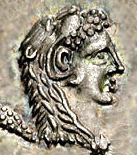 |
|
Moderator
  United States
23731 Posts |
I doubt it but I'll give it a shot. Alexander III?
On a side note, since we started this thread in April we have over 2000 reply's and they have been read 19,000 times.
|
|
Pillar of the Community
United States
2480 Posts |
No, but that was why I looked more closely at this coin-- thought it was AlexIII.
This one will be hard so to narrow it down a little... it's from Africa.
|
|
Pillar of the Community
United States
582 Posts |
|
|
Pillar of the Community
United States
2480 Posts |
Wow, yes! Good job, Dwayne! From what I've read, sounds like he was a fine leader. from coinproject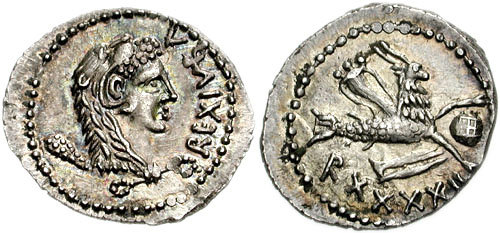 Quote:Type : Ancient Africa Region : MAURETANIAN KINGDOM Issuer : Juba II Date Ruled : 25 BC-23 AD Metal : Silver Denomination : Denarius Struck / Cast : struck Date Struck : AD 17 Diameter : 19 mm Weight : 3.00 g Obverse Legend : REX IVBL Obverse Description : Head right, wearing lion's skin; club to left Reverse Legend : RXXXXII Reverse Description : Capricorn right; cornucopiae above, globe to right Primary Reference : MAA 171 Reference2 : Mazard 212 Reference3 : cf. SNG Cop 587 (RY 41) Photograph Credit : Classical Numismatic Group Source : http://www.cngcoins.com/Coin.aspx?CoinID=68772Grade : EF, dark iridescent toning. from wikipedia: Quote:
Juba II was a Berber Prince from North Africa. He was the only child and heir to King Juba I of Numidia and his mother is unknown. In 46 BC, his father [2]had chosen to fight a duel to the death[2] as he was defeated by Julius Caesar (in Thapsus, North Africa). Numidia became a Roman Province.[1] His father was an ally to the Roman General Pompey.
Juba II was brought to Rome by Julius Caesar and took part in Caesar's triumphal procession. In Rome, he learned Latin and Greek, became romanized and was granted Roman citizenship.[1] Through dedication to his studies, he is said to have become one of Rome's best educated citizens, and by age 20 he wrote one of his first works entitled Roman Archaeology.[1] He was raised by Julius Caesar and later by his great-nephew Octavian (future Emperor Caesar Augustus). While growing up, Juba II accompanied Octavian on military campaigns, gaining valuable experience as a leader. He fought alongside Octavian in the battle of Actium in 31 BC. They became longtime friends.
...
When they moved to Mauretania, they renamed their new capital to Caesaria (modern Cherchell, Algeria). The city was named in honor of Augustus. The construction and sculpture projects at Caesaria and another city Volubilis, display a rich mixture of Egyptian, Greek and Roman architectural styles.
Cleopatra is said to have exerted considerable influence on Juba II's policies. Juba II encouraged and supported the performing arts, research of the sciences and research of natural history. Juba II also supported Mauretanian trade. The Kingdom of Mauretania was of great importance to the Roman Empire. Mauretania traded all over the Mediterranean, particularly with Spain and Italy. Mauretania exported fish, grapes, pearls, figs, grain, wooden furniture and purple dye harvested from certain shellfish, which was used in the manufacture of purple stripes for senatorial robes. Juba II sent a contingent to Iles Purpuraires to re-establish the ancient Phoenician dye manufacturing process.[4] Tingis (modern Tangier), a town at the Pillars of Hercules (modern Strait of Gibraltar) became a major trade centre. In Gades, (modern Cádiz) and Carthago Nova (modern Cartagena) Spain, Juba II was appointed by Augustus as an honorary Duovir. A Duovir was a chief magistrate of a Roman colony or town, most probably involving with trade and was also a Patronus Colonaie.
The value and quality of Mauretanian coins became distinguished. The Greek historian Plutarch describes him as 'one of the most gifted rulers of his time'. Between 2 BC â€" AD 2, he travelled with Gaius Caesar (a grandson of Augustus), as a member of his advisory staff to the troubled Eastern Mediterranean. In 21, Juba II made his son Ptolemy co-ruler and Juba II died in 23. Juba II was buried alongside his first wife in the Royal Mausoleum of Mauretania. Ptolemy then became the sole ruler of Mauretania. |
|
Pillar of the Community
United States
582 Posts |
Next one is very easy, 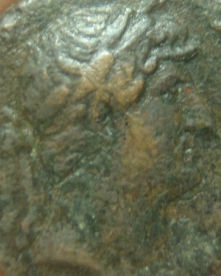 |
|
Pillar of the Community
United States
2480 Posts |
|
|
Pillar of the Community
United States
5010 Posts |
if I see a hint of a beard there...then hadrian.
|
|
Pillar of the Community
United States
582 Posts |
Like I said, easy. Good job TIF. 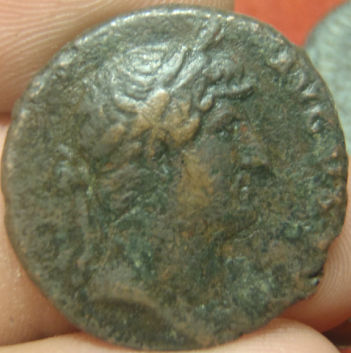 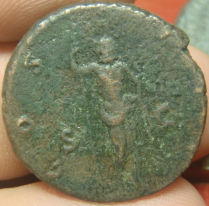 |
|
Pillar of the Community
United States
2480 Posts |
chrsmat71-- could you post the next one? I need to do something else right now.
|
|
Pillar of the Community
United States
5010 Posts |
sure TIF... this one shouldn't be to hard.  |
|
Moderator
United States
23731 Posts |
|
|
Pillar of the Community
United States
5010 Posts |
that's him!   |
|
Pillar of the Community
United States
582 Posts |
|
|
Moderator
United States
23731 Posts |
Should be pretty easy. 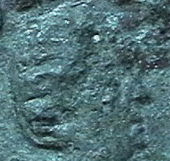 |
| |
Replies: 2,966 / Views: 91,203 |








 First Page
 Previous Page


 Posted 06/26/2013 7:15 pm


